Kirjahaku
Etsi kirjoja tekijän nimen, kirjan nimen tai ISBN:n perusteella.
1000 tulosta hakusanalla J. Malcolm Patrick
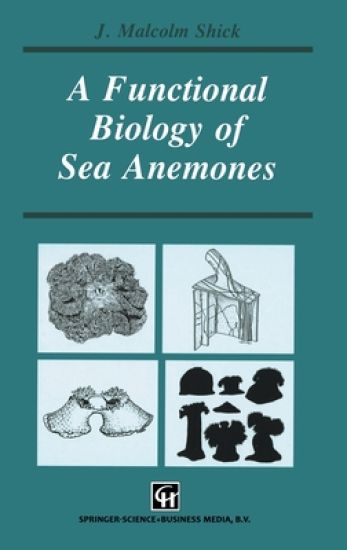
1 Overview of sea anemones.- 2 Nutrition.- 3 Energy metabolism and respiratory gas exchange.- 4 Nitrogen excretion and osmotic balance.- 5 Growth.- 6 Reproduction and population structure.- 7 Biotic interactions.- CODA.- References.- Appendix: Classification of Extant Anthozoans, Particularly Sea Anemones (Actiniaria).
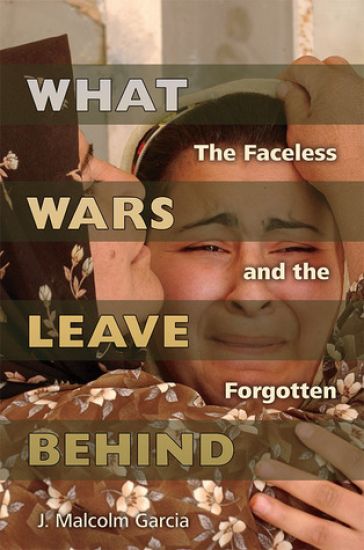
They bear labels instead of names - noncombatant, unintended victim, collateral damage. Theirs are the blurred faces and forms seen in news footage shot from a moving vehicle. And when soldiers, media, and profiteers move on to the next conflict, they stay behind to cope amid the wreckage. They have stories to tell to anyone who will pause long enough to hear them. In What Wars Leave Behind, J. Malcolm Garcia reveals the people and pain behind the statistics. He writes about impoverished families scraping by in Cairo’s city of the dead, ordinary Syrians pretending all is well as shells explode around them, and others caught in conflicts that rage long after the cameramen have packed up and gone away. Garcia describes his travels in some of the world’s hotspots in Central Asia, the Middle East, and Africa. In a series of personal travel essays that read like short stories, he exposes the endless messiness of war and the failings of good intentions, and he traces their impact on the lives of natives in Afghanistan, Pakistan, Egypt, Kosovo, Chad, and Syria. He discovers amazing resilience among people who must struggle just to survive each day. Garcia gives readers the sort of gritty detail learned from immersing himself in other cultures. He eats the food, drinks the tea, and endures the oppressive heat. These are the stories of how a middle-class guy from the Midwest with a social work degree learned to experience and embrace the cultures of Third World countries in conflict - and lived to tell the tale.
They bear labels instead of names—noncombatant, unintended victim, collateral damage. Theirs are the blurred faces and forms seen in news footage shot from a moving vehicle. And when soldiers, media, and profiteers move on to the next conflict, they stay behind to cope amid the wreckage. They have stories to tell to anyone who will pause long enough to hear them.In What Wars Leave Behind, J. Malcolm Garcia reveals the people and pain behind the statistics. He writes about impoverished families scraping by in Cairo’s city of the dead, ordinary Syrians pretending all is well as shells explode around them, and others caught in conflicts that rage long after the cameramen have packed up and gone away.Garcia describes his travels in some of the world’s hotspots in Central Asia, the Middle East, and Africa. In a series of personal travel essays that read like short stories, he exposes the endless messiness of war and the failings of good intentions, and he traces their impact on the lives of natives in Afghanistan, Pakistan, Egypt, Kosovo, Chad, and Syria. He discovers amazing resilience among people who must struggle just to survive each day.Garcia gives readers the sort of gritty detail learned from immersing himself in other cultures. He eats the food, drinks the tea, and endures the oppressive heat. These are the stories of how a middle-class guy from the Midwest with a social work degree learned to experience and embrace the cultures of Third World countries in conflict—and lived to tell the tale.
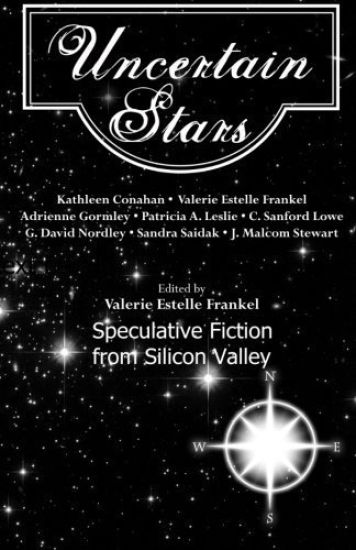
Uncertain Stars: Speculative Fiction from Silicon Valley
J. Malcolm Stewart; G. David Nordley; Kathleen Conahan
Createspace Independent Publishing Platform
2016
nidottu
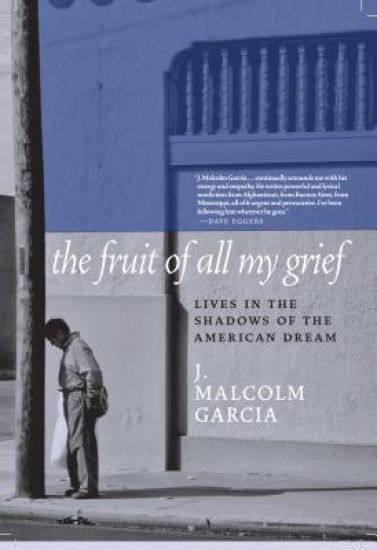
Real-life stories of American's living on the edge of survival, outside the bright lights of the media. Award-winning journalist, J. Malcolm Garcia's, essays highlight the struggle, survival, and endurance of average people affected by the injustices of America's remorseless mammoth institutions and public indifference. Families and small businesses still recovering from the BP Oil Spill. The man sentenced to life in prison for transporting drugs to save his son's life. The widows of soldiers who died, not in war, but from toxic fumes they were exposed to at their bases overseas. The Iraqi interpreter who was promised American asylum, only to arrive and be forced to live in poverty. The soaring narratives told in The Fruit of All My Grief let us feel the fears, hopes, and outrage of those living in the shadows of the "American Dream."
Timely literary reporting from Afghanistan by one of our most important nonfiction writers includes insightful new writing since the US pull-out in 2021. J. Malcolm Garcia has channeled the empathetic ear of Studs Terkel and the investigative skills of the best literary journalists ... These stories will remain in the heart and mind's eye forever." -Beth Taylor, author of The Plain Language of Love and Loss Reporting from Kabul and Kandahar between 2001 and 2015, J. Malcolm Garcia tells us what actually happened to the Afghan people as the conflict between first world nations and fundamentalists raged. In telling the stories of ordinary Afghans, Garcia shows the impact of years of occupation and war--and the sudden and harsh changes as new occupiers push in--on a people and their culture. Garcia meets Laila Haidary--everyone calls her "mother"--who, with no resources to speak of, gives addicts living on the street one month of detoxification and clean living, while at the same time sending her own children to make the perilous journey to Western Europe as best they can. And there is nine-year-old Ghani, who earns a few dollars a day collecting cans on the street to support his two brothers and sister now that his father has died of a brain tumor. There are the translators and fixers Garcia hires, who risk their lives working for foreigners against the warnings of the Taliban, and also the US soldiers who don't understand what their mission is here, and why they can't just do what they are trained to do, which is to seek out and kill the enemy. J. Malcolm Garcia has been compared to the Russian writer Svetlana Alexievich, winner of the 2015 Nobel Prize in Literature, for how the voices of everyday people ring out in the stories he tells. Most Dangerous, Most Unmerciful is an essential work of literature that documents one of the true disasters of our age, at the same time as it celebrates the human endurance and ingenuity of the Afghans we meet in these pages, and affirms the role journalists can play to make sure their stories can be heard.
A debut novel from the award-winning journalist about the people in a San Francisco homeless shelter, and those who try to help--or prey on them. "J. Malcolm Garcia has channeled the empathetic ear of Studs Terkel and the investigative skills of the best literary journalists...These stories will remain in the heart and mind's eye forever." --Beth Taylor, author of The Plain Language of Love and Loss "An exceptionally powerful voice on behalf of the people about whom he writes." --Pulitzer Prize-winning author Dale Maharidge on Garcia's What Wars Leave Behind Out of the Rain takes us into the growing world of the homeless in the United States, particularly in San Francisco. Here we read their powerful stories, which examine not just poverty but bottom-of-the-barrel destitution, and in many cases self-destruction. Tom, who runs a social services agency, doesn't play by a book of rules as much as try to bring some humanity to his work. Then there is Walter, a homeless man who can't save himself from booze but is ready to help others. Throughout this novel told from various perspectives, the reader is introduced in intimate detail to the lives of social services workers trying to find open shelter beds and simultaneously navigating federal programs. Homeless men and women are battling sobriety and addiction and simply trying to find sustainable work and decent housing. Based on the author's experience working with homeless people in San Francisco as a social services worker in the 1980s and 1990s, this novel vividly takes the reader into the heads of combat veterans, junkies, prostitutes and the unemployed. J. Malcolm Garcia left social services to pursue journalism so he could write about the people he worked with and share their stories--and humanity--with the broader public. "There weren't enough shelter beds, weren't enough detoxes, weren't enough jobs, weren't enough anything for the people I wanted to help." --Tom, social worker, in Out of the Rain
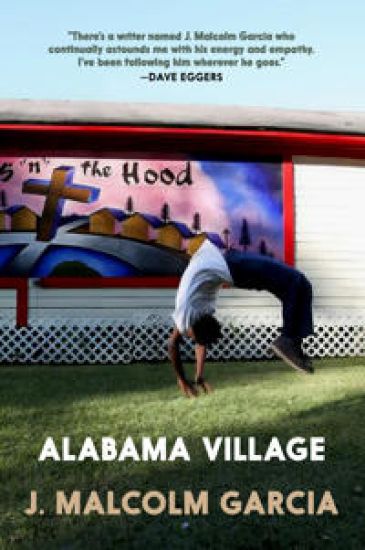
From the celebrated writer J. Malcolm Garcia, a narrative nonfiction account of a forgotten Alabama neighborhood through intimate, tender, and gritty profiles of its people as they navigate immense loss and an unassailable determination to overcome their circumstances. "J. Malcolm Garcia channels] the empathetic ear of Studs Terkel and the investigative skills of the best literary journalists." --Beth Taylor, author of The Plain Language of Love and Loss In Alabama Village, an impoverished and often violent neighborhood south of Mobile, the children no longer flinch at the eruption of gunshots. To them, it's just another day. In this community, few things last--the loss of life is relentless, and relief efforts come and go. But John and Dolores Eads, a devout Christian couple who established Light of the Village church, stay. They spread their mission: lead with love, faith, and consistency--and don't condemn or judge. In interlacing chapters, award-winning journalist J. Malcolm Garcia follows the lives of the Alabama Village community and the kids who grew up at Light of the Village church. Da'Cino Dees saw his first shooting at eight years old and now works at Light of the Village; Aaron "Billy Boy" Amison has been dreaming about dead people since he was little and has been in and out of jail since he was fourteen; Jesenda Brown hopes to escape poverty by starting her own cleaning business; and although Corey "Bigg Man" Davis has accrued exuberant wealth from unknown sources, his personality is marked by his kindhearted generosity. These striking, raw, and humanizing portraits, among others, showcase the Village and its people, in all its devastation and resilient determination. Alabama Village is an ode to communities and the individual narratives that make them whole.
Economic Development in Asia
J. Malcolm Dowling; Rebecca Valenzuela
Cengage Learning Asia
2009
nidottu
Many Americans believe service in the military to be a quintessential way to demonstrate patriotism. We expect those who serve to be treated with respect and dignity. However, as in so many aspects of our politics, the reality and our ideals diverge widely in our treatment of veterans. There is perhaps no starker example of this than the continued practice of deporting men and women who have served. J. Malcolm Garcia has travelled across the country and abroad to interview veterans who have been deported, as well as the families and friends they have left behind, giving the full scope of the tragedy to be found in this all too common practice. Without a Country analyzes the political climate that has led us here and takes a hard look at the toll deportation has taken on American vets and their communities. Deported veterans share in and reflect the diversity of America itself. The numerous compounding injustices meted out to them reflect many of the still unresolved contradictions of our nation and its ideals. But this story, in all its grit and complexity, really boils down to an old, simple question: Who is a real American?
Multiple Scattering Theory
J S Faulkner; G Malcolm Stocks; Yang Wang
Institute of Physics Publishing
2018
sidottu
Multiple Scattering Theory
J S Faulkner; G Malcolm Stocks; Yang Wang
Institute of Physics Publishing
2018
nidottu
In 1947, it was discovered that multiple scattering theory (MST) can be used to solve the Schr edinger equation for the stationary states of electrons in a solid. Written by experts in the field, J S Faulkner, G Malcolm Stocks and Yang Wang, this book collates the results of numerous studies in the field of MST and provides a comprehensive, systematic approach to it. For many scientists, students and engineers working with multiple scattering programmes, this will be a useful guide to help expand the existing knowledge of MST as well as understanding its future implications.
Humble Obedience Leverages Your Basic Instructions Before Leaving Earth
Wesley J. Malcolm
AuthorHouse
2010
sidottu
Humble Obedience Leverages Your Basic Instructions Before Leaving Earth
Wesley J. Malcolm
AuthorHouse
2010
pokkari
Powers of the President During Crises
J Malcolm (John Malcolm) Smith; Cornelius P Cotter
Anson Street Press
2025
pokkari
Powers of the President During Crises
J Malcolm (John Malcolm) Smith; Cornelius P Cotter
Anson Street Press
2025
sidottu
Classics in Institutional Economics, Part I, Volume 1
Warren J Samuels; Malcolm Rutherford
Routledge
1997
sidottu
Institutional economics is recognised as a peculiarly American development in economics — nothing quite like it emerged in Britain or continental Europe. As such, a knowledge of the literature of institutionalism is a necessary part of understanding the history of American economics and American social thought more broadly. The work of the authors featured in this collection served to create and define the American institutionalist tradition in economics: Thorstein Veblen, Richard Theodore Ely, John Rogers Commons, Robert Franklin Hoxie, Wesley Clair Mitchell and Walton Hale Hamilton. These figures were also central to institutionalism’s numerous debates on the unifying characteristics of the movement and its principal contributions — making this collection of their most important works a convenient vehicle to assess these issues. It is also of increasing value given the fact that the main concerns of institutionalists, such as the role of institutions and development of an evolutionary approach, having been coming back into prominence as important issues in economics.