Kirjahaku
Etsi kirjoja tekijän nimen, kirjan nimen tai ISBN:n perusteella.
1000 tulosta hakusanalla J.J Crooks




Launched in April 1912, the Vest Pocket Kodak was one of the world's first compact cameras. About the height and width of today's iPhone, it was small enough to fit into the pocket of a waistcoat (the American Vest) and allowed the soldiers to record their experiences of the trenches. The images they preserved offer us a remarkably personal viewpoint, and create a fascinating link between the camera and the conflict. The first half of the book sets the technology and timeline of the camera against those of the war. The second half presents a commemorative album of images taken with the camera, a remarkable record of a lost generation, and a tragic reflection of the manufacturer's advertising by-line: Kodak pictures never let you forget.

Tiger-shooting in the Doon and Ulwar - With Life in India is an unchanged, high-quality reprint of the original edition of 1887. Hansebooks is editor of the literature on different topic areas such as research and science, travel and expeditions, cooking and nutrition, medicine, and other genres. As a publisher we focus on the preservation of historical literature. Many works of historical writers and scientists are available today as antiques only. Hansebooks newly publishes these books and contributes to the preservation of literature which has become rare and historical knowledge for the future.


The Italians of To-Day ... Translated by J. Crooklands.
Rene Bazin; Josiah Crooklands
British Library, Historical Print Editions
2011
pokkari
The Music to J.M. Barrie'S Successful Play, Peter Pan, Or the Boy Who Wouldn'T Grow Up
John Crook
Creative Media Partners, LLC
2022
pokkari
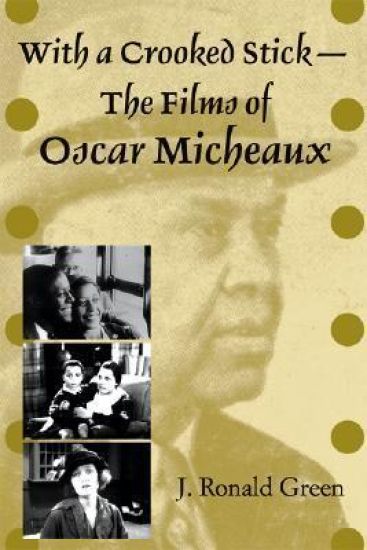
With a Crooked Stick—the Films of Oscar Micheaux
J. Ronald Green
Indiana University Press
2004
pokkari
With a "crooked stick," filmmaker Oscar Micheaux (1884–1951) sought to hit a "straight lick" by stressing the strategic importance of class mobility, or "uplift," for African Americans. A theme in all of his more than 40 feature-length, black-produced, black-directed, black-cast, and black-audience films, uplift would allow for the better things in life: fast cars and fancy clothes, freedom of belief, financial security, and an unencumbered intellectual life. Although racism was an impediment to uplift for Micheaux and other African Americans, race as a category was of a secondary order for him in the larger game of class. In With a Crooked Stick, J. Ronald Green pursues this seeming contradiction in a detailed analysis of each of Micheaux's 15 surviving films. He presents critical commentary on each film's plot and action and its contribution to the overall theme of uplift. Readers will also find this an invaluable guide to the preoccupations and features of Micheaux's remarkable career and the insight it provides into the African American experience of the 1920s and 30s.

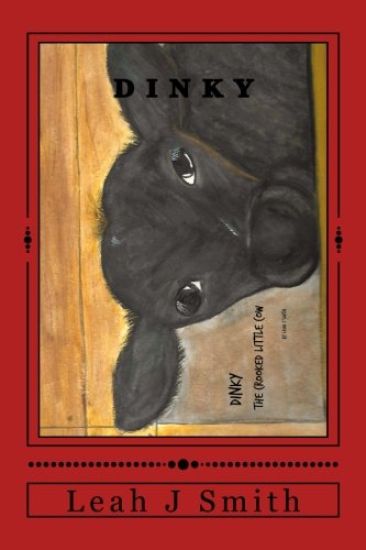
DINKY The Crooked Little Cow is a book based on the lives of Dinky, a special little cow, her best friend, a Canadian Goose named Goosey, and many other farm friends. Dinky is a special little cow for many reasons. She is extra small and her neck and front legs are a little on the crooked side. Come and join Dinky and her many farm friends in their many adventures on the farm.
The Crooked Man by Sir Arthur Conan Doyle, 13 illustrations in full color by J.I.Ludwig.
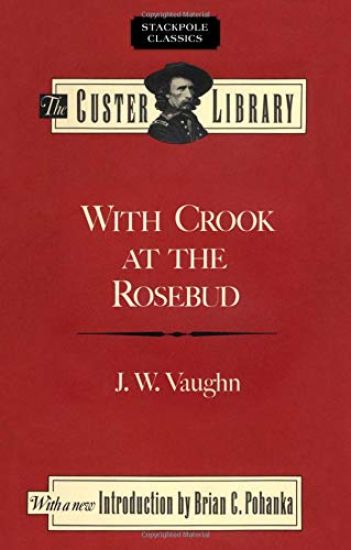
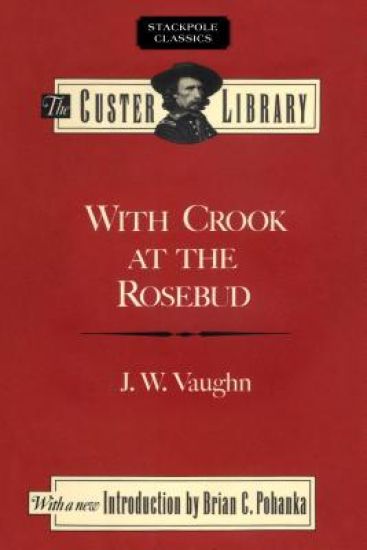
“Crook always maintained that, since his command occupied the field after the battle, he was not defeated at the Rosebud, and that if the battle had gone according to his orders, it would have resulted in a real triumph for his men. This view was also held by his superiors, although they called it a ‘barren victory.’ His part in the campaign was to form a junction with the other advancing columns, combining with them in returning the infractious Sioux to their reservations. His immediate purpose was to find and destroy the village of Crazy Horse. He accomplished none of these objectives. Instead he retired from the scene, permitting the forces of Crazy Horse to concentrate their strength against the troops to the north.” From With Crook at the Rosebud The 1868 Treaty of Fort Laramie gave the Sioux and Cheyenne Indian tribes control over a wide region, covering Montana, Wyoming, Nebraska, and part of the Dakotas. But in the 1870s gold was discovered in the Black Hills, and white settlers invaded Indian territ

An examination of the development of the first American appliance - the cast iron stove. The stove created a quiet but culturally contested transform of domestic life and sparked important debates about women, industrialization, the definition of social class and the consumer economy.