
Kirjahaku
Etsi kirjoja tekijän nimen, kirjan nimen tai ISBN:n perusteella.
1000 tulosta hakusanalla JAMES JOYCE

This book offers the first critical edition of the forty short texts James Joyce called “epiphanies.” Among Joyce’s earliest literary compositions, although published posthumously, the epiphanies are a series of highly polished miniatures, many of which Joyce reused in his later writings. By presenting the epiphanies with background details and thorough annotations, this edition provides a vivid insight into his art.Collected Epiphanies of James Joyce features an introduction to the texts that summarizes Joyce’s concept of epiphany; their biographical and cultural context; their echoes and adaptations in Stephen Hero, Dubliners, A Portrait of the Artist as a Young Man, Ulysses, and Finnegans Wake; and their critical reception and editorial history. Each epiphany is transcribed directly from its original manuscript, accompanied by extensive notes that include more information specific to each piece, as well as textual variants.Styled as prose poems, dramatic sketches, or combinations of the two, the epiphanies can be seen not only as lyrical counterparts to Joyce’s poetry in Chamber Music but also as bridges to the writer’s landmark fiction. This collection demonstrates that the epiphanies offer a paradigm case for studying the development of Joyce’s work as a whole, prompting a reassessment of their literary significance.
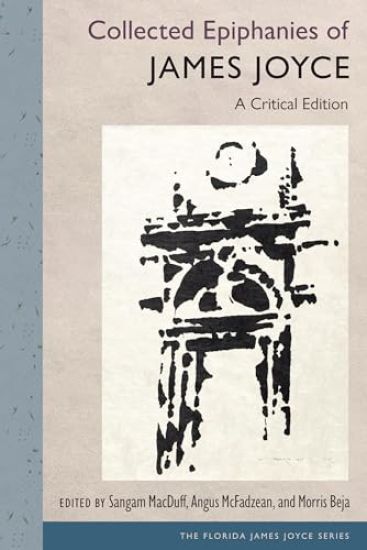
Joyce’s early texts, which informed his later masterpieces, available for the first time in a comprehensive critical edition This book offers the first critical edition of the forty short texts James Joyce called “epiphanies.” Among Joyce’s earliest literary compositions, although published posthumously, the epiphanies are a series of highly polished miniatures, many of which Joyce reused in his later writings. By presenting the epiphanies with background details and thorough annotations, this edition provides a vivid insight into his art.Collected Epiphanies of James Joyce features an introduction to the texts that summarizes Joyce’s concept of epiphany; their biographical and cultural context; their echoes and adaptations in Stephen Hero, Dubliners, A Portrait of the Artist as a Young Man, Ulysses, and Finnegans Wake; and their critical reception and editorial history. Each epiphany is transcribed directly from its original manuscript, accompanied by extensive notes that include more information specific to each piece, as well as textual variants.Styled as prose poems, dramatic sketches, or combinations of the two, the epiphanies can be seen not only as lyrical counterparts to Joyce’s poetry in Chamber Music but also as bridges to the writer’s landmark fiction. This collection demonstrates that the epiphanies offer a paradigm case for studying the development of Joyce’s work as a whole, prompting a reassessment of their literary significance.A volume in the Florida James Joyce Series, edited by Sam Slote
James Joyce
Routledge
2015
sidottu
This volume, first published in 1968, draws attention to the special relationship between Joyce’s life and his writing. The passages are presented in chronological order, with a commentary that pays particular attention to the bibliographical aspects of Joyce’s art. Goldman focuses on three texts; A Portrait of the Artist as a Young Man, Ulysses, and Finnegans Wake. James Joyce will be of interest to students of literature.
James Joyce
Routledge
2017
nidottu
This volume, first published in 1968, draws attention to the special relationship between Joyce’s life and his writing. The passages are presented in chronological order, with a commentary that pays particular attention to the bibliographical aspects of Joyce’s art. Goldman focuses on three texts; A Portrait of the Artist as a Young Man, Ulysses, and Finnegans Wake. James Joyce will be of interest to students of literature.

James Joyce: A Guide to Research, first published in 1982, is a selective annotated bibliography of works by and about James Joyce. It consists of three parts: the primary bibliography – which includes separate bibliographies of Joyce’s major works, of scholarly editions or collections of his works of his letters, and of concordances to his works; the secondary bibliography – which includes bibliographies of bibliographical, biographical, and critical works concerning Joyce generally or his individual works; and major foreign-language studies. This title will be of interest to students of literature.
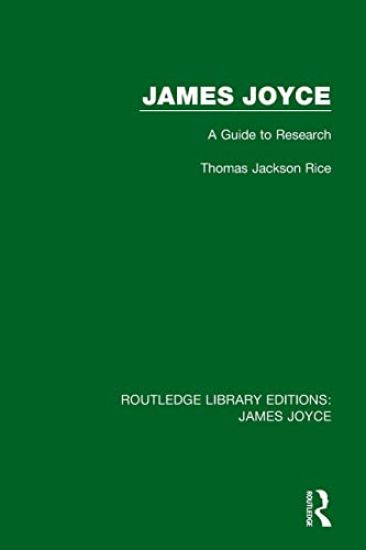
James Joyce: A Guide to Research, first published in 1982, is a selective annotated bibliography of works by and about James Joyce. It consists of three parts: the primary bibliography – which includes separate bibliographies of Joyce’s major works, of scholarly editions or collections of his works of his letters, and of concordances to his works; the secondary bibliography – which includes bibliographies of bibliographical, biographical, and critical works concerning Joyce generally or his individual works; and major foreign-language studies. This title will be of interest to students of literature.
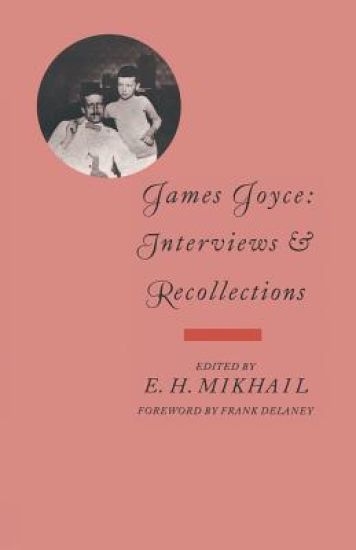
James Joyce
Palgrave Macmillan
1990
nidottu
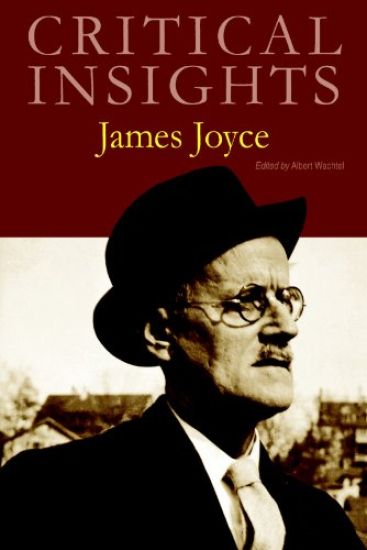
James Joyce
EBSCO Publishing
2013
sidottu
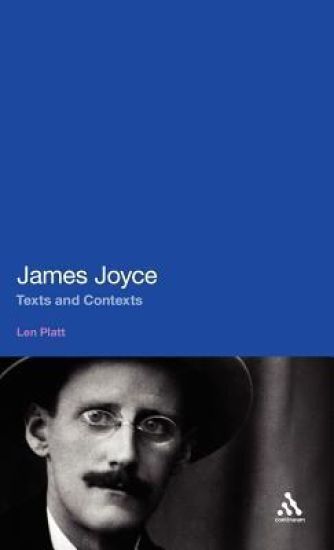
This title introduces the work of James Joyce, the literary, historical and political contexts in which he wrote and his critical reception up to the present day. James Joyce stands at the forefront of modernism - a writer whose work has gained a unique status in modern Western culture. This book offers an introduction to reading and studying Joycean texts and surveys the key contexts - literary, historical, political, philosophical and compositional - which shaped and determined them. By identifying and engaging with Joyce's writing methods and style, the book opens up strategies and approaches for reading his complex texts. It also introduces the critical reception of Joyce and his work, from the early structuralist and 'myth' critics, through deconstruction, to recent developments including historical criticism and genetic criticism.

This title introduces the work of James Joyce, the literary, historical and political contexts in which he wrote and his critical reception up to the present day. James Joyce stands at the forefront of modernism - a writer whose work has gained a unique status in modern Western culture. This book offers an introduction to reading and studying Joycean texts and surveys the key contexts - literary, historical, political, philosophical and compositional - which shaped and determined them. By identifying and engaging with Joyce's writing methods and style, this book opens up strategies and approaches for reading his complex texts. It also introduces the critical reception of Joyce and his work, from the early structuralist and 'myth' critics, through deconstruction, to recent developments including historical criticism and genetic criticism.

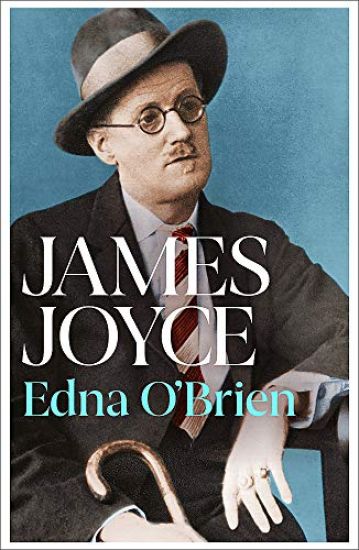
One of Ireland's greatest contemporary writers turns her attention to one of the country's greatest novelists: James Joyce - in celebration of the 100th anniversary of the iconic classic ULYSSES.'As skilful, stylish and pacy as one would expect from so adept a novelist' Sunday Telegraph'A delight from start to finish . . . achieves the near impossibility of giving a thoroughly fresh view of Joyce' Sunday Times'Accessible and passionate, it is a book which should bring Joyce in all his glory and agony to a new and very wide audience' Irish Independent Edna O'Brien depicts James Joyce as a man hammered by Church, State and family, yet from such adversities he wrote works 'to bestir the hearts of men and angels'. The journey begins with Joyce the arrogant youth, his lofty courtship of Nora Barnacle, their hectic sexuality, children, wanderings, debt and profligacy, and Joyce's obsession with the city of Dublin, which he would re-render through his words. Nor does Edna O'Brien spare us the anger and isolation of Joyce's later years, when he felt that the world had turned its back on him, and she asks how could it be otherwise for a man who knew that conflict is the source of all creation.
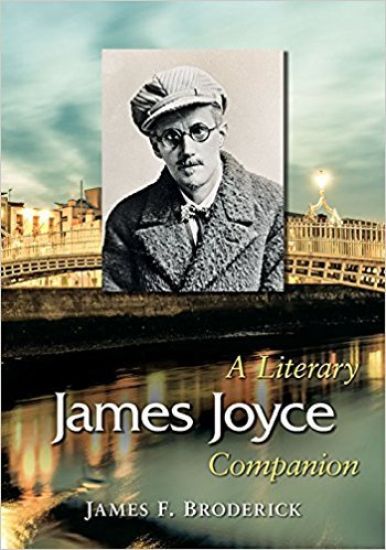
Though he published just a handful of major works in his lifetime, James Joyce (1882-1941) continues to fascinate readers around the world and remains one of the most important literary figures of the 20th century. The complexity of Joyce's style has attracted--and occasionally puzzled--generations of readers who have succumbed to the richness of his literary world. This literary companion guides readers through his four major works--Dubliners, A Portrait of the Artist as a Young Man, Ulysses and Finnegans Wake--with chapter-by-chapter discussions and critical inquiry. An A to Z format covers the works, people, history and context that influenced his writing. Appendices summarize notable Joycean literary criticism and biography, and also discuss significant films based on his work.
This book contains the collected poetry of James Joyce. It includes 'Chamber Music', 'Pomes Penyeach', and 'Ecce Puer'. James Joyce was born in Dublin, Ireland in 1882 and is considered to be one of the most influential writers in the modernist avant-garde of the early 20th century. He published his first short story in 1904 and wrote many poems and novels including A Portrait of the Artist as a Young Man (1914), Ulysses (1922), and Finnegans Wake in 1939. This book is a perfect addition to the bookshelf of those who admire James Joyce and collect his works.
Dubliners .(1917) by: James Joyce. ( collection of 15 short stories ) INCLUDE: A Portrait of the Artist as a Young Man. (1916) NOVEL by: Jam
James Joyce
Createspace Independent Publishing Platform
2016
nidottu
