Tehtaankadun kuiskaaja muistelee.Laaksosta on paljon huikeita tarinoita. Suojelupoliisin päällikkö Seppo Tiitinen on sanonut Laaksolla olleen pitkään paremmat suhteet Neuvostoliiton suurlähetystöön kuin ehkä kenelläkään toisella suomalaisella.Rikostoimittaja Harri Nykänen väitti Seppo Tiitisen pelastaneen kansanedustaja Jaakko Laakson syytteiltä 1980-luvun kohutussa vakoilutapauksessa. Toimittaja Mats Dumell tuomittiin vankilaan.Presidentti Mauno Koivisto nimesi Laakson ”sopulilauman johtajaksi”, joka ohjaili muita toimittajia. Pitkään eduskunnassa vaikuttaneen Laakson väitettiin olevan kulissien ”takapiru”.Kokoomuksen Ilkka Kanerva ja Laakso tunsivat toisensa paremmin kuin hyvin. Kanerva valittiin vaikutusvaltaisen Euroopan turvallisuus- ja yhteistyöjärjestön johtoon. Mikä oli Laakson osuus valinnassa? Entä Venäjän ja Turkin?Jaakon isä palveli palveli Suomen Joutsenella, panssarilaiva Väinämöisellä ja sukeltajista muodostetussa joukko-osastossa. Laakson molemmat vanhemmat olivat punaorpoja. Isoisät kuolivat punavankileirillä.Laakso kertoo nyt oman tarinansa.MUSTAAKSENI-sarjssa muistelevat Suomen yhteiskuntaan vaikuttaneet henkilöt. He paljastavat asioita, joista ovat aiemmin vaienneet ja joista jotkut haluaisivat edelleen vaieta.Jaakko Laakso oli 15 vuotta eduskuntatoimittaja. Ja sen jälkeen 20 vuotta vasemmistoliiton kansanedustaja. Hän oli puolustusvaliokunnan vaikutusvaltainen jäsen vuosina 1991–2011.
Jaakko on just se jätkä -sarjan ensimmäinen osa vie sinut hulvattomalle matkalle Jaakon maailmaan. Jaakko on kaveri, joka tekee kaiken omalla tavallaan - usein väärin, tyhmästi, kielletysti, ärsyttävästi ja täysin nurinkurisesti. Jaakko on se tyyppi, joka yrittää korjata vuotavaa hanaa ja päätyy tulvivaan keittiöön. Hän on se kaveri, joka yrittää tehdä vaikutuksen (tai sitten ei) ja päätyy vain aiheuttamaan kaaosta. Meidän kaikkien elämässä on Jaakko - ehkä hän kulkee eri nimellä, mutta tunnistat hänet varmasti. "jaakko1" on muuten Jaakon salasana. Joka paikkaan.
Observera att förlaget som ger ut denna produkt baserar innehållet i sina produkter på fria källor som Wikipedia. Boken är med stor sannolikhet endast ett utdrag ur dessa informationskällor, alltså inte en vanlig bok i den bemärkelsen.
Isäni Jaakko Linjama - säveltäjänä suurperheessä kertoo maalaisopettajasta, joka nousi kuuluisuuteen voitettuaan Helsingin olympiakisojen 1952 olympiahymnin sävellyskilpailun. Lähes 70 osallistujan joukossa oli myös Linjaman opettaja, Aarre Merikanto, joka oppilaansa voitosta kuullessaan tokaisi: "Ai, se suurperheinen Muuramelta." Jaakko Linjaman (1909-83) elämäkerta ilmestyy hänen syntymänsä satavuotisjuhlan johdosta. Kirja kertoo työläisperheen pojan kehityksen kirjapaino-oppilaasta kansakoulunopettajaksi ja monivuotisten opiskelujen jälkeen säveltäjäksi. Intohimoa säveltämiseen ei vähentänyt sekään, että perheeseen syntyi kaksitoista lasta, joiden elättämiseksi isän oli pakko pitää kolme virkaa. Jaakko Linjaman tuotantoon kuuluu laajamittaisten kuorolle, sooloille ja orkesterille sävellettyjen teosten lisäksi runsaasti kuorolauluja ja urkumusiikkia. Olympiahymnikilpailun lisäksi hän voitti myöhemmin useita sävellyskilpailuja. Jaakko Linjaman elämäntarinan kirjoittaja, lehtori Pirkko Randell, on perheen vanhin tytär.
Miten Laila Kinnunen ja Kirka oppivat laulamaan suomeksi? Kuka johdatti Olavi Virran ja Juha Vainion takaisin parrasvaloihin? Miksi Spede-elokuvien musiikki toimii niin hyvin? Jaakko Salo (1930-2002) oli suomalaisen musiikin pitkäaikainen vaikuttaja. Salo toi sovituksillaan Suomi-iskelmään kansainvälisen tuulahduksen 1950-luvun lopulla. Seuraavina vuosikymmeninä hän uudisti tangoa ja luotsasi tuottajana pop-artisteja tähteyteen. Salo kunnostautui myös elokuva-, televisio- ja näyttämömusiikin tekijänä. Musiikki: Jaakko Salo kertoo, miten määrätietoinen herrasmies koulutti laulajatähtiä legendaaristen levy-yhtiöiden Scandian ja Fazerin leivissä. Studiotekniikasta otettiin pienellä budjetilla kaikki irti. Käännöshitit kuulostivat paremmilta kuin ulkomaiset alkuperäisesitykset. Teos tuo esille tuottajan ja sovittajan keskeisen roolin musiikkituotannossa. Samalla kirja avaa uusia näkökulmia aikakauteen, jolloin suomalainen populaarimusiikki ja viihde etsivät tuoreita toimintatapoja. Musiikintutkija ja tietokirjailija Juha Henriksson on kirjoittanut aiemmin teokset Toivo Kärjestä, Erik Lindströmistä ja Rauno Lehtisestä.
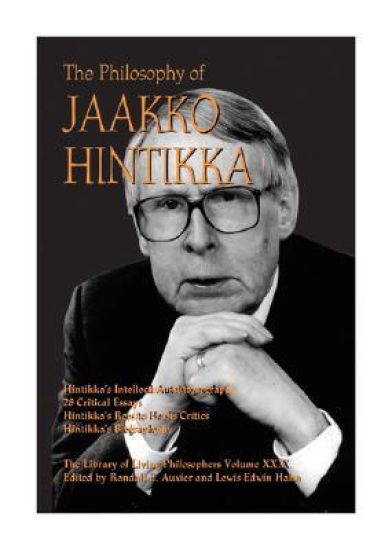
"Addresses Dr. Jaakko Hintikka's work in game-theoretical semantics, philosophy of language, theoretical linguistics, cognitive science, logic, and related fields. Includes twenty-seven critical and descriptive essays by scholars, Hintikka's reply to each essay, his intellectual autobiography, and a bibliography of Hintikka's publications"--Provided by publisher.
One of the world’s most influential logicians, Jaakko Hintikka is a leading figure on the international philosophical scene. Here, he responds to his critics. The 27 critical and descriptive essays in this book, written by important scholars from a variety of fields, challenge Hintikka’s innovations in philosophy, logic, and linguistics. His replies, and the essays themselves, all previously unpublished, form a lively, provocative exchange of ideas. Also included is an intellectual autobiography and a complete bibliography of Hintikka's writings.
Jaakko Hintikka was born on January 12th, 1929. He received his doctorate from the University of Helsinki under the supervision of Professor G. H. von Wright at the age of 24 in 1953. Hintikka was appointed Professor of philosophy at the University of Helsinki in 1959. Since the late 50s, he has shared his time between Finland and the U.S.A. He was appointed Professor of philosophy at Stanford University in 1964. As from 1970 Hintikka has been permanent research professor of the Academy of Finland. He has published 13 books and about 200 articles, not to mention the various editorial and organizational activities he has played an active role in. The present collection of essays has been edited to honour Jaakko Hintikka on the occasion of his fiftieth birthday. By dedicating a Festschrift to Jaakko Hintikka, the contributors wish to pay homage to this remarkable man whom they see not only as a scholar of prodigious energy and insight, but as a friend, colleague and former teacher. The contributors hope the essays collected here will bring pleasure to the man they are intended to honour. All of the essays touch upon topics Hintikka has taken an direct or indirect interest in, ranging from technical problems of mathematical logic and applications of formal methods through philosophical logic, philosophy of language, epistemology and history of philosophy to philosophical aesthetics.
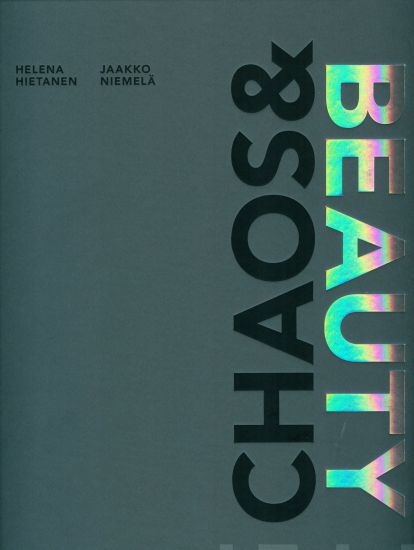
Suomen Taideyhdistys esittää kutsunäyttelyssään retrospektiivisen otoksen kuvataiteilijapari Helena Hietasen ja Jaakko Niemelän töitä viimeisten 18 vuoden ajalta. Hietanen ja Niemelä veistävät teoksensa valolla, materiaalilla, jota molemmat käyttävät aina kohteen ehdoilla.Näyttelyn yhteydessä julkaistaan kirja Helena Hietanen & Jaakko Niemelä: Chaos & Beauty. Kirjan on toimittanut Suomen Taideyhdistyksen näyttelysihteeri Pirkko Tuukkanen. Teksteistä vastaavat vapaa kirjoittaja Hannele Jäämeri sekä kuvataiteilija, kuvataiteen tohtori Petri Kaverma. Kirjan on taittanut Ilona Ilottu, Dog Design. Julkaisu on kolmikielinen; suomi-ruotsi-englanti.
This book is one of the first to apply engineering science and technology to biological cells and tissues that are electrically conducting and excitable. It describes the theory and a wide range of applications in both electric and magnetic fields. The similarities and differences between bioelectricity and biomagnetism are described in detail from the viewpoint of lead field theory. This book will enable readers to understand the properties of existing bioelectric and biomagnetic measurements and stimulation methods, and to design new systems. It includes carefully drawn illustrations and 500 references, and can be used as a textbook and as a reference.
Fundamentals of Nonlinear Digital Filtering is the first book of its kind, presenting and evaluating current methods and applications in nonlinear digital filtering. Written for professors, researchers, and application engineers, as well as for serious students of signal processing, this is the only book available that functions as both a reference handbook and a textbook. Solid introductory material, balanced coverage of theoretical and practical aspects, and dozens of examples provide you with a self-contained, comprehensive information source on nonlinear filtering and its applications.
Switching theory and logic design provide mathematical foundations and tools for digital system design that is an essential part in the research and development in almost all areas of modern technology. The vast complexity of modern digital systems implies that they can only be handled by computer aided design tools that are built on sophisticated mathematical models. Fundamentals of Switching Theory and Logic Design is aimed at providing an accessible introduction to these mathematical techniques that underlie the design tools and that are necessary for understanding their capabilities and limitations. As is typical to many disciplines a high level of abstraction enables a unified treatment of many methodologies and techniques as well as provides a deep understanding of the subject in general. The drawback is that without a hands-on touch on the details it is difficult to develop an intuitive understanding of the techniques. We try to combine these views by providing hands-on examples on the techniques while binding these to the more general theory that is developed in parallel. For instance, the use of vector spaces and group theory unifies the spectral (Fourier-like) interpretation of polynomial, and graphic (decision diagrams) representations of logic functions, as well as provides new methods for optimization of logic functions. Consequently, Fundamentals of Switching Theory and Logic Design discusses the fundamentals of switching theory and logic design from a slightly alternative point of view and also presents links between switching theory and related areas of signal processing and system theory. It also covers the core topics recommended in IEEE/ACM curricula for teaching and study in this area. Further, it contains several elective sections discussing topics for further research work in this area
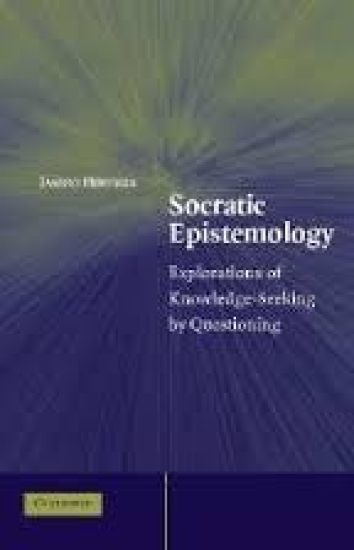
Most current work in epistemology deals with the evaluation and justification of information already acquired. In this book, Jaakko Hintikka instead discusses the more important problem of how knowledge is acquired in the first place. His model of information-seeking is the old Socratic method of questioning, which has been generalized and brought up-to-date through the logical theory of questions and answers that he has developed. Hintikka also argues that philosophers' quest for a definition of knowledge is ill-conceived and that the entire notion of knowledge should be replaced by the concept of information. He offers an analysis of the different meanings of the concept of information and of their interrelations. The result is a new and illuminating approach to the field of epistemology.
This book, written by one of philosophy’s pre-eminent logicians, argues that many of the basic assumptions common to logic, philosophy of mathematics and metaphysics are in need of change. It is therefore a book of critical importance to logical theory. Jaakko Hintikka proposes a new basic first-order logic and uses it to explore the foundations of mathematics. This new logic enables logicians to express on the first-order level such concepts as equicardinality, infinity, and truth in the same language. The famous impossibility results by Gödel and Tarski that have dominated the field for the last sixty years turn out to be much less significant than has been thought. All of ordinary mathematics can in principle be done on this first-order level, thus dispensing with the existence of sets and other higher-order entities.
Most current work in epistemology deals with the evaluation and justification of information already acquired. In this book, Jaakko Hintikka instead discusses the more important problem of how knowledge is acquired in the first place. His model of information-seeking is the old Socratic method of questioning, which has been generalized and brought up-to-date through the logical theory of questions and answers that he has developed. Hintikka also argues that philosophers' quest for a definition of knowledge is ill-conceived and that the entire notion of knowledge should be replaced by the concept of information. He offers an analysis of the different meanings of the concept of information and of their interrelations. The result is a new and illuminating approach to the field of epistemology.
somewhat like Henkin's nonstandard interpretation of higher-order logics, while the right semantics [or logical modalities is an analogue to the standard of type theory in Henkin's sense. interpretation Another possibility would be to follow W.V. Quine's advice to give up logi- cal modalities as being beyond repair. Or we could also try to develop a logic of conceptual possibility, restricting the range of our "possible worlds" to those compatible with the transcendental presuppositions of our own conceptual sys- tem. This looks in fact like one of the most interesting possible theories I have dreamt of developing but undoubtedly never will. Its kinship with Kant's way of thinking should be obvious. Besides putting the entire enterprise of possible-worlds semantics into a perspective, we can also see that the actual history of possible-worlds seman- tics is more complicated than it might first appear to be. For the standard in- terpretation of modal logics has reared its beautiful head repeatedly in the writings of Stig Kanger, Richard Montague the pre-Montague-semantics theorist, and Nino Cocchiarella.