One of the world’s most influential logicians, Jaakko Hintikka is a leading figure on the international philosophical scene. Here, he responds to his critics. The 27 critical and descriptive essays in this book, written by important scholars from a variety of fields, challenge Hintikka’s innovations in philosophy, logic, and linguistics. His replies, and the essays themselves, all previously unpublished, form a lively, provocative exchange of ideas. Also included is an intellectual autobiography and a complete bibliography of Hintikka's writings.
Jaakko Hintikka was born on January 12th, 1929. He received his doctorate from the University of Helsinki under the supervision of Professor G. H. von Wright at the age of 24 in 1953. Hintikka was appointed Professor of philosophy at the University of Helsinki in 1959. Since the late 50s, he has shared his time between Finland and the U.S.A. He was appointed Professor of philosophy at Stanford University in 1964. As from 1970 Hintikka has been permanent research professor of the Academy of Finland. He has published 13 books and about 200 articles, not to mention the various editorial and organizational activities he has played an active role in. The present collection of essays has been edited to honour Jaakko Hintikka on the occasion of his fiftieth birthday. By dedicating a Festschrift to Jaakko Hintikka, the contributors wish to pay homage to this remarkable man whom they see not only as a scholar of prodigious energy and insight, but as a friend, colleague and former teacher. The contributors hope the essays collected here will bring pleasure to the man they are intended to honour. All of the essays touch upon topics Hintikka has taken an direct or indirect interest in, ranging from technical problems of mathematical logic and applications of formal methods through philosophical logic, philosophy of language, epistemology and history of philosophy to philosophical aesthetics.
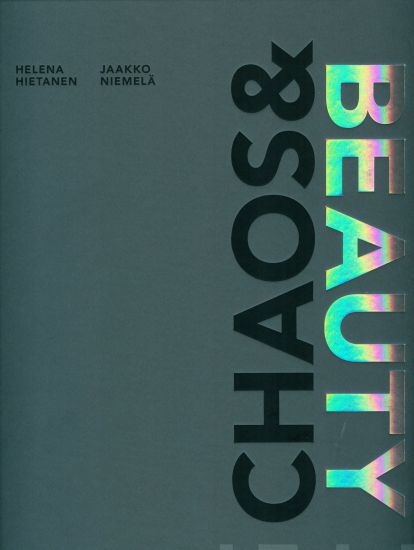
Suomen Taideyhdistys esittää kutsunäyttelyssään retrospektiivisen otoksen kuvataiteilijapari Helena Hietasen ja Jaakko Niemelän töitä viimeisten 18 vuoden ajalta. Hietanen ja Niemelä veistävät teoksensa valolla, materiaalilla, jota molemmat käyttävät aina kohteen ehdoilla.Näyttelyn yhteydessä julkaistaan kirja Helena Hietanen & Jaakko Niemelä: Chaos & Beauty. Kirjan on toimittanut Suomen Taideyhdistyksen näyttelysihteeri Pirkko Tuukkanen. Teksteistä vastaavat vapaa kirjoittaja Hannele Jäämeri sekä kuvataiteilija, kuvataiteen tohtori Petri Kaverma. Kirjan on taittanut Ilona Ilottu, Dog Design. Julkaisu on kolmikielinen; suomi-ruotsi-englanti.
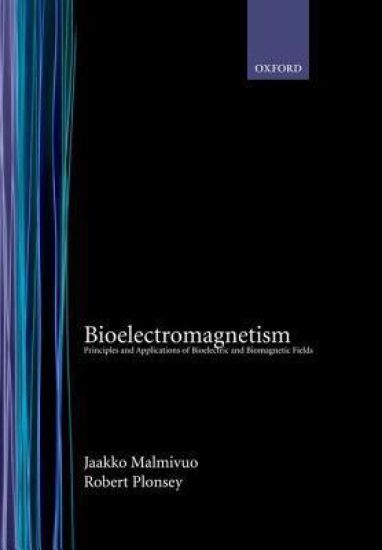
This book is one of the first to apply engineering science and technology to biological cells and tissues that are electrically conducting and excitable. It describes the theory and a wide range of applications in both electric and magnetic fields. The similarities and differences between bioelectricity and biomagnetism are described in detail from the viewpoint of lead field theory. This book will enable readers to understand the properties of existing bioelectric and biomagnetic measurements and stimulation methods, and to design new systems. It includes carefully drawn illustrations and 500 references, and can be used as a textbook and as a reference.
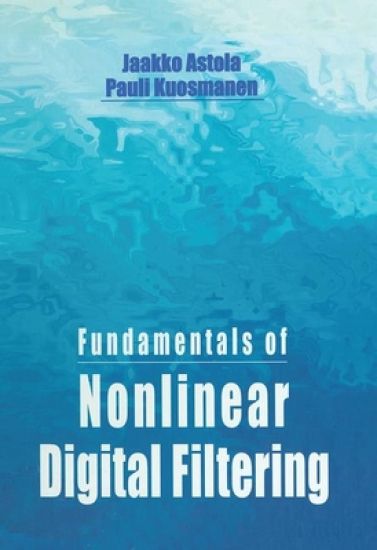
Fundamentals of Nonlinear Digital Filtering is the first book of its kind, presenting and evaluating current methods and applications in nonlinear digital filtering. Written for professors, researchers, and application engineers, as well as for serious students of signal processing, this is the only book available that functions as both a reference handbook and a textbook. Solid introductory material, balanced coverage of theoretical and practical aspects, and dozens of examples provide you with a self-contained, comprehensive information source on nonlinear filtering and its applications.
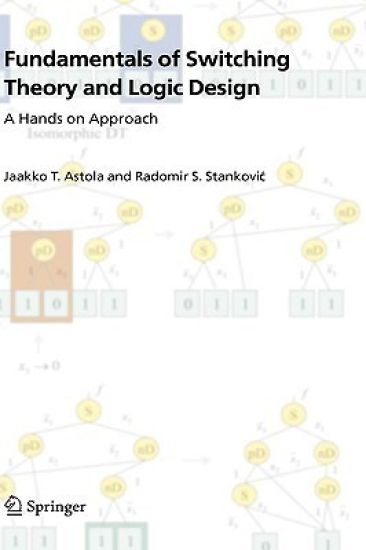
Switching theory and logic design provide mathematical foundations and tools for digital system design that is an essential part in the research and development in almost all areas of modern technology. The vast complexity of modern digital systems implies that they can only be handled by computer aided design tools that are built on sophisticated mathematical models. Fundamentals of Switching Theory and Logic Design is aimed at providing an accessible introduction to these mathematical techniques that underlie the design tools and that are necessary for understanding their capabilities and limitations. As is typical to many disciplines a high level of abstraction enables a unified treatment of many methodologies and techniques as well as provides a deep understanding of the subject in general. The drawback is that without a hands-on touch on the details it is difficult to develop an intuitive understanding of the techniques. We try to combine these views by providing hands-on examples on the techniques while binding these to the more general theory that is developed in parallel. For instance, the use of vector spaces and group theory unifies the spectral (Fourier-like) interpretation of polynomial, and graphic (decision diagrams) representations of logic functions, as well as provides new methods for optimization of logic functions. Consequently, Fundamentals of Switching Theory and Logic Design discusses the fundamentals of switching theory and logic design from a slightly alternative point of view and also presents links between switching theory and related areas of signal processing and system theory. It also covers the core topics recommended in IEEE/ACM curricula for teaching and study in this area. Further, it contains several elective sections discussing topics for further research work in this area
Most current work in epistemology deals with the evaluation and justification of information already acquired. In this book, Jaakko Hintikka instead discusses the more important problem of how knowledge is acquired in the first place. His model of information-seeking is the old Socratic method of questioning, which has been generalized and brought up-to-date through the logical theory of questions and answers that he has developed. Hintikka also argues that philosophers' quest for a definition of knowledge is ill-conceived and that the entire notion of knowledge should be replaced by the concept of information. He offers an analysis of the different meanings of the concept of information and of their interrelations. The result is a new and illuminating approach to the field of epistemology.
This book, written by one of philosophy’s pre-eminent logicians, argues that many of the basic assumptions common to logic, philosophy of mathematics and metaphysics are in need of change. It is therefore a book of critical importance to logical theory. Jaakko Hintikka proposes a new basic first-order logic and uses it to explore the foundations of mathematics. This new logic enables logicians to express on the first-order level such concepts as equicardinality, infinity, and truth in the same language. The famous impossibility results by Gödel and Tarski that have dominated the field for the last sixty years turn out to be much less significant than has been thought. All of ordinary mathematics can in principle be done on this first-order level, thus dispensing with the existence of sets and other higher-order entities.
Most current work in epistemology deals with the evaluation and justification of information already acquired. In this book, Jaakko Hintikka instead discusses the more important problem of how knowledge is acquired in the first place. His model of information-seeking is the old Socratic method of questioning, which has been generalized and brought up-to-date through the logical theory of questions and answers that he has developed. Hintikka also argues that philosophers' quest for a definition of knowledge is ill-conceived and that the entire notion of knowledge should be replaced by the concept of information. He offers an analysis of the different meanings of the concept of information and of their interrelations. The result is a new and illuminating approach to the field of epistemology.
somewhat like Henkin's nonstandard interpretation of higher-order logics, while the right semantics [or logical modalities is an analogue to the standard of type theory in Henkin's sense. interpretation Another possibility would be to follow W.V. Quine's advice to give up logi- cal modalities as being beyond repair. Or we could also try to develop a logic of conceptual possibility, restricting the range of our "possible worlds" to those compatible with the transcendental presuppositions of our own conceptual sys- tem. This looks in fact like one of the most interesting possible theories I have dreamt of developing but undoubtedly never will. Its kinship with Kant's way of thinking should be obvious. Besides putting the entire enterprise of possible-worlds semantics into a perspective, we can also see that the actual history of possible-worlds seman- tics is more complicated than it might first appear to be. For the standard in- terpretation of modal logics has reared its beautiful head repeatedly in the writings of Stig Kanger, Richard Montague the pre-Montague-semantics theorist, and Nino Cocchiarella.
somewhat like Henkin's nonstandard interpretation of higher-order logics, while the right semantics [or logical modalities is an analogue to the standard of type theory in Henkin's sense. interpretation Another possibility would be to follow W.V. Quine's advice to give up logi- cal modalities as being beyond repair. Or we could also try to develop a logic of conceptual possibility, restricting the range of our "possible worlds" to those compatible with the transcendental presuppositions of our own conceptual sys- tem. This looks in fact like one of the most interesting possible theories I have dreamt of developing but undoubtedly never will. Its kinship with Kant's way of thinking should be obvious. Besides putting the entire enterprise of possible-worlds semantics into a perspective, we can also see that the actual history of possible-worlds seman- tics is more complicated than it might first appear to be. For the standard in- terpretation of modal logics has reared its beautiful head repeatedly in the writings of Stig Kanger, Richard Montague the pre-Montague-semantics theorist, and Nino Cocchiarella.
IF WITI'GENSTEIN COULD TALK, COULD WE UNDERSTAND HIM? Perusing the secondary literature on Wittgenstein, I have frequently experienced a perfect Brechtean Entfremdungseffekt. This is interesting, I have felt like saying when reading books and papers on Wittgenstein, but who is the writer talking about? Certainly not Ludwig Wittgenstein the actual person who wrote his books and notebooks and whom I happened to meet. Why is there this strange gap between the ideas of the actual philosopher and the musings of his interpreters? Wittgenstein is talking to us through the posthumous publication of his writings. Why don't philosophers understand what he is saying? A partial reason is outlined in the first essay of this volume. Wittgenstein was far too impatient to explain in his books and book drafts what his problems were, what it was that he was trying to get clear about. He was even too impatient to explain in full his earlier solutions, often merely referring to them casually as it were ina shorthand notation. For one important instance, in The Brown Book, Wittgenstein had explained in some detail what name-object relationships amount to in his view. There he offers both an explanation of what his problem is and an account of his own view illustrated by means of specific examples of language-games. But when he raises the same question again in Philosophical Investigations I, sec.
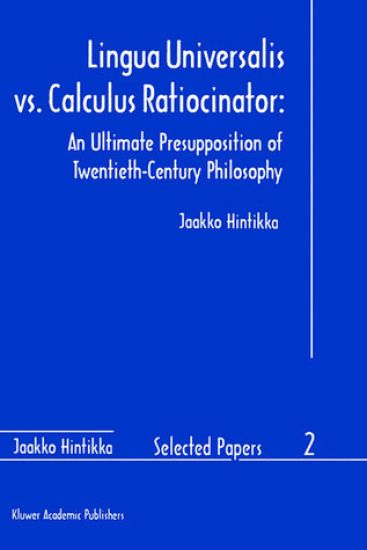
R. G. Collingwood saw one of the main tasks of philosophers and of historians of human thought in uncovering what he called the ultimate presuppositions of different thinkers, of different philosophical movements and of entire eras of intellectual history. He also noted that such ultimate presuppositions usually remain tacit at first, and are discovered only by subsequent reflection. Collingwood would have been delighted by the contrast that constitutes the overall theme of the essays collected in this volume. Not only has this dichotomy ofviews been one ofthe mostcrucial watersheds in the entire twentieth-century philosophical thought. Not only has it remained largely implicit in the writings of the philosophers for whom it mattered most. It is a truly Collingwoodian presupposition also in that it is not apremise assumed by different thinkers in their argumentation. It is the presupposition of a question, an assumption to the effect that a certain general question can be raised and answered. Its role is not belied by the fact that several philosophers who answered it one way or the other seem to be largely unaware that the other answer also makes sense - if it does. This Collingwoodian question can be formulated in a first rough approximation by asking whether language - our actual working language, Tarski's "colloquiallanguage" - is universal in the sense of being inescapable. This formulation needs all sorts of explanations, however.
IF WITI'GENSTEIN COULD TALK, COULD WE UNDERSTAND HIM? Perusing the secondary literature on Wittgenstein, I have frequently experienced a perfect Brechtean Entfremdungseffekt. This is interesting, I have felt like saying when reading books and papers on Wittgenstein, but who is the writer talking about? Certainly not Ludwig Wittgenstein the actual person who wrote his books and notebooks and whom I happened to meet. Why is there this strange gap between the ideas of the actual philosopher and the musings of his interpreters? Wittgenstein is talking to us through the posthumous publication of his writings. Why don't philosophers understand what he is saying? A partial reason is outlined in the first essay of this volume. Wittgenstein was far too impatient to explain in his books and book drafts what his problems were, what it was that he was trying to get clear about. He was even too impatient to explain in full his earlier solutions, often merely referring to them casually as it were ina shorthand notation. For one important instance, in The Brown Book, Wittgenstein had explained in some detail what name-object relationships amount to in his view. There he offers both an explanation of what his problem is and an account of his own view illustrated by means of specific examples of language-games. But when he raises the same question again in Philosophical Investigations I, sec.
One can distinguish, roughly speaking, two different approaches to the philosophy of mathematics. On the one hand, some philosophers (and some mathematicians) take the nature and the results of mathematicians' activities as given, and go on to ask what philosophical morals one might perhaps find in their story. On the other hand, some philosophers, logicians and mathematicians have tried or are trying to subject the very concepts which mathematicians are using in their work to critical scrutiny. In practice this usually means scrutinizing the logical and linguistic tools mathematicians wield. Such scrutiny can scarcely help relying on philosophical ideas and principles. In other words it can scarcely help being literally a study of language, truth and logic in mathematics, albeit not necessarily in the spirit of AJ. Ayer. As its title indicates, the essays included in the present volume represent the latter approach. In most of them one of the fundamental concepts in the foundations of mathematics and logic is subjected to a scrutiny from a largely novel point of view. Typically, it turns out that the concept in question is in need of a revision or reconsideration or at least can be given a new twist. The results of such a re-examination are not primarily critical, however, but typically open up new constructive possibilities. The consequences of such deconstructions and reconstructions are often quite sweeping, and are explored in the same paper or in others.
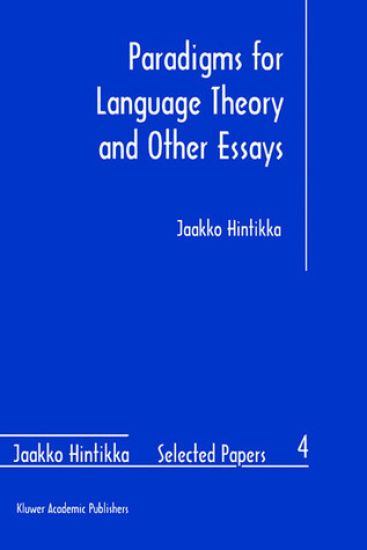
Several of the basic ideas of current language theory are subjected to critical scrutiny and found wanting, including the concept of scope, the hegemony of generative syntax, the Frege-Russell claim that verbs like `is' are ambiguous, and the assumptions underlying the so-called New Theory of Reference. In their stead, new constructive ideas are proposed.