

Kirjahaku
Etsi kirjoja tekijän nimen, kirjan nimen tai ISBN:n perusteella.
1000 tulosta hakusanalla James C. Rodkey


Dr. James C. Cox's Exchange List of Land and Marine Shells
James Charles Cox
Hansebooks
2017
pokkari

Sir James Ewing; a Biography of Sir James C.R. Ewing
Robert E. (Robert Elliott) 18 Speer
Hassell Street Press
2021
nidottu

The Poems of the Late James C. Doolittle
Antigonos Verlag
2025
sidottu

Cowley, C: Reminiscences of James C. Ayer and the town of Ay
Antigonos Verlag
2024
nidottu

Cowley, C: Reminiscences of James C. Ayer and the town of Ay
Antigonos Verlag
2024
sidottu
Aquilla Redditt, James Williford Redditt, and Mildred Ion Redditt, Non Compos Mentis, Etc., et al., Petitioners, V. James C. Hale, Individually, Etc., et al. U.S. Supreme Court Transcript of Record with Supporting Pleadings
Thomas F Turley; Joe C Barrett
Gale, U.S. Supreme Court Records
2011
pokkari
Nominations of Hon. James C. Miller, III, Stephen Crawford, D. Michael Bennett, and Victoria Reggie Kennedy to be Governors, U.S. Postal Service
United States Senate; Committee on Homeland Secu Governmental; United States Congress
Createspace Independent Publishing Platform
2017
nidottu
Nominations of Hon. James C. Miller, III, Stephen Crawford, D. Michael Bennett, and Victoria Reggie Kennedy to be Governors, U.S. Postal Service: hearing before the Committee on Homeland Security and Governmental Affairs, United States Senate, One Hundred Thirteenth Congress, second session: nominations of Hon. James C. Miller, III, Stephen Crawford, D. Michael Bennett, and Victoria Reggie
Original "circle" Chart of Lieut. James C. Cresap, U.S.N. Dated 1894, Reproduced in 1932 by the Cresap Society ... Prep. by Mrs. S.W. Holladay and Lie
Georgiana Catherine Ord 18 Holladay
Hassell Street Press
2021
nidottu

Preaching the Psalms / J. Clinton Mccann, Jr. & James C. Howell.
J.Clinton McCann
Abingdon Press
2001
pokkari
This book is designed to help preachers find and use the riches of the Psalms for preaching. The authors address the perception that the Psalms often go neglected in preparing for one of the central acts of worship: preaching. McCann and Howell demonstrate that the Psalms offer the preacher broad, rich possibilities for the congregation s engagement with the Scripture. Each chapter concludes with a brief sample."

Zoology Of The Voyage Of H.m.s. Erebus And Terror, Under The Command Of Sir James C. Ross, 1839-43
John Edward Gray
Hutson Street Press
2025
sidottu
Zoology Of The Voyage Of H.m.s. Erebus And Terror, Under The Command Of Sir James C. Ross, 1839-43
John Edward Gray
Hutson Street Press
2025
pokkari
The Life, Speeches, Labors and Essays of William H. Sylvis, Late President of the Iron-Moulders' international Union; and Also of the National Labor Union. by His Brother James C. Sylvis.
William H Sylvis
University of Michigan Library
2006
pokkari

In 1896 William James published an essay entitled The Will to Believe, in which he defended the legitimacy of religious faith against the attacks of such champions of scientific method as W.K. Clifford and Thomas Huxley. James's work quickly became one of the most important writings in the philosophy of religious belief. James Wernham analyses James's arguments, discusses his relation to Pascal and Renouvier, and considers the interpretations, and misinterpretations, of James's major critics. Wernham shows convincingly that James was unaware of many destructive ambiguitities in his own doctrines and arguments, although clear and consistent in his view that our obligation to believe in theism is not a moral but a prudential obligation -- a foolish-not-to-believe doctrine, rather than a not-immoral-to-believe one. Wernham also shows that the doctrine is best read as affirming the wisdom of gambling that God exists, a notion which James failed to distinguish from believing and which, among other things, he explicitly identified with faith. James's pragmatism, a theory concerning the meaning of truth, is shown to be quite distinct from the doctrine of The Will to Believe. In concentrating on a careful analysis of this doctrine of the will-to-believe, Wernham not only makes a major contribution to understanding James's philosophy, but also clarifies issues in the philosophy of religion and in the analysis of belief and faith.

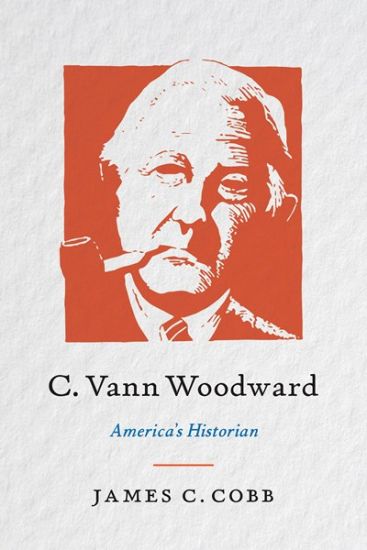
With an epic career that spanned two-thirds of the twentieth century, C. Vann Woodward (1908–1999) was a historian of singular importance. A brilliant writer, his work captivated both academic and public audiences. He also figured prominently in the major intellectual conflicts between left and right during the last half of the twentieth century, although his unwavering commitment to free speech and racial integration that affirmed his liberalism in the 1950s struck some as emblematic of his growing conservatism by the 1990s. Woodward's vision still permeates our understandings of the American South and of the history of race relations in the United States. Indeed, as this fresh and revealing biography shows, he displayed a rare genius and enthusiasm for crafting lessons from the past that seemed directly applicable to the concerns of the present—a practice that more than once cast doubt on his scholarship.James C. Cobb offers many original insights into Woodward's early years and private life, his long career, and his almost mythic public persona. In a time where the study and substance of American history are profoundly contested, Woodward's career is replete with lessons in how myths about the past, some created by historians themselves, come to be enshrined as historical truth.
The House of James - ExPat
James C. Logsdon
Createspace Independent Publishing Platform
2014
nidottu
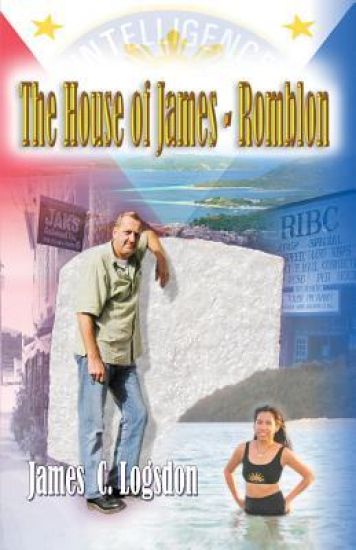
The House of James - Romblon
James C. Logsdon
Createspace Independent Publishing Platform
2015
nidottu