Kirjojen hintavertailu. Mukana 11 627 463 kirjaa ja 12 kauppaa.

Kirjahaku

Etsi kirjoja tekijän nimen, kirjan nimen tai ISBN:n perusteella.

1000 tulosta hakusanalla James Elkins

The Poetics of Perspective

The Poetics of Perspective

James Elkins

Cornell University Press
1996
pokkari
Perspective has been a divided subject, orphaned among various disciplines from philosophy to gardening. In the first book to bring together recent thinking on perspective from such fields as art history, literary theory, aesthetics, psychology, and the history of mathematics, James Elkins leads us to a new understanding of how we talk about pictures. Elkins provides an abundantly illustrated history of the theory and practice of perspective. Looking at key texts from the Renaissance to the present, he traces a fundamental historical change that took place in the way in which perspective was conceptualized; first a technique for constructing pictures, it slowly became a metaphor for subjectivity. That gradual transformation, he observes, has led to the rifts that today separate those who understand perspective as a historical or formal property of pictures from those who see it as a linguistic, cognitive, or epistemological metaphor. Elkins considers how the principal concepts of perspective have been rewritten in work by Erwin Panofsky, Hubert Damisch, Martin Jay, Paul Ricoeur, Jacques Lacan, Maurice Merleau-Ponty, and E. H. Gombrich. The Poetics of Perspective illustrates that perspective is an unusual kind of subject: it exists as a coherent idea, but no one discipline offers an adequate exposition of it. Rather than presenting perspective as a resonant metaphor for subjectivity, a painter's tool without meaning, a disused historical practice, or a model for vision and representation, Elkins proposes a comprehensive revaluation. The perspective he describes is at once a series of specific pictorial decisions and a powerful figure for our knowledge of the world.
The Domain of Images

The Domain of Images

James Elkins

Cornell University Press
2001
pokkari
In the domain of visual images, those of fine art form a tiny minority. This original and brilliant book calls upon art historians to look beyond their traditional subjects—painting, drawing, photography, and printmaking—to the vast array of "nonart" images, including those from science, technology, commerce, medicine, music, and archaeology. Such images, James Elkins asserts, can be as rich and expressive as any canonical painting. Using scores of illustrations as examples, he proposes a radically new way of thinking about visual analysis, one that relies on an object's own internal sense of organization.Elkins begins by demonstrating the arbitrariness of current criteria used by art historians for selecting images for study. He urges scholars to adopt, instead, the far broader criteria of the young field of image studies. After analyzing the philosophic underpinnings of this interdisciplinary field, he surveys the entire range of images, from calligraphy to mathematical graphs and abstract painting. Throughout, Elkins blends philosophic analysis with historical detail to produce a startling new sense of such basic terms as pictures, writing, and notation.
Six Stories from the End of Representation

Six Stories from the End of Representation

James Elkins

Stanford University Press
2008
sidottu
James Elkins has shaped the discussion about how we—as artists, as art historians, or as outsiders—view art. He has not only revolutionized our thinking about the purpose of teaching art, but has also blazed trails in creating a means of communication between scientists, artists, and humanities scholars. In Six Stories from the End of Representation, Elkins weaves stories about recent images from painting, photography, physics, astrophysics, and microscopy. These images, regardless of origin, all fail as representations: they are blurry, dark, pixellated, or otherwise unclear. In these opaque images, Elkins finds an opportunity to create stories that speak simultaneously to artists and to scientists, and to open both those fields to those of us who have little purchase in either. Regarding each image through the lens of the discipline that produced it, Elkins simultaneously affirms the unique structure of each way of viewing the world and brings those views together into a vibrant conversation.
Six Stories from the End of Representation

Six Stories from the End of Representation

James Elkins

Stanford University Press
2008
pokkari
James Elkins has shaped the discussion about how we—as artists, as art historians, or as outsiders—view art. He has not only revolutionized our thinking about the purpose of teaching art, but has also blazed trails in creating a means of communication between scientists, artists, and humanities scholars. In Six Stories from the End of Representation, Elkins weaves stories about recent images from painting, photography, physics, astrophysics, and microscopy. These images, regardless of origin, all fail as representations: they are blurry, dark, pixellated, or otherwise unclear. In these opaque images, Elkins finds an opportunity to create stories that speak simultaneously to artists and to scientists, and to open both those fields to those of us who have little purchase in either. Regarding each image through the lens of the discipline that produced it, Elkins simultaneously affirms the unique structure of each way of viewing the world and brings those views together into a vibrant conversation.
What Happened to Art Criticism?

What Happened to Art Criticism?

James Elkins

University of Chicago Press
2003
nidottu
Art criticism was once passionate, polemical, and judgmental; now critics are more often interested in ambiguity, neutrality, and nuanced description. And while art criticism is ubiquitous in newspapers, magazines, and exhibition brochures, it is also virtually absent from academic writing. How is it that even as criticism drifts away from academia, it becomes more academic? How is it that sifting through a countless array of colorful periodicals and catalogs makes criticism seem to slip even further from our grasp? In this pamphlet, James Elkins surveys the last fifty years of art criticism, proposing some interesting explanations for these startling changes."In What Happened to Art Criticism?, art historian James Elkins sounds the alarm about the perilous state of that craft, which he believes is 'In worldwide crisis . . . dissolving into the background clutter of ephemeral cultural criticism' even as more and more people are doing it. 'It's dying, but it's everywhere . . . massively produced, and massively ignored.' Those who pay attention to other sorts of criticism may recognize the problems Elkins describes: 'Local judgments are preferred to wider ones, and recently judgments themselves have even come to seem inappropriate. In their place critics proffer informal opinions or transitory thoughts, and they shy from strong commitments.' What he'd like to see more of: ambitious judgment, reflection about judgment itself, and 'criticism important enough to count as history, and vice versa.' Amen to that."—Jennifer Howard, Washington Post Book World
Stories of Art

Stories of Art

James Elkins

TAYLOR FRANCIS LTD
2024
nidottu
A thoughtful, engaging, and intimate history of art that offers a critical analysis of the assumptions on which the entire discipline of art history depends.Concise and original, this accessible second edition continues to act as an antidote to the behemoth art history textbooks of the past. Cultures have their own stories – about themselves, about other cultures – and to hear them all is one way to hear the multiple stories that art tells. James Elkins persuasively demonstrates there can never be one story of art now that art historians are concerned with gender, diversity, inclusiveness, and decolonization. Stories of Art is an interactive, iconoclastic text, encouraging readers to imagine how they would present art history in an age of multiple narratives. Elkins discusses decolonizing the discipline, representing race and ethnicity, Eurocentrism, post-nationalism, and indigenous voices while examining histories of art written in China, Persia, Turkey, and India. This new edition features QR codes to 27 short videos that introduce challenging ideas about art and history in a clear and open way, encouraging active reading, and including ideas for writing exercises and class conversations.A must read for students and scholars interested in exploring the cultural function of art history.
Stories of Art

Stories of Art

James Elkins

TAYLOR FRANCIS LTD
2024
sidottu
A thoughtful, engaging, and intimate history of art that offers a critical analysis of the assumptions on which the entire discipline of art history depends.Concise and original, this accessible second edition continues to act as an antidote to the behemoth art history textbooks of the past. Cultures have their own stories – about themselves, about other cultures – and to hear them all is one way to hear the multiple stories that art tells. James Elkins persuasively demonstrates there can never be one story of art now that art historians are concerned with gender, diversity, inclusiveness, and decolonization. Stories of Art is an interactive, iconoclastic text, encouraging readers to imagine how they would present art history in an age of multiple narratives. Elkins discusses decolonizing the discipline, representing race and ethnicity, Eurocentrism, post-nationalism, and indigenous voices while examining histories of art written in China, Persia, Turkey, and India. This new edition features QR codes to 27 short videos that introduce challenging ideas about art and history in a clear and open way, encouraging active reading, and including ideas for writing exercises and class conversations.A must read for students and scholars interested in exploring the cultural function of art history.
What Painting Is

What Painting Is

James Elkins

Routledge
2019
nidottu
In this classic text, James Elkins communicates the experience of painting beyond the traditional vocabulary of art history. Alchemy provides a strange language to explore what it is a painter really does in the studio—the smells, the mess, the struggle to control the uncontrollable, the special knowledge only painters hold of how colors will mix, and how they will look. Written from the perspective of a painter-turned-art historian, this anniversary edition includes a new introduction and preface by Elkins in which he further reflects on the experience of painting and its role in the study of art today.
What Painting Is

What Painting Is

James Elkins

Routledge
2019
sidottu
In this classic text, James Elkins communicates the experience of painting beyond the traditional vocabulary of art history. Alchemy provides a strange language to explore what it is a painter really does in the studio—the smells, the mess, the struggle to control the uncontrollable, the special knowledge only painters hold of how colors will mix, and how they will look. Written from the perspective of a painter-turned-art historian, this anniversary edition includes a new introduction and preface by Elkins in which he further reflects on the experience of painting and its role in the study of art today.
What is Interesting Writing in Art History?
This is a book about how art history is written. It includes detailed analyses of a dozen important texts, and theories about what counts as "interesting" or "experimental" writing on art. There are chapters on texts by Rosalind Krauss, T.J. Clark, Alexander Nemerov, Gilles Deleuze, Helene Cixous, Leo Steinberg, Jean-Louis Schefer, and others; a chapter on institutions that teach experimental writing on art; analyses of rival concepts of the essay; and chapters on the absence of literary criticism in the disciplines of art history, visual studies, art theory, and art criticism.
Visual Cultures

Visual Cultures

James ELKINS

Intellect Books
2010
nidottu
Visual Cultures is the first study of the place of visuality and literacy in specific nations around the world, and includes authoritative, insightful essays on the value accorded to the visual and the verbal in Japan, Poland, China, Russia, Ireland and Slovenia. The content is not only analytic, but also historical, tracing changes in the significance of visual and verbal literacy in each nation. Visual Cultures also raises and explores issues of national identity, and provides a wealth of information for future research. Visual Cultures will appeal to those with an interest in visual studies, cultural studies, postcolonial theory, area studies, subaltern studies, political theory, art history and art criticism.
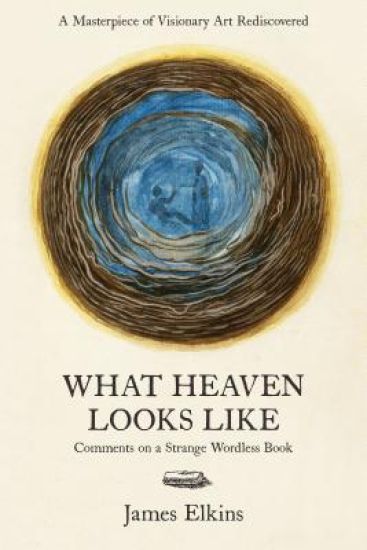
What Heaven Looks Like

What Heaven Looks Like

James Elkins

Laboratory Books
2017
sidottu
An unknown masterpiece of visionary art-as daring as Blake or Goya, but utterly different-reproduced in full color, with a commentary by one of our most original art historians Somewhere in Europe-we don't know where-around 1700. An artist is staring at something on the floor next to her worktable. It's just a log from the woodpile, stood on end. The soft, damp bark; the gently raised growth rings; the dark radial cracks-nothing could be more ordinary. But as the artist looks, and looks, colors begin to appear-shapes-even figures. She turns to a sheet of paper and begins to paint. Today this anonymous artist's masterpiece is preserved in the University of Glasgow Library. It is a manuscript in a plain brown binding, whose entire contents, beyond a cryptic title page, are fifty-two small, round watercolor paintings based on the visions she saw in the ends of firewood logs. This book reproduces the entire sequence of paintings in full color, together with a meditative commentary by the art historian James Elkins. Sometimes, he writes, we can glimpse the artist's sources-Baroque religious art, genre painting, mythology, alchemical manuscripts, emblem books, optical effects. But always she distorts her images, mixes them together, leaves them incomplete-always she rejects familiar stories and clear-cut meanings. In this daring refusal to make sense, Elkins sees an uncannily modern attitude of doubt and skepticism; he draws a portrait of the artist as an irremediably lonely, amazingly independent soul, inhabiting a distinct historical moment between the faded Renaissance and the overconfident Enlightenment. What Heaven Looks Like is a rare event: an encounter between a truly perceptive historian of images, and a master conjurer of them.
Weak in Comparison to Dreams

Weak in Comparison to Dreams

James Elkins

Unnamed Press
2024
sidottu
"Weak in Comparison to Dreams... is the most courageous and fascinating debut I have read since Mark Z. Danielewski’s House of Leaves." —Full Stop MagazineFor years, Samuel Emmer has monitored bacteria levels in drinking water for the small city of Guelph.He is content to focus on dangerous life-threatening single-celled organisms as his grasp on his own life recedes—and with it, family and friends. To be sure, it is more than a little surprising when Samuel learns that he has been appointed to the city’s Zoo Feasibility Committee. Even more so, that he is being tasked with interacting not just with animals, but human beings. His assignment: travel to zoos around the world and gather information on the stereotypical behavior of animals in their enclosures—the city of Guelph aspiring commendably, if naively, to a cruelty-free habitat for its animals. It is in Tallinn, Estonia, that the dreams start for Samuel. He is in a vast wooded landscape; there is a fire burning in the distance; and it is coming his way… Weak in Comparison to Dreams, by the historian and art critic James Elkins, is like no other novel you have ever read, even as certain inspirations, from Sebald to Tokarczuk, are clear. With an astounding breadth of knowledge and playful courage, Weak in Comparison to Dreams reignites our love for the ambitious novel with experimentation that never lacks intention, and whose empathetic scope explores the deepest aspects of our individual humanity.
A Short Introduction to Anneliese

A Short Introduction to Anneliese

James Elkins

Unnamed Press
2025
sidottu
A Short Introduction to Anneliese is the second volume in author James Elkins' multi-volume mega-novel Five Strange Languages being published by Unnamed Press, all of which trace the final year of Samuel Emmer's life before he disappears.When Samuel Emmer meets unemployed biologist Anneliese Glur for dinner during his stopover in Frankfurt, he has no notion of what to expect. Anneliese is an old friend and former colleague of his boss, and he agrees to dinner for no other reason than he has nothing better to do. As it turns out, Anneliese is a torrent-of observations; digressions; theories, hypotheses and resentments. She complains about her niece, who lives with her and her brother Paul (also, quietly, at dinner), and their uncle Hans, whose dementia haunts Anneliese's concerns about the state of her own mind. More crucially, she deconstructs the "awfulness" of language, calling it an ill-fitting suit, and challenges the validity of memory. Most surprising is what Samuel comes to realize by the end of this strange dinner: that the insufferable but deeply compelling Anneliese is conducting a kind of interview with him-the purposes of which are not entirely clear. A month later, back home in Guelph, Samuel finds himself on the phone with Anneliese, listening to her once again. Her monologues are wild, seemingly endless, often laugh-out funny, occasionally repellent; but nothing is random, for Anneliese Glur is systematically introducing Samual not just to her work, but to a breakdown in her mind for which she has identified thirteen distinct problems in her thinking. In short, she is no longer sure that she is sane, and she needs Samuel to read her book - a comprehensive theory of the essence of life, that transcends category or definition - to see if it makes sense. But first, through a series of long conversations, she introduces him to the world of her mind. A Short Introduction to Anneliese has notes, which comprise a separate narrative at the end of the novel, written by Samuel in extreme old age (whom readers will recognize from Weak in Comparison to Dreams). This Samuel scarcely remembers Anneliese. Instead her way of talking sounds to him like music. Her startling ideas have evaporated, leaving only melodies.
The End of Diversity in Art Historical Writing

The End of Diversity in Art Historical Writing

James Elkins

De Gruyter
2020
isokokoinen pokkari
The End of Diversity in Art Historical Writing is the most globally informed book on world art history, drawing on research in 76 countries. In addition some chapters have been crowd sourced: posted on the internet for comments, which have been incorporated into the text. It covers the principal accounts of Eurocentrism, center and margins, circulations and atlases of art, decolonial theory, incommensurate cultures, the origins and dissemination of the "October" model, problems of access to resources, models of multiple modernisms, and the emergence of English as the de facto lingua franca of art writing.
Visual Worlds: Looking, Images, Visual Disciplines

Visual Worlds: Looking, Images, Visual Disciplines

James Elkins; Erna Fiorentini

Oxford University Press
2020
nidottu
Ideal for first-year university students from diverse backgrounds, Visual Worlds: Looking, Images, Visual Disciplines provides a full introduction to the visual world across all the fields that theorize it. In contrast with typical visual culture texts, it looks beyond the arts, taking a comparative approach that considers a number of fields including art history and theory but also epistemology, ontology, vision science, neurology, cognitive psychology, law, advertising, medicine, warfare, and more.
The Object Stares Back

The Object Stares Back

Elkins James

Cengage Learning EMEA
1999
nidottu
In this "remarkable tour de force" (Publishers Weekly)-a "ceaselessly thought-provoking book" (Kirkus Reviews)-art historian James Elkins marshals psychology, philosophy, science, and art history to show how seeing alters the thing seen and transforms the seer. Black-and-white photographs.