Kirjojen hintavertailu. Mukana 11 627 363 kirjaa ja 12 kauppaa.

Kirjahaku

Etsi kirjoja tekijän nimen, kirjan nimen tai ISBN:n perusteella.

1000 tulosta hakusanalla James Liberty

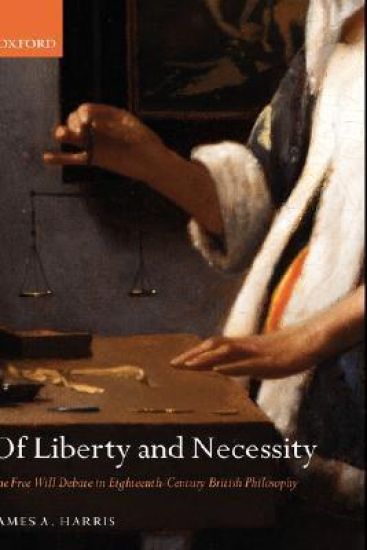
Of Liberty and Necessity

Of Liberty and Necessity

James A. Harris

Clarendon Press
2005
sidottu
In Of Liberty and Necessity James A. Harris presents the first comprehensive account of the free will problem in eighteenth-century British philosophy. Harris proposes new interpretations of the positions of familiar figures such as Locke, Hume, Edwards, and Reid. He also gives careful attention to writers such as William King, Samuel Clarke, Anthony Collins, Lord Kames, James Beattie, David Hartley, Joseph Priestley, and Dugald Stewart, who, while well-known in the eighteenth century, have since been largely ignored by historians of philosophy. Through detailed textual analysis, and by making precise use of a variety of different contexts, Harris elucidates the contribution that each of these writers makes to the eighteenth-century discussion of the will and its freedom. In this period, the question of the nature of human freedom is posed principally in terms of the influence of motives upon the will. On one side of the debate are those who believe that we are free in our choices. A motive, these philosophers believe, constitutes a reason to act in a particular way, but it is up to us which motive we act upon. On the other side of the debate are those who believe that, on the contrary, there is no such thing as freedom of choice. According to these philosophers, one motive is always intrinsically stronger than the rest and so is the one that must determine choice. Several important issues are raised as this disagreement is explored and developed, including the nature of motives, the value of 'indifference' to the will's freedom, the distinction between 'moral' and 'physical' necessity, the relation between the will and the understanding, and the internal coherence of the concept of freedom of will. One of Harris's primary objectives is to place this debate in the context of the eighteenth-century concern with replicating in the mental sphere what Newton had achieved in the philosophy of nature. All of the philosophers discussed in Of Liberty and Necessity conceive of themselves as 'experimental' reasoners, and, when examining the will, focus primarily upon what experience reveals about the influence of motives upon choice. The nature and significance of introspection is therefore at the very centre of the free will problem in this period, as is the question of what can legitimately be inferred from observable regularities in human behaviour.
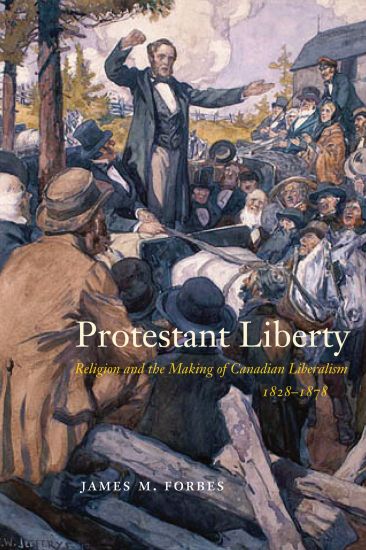
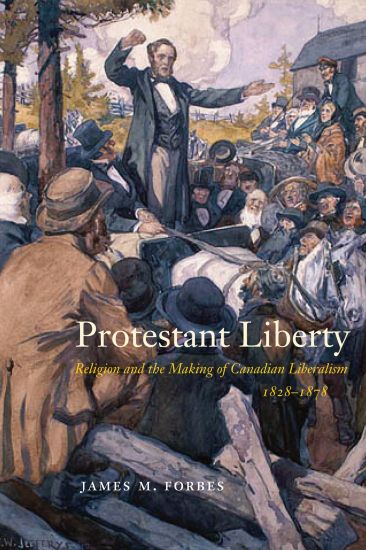
Protestant Liberty

Protestant Liberty

James M. Forbes

MCGILL-QUEEN'S UNIVERSITY PRESS
2022
sidottu
Tensions between Protestantism and Catholicism dominated politics in nineteenth-century Canada, occasionally erupting into violence. While some liberal politicians and community leaders believed that equal treatment of Protestants and Catholics would defuse these ancient quarrels, other Protestant liberals perceived a battle for the soul of the nation.Protestant Liberty offers a new interpretation of nineteenth-century liberalism by re-examining the role of religion in Canadian politics. While this era’s liberal thought is often characterized as being neutral toward religion, James Forbes argues that the origins of Canadian liberalism were firmly rooted in the British tradition of Protestantism and were based on the premise of guarding against the advance of supposedly illiberal faiths, especially Catholicism. After the union of Upper Canada with predominantly French-Catholic Lower Canada in 1840, this Protestant ideal of liberty came into conflict with a more neutral alternative that sought to strip liberalism of its religious associations in order to appeal to Catholic voters and allies. In a decisive break from their Protestant heritage, these liberals redefined their ideology in secular-materialist terms by emphasizing free trade and private property over faith and culture.In tracing how the Confederation generation competed to establish a unifying vision for the nation, Protestant Liberty reveals religion and religious differences at the centre of this story.
Protestant Liberty

Protestant Liberty

James M. Forbes

MCGILL-QUEEN'S UNIVERSITY PRESS
2022
nidottu
Tensions between Protestantism and Catholicism dominated politics in nineteenth-century Canada, occasionally erupting into violence. While some liberal politicians and community leaders believed that equal treatment of Protestants and Catholics would defuse these ancient quarrels, other Protestant liberals perceived a battle for the soul of the nation.Protestant Liberty offers a new interpretation of nineteenth-century liberalism by re-examining the role of religion in Canadian politics. While this era’s liberal thought is often characterized as being neutral toward religion, James Forbes argues that the origins of Canadian liberalism were firmly rooted in the British tradition of Protestantism and were based on the premise of guarding against the advance of supposedly illiberal faiths, especially Catholicism. After the union of Upper Canada with predominantly French-Catholic Lower Canada in 1840, this Protestant ideal of liberty came into conflict with a more neutral alternative that sought to strip liberalism of its religious associations in order to appeal to Catholic voters and allies. In a decisive break from their Protestant heritage, these liberals redefined their ideology in secular-materialist terms by emphasizing free trade and private property over faith and culture.In tracing how the Confederation generation competed to establish a unifying vision for the nation, Protestant Liberty reveals religion and religious differences at the centre of this story.
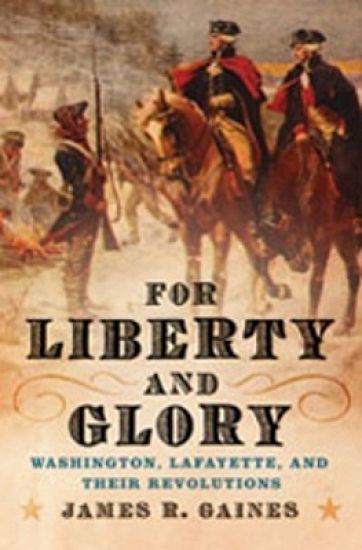
For Liberty and Glory

For Liberty and Glory

James R. Gaines

WW Norton Co
2009
nidottu
This book tells the story of the French and American Revolutions in a single, thrilling narrative that shows just how deeply intertwined they actually were. Their leaders were often seen as father and son, but the relationship of George Washington and the Marquis de Lafayette, while close, was every bit as complex as the long, fraught history of the French-American alliance, of which they were also the founding fathers.
Ordered Liberty

Ordered Liberty

James E. Fleming; Linda C. McClain

Harvard University Press
2013
sidottu
Many have argued in recent years that the U.S. constitutional system exalts individual rights over responsibilities, virtues, and the common good. Answering the charges against liberal theories of rights, James Fleming and Linda McClain develop and defend a civic liberalism that takes responsibilities and virtues—as well as rights—seriously. They provide an account of ordered liberty that protects basic liberties stringently, but not absolutely, and permits government to encourage responsibility and inculcate civic virtues without sacrificing personal autonomy to collective determination.The battle over same-sex marriage is one of many current controversies the authors use to defend their understanding of the relationship among rights, responsibilities, and virtues. Against accusations that same-sex marriage severs the rights of marriage from responsible sexuality, procreation, and parenthood, they argue that same-sex couples seek the same rights, responsibilities, and goods of civil marriage that opposite-sex couples pursue. Securing their right to marry respects individual autonomy while also promoting moral goods and virtues. Other issues to which they apply their idea of civic liberalism include reproductive freedom, the proper roles and regulation of civil society and the family, the education of children, and clashes between First Amendment freedoms (of association and religion) and antidiscrimination law. Articulating common ground between liberalism and its critics, Fleming and McClain develop an account of responsibilities and virtues that appreciates the value of diversity in our morally pluralistic constitutional democracy.
Federalism Liberty & the Law

Federalism Liberty & the Law

James Buchanan

Liberty Fund Inc
2001
sidottu
As diverse as the papers presented in this volume may seem at first glance, all of them touch on two characteristic themes of James Buchanan's work: the respect for individual sovereignty and the threat of monopoly power on the rights of the individual. In his foreword, Hartmut Kliemt says, "As opposed to more extreme and more utopian libertarians, (Buchanan) well understands that in our world it takes a state to defend the individual from the state. Buchanan, therefore, is not an anarchist but, rather, what may be called a 'reluctant anarchist' who accepts both that the state is the greatest threat to individual sovereignty and that without some statelike monopoly, individual sovereignty cannot be protected." The twenty-six essays included in FEDERALISM, LIBERTY, AND THE LAW are grouped into these categories: the analytics of federalism; federalism and freedom; liberty, man, and the state; the constitution of markets; economists, efficiency, and the law; law, money, and crime. The central issue that unites the pieces in this volume is monopoly power and its control. As a libertarian, Buchanan sees government as the greatest threat -- and also the greatest protector -- of individual liberties.
Federalism Liberty & the Law

Federalism Liberty & the Law

James Buchanan

Liberty Fund Inc
2001
nidottu
As diverse as the papers presented in this volume may seem at first glance, all of them touch on two characteristic themes of James Buchanan's work: the respect for individual sovereignty and the threat of monopoly power on the rights of the individual. In his foreword, Hartmut Kliemt says, "As opposed to more extreme and more utopian libertarians, (Buchanan) well understands that in our world it takes a state to defend the individual from the state. Buchanan, therefore, is not an anarchist but, rather, what may be called a 'reluctant anarchist' who accepts both that the state is the greatest threat to individual sovereignty and that without some statelike monopoly, individual sovereignty cannot be protected." The twenty-six essays included in FEDERALISM, LIBERTY, AND THE LAW are grouped into these categories: the analytics of federalism; federalism and freedom; liberty, man, and the state; the constitution of markets; economists, efficiency, and the law; law, money, and crime. The central issue that unites the pieces in this volume is monopoly power and its control. As a libertarian, Buchanan sees government as the greatest threat -- and also the greatest protector -- of individual liberties.
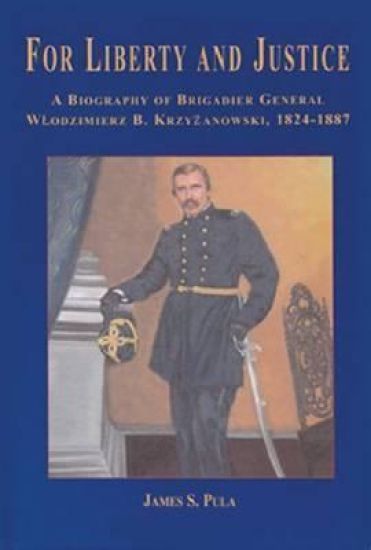
For Liberty and Justice

For Liberty and Justice

James S. Pula

Utica College of Syracuse University
2009
sidottu
A son of Poland, steeped in its traditions and culture, Wlodzimierz Krzyzanowski was exiled because of his participation in the democratic and patriotic Polish revolt of 1846. He arrived in the New World without fanfare, with neither resources nor knowledge of the English language. Over the course of many difficult years, he rose from the depths of poverty to become a leading citizen in the large ethnic community of Washington, D.C. Krzyzanowski was not a 'great man' in the sense of someone who shaped and defined policies that altered the course of human events; rather, he was an idealist who possessed the determination and courage of his convictions to risk all that he had in pursuit of the goals he valued.
Irish Liberty, British Democracy

Irish Liberty, British Democracy

James Doherty

Cork University Press
2019
sidottu
The crisis over the third Irish Home Rule Bill of 1913-14 is remembered as a dramatic political controversy that brought Ireland to the brink of civil war. What might have happened if the outbreak of the First World War had not stopped the clock on Home Rule? That is one of the intriguing questions explored in a new study of this fascinating episode in history, Irish Liberty, British Democracy: the third Irish Home Rule crisis, 1909-14. More than any previous author, James Doherty demonstrates that the British Liberal Cabinet was out-of-step with the impulses of popular Liberalism. Offering a fresh clue to the demise of the Liberal Party, Doherty reveals a progressive groundswell that demanded Irish Home Rule as a means of democratising a British constitution still heavily weighted in the aristocracy's favour. Home Rule, he argues, was not just a solution to the Irish problem, but the crucial instrument for the advance of British democracy. Irish Liberty, British Democracy challenges some entrenched beliefs about the role of the crisis in cementing the partition of Ireland, arguing that despite, or perhaps because of the perils swirling in Ireland in the summer of 1914, the possibilities of a Unionist capitulation were not exhausted when the unexpected outbreak of the First World War altered the course of Irish and world history.
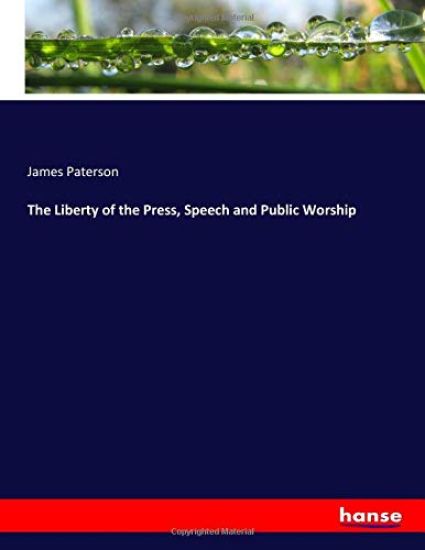
The liberty of the press, speech and public worship
The liberty of the press, speech and public worship is an unchanged, high-quality reprint of the original edition of 1880. Hansebooks is editor of the literature on different topic areas such as research and science, travel and expeditions, cooking and nutrition, medicine, and other genres. As a publisher we focus on the preservation of historical literature. Many works of historical writers and scientists are available today as antiques only. Hansebooks newly publishes these books and contributes to the preservation of literature which has become rare and historical knowledge for the future.
The Liberty of the press, speech, and public worship. Being Commentaries on the Liberty of the subject and the Laws of England.
This book has been considered by academicians and scholars of great significance and value to literature. This forms a part of the knowledge base for future generations. So that the book is never forgotten we have represented this book in a print format as the same form as it was originally first published. Hence any marks or annotations seen are left intentionally to preserve its true nature.
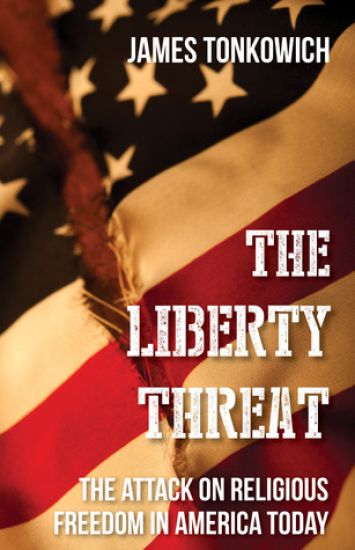
The Liberty Threat

The Liberty Threat

James Tonkowich

Catholic Courses
2014
pokkari
What happened to liberty and justice for all? Americans are losing what are supposed to be constitutionally promised rights at an alarming pace. The Founding Fathers understood the overriding essentiality of religious practice unimpeded by governmental authority, but time and vast cultural change has eroded this from the consciences of modern politicians. The struggle for the right to worship freely has been present since the time of the Roman Empire. By looking at how the Ancient Christian world relates to the failures of our own Supreme Court, it is possible to see what has led to so much government interference in personal religious beliefs in the name of "equality." As we watch America teeter ever closer to the brink of moral collapse and prejudice against religion becomes even more institutionalized, one question always surfaces: How can we stop this? In The Liberty Threat James Tonkowich explores the history of Christian philosophy from the Church's infancy through the birth of America and how it influenced religious liberty. With powerful examples fresh from today's courts, Tonkowich illustrates just how the rigid separation of Church and state has created a world that is hostile to true faith. The Liberty Threat is both a chilling wake-up and a clear call to action for Christians everywhere.
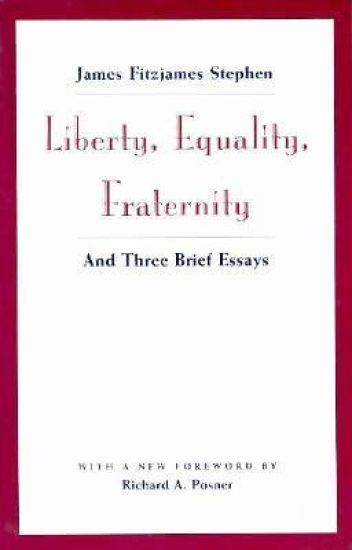
Liberty, Equality, Fraternity

Liberty, Equality, Fraternity

James Fitzjames Stephen

University of Chicago Press
1992
nidottu
With great energy and clarity, Sir James Fitzjames Stephen (1829-1894), author of History of the Criminal Law of England, and judge of the High Court from 1879-91, challenges John Stuart Mill's On Liberty and On Utilitarianism, arguing that Mill's view of humanity is sentimental and utopian. "His writing is strong meat--full of the threat of hellfrire, the virtue of government by the lash and a fervent belief that the state cannot remain neutral but has a duty to espouse a moral code."--Roderick Munday, Cambridge Law Journal
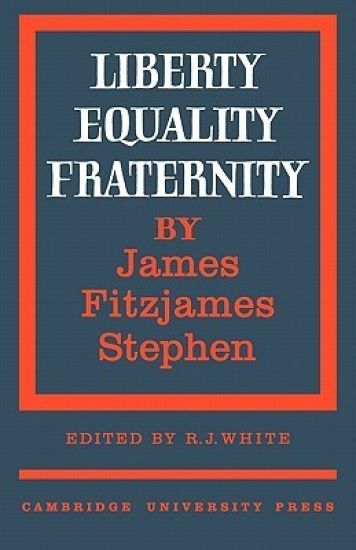
Liberty, Equality, Fraternity

Liberty, Equality, Fraternity

James Fitzjames Stephen

Cambridge University Press
2011
pokkari
R. J. White's edition, which was originally published in 1967, made Fitzjames Stephen's classic available for the first time since 1914. The editor made use of the 1874 second edition which included Stephen's notes in reply to his original critics. Stephen's work is written as a systematic denunciation of John Stuart Mill's political thought. It is thus of great importance in the history of Utilitarianism, and also as the most forthright and systematic of the Victorian attacks on democracy. Stephen's work is also important for its repudiation of the progressive attitudes to religion and morality characteristic of the Comptist philosophy which had attracted Mill. Stephen's aim was to show that 'no room is left for the order of ideas hinted at by the phrase 'Liberty, Equality, Fraternity''. He argues his case with legal precision and considerable rhetorical powers.
Liberty Bell and the Last American

Liberty Bell and the Last American

James Stoddard

Ransom House
2021
pokkari
What if American history became the stuff of legend? Two hundred years after the Great Blackout obliterates the world's digitized books, a scholar traveling through America collects the oral histories of its people and uses them to write The Americana, a book depicting a golden age ruled by President Washington and the Knights of the Pentagonal Table, figures such as Eisenhower Iron-Hewer, the wizard Ben Franklin, Waynejon the Pilgrim, and Betsee Ross, the Star Weaver. Centuries later, seventeen-year-old Liberty Bell, growing up raised on The Americana, is thrown into a quest with secret agent, Antonio Ice, to find the legendary gold of Fort Knox. But in the Old Forest, electricity is returning, the heroes and legends of The Americana are coming to life, and what Liberty decides to do will determine her country's fate. Includes a copy of the United States Constitution.