Kirjojen hintavertailu. Mukana 11 699 587 kirjaa ja 12 kauppaa.

Kirjahaku

Etsi kirjoja tekijän nimen, kirjan nimen tai ISBN:n perusteella.

1000 tulosta hakusanalla James M. Lee

Epistemology I

Epistemology I

Peter M. Burkholder; Shannon DuBose; James Wayne Dye; James K. Feiblemen; Max Hocutt; Donald S. Lee; Harold N. Lee; Sandra B. Rosenthal

Kluwer Academic Publishers
1968
nidottu
Due to the unprecedented interest which the announcement of the topic of epistemology evoked from contributors, two annual volumes will be devoted to it. This volume accordingly is entitled Epistemology I, and the next volume will be entitled Epistemology II. The Editor KNOWING IN THE STRONG SENSE PETER M. BURKHOLDER Professor Norman Malcolm has defended what he calls "the strong sense" of "know." 1 It is one of the propositional senses; i.e. what is said to be known, in this sense, is an item of information rather than a person, a poem, a physical object, or a skill. According to· Malcolm, this sense of "know" is important and useful.' Philosophers have had it "in mind when they have spoken of 'perfect,' 'metaphysical,' or 'strict' cer­ tainty" (Ke, 70). Moreover, laymen use it when they profess to know such obvious truths as "2 + 2 = 4" or "This is an ink-bottle" (said while peering at and poking an ink-bottle). Nevertheless, in spite of his opinion that it is important, Malcolm has not given a detailed analysis of the strong sense of "know." Thus we may be justified in studying it, first to determine exactly what it is, and then to evaluate it. I do not, of course, wish to suggest that Malcolm necessarily WQuid accept my account of the strong sense as an accurate expli­ cation of his opinions. However, in its descriptive aspects my analysis seems compatible with his written statements.
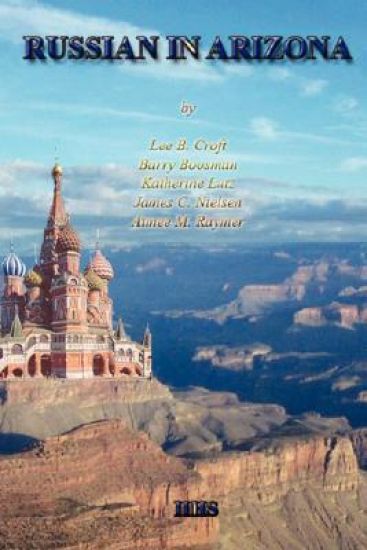
RUSSIAN IN ARIZONA: A History of Its Teaching

RUSSIAN IN ARIZONA: A History of Its Teaching

Lee B Croft; Barry Boosman; Katherine Lutz; James C Nielsen; Aimee M Raymer

Lulu.com
2007
pokkari
This is a history of the teaching of Russian in the State of Arizona. It attempts to describe the efforts of EVERYONE who has EVER taught Russian ANYWHERE in the State of Arizona, as well as the subsequent fates of hundreds of their Arizona students of Russian. Over 1600 teachers and students are mentioned.
Philosophical Logic

Philosophical Logic

Robert L. Arrington; Peter M. Burkholder; Shannon Dubose; James W. Dye; James K. Feibleman; Bertrand P. Helm; Max Hocutt; Harold N. Lee; Louise N. Roberts; John C. Sallis; Donald H. Weiss

Kluwer Academic Publishers
1968
nidottu
With this issue we initiate the policy of expanding the scope of Tulane Studies in Philosophy to include, in addition to the work of members of the department, contributions from philosophers who have earned advanced degrees from Tulane and who are now teaching in other colleges and universities. The Editor THE LOGIC OF OUR LANGUAGE ROBERT L. ARRINGTON Wittgenstein wrote in the Tractatus that "logic is not a body of doctrine, but a mirror-image of the world. " 1 In line with his suggestion that a proposition is a 'picture', Wittgenstein argued that propositions 'show' the logical structure of the real. He was insistent, however, that "the apparent logical form of a proposition need not be its real one. " 2 As a result of this we can misunderstand the structure of fact. Philosophical problems arise just when "the logic of our language is mis­ understood. " 3 It is common knowledge that much of this view of logic was rejected by Wittgenstein himself in the Philosophical Investi­ gations. There we are told that language has no ideal or sublime 4 logic which mirrors the structure of the extra-linguistic world. Consequently, inferences from the structure of language to the structure of that extra-linguistic world are invalid. Reality can be 'cut up' in any of a number of ways by language. Wittgenstein adopted a view of philosophy which would render that discipline a non-explanatory, non-critical study of the multiple ways in which language can be used.
Environmental Law Handbook

Environmental Law Handbook

Kevin A. Ewing; Duke K. McCall; David R. Case; Marshall Lee Miller; Daniel M. Steinway; Karen J. Nardi; Christopher Bell; Stanley W. Landfair; Austin P. Olney; Thomas Richichi; F. William Brownell; Jessica O. King; John M. Scagnelli; James W. Spensley; Rolf R. von Oppenfeld; Andrew N. Davis

Bernan Press
2019
sidottu
The environmental field and its regulations have evolved significantly since Congress passed the first environmental law in 1970, and the Environmental Law Handbook, published just three years later, has been indispensable to students and professionals ever since. The authors provide clear and accessible explanations, expert legal insight into new and evolving regulations, and reliable compliance and management guidance. The Environmental Law Handbook continues to provide individuals across the country—professionals, professors, and students—with a comprehensive, up-to-date, and easy-to-read look at the major environmental, health, and safety laws affecting U.S. businesses and organizations. Because it is written by the country's leading environmental law firms, it provides the best, most reliable guidance anywhere. Both professional environmental managers and students aspiring to careers in environmental management should keep the Environmental Law Handbook within arm's reach for thoughtful answers to regulatory questions like: ·How do I ensure compliance with the regulations? ·How do the latest environmental developments impact my operations? ·How do we keep our operations efficient and our community safe? The Handbook begins with chapters on the fundamentals of environmental law and on issues of enforcement and liability. It then dives headfirst into the major laws, examining their history, scope, and requirements with a chapter devoted to each. The 24th edition of this well-known Handbook has been thoroughly updated, covering major changes to the law and enforcement in the areas of Clean Air, Clean Water, Climate Change, Oil Pollution, and Pollution Prevention. This is an essential reference for environmental students and professionals, and anyone who wants the most up-to-date information available on environmental laws.
Australia's Naval Shipbuilding Enterprise

Australia's Naval Shipbuilding Enterprise

John Birkler; John F. Schank; Mark V. Arena; Edward G. Keating; Joel B. Predd; James Black; Irina Danescu; Dan Jenkins; James G. Kallimani; Gordon T. Lee; Roger Lough; Robert Murphy; David Nicholls; Deborah Peetz; Brian Perkinson; Jerry M. Sollinger; Shane Tierney; Obaid Younossi

RAND
2015
pokkari
To prepare for its next Defence White Paper, Australia is examining an enterprise-level naval shipbuilding plan. To support this effort, RAND researchers explore the feasibility of Australia sustaining a domestic naval shipbuilding industry compared with buying ships from foreign shipbuilders. The authors outline the complex consequences and trade-offs of both options.
James M. Cain and the American Authors' Authority

James M. Cain and the American Authors' Authority

Richard Fine

University of Texas Press
2013
nidottu
The 1940s offered ever-increasing outlets for writers in book publishing, magazines, radio, film, and the nascent television industry, but the standard rights arrangements often prevented writers from collecting a fair share of the profits made from their work. To remedy this situation, novelist and screenwriter James M. Cain (The Postman Always Rings Twice,Double Indemnity, Mildred Pierce) proposed that all professional writers, including novelists, playwrights, poets, and screenwriters, should organize into a single cartel that would secure a fairer return on their work from publishers and producers. This organization, conceived and rejected within one turbulent year (1946), was the American Authors' Authority (AAA).In this groundbreaking work, Richard Fine traces the history of the AAA within the cultural context of the 1940s. After discussing the profession of authorship as it had developed in England and the United States, Fine describes how the AAA, which was to be a central copyright repository, was designed to improve the bargaining position of writers in the literary marketplace, keep track of all rights and royalty arrangements, protect writers' interests in the courts, and lobby for more favorable copyright and tax legislation.Although simple enough in its design, the AAA proposal ignited a firestorm of controversy, and a major part of Fine's study explores its impact in literary and political circles. Among writers, the AAA exacerbated a split between East and West Coast writers, who disagreed over whether writing should be treated as a money-making business or as an artistic (and poorly paid) calling. Among politicians, a move to unite all writers into a single organization smacked of communism and sowed seeds of distrust that later flowered in the Hollywood blacklists of the McCarthy era.Drawing insights from the fields of American studies, literature, and Cold War history, Fine's book offers a comprehensive picture of the development of the modern American literary marketplace from the professional writer's perspective. It uncovers the effect of national politics on the affairs of writers, thus illuminating the cultural context in which literature is produced and the institutional forces that affect its production.
James M. H. Gregg

James M. H. Gregg

James M H Gregg

iUniverse
2005
pokkari
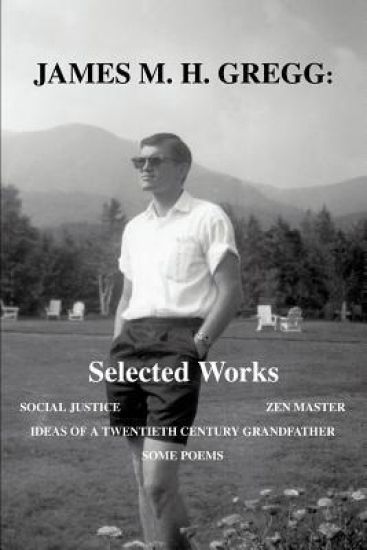
The James M. H. Gregg Selected Works includes four books. Each book was written to inspire future generations to think and act in ways to improve themselves and society. Mr. Gregg's most recent work, Social Justice (A Blueprint), explores a new set of ideas and strategies for moving humans to a higher cultural plane on which all can live to their full potential. In Ideas of a Twentieth Century Grandfather the author reveals to his grandchildren his knowledge and insight that he may not otherwise get a chance to tell them. Zen Master is a dialogue between a Zen Master and students. The students ask him questions about many subjects to include the meaning of life and living, death, the essences of Zen, and peace of mind. Finally, Some Poems is a compilation of poems that the author has written over the years about loving, living, being, and love.
James M. H. Gregg

James M. H. Gregg

James M H Gregg

iUniverse
2005
sidottu
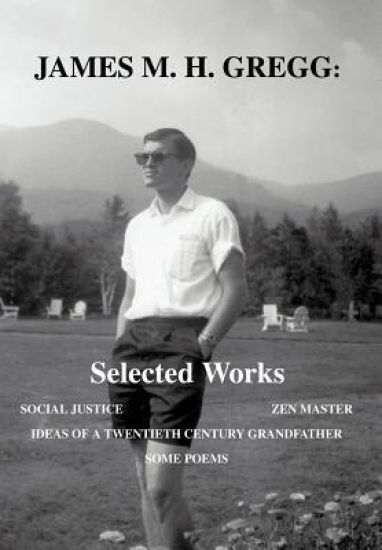
The James M. H. Gregg Selected Works includes four books. Each book was written to inspire future generations to think and act in ways to improve themselves and society. Mr. Gregg's most recent work, Social Justice (A Blueprint), explores a new set of ideas and strategies for moving humans to a higher cultural plane on which all can live to their full potential. In Ideas of a Twentieth Century Grandfather the author reveals to his grandchildren his knowledge and insight that he may not otherwise get a chance to tell them. Zen Master is a dialogue between a Zen Master and students. The students ask him questions about many subjects to include the meaning of life and living, death, the essences of Zen, and peace of mind. Finally, Some Poems is a compilation of poems that the author has written over the years about loving, living, being, and love.
James M. Cain

James M. Cain

David Madden; Kristopher Mecholsky

Scarecrow Press
2011
sidottu
James M. Cain wrote some of the grittiest novels in American literature, including such classics as The Postman Always Rings Twice, Double Indemnity, and Mildred Pierce. James M. Cain: Hard-Boiled Mythmaker is a critical overview of the author's life, work, and legacy. An updated and expanded edition of two of David Madden's scholarly works on Cain, this new book improves upon the previous works by collecting the most essential writing on Cain by Madden into one volume. In addition to melding existing material, this work contains updated and new material, including fresh commentaries on later books, such as Rainbow's End, Cloud Nine, and The Enchanted Isle, as well as later film adaptations, including Butterfly. It also responds to 40 years' worth of criticism on Cain and reevaluates his influence. Providing an overview of all of Cain's fiction, including an analysis of the major themes of his entire literary career, the book also describes Cain's impact on and importance in 20th-century culture, film in particular. In addition to a biographical summary and thematic outline of Cain's nearly 50-year career, Madden and Mecholsky examine how Cain's works explore the nightmare consequences of the persistent American dream. Finally, Madden and Mecholsky consider Cain's technical innovations of the novel and survey the major film adaptations of Cain's novels. With its significant in-depth analysis and a foreword by Edgar-award winning author Max Allan Collins, this volume will be of interest to Cain scholars as well as anyone interested in 20th century American literature and film.
James M. Buchanan

James M. Buchanan

John Meadowcroft

Continuum Publishing Corporation
2011
sidottu
This is volume 17 in the "Major Conservative and Libertarian Thinkers" series. James McGill Buchanan (B. 1919) is an American economist best known for his public choice theory. The founder of a new Virginia school of political economy, he has written extensively on subjects including public finance, macroeconomics, and libertarian theory. Buchanan's theory offered a basis for conservative political endeavors such as a constitutional amendment to balance the federal budget. He was awarded the Nobel Prize in Economics in 1986. "Major Conservative and Libertarian Thinkers" provides comprehensive accounts of the works of seminal conservative thinkers from a variety of periods, disciplines, and traditions - the first series of its kind. Even the selection of thinkers adds another aspect to conservative thinking, including not only theorists but also writers and practitioners. The series comprises twenty volumes, each including an intellectual biography, historical context, critical exposition of the thinker's work, reception and influence, contemporary relevance, bibliography including references to electronic resources, and an index.