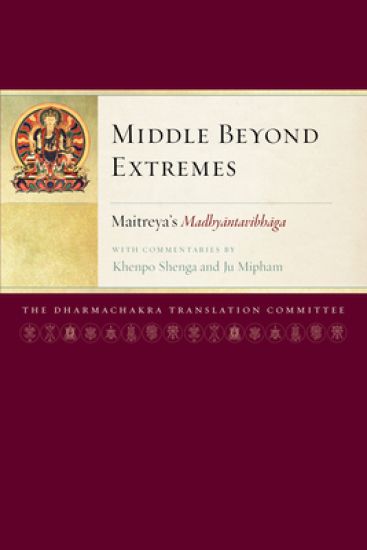
Unraveling the subtle processes that condition our thinking and experience, Maitreya's teaching reveals a powerful path of compassionate vision and spiritual transformation. Middle Beyond Extremes contains a translation of the Buddhist masterpiece Distinguishing the Middle from Extremes. This famed text, often referred to by its Sanskrit title, Madhyāntavibhāga, is part of a collection known as the Five Maitreya Teachings. Maitreya is held to have entrusted these profound and vast instructions to the master Asaṅga in the heavenly realm of Tuṣita.Distinguishing the Middle from Extremes employs the principle of the three natures to explain the way things seem to be as well as the way they actually are. It is presented here alongside commentaries by two outstanding masters of Tibet's nonsectarian Rim movement, Khenpo Shenga and Ju Mipham.
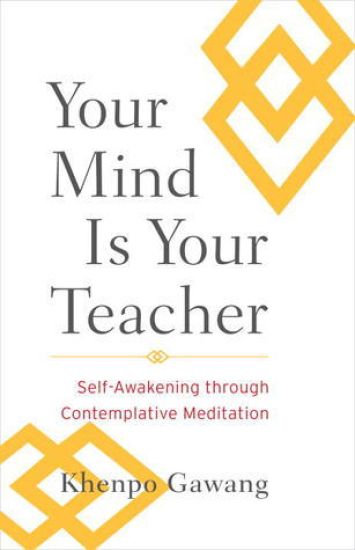
This concise handbook of Tibetan Buddhist teachings, designed for Western students, is centered on a sitting practice called Contemplative Meditation. This practice can be used as a way to change troublesome habits, even by someone with little knowledge of Buddhism. Although the teachings are based it on a nineteenth-century text by Lama Mipham, they are presented in a non-scholarly way, with examples drawn from modern life and everyday experience. In particular, the author addresses the unique attitudes and questions of twenty-first-century Westerners who are exploring Buddhism. The practice taught in the book consists of a reflection on four subjects, known as the Four Seals of the Buddha's teaching: multiplicity, impermanence, suffering, and emptiness. Khenpo Gawang Rinpoche explains how to investigate each of these topics in a way that helps you recognize your innate wisdom mind, which is your ultimate teacher. Once you learn how to examine your own mind and your life with this method, you will start to look at everything differently. By helping to dissolve negative thoughts and habits, the practice can increase your focus, confidence, self-esteem, and happiness. Along with exercises and questions, short readings, a glossary, and checklists for study, this book provides a complete handbook, with simple instructions for additional practices: - the Ninefold Exhalation, a breathing method for expelling stale air before meditation - visualization of buddhas and great teachers to inspire practice - the practice of bodhichitta, or generating love and compassion for all beings - the seven-branch offering, seven devotional thoughts to strengthen efforts - dedication of merit--the positive energy from the meditation--for the benefit of all beings Finally, the appendix gives translations of two short readings: The Wheel of Analytical Meditation by Lama Mipham, which is the source of this book's teaching, and the Heart Sutra, a famous brief teaching on emptiness, along with a traditional commentary.
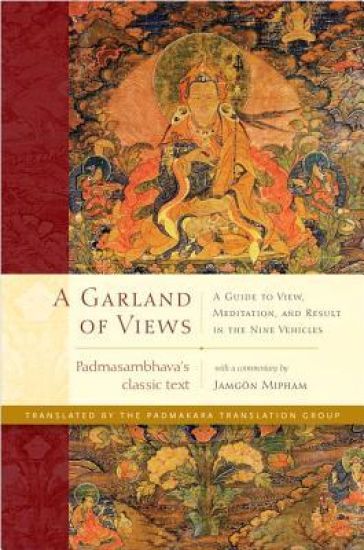
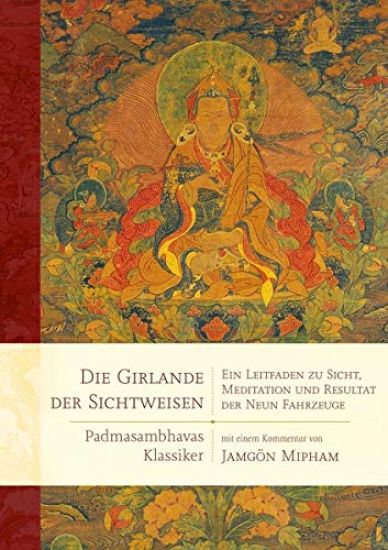
A core text of the Nyingma tradition of Tibetan Buddhism, presented in English for the first time, with commentary by Jamg n Mipham, one of the Nyingma tradition's most lucid and brilliant minds. A concise commentary by the eighth-century Indian Buddhist master Padmasambhava on a chapter from the Guhyagarbha Tantra, which gives an overview of the different Buddhist and non-Buddhist philosophical views, including the Great Perfection (Dzogchen), with an explicative commentary by the nineteenth-century scholar Jamg n Mipham (1846-1912). Padmasambhava's text is a core text of the Nyingma tradition because it provides the basis for the system of nine vehicles (three sutra vehicles and six tantra vehicles) that subsequently became the accepted way of classifying the different Buddhist paths in the Nyingma tradition. Mipham's commentary is the one most commonly used to explain Padmasambhava's teaching. Mipham is well known for his prolific, lucid, and original writings on many subjects, including science, medicine, and philosophy, in addition to Tibetan Buddhist practice and theory.
"If you recite this when you arise, then you will accomplish all of your wholesome aims for the day. If you recite it when you go to sleep, then you will have nourishing dreams. If you recite it before you go to into action, you will be virtuous and successful. If you recite it when you begin an activity, then the good that you aspire to will increase. If you recite it daily, then health, longevity, glory, prosperity, auspiciousness, happiness and virtue will accompany you according to your thoughts and actions. All harmful actions and obscurations will be purified. Both the higher realms and the resplendent Buddhahood - all aims will be accomplished. This was said by the Supreme Victor - Jamg n Ju Mipham."
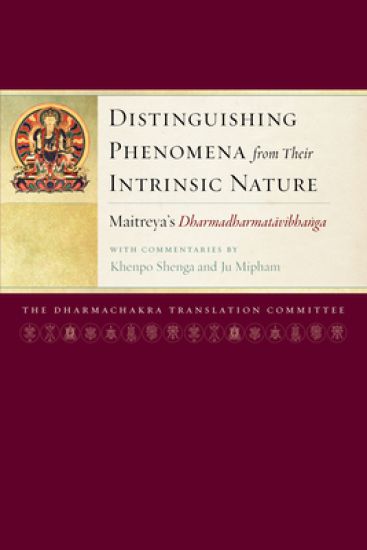
Outlining the difference between appearance and reality, this work shows that the path to awakening involves leaving behind the inaccurate and limiting beliefs we have about ourselves and the world around us and opening ourselves to the limitless potential of our true nature. The Buddhist masterpiece Distinguishing Phenomena from Their Intrinsic Nature, often referred to by its Sanskrit title, Dharmadharmatāvibhaṅga, is part of a collection known as the Five Maitreya Teachings, a set of philosophical works that have become classics of the Indian Buddhist tradition. Maitreya, the Buddha's regent, is held to have entrusted these profound and vast instructions to the master Asaṅga in the heavenly realm of Tuṣita. By divesting the mind of confusion, the treatise explains, we see things as they actually are. This insight allows for the natural unfolding of compassion and wisdom. This volume includes commentaries by Khenpo Shenga and Ju Mipham, whose discussions illuminate the subtleties of the root text and provide valuable insight into the nature of reality and the process of awakening.
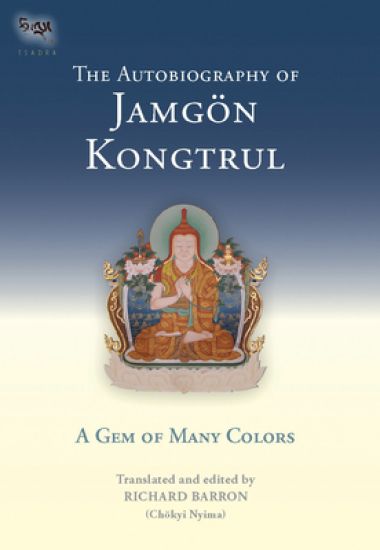
Jamg n Kongtrul Lodr Taye (1813-1899) was one of the most influential figures and prolific writers in the Tibetan Buddhist world. He was a founder and the single most important proponent of the nonsectarian movement that flourished in eastern Tibet and remains popular today. Two additional texts discuss his previous lives and recount Kongtrul's final days. The Autobiography of Jamg n Kongtrul is part of The Tsadra Foundation Series published by Snow Lion Publications.
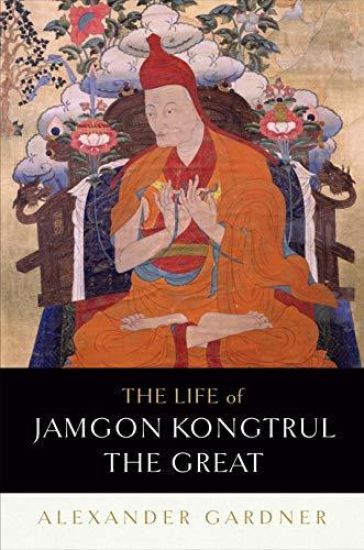
The first-ever extensive biography of Tibet's most famous nonsectarian Buddhist lama Known as the "king of renunciates," Jamgon Kongtrul Lodro Taye (1813-1899) forever changed the face of Buddhism through collecting, arranging, and disseminating the various lineage traditions of Tibet across sectarian lines. His extensive treasury collections of profound Buddhist teachings continue to be taught and transmitted throughout the Himalayas by all major traditions and represent the breadth and profundity of Tibetan Buddhist philosophy and practice. Jamgon Kongtrul was a polymath, dedicated retreatant, writer, and teacher from the eastern Tibetan kingdom of Derg . During the nineteenth century, this region experienced extreme sectarian and political divides, during which Jamgon Kongtrul, along with Jamyang Khyentse Wangpo and Chokgyur Lingpa, set about collecting, teaching, and transmitting the major practice traditions found in Tibet. They focused particularly on preserving declining lineages. This conservation project, which did not adhere to the traditional divides of the Tibetan "schools" and included both tantric lineages coming from India as well as Tibetan treasure (terma) lineages, came to be known as the Rim or "unbiased" tradition. Jamgon Kongtrul is perhaps the most famous among these Rim figures. This is the most accessible work available on Jamgon Kongtrul's life, writings, and influence, written as a truly engaging historical biography. Alexander Gardner, who is a specialist of Jamgon Kongtrul, provides an intimate glimpse into the life of one of the most important Tibetan Buddhist teachers to have ever lived.
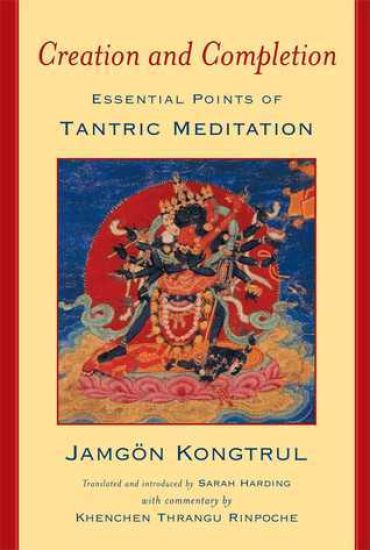
Jamgon Kongtrul, a master practitioner and one of Tibet's most prolific writers, composed this text as a guide to the effective practice of tantric Buddhist meditation. Written in the style of the Tibetan songs of realization, the text leads a way along a clear path of meditative self-transformation. This revised and updated edition of "Creation and Completion includes a commentary by Khenchen Thrangu Rinpoche.
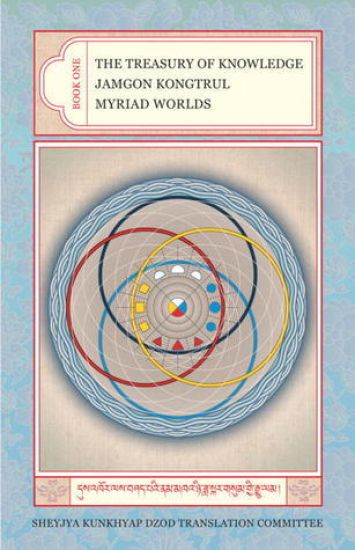
In Tibetan religious literature, Jamg n Kongtr l's Treasury of Knowledge in ten books stands out as a unique, encyclopedic masterpiece embodying the entire range of Buddhist teachings as they were preserved in Tibet. In his monumental Treasury of Knowledge, Jamg n Kongtr l presents a complete account of the major lines of thought and practice that comprise Tibetan Buddhism. This first book of The Treasury which serves as a prelude to Kongtrul's survey describes four major cosmological systems found in the Tibetan tradition--those associated with the Hinayana, Mahayana, Kalachakra, and Dzogchen teachings. Each of these cosmologies shows how the world arises from mind, whether through the accumulated results of past actions or from the constant striving of awareness to know itself.
An introduction to the mysticism of Shangpa Kagyu as based on the teachings of Niguma and Sukasiddhi is comprised of verses sung by Indian and Tibetan tantric Buddhist masters from the tenth century to the present, providing additional descriptions of each poet's life and an overview of the history of Tibetan lineage.
In Tibetan religious literature, Jamgon Kongtrul's Treasury of Knowledge stands out as a unique encyclopedic masterpiece embodying the entire range of Buddhist teachings as they were presented in Tibet.