Kirjojen hintavertailu. Mukana 11 244 527 kirjaa ja 12 kauppaa.

Kirjahaku

Etsi kirjoja tekijän nimen, kirjan nimen tai ISBN:n perusteella.

1000 tulosta hakusanalla Jan Montefiore

Jan  Svankmajer

Jan Svankmajer

Keith Leslie Johnson

University of Illinois Press
2017
sidottu
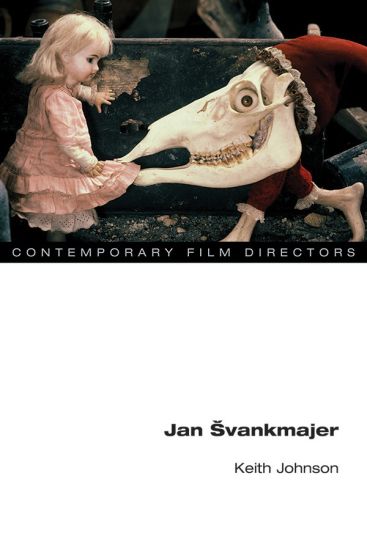
Jan Svankmajer enjoys a curious sort of anti-reputation: he is famous for being obscure. Unapologetically surrealist, Svankmajer draws on the traditions and techniques of stop-motion animation, collage, montage, puppetry, and clay to craft bizarre filmscapes. If these creative choices are off-putting to some, they have nonetheless won the Czech filmmaker recognition as a visionary animator. Keith Leslie Johnson explores Svankmajer's work as a cinema that spawns new and weird life forms "hybrids of machine, animal, and non-organic materials like stone and dust. Johnson's ambitious approach unlocks access to the director's world, a place governed by a single, uncanny order of being where all things are at once animated and inert. For Svankmajer, everything is at stake in every aspect of life, whether that life takes the form of an object, creature, or human. Sexuality, social bonds, religious longings "all get recapitulated on the stage of inanimate things. In Johnson's view, Svankmajer stands as the proponent of a biopolitical, ethical, and ecological outlook that implores us to reprogram our relationship with the vital matter all around us, including ourselves and our bodies.
Jan Svankmajer

Jan Svankmajer

Keith Leslie Johnson

University of Illinois Press
2017
nidottu
Jan Svankmajer enjoys a curious sort of anti-reputation: he is famous for being obscure. Unapologetically surrealist, Svankmajer draws on the traditions and techniques of stop-motion animation, collage, montage, puppetry, and clay to craft bizarre filmscapes. If these creative choices are off-putting to some, they have nonetheless won the Czech filmmaker recognition as a visionary animator. Keith Leslie Johnson explores Svankmajer's work as a cinema that spawns new and weird life forms "hybrids of machine, animal, and non-organic materials like stone and dust. Johnson's ambitious approach unlocks access to the director's world, a place governed by a single, uncanny order of being where all things are at once animated and inert. For Svankmajer, everything is at stake in every aspect of life, whether that life takes the form of an object, creature, or human. Sexuality, social bonds, religious longings "all get recapitulated on the stage of inanimate things. In Johnson's view, Svankmajer stands as the proponent of a biopolitical, ethical, and ecological outlook that implores us to reprogram our relationship with the vital matter all around us, including ourselves and our bodies.
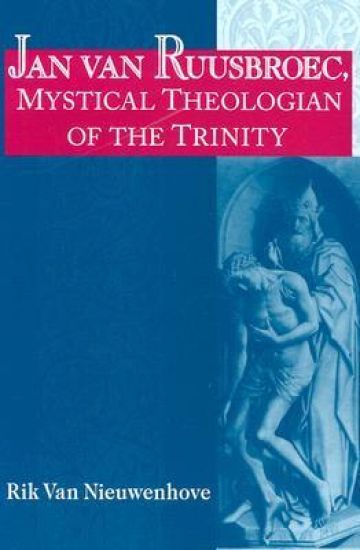
Jan Van Ruusbroec, Mystical Theologian of the Trinity

Jan Van Ruusbroec, Mystical Theologian of the Trinity

Rik Van Nieuwenhove

University of Notre Dame Press
2003
sidottu
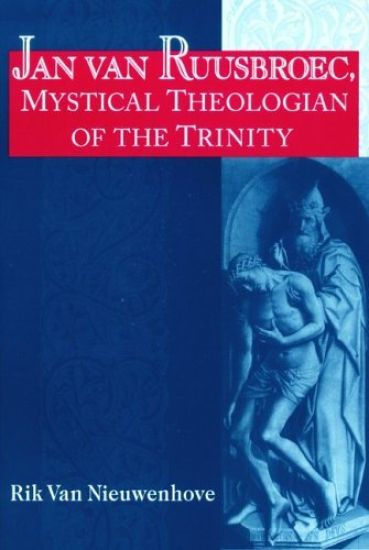
Jan van Ruusbroec (1293–1381), a Flemish mystical theologian, was one of the most original Trinitarian thinkers in the medieval West. Yet, his works—written in Middle-Dutch—have remained relatively unknown. In this book, Rik Van Nieuwenhove presents the first major study in English of Ruusbroec's thought. Van Nieuwenhove explores in detail Ruusbroec's theology of the Trinity, his anthropology, Christology, and his understanding of union with God. Van Nieuwenhove's study reveals that Ruusbroec, while incorporating aspects of the rich theological and spiritual tradition that preceded him, wrote at the beginning of a modern age in which mystical theology changed radically in nature. Ruusbroec claimed that the divine Persons are subject to an eternal dynamic of procession or out-going from the Father, on the one hand, and returning to the shared divine essence, on the other. The human person is called to participate in this continuous ebbing and flowing by leading a life that combines contemplation and charitable activity. Ruusbroec argued that mysticism should be interpreted in terms of a transformation of the human person rather than in terms of an immediate experience of God. Jan van Ruusbroec, Mystical Theologian of the Trinity is an innovative, original study of one of late medieval theology's undiscovered treasures. Written in clear, accessible language, this new interpretation of Ruusbroec's theology will appeal to all those interested in mysticism, medieval theology, and the doctrine of the Trinity.
Jan Van Ruusbroec, Mystical Theologian of the Trinity

Jan Van Ruusbroec, Mystical Theologian of the Trinity

Rik Van Nieuwenhove

University of Notre Dame Press
2003
nidottu
Jan van Ruusbroec (1293–1381), a Flemish mystical theologian, was one of the most original Trinitarian thinkers in the medieval West. Yet, his works—written in Middle-Dutch—have remained relatively unknown. In this book, Rik Van Nieuwenhove presents the first major study in English of Ruusbroec's thought. Van Nieuwenhove explores in detail Ruusbroec's theology of the Trinity, his anthropology, Christology, and his understanding of union with God. Van Nieuwenhove's study reveals that Ruusbroec, while incorporating aspects of the rich theological and spiritual tradition that preceded him, wrote at the beginning of a modern age in which mystical theology changed radically in nature. Ruusbroec claimed that the divine Persons are subject to an eternal dynamic of procession or out-going from the Father, on the one hand, and returning to the shared divine essence, on the other. The human person is called to participate in this continuous ebbing and flowing by leading a life that combines contemplation and charitable activity. Ruusbroec argued that mysticism should be interpreted in terms of a transformation of the human person rather than in terms of an immediate experience of God. Jan van Ruusbroec, Mystical Theologian of the Trinity is an innovative, original study of one of late medieval theology's undiscovered treasures. Written in clear, accessible language, this new interpretation of Ruusbroec's theology will appeal to all those interested in mysticism, medieval theology, and the doctrine of the Trinity.
Jan Brueghel and the Senses of Scale

Jan Brueghel and the Senses of Scale

Elizabeth Alice Honig

Pennsylvania State University Press
2016
sidottu
Unlike the work of his contemporaries Rubens and Caravaggio, who painted on a grand scale, seventeenth-century Flemish painter Jan Brueghel’s tiny, detail-filled paintings took their place not in galleries but among touchable objects. This first book-length study of his work investigates how educated beholders valued the experience of refined, miniaturized artworks in Baroque Europe, and how, conversely, Brueghel’s distinctive aesthetic set a standard—and a technique—for the production of inexpensive popular images.It has been easy for art historians to overlook the work of Jan Brueghel, Pieter’s son. Yet the very qualities of smallness and intimacy that have marginalized him among historians made the younger Brueghel a central figure in the seventeenth-century art world. Elizabeth Honig’s thoughtful exploration reveals how his works—which were portable, mobile, and intimate—questioned conceptions of distance, dimension, and style. Honig proposes an alternate form of visuality that allows us to reevaluate how pictures were experienced in seventeenth-century Europe, how they functioned, and how and what they communicated.A monumental examination of an extraordinary artist, Jan Brueghel and the Senses of Scale reconsiders Brueghel’s paintings and restores them to their rightful place in history.
Jan Tschichold and the New Typography

Jan Tschichold and the New Typography

Paul Stirton

Yale University Press
2019
pokkari
An original account of the life and work of legendary designer Jan Tschichold and his role in the movement in Weimar Germany to create modern graphic design Richly illustrated with images from Jan Tschichold’s little-known private collection of design ephemera, this important book explores a legendary figure in the history of modern graphic design through the artists, ideas, and texts from the Bauhaus that most influenced him. Tschichold (1902–1974), a prolific designer, writer, and theorist, stood at the forefront of a revolution in visual culture that made printed material more elemental and dynamic. His designs were applied to everyday graphics, from billboard advertisements and business cards to book jackets and invoices. This handsome volume offers a new understanding of Tschichold’s work, and of the underlying theories of the artistic movement he helped to form, by analyzing his collections: illustrations, advertisements, magazines, and books by well-known figures, such as Kurt Schwitters, El Lissitzky, Aleksandr Rodchenko, and László Moholy-Nagy, and lesser-known artist-designers, including Willi Baumeister, Max Burchartz, Walter Dexel, and Piet Zwart. This book also charts the development of the New Typography, a broad-based movement across Central Europe that included “The Ring,” a group formed by Schwitters in 1927. Tschichold played a crucial role in defining this movement, documenting the theory and practice in his most influential book, The New Typography (1928), still regarded as a seminal text of graphic design.Published in association with the Bard Graduate CenterExhibition Schedule:Bard Graduate Center, New York (02/15/19–07/07/19)
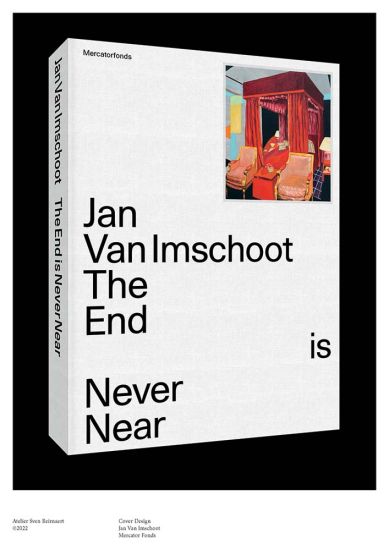
Jan Van Imschoot

Jan Van Imschoot

Selen Ansen; Hendrik Folkerts; Dieter Roelstraete; Alain Tapié

YALE UNIVERSITY PRESS
2023
sidottu
A comprehensive overview of the oeuvre of Belgian painter Jan Van Imschoot A comprehensive overview of the oeuvre of Belgian painter Jan Van Imschoot (b. 1963), whose contemporary work builds bridges to predecessors such as Caravaggio, Tintoretto, Goya, and Manet. Van Imschoot’s painting consciously opts for a clear, sometimes contradictory and ironic style. The directness of his decisive brushwork and his balanced yet audacious use of color is strikingly contemporary, while his work draws on historical themes from literature and art history. In this way, Van Imschoot engages in a continuous dialogue with the past, in which he, with a dose of cynicism, often targets phenomena or figures that find themselves on the fringes of (contemporary) society. Bringing together more than 220 works by Van Imschoot with five accompanying texts, this book gives fresh insight into the painting practice of this Belgian master.Distributed for Mercatorfonds
Jan de Witt’s Elementa Curvarum Linearum, Liber Primus

Jan de Witt’s Elementa Curvarum Linearum, Liber Primus

Albertus W. Grootendorst

Springer-Verlag New York Inc.
2000
sidottu
The present book is a translation into English of Elernenta CU'f'Varurn Linearurn-Liber Prirnus, written in Latin, by the Dutch statesman and mathematician Jan de Witt (1625-1672). Together with its sequel, Ele- rnenta CU'f'Varurn Linearurn-Liber Secundus, it constitutes the first text- book on Analytic Geometry, based on the ideas of Descartes, as laid down in his Geornetrie of 1637. The first edition of de Witt's work appeared in 1659 and this translation is its first translation into English. For more details the reader is referred to the Introduction. Apart from this translation and this introduction, the present work con- tains an extensive summary, annotations to the translation, and two ap- pendices on the role of the conics in Greek mathematics. The translation has been made from the second edition, printed by the Blaeu Company in Amsterdam in 1684. In 1997 the translator published a translation into Dutch of the same work, likewise supplied with an introduction, a summary, notes, and two appendices. This edition appeared as a publication of the Stichting Mathe- matisch Centrum Amsterdam. The present translation, however, is a direct translation of the Latin text. The rest of this work is an English version of the introduction, the summary, the notes, and the appendices, based on the Dutch original.
Jan Brett's Little Library

Jan Brett's Little Library

Brett Jan

G P Putnam's Sons
2003
pahvisivuinen
Lively, colorful characters decorate a new slipcase for Jan Brett's Little Library, home to three favorite board books: The Mitten, The Hat and Gingerbread Baby. This new look is sure to pull in gift-givers who will find this little library the perfect gift year round, especially during the holiday season. It's the easy, surefire present to give to board book fans and a great way to make future readers of Jan Brett picture books
Jan Tschichold - Master Typographer

Jan Tschichold - Master Typographer

Cees W. de Jong; Alston W. Purvis; Martijn F. Le Coultre; Richard B. Doubleday; Hans Reichardt

Thames Hudson Ltd
2008
sidottu
Few have left a deeper impression on the world of typography than Jan Tschichold (1902–74), one of the most outstanding and influential designers of the 20th century. Not only was he was a master in his field, but he wrote a number of highly influential books and became instrumental in promoting the modernist design strategy called the New Typography. This substantial volume covers Tschichold’s life and career, placing the designer’s vision firmly in the rich cultural and historical context of his era. Tschichold embraced avant-garde ideas from movements such as the Bauhaus and De Stijl and made them accessible to working designers and printers, stressing clarity in communication, with form and function going hand in hand. The contributing writers discuss the designer’s major influences and the highlights of his varied career, including his seminal poster designs, his groundbreaking work with Penguin Books, and his creation of the classic typeface Sabon. Lavish illustrations – archive photographs, many published here for the first time, as well as copious examples of Tschichold’s work – accompany the text, confirming that Tschichold’s heritage lives on in the digital age, and proving that he is amongst the greatest typographic designers ever.
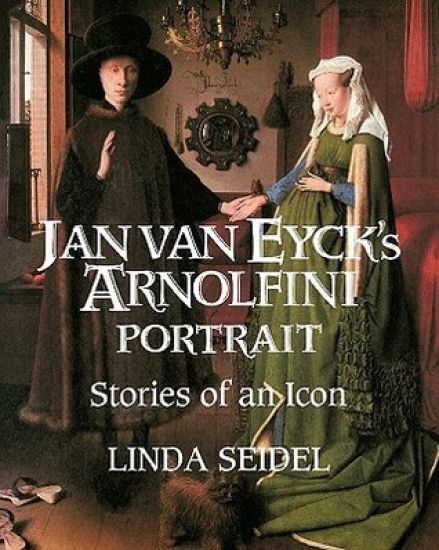
Jan Van Eyck's Arnolfini Portrait

Jan Van Eyck's Arnolfini Portrait

Seidel Linda

Cambridge University Press
1995
pokkari
First published in 1993, Jan van Eyck's Arnolfini Portrait: Stories of an Icon examines one of the earliest and most celebrated paintings in the history of European art from a variety of perspectives. In her lucid analysis, Linda Seidel considers this famous double portrait as social record, legal document, material object, and poetic fiction. Each chapter of her study represents a distinct mode of inquiry and each situates the painting within a different discursive tradition. In this way, Seidel explores a variety of historical practices to illuminate the portrait's painted narrative. Through the implementation of a variety of interpretive strategies and in consultation with different types and categories of information, Stories of an Icon informs the viewer about the function and nature of early European painting, and invites the reader to reflect on the many ways in which works of art can be examined and reconfigured centuries after their creation.
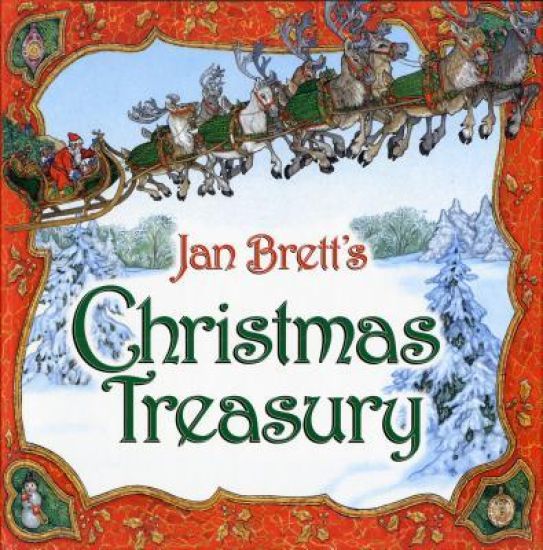
Jan Brett's Christmas Treasury

Jan Brett's Christmas Treasury

Brett Jan

G.P.Putnam's Sons Books for Young Readers'
2018
sidottu
A festive treasury featuring seven of Jan Brett's classic Christmas titles, a perfect gift that will be the center of family holidays for years to come This deluxe Christmas collection is the perfect holiday gift It includes seven of Jan Brett's most beloved Yuletide titles: The Night Before Christmas, Trouble with Trolls, Christmas Trolls, The Mitten, The Hat, The Twelve Days of Christmas, and The Wild Christmas Reindeer.
Bunny Jan's Tale

Bunny Jan's Tale

Jan Grande

Jan and John Grande
2019
nidottu
In 1971, when her husband left her with no money, no car, and two small children, Janice Yates was desperate for work. A few months later she became a waitress for the Playboy Club of Boston. Bunny Jan's Tale is a memoir of injury and chronic pain, as well as love and loss, but most importantly tremendous resilience as one woman struggles to survive.
Jan Gossart and the Invention of Netherlandish Antiquity

Jan Gossart and the Invention of Netherlandish Antiquity

Marisa Anne Bass

PRINCETON UNIVERSITY PRESS
2016
sidottu
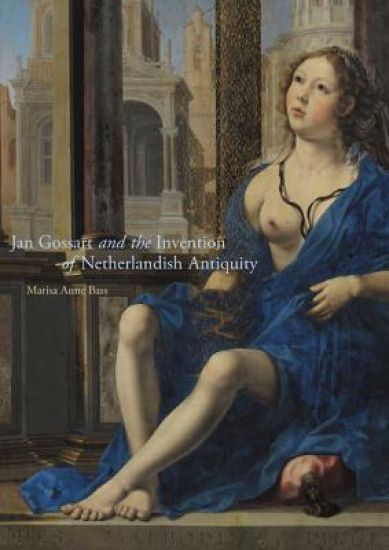
This is the first in-depth historical study of Jan Gossart (ca. 1478-1532), one of the most important painters of the Renaissance in northern Europe. Providing a richly illustrated narrative of the Netherlandish artist's life and art, Marisa Anne Bass shows how Gossart's paintings were part of a larger cultural effort in the Netherlands to assert the region's ancient heritage as distinct from the antiquity and presumed cultural hegemony of Rome. Focusing on Gossart's vibrant, monumental mythological nudes, the book challenges previous interpretations by arguing that Gossart and his patrons did not slavishly imitate Italian Renaissance models but instead sought to contest the idea that the Roman past gave the Italians a monopoly on antiquity. Drawing on many previously unused primary sources in Latin, Dutch, and French, Jan Gossart and the Invention of Netherlandish Antiquity offers a fascinating new understanding of both the painter and the history of northern European art at large.