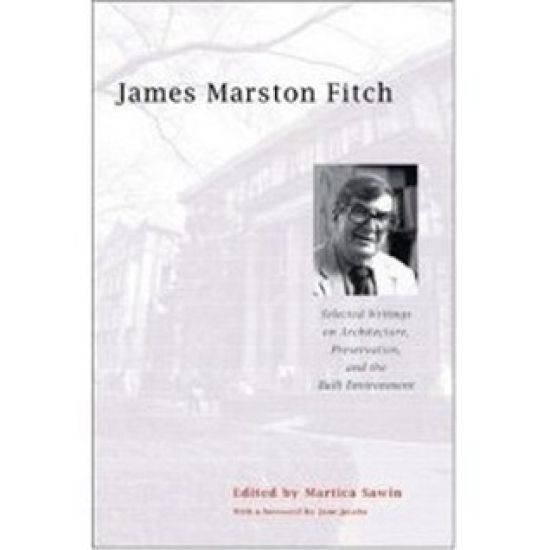
In this anthology of his writings, spanning over sixty years of his professional career, Fitch's incisive ideas and observations on a range of subjects are brought to light in a single, readable volume. Whether a lament of the loss of functionalism in the wake of modernism, a celebration of the architectural perfection embodied in the University of Virginia campus, or an appeal to architects to heed factors of climate and environment in their designs, Fitch's essays are both provocative and pragmatic and always deeply rooted in the human element. In the face of contemporary concerns such as suburban sprawl, energy expenditure, and environmental degradation, Fitch's writings resonate today more than ever.
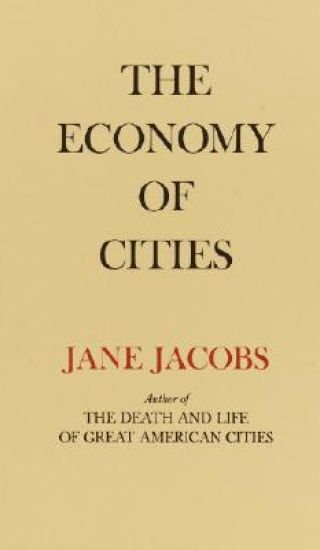
In this book, Jane Jacobs, building on the work of her debut, The Death and Life of Great American Cities, investigates the delicate way cities balance the interplay between the domestic production of goods and the ever-changing tide of imports. Using case studies of developing cities in the ancient, pre-agricultural world, and contemporary cities on the decline, like the financially irresponsible New York City of the mid-sixties, Jacobs identifies the main drivers of urban prosperity and growth, often via counterintuitive and revelatory lessons.
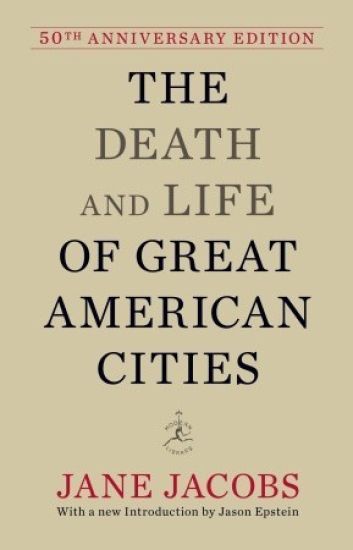
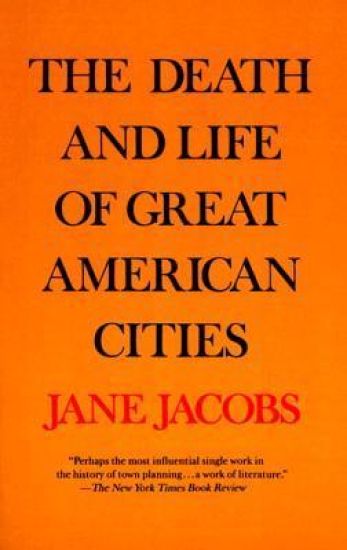
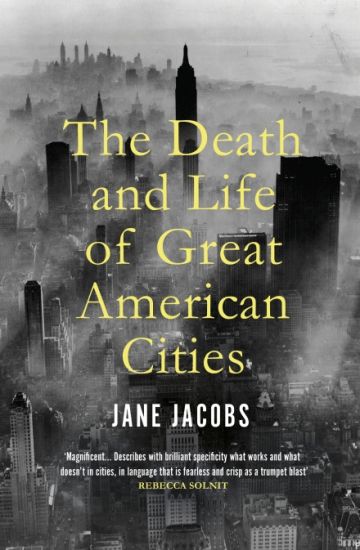
Published to coincide with the 50th anniversary of its initial publication, this special edition of Jane Jacobs's masterpiece, The Death and Life of Great American Cities, features a new Introduction by Jason Epstein, the book's original editor, who provides an intimate perspective on Jacobs herself and unique insights into the creation and lasting influence of this classic. The Death and Life of Great American Cities was described by The New York Times as -perhaps the most influential single work in the history of town planning. . . . It] can also be seen in a much larger context. It is first of all a work of literature; the descriptions of street life as a kind of ballet and the bitingly satiric account of traditional planning theory can still be read for pleasure even by those who long ago absorbed and appropriated the book's arguments.- Jane Jacobs, an editor and writer on architecture in New York City in the early sixties, argued that urban diversity and vitality were being destroyed by powerful architects and city planners. Rigorous, sane, and delightfully epigrammatic, Jane Jacobs's tour de force is a blueprint for the humanistic management of cities. It remains sensible, knowledgeable, readable, and indispensable.
A classic since its publication in 1961, this book is the defintive statement on American cities: what makes them safe, how they function, and why all too many official attempts at saving them have failed.
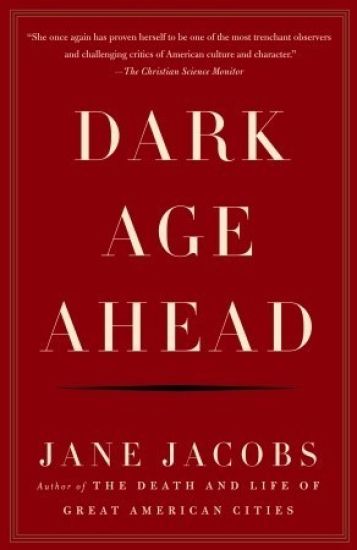
In this indispensable book, urban visionary Jane Jacobs argues that as agrarianism gives way to a technology-based future, we're at risk of cultural collapse. Jacobs--renowned author of The Death and Life of Great American Cities and The Economy of Cities--pinpoints five pillars of our culture that are in serious decay: community and family; higher education; the effective practice of science; taxation, and government; and the self-regulation of the learned professions. The corrosion of these pillars, Jacobs argues, is linked to societal ills such as environmental crisis, racism, and the growing gulf between rich and poor. But this is a hopeful book as well as a warning. Drawing on a vast frame of reference--from fifteenth-century Chinese shipbuilding to Ireland's cultural rebirth--Jacobs suggests how the cycles of decay can be arrested and our way of life renewed. Invigorating and accessible, Dark Age Ahead is not only the crowning achievement of Jane Jacobs' career, but one of the most important works of our time.
In this classic text, Jane Jacobs set out to produce an attack on current city planning and rebuilding and to introduce new principles by which these should be governed.
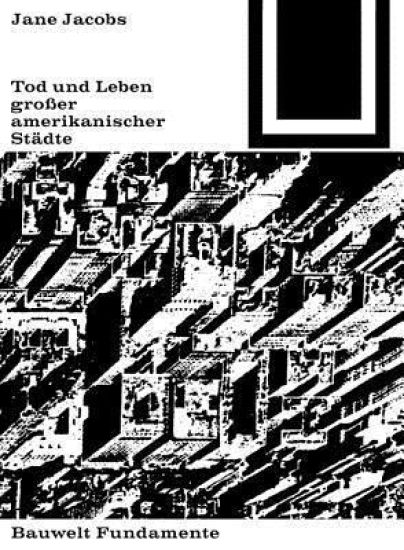
2016 New editorship Elisabeth Blum, Jesko Fezer, Günther Fischer, Angelika Schnell Not unjustly referred to as legendary, this series of books on the history and theory of architecture and urban development was founded in 1963 by Ulrich Conrads, who was joined by Peter Neitzke as a co-editor of the series in the early 1980s. Now numbering over 150 titles, it is the most comprehensive German-language book series covering these fields. Following the deaths of the two longtime editors Ulrich Conrads (2013) and Peter Neitzke (2015), a new editorial committee was formed to continue their work: Elisabeth Blum, Jesko Fezer, Günther Fischer and Angelika Schnell. As the future editors of this series, it is our aim to maintain the course set by our forerunners. The series has fulfilled its original aim of taking stock of the constructional and urban planning ideas and realizations formulated and achieved over the twentieth century in exemplary fashion. The Bauwelt Fundament series actually represents a history of ideas in the fields of planning and building that extends from the beginning of the twentieth century into the present. The second objective of the series, one that is anchored in its very name, will also continue to guide the development of the series, namely the publication of foundational thought – authoritative and fundamental – rather than passing opinion, of theses and polemics relating to the burning architectural and urban planning themes of the time. Penetrating complex interrelationships and probing them with systematic analysis provides the prerequisite for fruitful discourse and ongoing debate. As a forum for such discourses and contributions, the Bauwelt Fundamente series is maintaining its focus on the areas of architecture and urbanism, supplementing it with the always necessary historical investigation of important questions and texts and its extension into other cultural and social fields. A strong international orientation and the desire for more female authors are self-evident in such a context. The original graphic design approach taken by Helmut Lortz to the series is being maintained. As is fitting for a working library, Bauwelt Fundamente titles remain simply designed, using black and white for the logo, the images on the front and back, and the eleven-line summary of the volume’s contents. This is indicative of the broad orientation of Bauwelt Fundamente to all those interested in the cultural and social development that provides the context for the creation of cities, houses and other objects, which in turn create contexts for the world. "Architects, it is said – or hoped – have always been interested in the world beyond the boundaries of their profession." (1) (1) Peter Neitzke, manuscript of his address Nicht mit dem Rücken zur Gesellschaft (Not with one’s back to society) given to mark the fiftieth anniversary of Bauwelt Fundamente in Berlin, 2013.
Staden har blivit het. Vi lever nu i en stadsrenässansens era. Därmed inte sagt att de urbana kvaliteterna blivit fler i våra städer, utan snarare att sensibiliteten för staden och dess möjligheter går att finna hos allt fler. Jane Jacobs klassiker The Death and Life of Great American Cities har på senare tid dragit till sig ett förnyat intresse. Jacobs får oss att skärpa blicken för staden, för livet i staden, för det speciella med stadslivet. Hon ger oss redskap för att förklara hur detta liv blir till, liksom förklaringar till hur bristen på det har uppstått. Hon hjälper oss att formulera kraven på en fungerande stad.
Staden har blivit het. Vi lever nu i en stadsrenässansens era. Därmed inte sagt att de urbana kvaliteterna blivit fler i våra städer, utan snarare att sensibiliteten för staden och dess möjligheter går att finna hos allt fler. Jane Jacobs klassiker "The Death and Life of Great American Cities" har på senare tid dragit till sig ett förnyat intresse. Jacobs får oss att skärpa blicken för staden, för livet i staden, för det speciella med stadslivet. Hon ger oss redskap för att förklara hur detta liv blir till, liksom förklaringar till hur bristen på det har uppstått. Hon hjälper oss att formulera kraven på en fungerande stad.
I Sverige är Jane Jacobs mest känd för att ha revolutionerat den moderna stadsbyggnadsdebatten med boken Life and Death of Great American Cities. Men Jacobs intresse för städers dynamik ledde också till flera betydelsefulla arbeten om ekonomi. I Den spontana staden presenteras för första gången ekonomen Jane Jacobs för en svensk publik. Economy och Cites (1970) och Cities and the Wealth of Nations (1984) var banbrytande verk, som för första gången på ett systematiskt sätt analyserade städer som täta centrum för marknader, kunskapsutveckling och nyföretagsamhet. Det är med direkt inspiration från de två böckerna som Robert Lucas, Richard Florida och Edward Glaeser sedan fortsatte att arbeta med teoriutveckling om städers betydelse för den moderna ekonomins utveckling."Förmodligen finns det ingen enskild tänkare som under de senaste femtio åren har gjort mer för att förändra våra idéer om stadslivets förutsättningar." - Chicago Tribune
A challenging and thought-provoking work that offers a new way of understanding how the sacred haunts the modern through the effect of the uncanny. Gelder and Jacobs show how Aboriginal claims for sacredness radiate out to affect the fortunes and misfortunes of the modern nation.
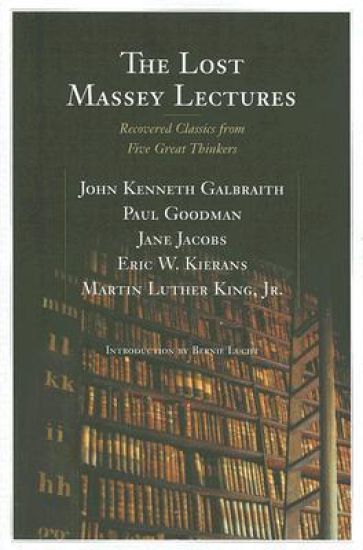
The CBC Massey Lectures, Canada's preeminent public lecture series, are for many of us a highly anticipated annual feast of ideas. However, some of the finest lectures, by some of the greatest minds of modern times, have been lost for many years -- unavailable to the public in any form. Important thinkers whose Massey Lectures are lamentably out of print include the likes of Martin Luther King, Jr., John Kenneth Galbraith, Jane Jacobs, Paul Goodman, and Eric Kierans. Each of these lecturers spoke on a subject at the heart of their intellectual and spiritual concerns -- King on race and prejudice, Galbraith on economics and poverty, Jacobs on Canadian cities and Quebec separatism, Goodman on the moral ambiguity of America, Kierans on globalism and the nation-state -- and their words are not only of considerable historical significance but remain hugely relevant to the problems we face today. At last, a selection of these "lost" lectures is available to a world so hungry for, and yet in such short supply of, innovative ideas. The Lost Massey Lectures includes an introduction by Bernie Lucht, who has been the executive producer of CBC Radio's Ideas and the Massey Lectures since 1984.
Jenny McCartney; Adriano Cirino; Clare Coffey; Joseph Bottum; Brandon McGinley; N.T. Wright; José Corpas; John Thornton; Jane Jacobs; Julian Peters; Eberhard Arnold
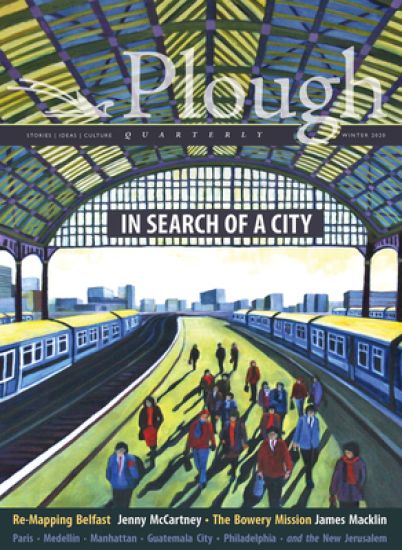
The future of humanity is urban. It might seem a bad move for a magazine named after a farm tool to bring out an issue on cities. Especially if that magazine is published by an Anabaptist community that originated in a back-to-the-land movement and still has the whiff of hayfield and woodlot to it. Why not stick to what you’re good at? Why jump lanes? Because the future of humanity, pretty clearly, is urban. Urbanization is arguably the biggest change of habitat our species has ever undergone. For anyone who cares about the common good of humanity, then, cities need to matter. The modern city is an electrifying concentration of creativity, energy, and cultural dynamism. It’s also still the “cauldron of unholy loves” that Saint Augustine discovered in Carthage one and a half millennia ago. It’s the place where the cruelties of mammon, the hubris of power, and the perversions of lust manifest themselves most crassly. But cities have also given birth to culture and community and to remarkable movements of revival and renewal. In this issue, visit: - Belfast with Jenny McCartney - New York City with James Macklin - Medellín with Adriano Cirino - Pittsburgh with Brandon McGinley - Guatemala City with José Corpas - Philadelphia with Clare Coffey - Chicago with John Thornton Jr. - Paris with Jason Landsel You’ll also find: - Insights on cities from Jane Jacobs, Eberhard Arnold, Augustine, and Philip Britts - reviews of books by Jonathan Foiles, Bethany McKinney Fox, J. Malcolm Garcia, Tatiana Schlossberg, Tim Gautreaux, Philip Bess, and Frederic Morton - art by Gail Brodholt, Michelangelo Buonarroti, Ben Ibebe, Brian Peterson, Chota, Raphael, Gertrude Hermes, Valentino Belloni, Tony Taj, and Aristarkh Lentulov Plough Quarterly features stories, ideas, and culture for people eager to put their faith into action. Each issue brings you in-depth articles, interviews, poetry, book reviews, and art to help you put Jesus’ message into practice and find common cause with others.
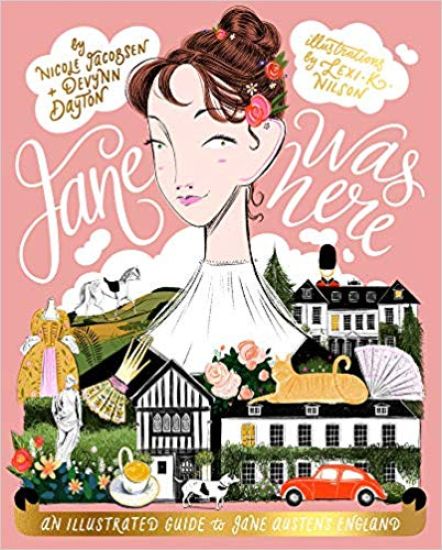
Jane Was Here is a whimsical, illustrated guide to Jane Austen's England – from the settings in her novels and the scenes in the wildly popular television and film adaptations, to her homes and other important locations throughout her own life.Discover the stately homes of Basildon Park and Ham House and the lush landscapes of Stourhead and Stanage Edge. Tread in Jane's footsteps as you explore her school in the old gatehouse of the ruined Reading Abbey; her perfectly-preserved home in her Chawton cottage, where she spent the last eight years of her life; or her final resting place in Winchester Cathedral.Whether you want to take this book as your well-thumbed guide on a real Austenian pilgrimage of your own, or experience the journey from the comfort of your own living room, Jane Was Here will take you – with a tone as wry as Jane’s itself – on an enchanting adventure through the ups and downs of the world of Jane Austen.
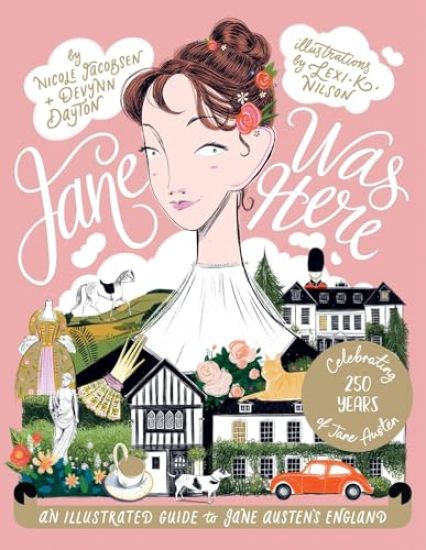
Jane Was Here is a whimsical, illustrated guide to Jane Austen's England – from the settings in her novels and the scenes in the wildly popular television and film adaptations, to her homes and other important locations throughout her own life.Discover the stately homes of Basildon Park and Ham House and the lush landscapes of Stourhead and Stanage Edge. Tread in Jane's footsteps as you explore her school in the old gatehouse of the ruined Reading Abbey; her perfectly-preserved home in her Chawton cottage, where she spent the last eight years of her life; or her final resting place in Winchester Cathedral.Whether you want to embark on a real Austenian pilgrimage of your own, or experience the journey from the comfort of your own living room, Jane Was Here will take you – with a tone as wry as Jane herself's – on an enchanting adventure through the ups and downs of the world of Jane Austen. Publishing in time for the 250th anniversary of Austen's birth, this book is the perfect companion for any Janeite looking for a novel way to celebrate.
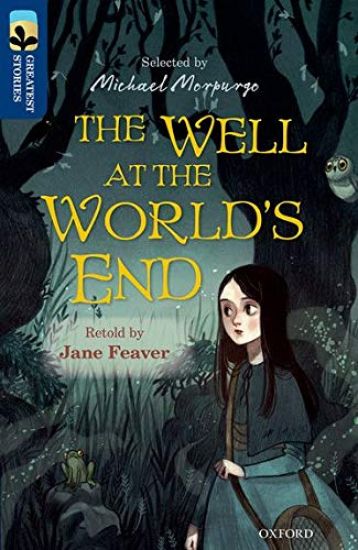
When a girl is sent to find a well at the end of the world, simple acts of kindness lead her to more than she expects. A lost daughter captures the heart of a prince, but will she be reunited with her father? An unfortunate girl is given not one, but two impossible tasks to spin straw into gold, and to guess the name of an unknown creature. The girls will have to use their hearts, charms and wits to find solutions to their problems. TreeTops Greatest Stories offers children some of the worlds best-loved tales in a collection of timeless classics. Top children's authors and talented illustrators work together to bring to life our literary heritage for a new generation, engaging and delighting children. The books are carefully levelled, making it easy to match every child to the right book. Each book contains inside cover notes to help children explore the content, supporting their reading development. Teaching notes on Oxford Owl offer cross-curricular links and activities to support guided reading, writing, speaking and listening.
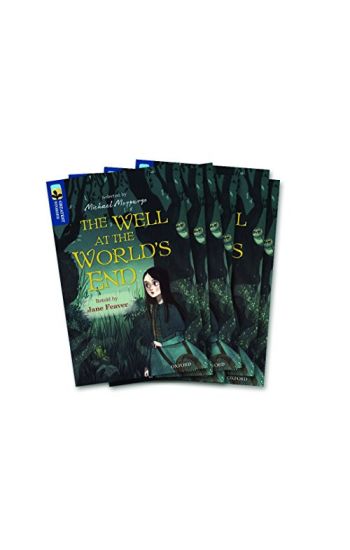
When a girl is sent to find a well at the end of the world, simple acts of kindness lead her to more than she expects. A lost daughter captures the heart of a prince, but will she be reunited with her father? An unfortunate girl is given not one, but two impossible tasks to spin straw into gold, and to guess the name of an unknown creature. The girls will have to use their hearts, charms and wits to find solutions to their problems. TreeTops Greatest Stories offers children some of the worlds best loved tales in a collection of timeless classics. Top children's authors and talented illustrators work together to bring to life our literary heritage for a new generation, engaging and delighting children. The books are carefully levelled, making it easy to match every child to the right book. Each book contains inside cover notes to help children explore the content, supporting their reading development. Teaching notes on Oxford Owl offer cross-curricular links and activities to support guided reading, writing, speaking and listening. This pack provides 6 copies of the same title.
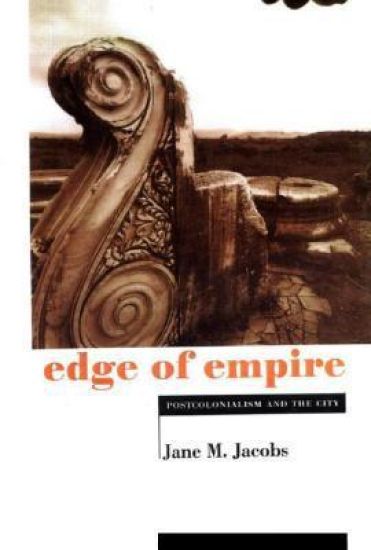
Edge of Empire examines struggles over urban space in three contemporary first world cities in an attempt to map the real geographies of colonialism and postcolonialism as manifest in modern society. From London, the one-time heart of the empire, to Perth and Brisbane, scenes of Aboriginal claims for the sacred in the space of the modern city, Jacobs emphasises the global geography of the local and unravels the spatialised cultural politics of postcolonial processes.Edge of Empire forms the basis for understanding imperialism over space and time, and is a recognition of the unruly spatial politics of race and nation, nature and culture, past and present.
Edge of Empire examines struggles over urban space in three contemporary first world cities in an attempt to map the real geographies of colonialism and postcolonialism as manifest in modern society. From London, the one-time heart of the empire, to Perth and Brisbane, scenes of Aboriginal claims for the sacred in the space of the modern city, Jacobs emphasises the global geography of the local and unravels the spatialised cultural politics of postcolonial processes.Edge of Empire forms the basis for understanding imperialism over space and time, and is a recognition of the unruly spatial politics of race and nation, nature and culture, past and present.