Kirjojen hintavertailu. Mukana 11 244 527 kirjaa ja 12 kauppaa.

Kirjahaku

Etsi kirjoja tekijän nimen, kirjan nimen tai ISBN:n perusteella.

1000 tulosta hakusanalla Jane M. Style

Managing the Monstrous Feminine

Managing the Monstrous Feminine

Jane M. Ussher

Routledge
2005
sidottu
Managing the Monstrous Feminine takes a unique approach to the study of the material and discursive practices associated with the construction and regulation of the female body. Jane Ussher examines the ways in which medicine, science, the law and popular culture combine to produce fictions about femininity, positioning the reproductive body as the source of women's power, danger and weakness.Including sections on 'regulation', 'the subjectification of women' and 'women's negotiation and resistance', this book describes the construction of the 'monstrous feminine' in mythology, art, literature and film, revealing its implications for the regulation and experience of the fecund female body. Critical reviews are combined with case studies and extensive interview material to illuminate discussions of subjects including:the regulation of women through the bodyregimes of knowledge associated with reproductionintersubjectivity and the bodywomen’s narratives of resistance.These insights into the relation between the construction of the female body and women's subjectivity will be of interest to those studying health psychology, social psychology, medical sociology, gender studies and cultural studies. The book will also appeal to all those looking for a high-level introduction to contemporary feminist thought on the female body.
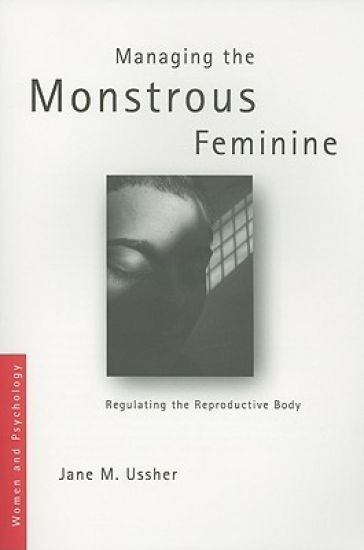
Managing the Monstrous Feminine

Managing the Monstrous Feminine

Jane M. Ussher

Routledge
2005
nidottu
Managing the Monstrous Feminine takes a unique approach to the study of the material and discursive practices associated with the construction and regulation of the female body. Jane Ussher examines the ways in which medicine, science, the law and popular culture combine to produce fictions about femininity, positioning the reproductive body as the source of women's power, danger and weakness.Including sections on 'regulation', 'the subjectification of women' and 'women's negotiation and resistance', this book describes the construction of the 'monstrous feminine' in mythology, art, literature and film, revealing its implications for the regulation and experience of the fecund female body. Critical reviews are combined with case studies and extensive interview material to illuminate discussions of subjects including:the regulation of women through the bodyregimes of knowledge associated with reproductionintersubjectivity and the bodywomen’s narratives of resistance.These insights into the relation between the construction of the female body and women's subjectivity will be of interest to those studying health psychology, social psychology, medical sociology, gender studies and cultural studies. The book will also appeal to all those looking for a high-level introduction to contemporary feminist thought on the female body.

The Madness of Women

The Madness of Women

Jane M. Ussher; Jane Ussher

Routledge
2011
sidottu
Nominated for the 2012 Distinguished Publication Award of the Association for Women in Psychology!Why are women more likely to be positioned or diagnosed as mad than men?If madness is a social construction, a gendered label, as many feminist critics would argue, how can we understand and explain women's prolonged misery and distress? In turn, can we prevent or treat women’s distress, in a non-pathologising women centred way? The Madness of Women addresses these questions through a rigorous exploration of the myths and realities of women's madness.Drawing on academic and clinical experience, including case studies and in-depth interviews, as well as on the now extensive critical literature in the field of mental health, Jane Ussher presents a critical multifactorial analysis of women's madness that both addresses the notion that madness is a myth, and yet acknowledges the reality and multiple causes of women's distress. Topics include:The genealogy of women’s madness – incarceration of difficult or deviant womenRegulation through treatmentDeconstrucing depression, PMS and borderline personality disorderMadness as a reasonable response to objectification and sexual violenceWomen’s narratives of resistanceThis book will be of great interest to students and scholars of psychology, gender studies, sociology, women's studies, cultural studies, counselling and nursing.
The Madness of Women

The Madness of Women

Jane M. Ussher; Jane Ussher

Routledge
2011
nidottu
Nominated for the 2012 Distinguished Publication Award of the Association for Women in Psychology!Why are women more likely to be positioned or diagnosed as mad than men?If madness is a social construction, a gendered label, as many feminist critics would argue, how can we understand and explain women's prolonged misery and distress? In turn, can we prevent or treat women’s distress, in a non-pathologising women centred way? The Madness of Women addresses these questions through a rigorous exploration of the myths and realities of women's madness.Drawing on academic and clinical experience, including case studies and in-depth interviews, as well as on the now extensive critical literature in the field of mental health, Jane Ussher presents a critical multifactorial analysis of women's madness that both addresses the notion that madness is a myth, and yet acknowledges the reality and multiple causes of women's distress. Topics include:The genealogy of women’s madness – incarceration of difficult or deviant womenRegulation through treatmentDeconstrucing depression, PMS and borderline personality disorderMadness as a reasonable response to objectification and sexual violenceWomen’s narratives of resistanceThis book will be of great interest to students and scholars of psychology, gender studies, sociology, women's studies, cultural studies, counselling and nursing.
Striving for Military Stability in Europe
This new book traces the changing relationship between Russia and NATO through the prism of conventional arms control, focusing on the negotiation, implementation and adaptation of the Conventional Armed Forces in Europe (CFE) Treaty. The author shows that arms control agreements reflect relations between parties and how the CFE Treaty codified parity between NATO and the Soviet-led Warsaw Treaty Organization (WTO) in November 1990. Although still widely viewed in the West as the cornerstone of security and stability in post-Cold War Europe, from the Russian perspective the treaty was soon overtaken by events. With the collapse of the WTO and the Soviet Union in 1991, it became impossible to talk of a military balance between East and West in Europe, especially as all the former WTO states opted for membership in NATO. This study details how the other state parties worked hard to adjust and adapt the treaty to meet Russian concerns about its new weakness relative to NATO, and the issues that complicated Russian acceptance of CFE limits. This book will be of great interest to all students of NATO, European politics, international relations and strategic studies in general.
Striving for Military Stability in Europe
This new book traces the changing relationship between Russia and NATO through the prism of conventional arms control, and focuses on the negotiation, implementation and adaptation of the Conventional Armed Forces in Europe (CFE) Treaty. It shows that arms control agreements reflect rather than affect relations between parties and how the CFE Treaty codified parity between NATO and the Soviet-led Warsaw Treaty Organization (WTO) in November 1990. It also shows how the CFE Treaty reflected the status quo at the end of the cold war, but the benefits were short lived, at least for Russia. Although still widely viewed in the west as the cornerstone of security and stability in post-Cold War Europe, from the Russian perspective the treaty was soon overtaken by events. With the collapse of the WTO and the Soviet Union in 1991, it became impossible to talk of a military balance between east and west in Europe, especially as all the former WTO states opted for membership in NATO. This study details how the other state parties worked hard to adjust and adapt the treaty to meet Russian concerns about its new weakness relative to NATO, and the issues that complicated Russian acceptance of CFE limits. This book will be of great interest to all students of NATO, European politics, international relations and strategic studies in general.
The Talking Cure

The Talking Cure

Jane M. Shattuc

Routledge
1997
nidottu
The Talking Cure examines four nationally syndicated television talk shows--Donahue, The Oprah Winfrey Show,Geraldo and Sally Jessy Raphael--which are primarily devoted to feminine culture and issues. Serving as one of the few public forums where working-class women and those with different sexual orientations have a voice, these talk shows represent American TV at its most radical. Shattuc examines the tension between talk's feminist politics and the television industry, who, in their need to appeal to women, trades on sensation, stereotypes and fears in order to engender product consumption. However, this genre is not a one-way form of social interaction. The female audience complies and resists in a complex give-and-take, and it is this relationship which TheTalking Cure aims to understand and reveal.
Probability with R

Probability with R

Jane M. Horgan

John Wiley Sons Inc
2008
sidottu
A Complete Introduction to probability AND its computer Science Applications USING R Probability with R serves as a comprehensive and introductory book on probability with an emphasis on computing-related applications. Real examples show how probability can be used in practical situations, and the freely available and downloadable statistical programming language R illustrates and clarifies the book's main principles. Promoting a simulation- and experimentation-driven methodology, this book highlights the relationship between probability and computing in five distinctive parts: The R Language presents the essentials of the R language, including key procedures for summarizing and building graphical displays of statistical data. Fundamentals of Probability provides the foundations of the basic concepts of probability and moves into applications in computing. Topical coverage includes conditional probability, Bayes' theorem, system reliability, and the development of the main laws and properties of probability. Discrete Distributions addresses discrete random variables and their density and distribution functions as well as the properties of expectation. The geometric, binomial, hypergeometric, and Poisson distributions are also discussed and used to develop sampling inspection schemes. Continuous Distributions introduces continuous variables by examining the waiting time between Poisson occurrences. The exponential distribution and its applications to reliability are investigated, and the Markov property is illustrated via simulation in R. The normal distribution is examined and applied to statistical process control. Tailing Off delves into the use of Markov and Chebyshev inequalities as tools for estimating tail probabilities with limited information on the random variable. Numerous exercises and projects are provided in each chapter, many of which require the use of R to perform routine calculations and conduct experiments with simulated data. The author directs readers to the appropriate Web-based resources for installing the R software package and also supplies the essential commands for working in the R workspace. A related Web site features an active appendix as well as a forum for readers to share findings, thoughts, and ideas. With its accessible and hands-on approach, Probability with R is an ideal book for a first course in probability at the upper-undergraduate and graduate levels for readers with a background in computer science, engineering, and the general sciences. It also serves as a valuable reference for computing professionals who would like to further understand the relevance of probability in their areas of practice.
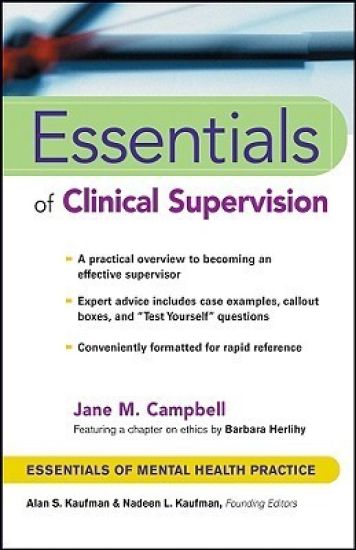
Essentials of Clinical Supervision

Essentials of Clinical Supervision

Jane M. Campbell

John Wiley Sons Inc
2005
nidottu
Essentials of Supervision presents, in the popular Essentials format, the key information students need to learn in a course on supervision. Utilizing pedagogical tools such as call-out boxes, Test Yourself questions, and case studies, the author provides step-by-step guidelines for effective planning, goal setting, and evaluation, along with tips for giving constructive feedback and applying coaching strategies to motivate supervisees. She also clearly explains how to manage paperwork and describes specialized techniques, such as using video in supervision. This informative text also includes a special section on ethics authored by a leading expert in the field.
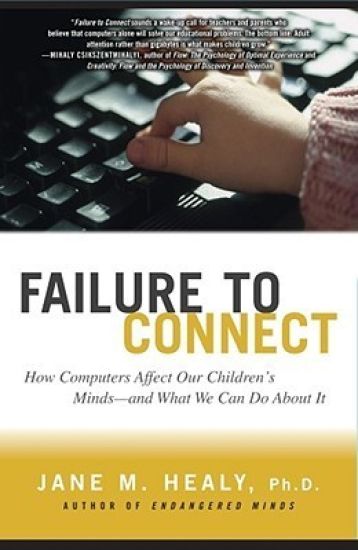
Failure to Connect

Failure to Connect

Jane M. Healy

Simon Schuster
2000
pokkari
Though most parents of school-age and even preschool children believe that computers are essential to learning, the truth, according to Jane Healy, is that more important educational priorities are being pushed aside in the rush to buy computers and computer related products. Once a bedazzled enthusiast of educational computing, now a troubled sceptic, Healy spent hundreds of hours talking to school administrators, teachers, parents, and students to provide this balanced and thoughtful evaluation of computers in the school and at home. In FAILURE TO CONNECT, she examines the benefits and drawbacks of computer use for children, arguing that time spent on computers is often time stolen from other developmentally important activities such as reading and creative play. Healy also suggests that most schools overlook the most critical technology component: adequate teacher training. FAILURE TO CONNECT also explores the effects computers have on children's health, brain development, creativity and their social and emotional needs. Based on years of research, FAILURE TO CONNECT is a timely and eye-opening examination of the central questions we must confront as technology increasingly influences the way we educate our children.
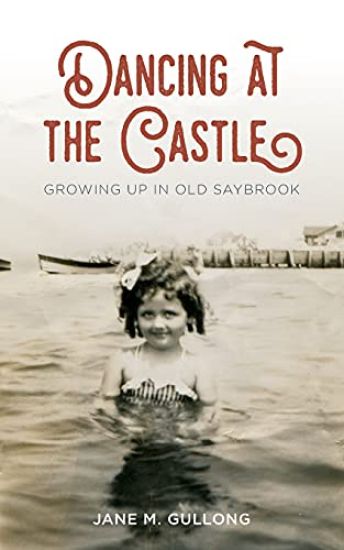
Dancing at the Castle: Growing Up in Old Saybrook
Dancing at the Castle, a memoir, is the story of an American girl coming of age in the 1950s on the shore of Long Island Sound. It is set in Old Saybrook, Connecticut, where Katharine Hepburn also lived, enjoying the same view of the lighthouses at the mouth of the Connecticut River. Growing up, the author found work and love in the shoreline resorts. The book celebrates family life, boating and deep connection to place, particularly Old Saybrook with its colonial history, beautiful beach communities, and abundant water views.
Healing with Water

Healing with Water

Jane M. Adams

Manchester University Press
2015
sidottu
Healing with water provides a medical and social history of English spas and hydropathic centres from the early nineteenth to the mid-twentieth centuries. It argues that demand for healing rather than leisure drove the growth of a number of inland resorts which became renowned for expertise and treatment facilities. These aspects were actively marketed to doctors and patients. It assesses the influence of these centres on broader patterns of resort development, leisure and sociability in Britain. The study explores ideas about water’s healing potential and the varied ways it was used to maintain good health and treat a variety of illnesses. Water cures were endorsed by both orthodox and unorthodox practitioners and attracted growing numbers of patients into the twentieth century. It examines how institutions and skilled workers shaped the development of specialist resorts and considers why the NHS support for spa treatment declined from the 1960s.
Colombia and World War I

Colombia and World War I

Jane M. Rausch

Lexington Books
2014
sidottu
In the horrific conflict of 1914–1918 known first as “The Great War” and later as World War I, Latin American nations were peripheral players. Only after the U.S. entered the fighting in 1917 did eight of the twenty republics declare war. Five others broke diplomatic relations with Germany, while seven maintained strict neutrality. These diplomatic stances, even those of the two actual belligerents—Brazil and Cuba—did little to tip the balance of victory in favor of the allies, and perhaps that explains why historians have paid scant attention to events in Latin America related to the war. Nevertheless, it is still remarkable that Percy Alvin Martin’s classic account, Latin American and the War, first published in 1925, remains the standard text on the topic. This book attempts to redress this gap by taking a fresh look at developments between 1914 and 1921 in one of the neutral nations—Colombia. This period, which coincides with the presidency of José Vicente Concha (1914–1918) and his successor, Marco Fidel Suárez (1918–1921), is filled with momentous developments not only in foreign policy, when Colombian diplomats pressured by German, British and U.S. propaganda struggled to maintain strict neutrality, but also on the domestic scene as the newly installed Conservative regime faced political and economic crises that sparked numerous and violent protests. Rausch's examination of the administrations of Concha and Suárez supports Martin’s assertion that even those countries neutral in the Great War were not immune from its effects.
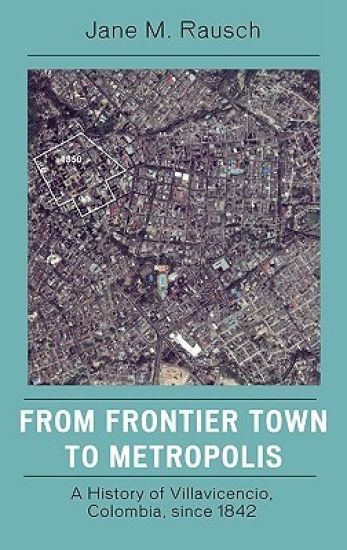
From Frontier Town to Metropolis

From Frontier Town to Metropolis

Jane M. Rausch

Rowman Littlefield Publishers
2007
sidottu
Although Villavicencio, the capital of the Department of Meta, is located just 120 miles from Bogotá, the mountains of the eastern Andean Cordillera lies between the two cities. As a result, after its founding in 1842, Villavicencio remained an isolated frontier outpost for more than one hundred years—even though "El Portal de la Llanura" ("the Gateway to the Plains") provided the principal access to Colombia's tropical plains (Llanos), a vast grassy region cut by tributaries connecting with the Meta and Guaviare rivers and eventually the Orinoco. Nineteenth- and twentieth-century governments in Bogotá regarded the Llanos as the "Eastern Lands of Promise," underestimating the geographic and climatic obstacles to their development. From Frontier Town to Metropolis recounts the history of the town and explains how, by the twenty-first century, it became a thriving metropolis with a population nearing three hundred thousand. During the next sixty years, it became the principal urban center of the Llanos despite the continual presence of militant guerrillas, paramilitaries, and drug traffickers. This book examines the developments that transformed Villavicencio, drawing on data collected about the Colombian Llanos over a period of forty years. Noted researcher Jane M. Rausch offers a detailed treatment of the development of Villavicencio and the Department of Meta as a microcosm of Colombia's eastern frontier. The book incorporates a wealth of research published in Spanish by Colombian scholars in the last twenty years and is the first history of Villavicencio available to English-speaking scholars. It considers the important topics of when a frontier is no longer a frontier and the role played by frontier images in contemporary nationalism.
From Frontier Town to Metropolis

From Frontier Town to Metropolis

Jane M. Rausch

Rowman Littlefield Publishers
2007
nidottu
Although Villavicencio, the capital of the Department of Meta, is located just 120 miles from Bogotá, the mountains of the eastern Andean Cordillera lies between the two cities. As a result, after its founding in 1842, Villavicencio remained an isolated frontier outpost for more than one hundred years—even though "El Portal de la Llanura" ("the Gateway to the Plains") provided the principal access to Colombia's tropical plains (Llanos), a vast grassy region cut by tributaries connecting with the Meta and Guaviare rivers and eventually the Orinoco. Nineteenth- and twentieth-century governments in Bogotá regarded the Llanos as the "Eastern Lands of Promise," underestimating the geographic and climatic obstacles to their development. From Frontier Town to Metropolis recounts the history of the town and explains how, by the twenty-first century, it became a thriving metropolis with a population nearing three hundred thousand. During the next sixty years, it became the principal urban center of the Llanos despite the continual presence of militant guerrillas, paramilitaries, and drug traffickers. This book examines the developments that transformed Villavicencio, drawing on data collected about the Colombian Llanos over a period of forty years. Noted researcher Jane M. Rausch offers a detailed treatment of the development of Villavicencio and the Department of Meta as a microcosm of Colombia's eastern frontier. The book incorporates a wealth of research published in Spanish by Colombian scholars in the last twenty years and is the first history of Villavicencio available to English-speaking scholars. It considers the important topics of when a frontier is no longer a frontier and the role played by frontier images in contemporary nationalism.
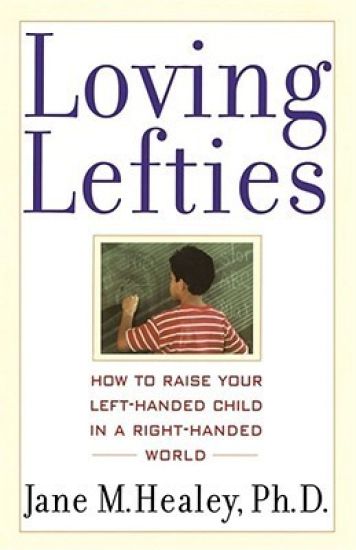
Loving Lefties

Loving Lefties

Jane M. Healey

Atria Books
2001
pokkari
For a left-handed child in a right-friendly world, tasks that should come easily can seem confusing and frustrating. Parents of the more than 400,000 lefties born annually in the United States have had no resource that deals seriously with the learning difficulties their children face -- until now. Loving Lefties is the first ever guide to address all the issues pertinent to left-handedness: the biology, the physiology, and the psychological and practical effects of being a left-handed child. An essential aid for parents, teachers, and professionals, it covers the history and mythology of the left-handed brain, and offers sound advice on: ? recognizing left-handedness in a child ? making your child's home and school lefty-friendly ? giving your child appropriate direction and encouragement ? identifying the advantages of being left-handed ? helping your child learn the skills his right-handed parents, instructors, and siblings consider basic. Filled with resource lists, guidelines, quick tips, answers to frequently asked questions, case studies, and anecdotes, Loving Lefties is the essential guide for raising a happy, healthy southpaw.
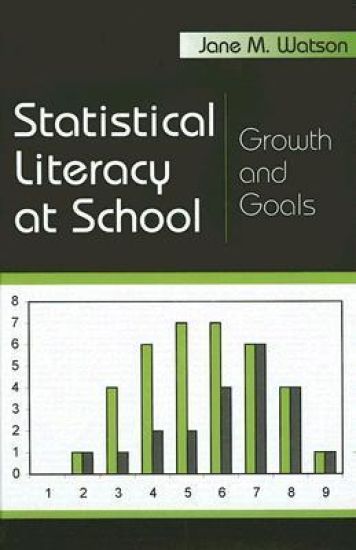
Statistical Literacy at School

Statistical Literacy at School

Jane M. Watson

Routledge Member of the Taylor and Francis Group
2006
sidottu
This book reveals the development of students' understanding of statistical literacy. It provides a way to "see" student thinking and gives readers a deeper sense of how students think about important statistical topics. Intended as a complement to curriculum documents and textbook series, it is consistent with the current principles and standards of the National Council of Teachers of Mathematics. The term "statistical literacy" is used to emphasize that the purpose of the school curriculum should not be to turn out statisticians but to prepare statistically literate school graduates who are prepared to participate in social decision making. Based on ten years of research--with reference to other significant research as appropriate--the book looks at students' thinking in relation to tasks based on sampling, graphical representations, averages, chance, beginning inference, and variation, which are essential to later work in formal statistics. For those students who do not proceed to formal study, as well as those who do, these concepts provide a basis for decision making or questioning when presented with claims based on data in societal settings. Statistical Literacy at School: Growth and Goals:*establishes an overall framework for statistical literacy in terms of both the links to specific school curricula and the wider appreciation of contexts within which chance and data-handling ideas are applied;*demonstrates, within this framework, that there are many connections among specific ideas and constructs;*provides tasks, adaptable for classroom or assessment use, that are appropriate for the goals of statistical literacy; *presents extensive examples of student performance on the tasks, illustrating hierarchies of achievement, to assist in monitoring gains and meeting the goals of statistical literacy; and*includes a summary of analysis of survey data that suggests a developmental hierarchy for students over the years of schooling with respect to the goal of statistical literacy.Statistical Literacy at School: Growth and Goals is directed to researchers, curriculum developers, professionals, and students in mathematics education as well those across the curriculum who are interested in students' cognitive development within the field; to teachers who want to focus on the concepts involved in statistical literacy without the use of formal statistical techniques; and to statisticians who are interested in the development of student understanding before students are exposed to the formal study of statistics.
Statistical Literacy at School

Statistical Literacy at School

Jane M. Watson

Routledge Member of the Taylor and Francis Group
2006
nidottu
This book reveals the development of students' understanding of statistical literacy. It provides a way to "see" student thinking and gives readers a deeper sense of how students think about important statistical topics. Intended as a complement to curriculum documents and textbook series, it is consistent with the current principles and standards of the National Council of Teachers of Mathematics. The term "statistical literacy" is used to emphasize that the purpose of the school curriculum should not be to turn out statisticians but to prepare statistically literate school graduates who are prepared to participate in social decision making. Based on ten years of research--with reference to other significant research as appropriate--the book looks at students' thinking in relation to tasks based on sampling, graphical representations, averages, chance, beginning inference, and variation, which are essential to later work in formal statistics. For those students who do not proceed to formal study, as well as those who do, these concepts provide a basis for decision making or questioning when presented with claims based on data in societal settings. Statistical Literacy at School: Growth and Goals:*establishes an overall framework for statistical literacy in terms of both the links to specific school curricula and the wider appreciation of contexts within which chance and data-handling ideas are applied;*demonstrates, within this framework, that there are many connections among specific ideas and constructs;*provides tasks, adaptable for classroom or assessment use, that are appropriate for the goals of statistical literacy; *presents extensive examples of student performance on the tasks, illustrating hierarchies of achievement, to assist in monitoring gains and meeting the goals of statistical literacy; and*includes a summary of analysis of survey data that suggests a developmental hierarchy for students over the years of schooling with respect to the goal of statistical literacy.Statistical Literacy at School: Growth and Goals is directed to researchers, curriculum developers, professionals, and students in mathematics education as well those across the curriculum who are interested in students' cognitive development within the field; to teachers who want to focus on the concepts involved in statistical literacy without the use of formal statistical techniques; and to statisticians who are interested in the development of student understanding before students are exposed to the formal study of statistics.
Food Safety

Food Safety

Jane M. Hemminger

Iowa State University Press
2000
nidottu
Commissioned by the Iowa Dietetic Association, Food Safety: A Guide to What You Really Need to Know is a totally updated edition of Food Sanitation and Safety Study Course, Second Edition. This book provides practical techniques and the most up-to-date Hazard Analysis Critical Control Points (HACCP) guidelines for handling food hazards, food preparation and service, cleaning and sanitation, trash, and pests. Each chapter has figures and tables for increased understanding of the material and ends with study questions. Answers to the questions are provided. Appendixes feature a HACCP Flowchart, a Sanitation Walk-Through of all food preparation areas, and Recommended Storage Times for the refrigerator/freezer and the storeroom. A glossary provides specific definitions of key terms.