Kirjojen hintavertailu. Mukana 11 342 296 kirjaa ja 12 kauppaa.

Kirjahaku

Etsi kirjoja tekijän nimen, kirjan nimen tai ISBN:n perusteella.

1000 tulosta hakusanalla Janet Allen

Complete Criminal Law

Complete Criminal Law

Janet Loveless; Mischa Allen; Caroline Derry

Oxford University Press
2025
nidottu
Concepts, cases, and commentary combine to stimulate active learning, critical thinking, and perceptive analysis. Complete Criminal Law offers students a carefully blended combination of the concepts and cases of criminal law, accompanied by insightful commentary - a combination designed to encourage critical thinking, stimulate analysis, and promote a complete understanding. Key features: - Clear explanations of the legal concepts that underpin the subject give students a strong base on which to build - Extracts from cases and primary materials show at first hand the law at work and will deepen understanding - Thought-provoking thinking points that help develop the ability to analyse and critically evaluate the law - Review questions and self-testing tools will help consolidate knowledge and give students the confidence to perform well in assessments New to this edition: - A further level of sub-headings has been added, to improve structure and navigation throughout. - The offence of non-fatal strangulation or suffocation (s 75A Serious Crime Act 2015, inserted by s 70 Domestic Abuse Act 2021), now in force, is considered in detail. - Changes introduced by the Economic Crime and Corporate Transparency Act 2023 including a new offence of failing to prevent fraud. Digital formats and resources The 9th edition is available for students and institutions to purchase in a variety of formats: the e-book and Law Trove offer a mobile experience and convenient access along with multiple-choice questions, answer guidance to problem questions and thinking points, extra exam-style questions, functionality tools, navigation features and links that offer extra learning support. For more information about e-books, please visit www.oxfordtextbooks.co.uk/ebooks

Herding Cats and Other Alien Creatures: The Indian Creek Anthology Series Volume 21

Herding Cats and Other Alien Creatures: The Indian Creek Anthology Series Volume 21

Janet Wolanin Alexander; Marian Allen; J. Baumgartle

Per Bastet Publications LLC
2017
nidottu
There is magic in these nine stories, two poems, and single work of creative nonfiction. Among its wild array of visions are a band of ruffians waylaying "Living Books" on a strangely Earth-like planet; a cat-like alien astronaut whose ship lands at the bottom of an English garden; a hilarious case of "cat-o-strophic spelling" in New York City and some more cosmically fortunate magic at a school for young wizards; a Native American "ghost walker" fighting evil "spiderlings" on a distant asteroid; and a comedy - set in more familiar Hoosier territory - of middle-aged lovers in crisis, a rebellious teenager, and a biker gang leader named Mongo.
Mission Hills

Mission Hills

Allen A. Hazard; Janet Marie O'Dea

Arcadia Publishing (SC)
2015
nidottu
Several visionaries shaped the character that defines present-day Mission Hills. First, there was Sarah Miller, stepdaughter of Captain Johnston of the SS Orizaba. She inherited land from him and built a dream home overlooking Old Town and the Pacific Ocean. There was also Kate Sessions, the mother of Balboa Park, whose nursery growing grounds just outside the original Mission Hills subdivision proved difficult for her clientele to traverse, leading her to convince transportation mogul John D. Spreckles to expand the streetcar route to accommodate her business. In 1905, George Marston, a San Diego civic leader, commissioned landscape architect and urban planner John Nolan to implement a development plan for the city. Nolan's plan, however, was never adopted. In 1908, as if to prove what was possible, Marston's syndicate formed the restricted subdivision of Mission Hills. Then, in 1909, the city announced plans to celebrate the opening of the Panama Canal. The fuse was lit, and the boom that followed brought builders and skilled artisans to San Diego. As a result, Mission Hills became architecturally magnificent.
Architecting Networked Engineered Systems

Architecting Networked Engineered Systems

Jelena Milisavljevic-Syed; Janet K. Allen; Sesh Commuri; Farrokh Mistree

Springer Nature Switzerland AG
2020
sidottu
In this monograph, the authors demonstrate how the integration of adaptability, operability, and re-configurability in the design of complex systems is indispensable for the further digitization of engineering systems in smart manufacturing. Globalization of the customer base has resulted in distributed and networked manufacturing systems. However, current design methods are not suitable to address variations in product design, changes in production scale, or variations in product quality necessitated by dynamic changes in the market. Adaptability, operability, and re-configurability are key characteristics that are necessary to address the limitations of the current methods used to design networked manufacturing systems. In recent years, the digital transformation driving Industry 4.0 has had an enormous impact on globally distributed manufacturing. Digitalisation, the integration of digital technology into networked engineered systems, is increasingly being adopted to respond to changes in the market. This is achieved by means of (a) the concurrent design of adaptable systems, (b) addressing flexibility in design parameters, (c) conducting an operability analysis, and (d) employing a reconfiguration strategy to address faults and variances in product quality and re-establish connectivity among the elements in the system. The design of manufacturing systems in the age of Industry 4.0 is addressed in this monograph. The authors introduce the concept of a ‘smart platform’ and a computational framework for the digitalization of networked manufacturing systems. They also suggest how the framework and techniques in this monograph are applicable beyond the manufacturing domain for architecting networked engineered systems in other industries such as chemical processes and health care, that are being transformed through the adoption of the Industry 4.0 construct.
Architecting Robust Co-Design of Materials, Products, and Manufacturing Processes

Architecting Robust Co-Design of Materials, Products, and Manufacturing Processes

Anand Balu Nellippallil; Janet K. Allen; B. P. Gautham; Amarendra K. Singh; Farrokh Mistree

Springer Nature Switzerland AG
2020
sidottu
This book explores systems-based, co-design, introducing a “Decision-Based, Co-Design” (DBCD) approach for the co-design of materials, products, and processes.In recent years there have been significant advances in modeling and simulation of material behavior, from the smallest atomic scale to the macro scale. However, the uncertainties associated with these approaches and models across different scales need to be addressed to enable decision-making resulting in designs that are robust, that is, relatively insensitive to uncertainties. An approach that facilitates co-design is needed across material, product design and manufacturing processes. This book describes a cloud-based platform to support decisions in the design of engineered systems (CB-PDSIDES), which feature an architecture that promotes co-design through the servitization of decision-making, knowledge capture and use templates that allow previous solutions to be reused. Placing the platform in the cloud aids masscollaboration and open innovation.A valuable reference resource reference on all areas related to the design of materials, products and processes, the book appeals to material scientists, design engineers and all those involved in the emerging interdisciplinary field of integrated computational materials engineering (ICME).
Architecting Robust Co-Design of Materials, Products, and Manufacturing Processes

Architecting Robust Co-Design of Materials, Products, and Manufacturing Processes

Anand Balu Nellippallil; Janet K. Allen; B. P. Gautham; Amarendra K. Singh; Farrokh Mistree

Springer Nature Switzerland AG
2021
nidottu
This book explores systems-based, co-design, introducing a “Decision-Based, Co-Design” (DBCD) approach for the co-design of materials, products, and processes.In recent years there have been significant advances in modeling and simulation of material behavior, from the smallest atomic scale to the macro scale. However, the uncertainties associated with these approaches and models across different scales need to be addressed to enable decision-making resulting in designs that are robust, that is, relatively insensitive to uncertainties. An approach that facilitates co-design is needed across material, product design and manufacturing processes. This book describes a cloud-based platform to support decisions in the design of engineered systems (CB-PDSIDES), which feature an architecture that promotes co-design through the servitization of decision-making, knowledge capture and use templates that allow previous solutions to be reused. Placing the platform in the cloud aids masscollaboration and open innovation.A valuable reference resource reference on all areas related to the design of materials, products and processes, the book appeals to material scientists, design engineers and all those involved in the emerging interdisciplinary field of integrated computational materials engineering (ICME).
Telephone Fund Raising

Telephone Fund Raising

Jonathan A. Segal; Janet B. Allen

Springer-Verlag New York Inc.
2011
nidottu
There was a time when bake sales, raffles, and the like provided non­ profit-making organizations with the funds they needed to flourish. Those days have long passed. Non-profit-making organizations now find themselves competing with one another for public and private sup­ port just to survive. The organizations that will survive are the ones that are not afraid of sophisticated fund-raising methods. Telephone fund raising is such a method. There is virtually no limit to the amount of money telephone fund raising can bring your organization. Telephone fund raising is so successful because it is personal. It allows for dialogue. More specifical­ ly, it allows the caller to answer questions, deal with complaints, negoti­ ate hard, and stress those aspects of the program that interest the poten­ tial contributor most. No method of fund raising other than a personal visit can do this. And, of course, visiting all your potential contributors personally would be impossible. This book provides you with all the information you need to devel­ op and maintain a lucrative telephone fund-raising program on your own. The general principles of telephone fund raising apply universally. Therefore, the principles will work for you, whatever your cause. They also will apply whatever your need. Whether you need a long-term telephone fund-raising program bringing in money at a steadily increas­ ing rate over the years or a short-term program lasting one month, one week, or even one day, this book is for you.
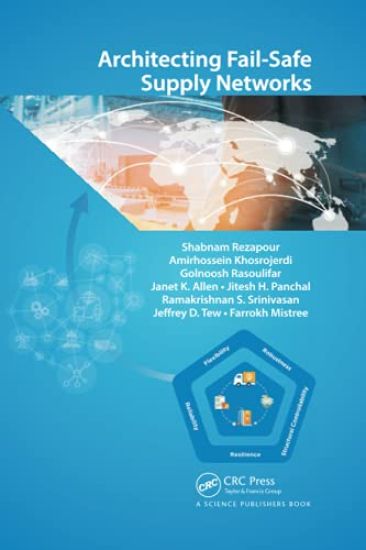
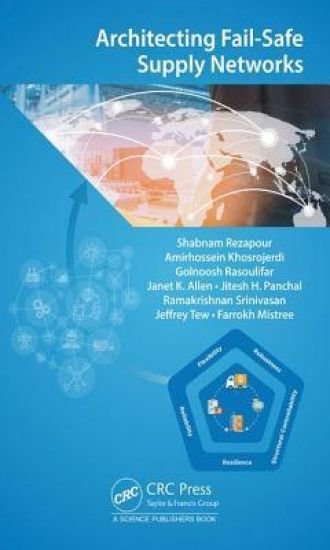
Architecting Fail-Safe Supply Networks

Architecting Fail-Safe Supply Networks

Shabnam Rezapour; Amirhossein Khosrojerdi; Golnoosh Rasoulifar; Janet K. Allen; Jitesh H. Panchal; Ramakrishnan S. Srinivasan; Jeffrey D. Tew; Farrokh Mistree

CRC Press
2021
nidottu
A fail-safe supply network is designed to mitigate the impact of variations and disruptions on people and corporations. This is achieved by (1) developing a network structure to mitigate the impact of disruptions that distort the network structure and (2) planning flow through the network to neutralize the effects of variations. In this monograph, we propose a framework, develop mathematical models and provide examples of fail-safe supply network design. We show that, contrary to current thinking as embodied in the supply network literature, disruption management decisions made at the strategic network design level are not independent from variation management decisions made at the operational level. Accordingly, we suggest that it is beneficial to manage disruptions and variations concurrently in supply networks. This is achieved by architecting fail-safe supply networks, which are characterized by the following elements: reliability, robustness, flexibility, structural controllability, and resilience. Organizations can use the framework presented in this monograph to manage variations and disruptions. Managers can select the best operational management strategies for their supply networks considering variations in supply and demand, and identify the best network restoration strategies including facility fortification, backup inventory, flexible production capacity, flexible inventory, and transportation route reconfiguration. The framework is generalizable to other complex engineered networks.
Architecting Fail-Safe Supply Networks

Architecting Fail-Safe Supply Networks

Shabnam Rezapour; Amirhossein Khosrojerdi; Golnoosh Rasoulifar; Janet K. Allen; Jitesh H. Panchal; Ramakrishnan S. Srinivasan; Jeffrey D. Tew; Farrokh Mistree

CRC Press
2018
sidottu
A fail-safe supply network is designed to mitigate the impact of variations and disruptions on people and corporations. This is achieved by (1) developing a network structure to mitigate the impact of disruptions that distort the network structure and (2) planning flow through the network to neutralize the effects of variations. In this monograph, we propose a framework, develop mathematical models and provide examples of fail-safe supply network design. We show that, contrary to current thinking as embodied in the supply network literature, disruption management decisions made at the strategic network design level are not independent from variation management decisions made at the operational level. Accordingly, we suggest that it is beneficial to manage disruptions and variations concurrently in supply networks. This is achieved by architecting fail-safe supply networks, which are characterized by the following elements: reliability, robustness, flexibility, structural controllability, and resilience. Organizations can use the framework presented in this monograph to manage variations and disruptions. Managers can select the best operational management strategies for their supply networks considering variations in supply and demand, and identify the best network restoration strategies including facility fortification, backup inventory, flexible production capacity, flexible inventory, and transportation route reconfiguration. The framework is generalizable to other complex engineered networks.
Architecting A Knowledge-Based Platform for Design Engineering 4.0

Architecting A Knowledge-Based Platform for Design Engineering 4.0

Zhenjun Ming; Anand Balu Nellippallil; Ru Wang; Janet K. Allen; Guoxin Wang; Yan Yan; Farrokh Mistree

Springer Nature Switzerland AG
2022
sidottu
"Design Engineering for Industry 4.0 (DE4.0) represents the 'human-cyber-physical view of the systems realization ecosystem “that is necessary to accommodate the drivers of Industry 4.0 (IoX) and provide an open ecosystem for the realization of complex systems. Seamless integration of digital threads and digital twins throughout the product design, the development and fulfillment lifecycle; the ability to accommodate diverse and rapidly changing technologies; and the mechanisms to facilitate the creation of new opportunities for the design of products, processes, services, and systems are some of the desired characteristics of DE4.0."Jiao, R., Commuri, S. Panchal, J., Milisavljevic-Syed, J, Allen, J.K., Mistree, F. and Schaefer, D., "Design Engineering in the Age of Industry 4.0," ASME Journal of Mechanical Design, 143(7), 070801, 25 pages.In keeping with the Design Engineering 4.0 construct the authors describe architecting a computer platform to support human designers make decisions associated with the realization of complex engineered systems. The platform is designed to facilitate end-to-end digital integration, customization and personalization, agile collaboration networks, open innovation, co-creation and crowdsourcing, product servitization and anything-as-a-service.Recognizing that simulation models are abstractions of reality the authors opt for a satisficing strategy instead of an optimization strategy. They include fundamentals and then describe tools for architecting a knowledge-based platforms for decision support. Challenges associated with developing a computational platform for decision support for the realization of complex engineered systems in the context of Design Engineering 4.0 are identified. Constructs for formulating design decisions (e.g., selection, compromise, and coupled decisions), knowledge modelling schemes (e.g., ontologies and modular templates), diagrams for designing decision workflows (e.g., the PEI-X diagram), and some analytical methods for robust design under uncertainty are presented. The authors describe integrating the knowledge-based platform to architect a cloud-based platform for decision support promoting co-design and cloud-based design communication essential for mass collaboration and open innovation for Design Engineering 4.0.This book is a valuable resource for researchers, design engineers, and others working on pushing the boundary of digitized manufacturing to include Design Engineering 4.0 principles in designing products, processes, and services.
Architecting A Knowledge-Based Platform for Design Engineering 4.0

Architecting A Knowledge-Based Platform for Design Engineering 4.0

Zhenjun Ming; Anand Balu Nellippallil; Ru Wang; Janet K. Allen; Guoxin Wang; Yan Yan; Farrokh Mistree

Springer Nature Switzerland AG
2023
nidottu
"Design Engineering for Industry 4.0 (DE4.0) represents the 'human-cyber-physical view of the systems realization ecosystem “that is necessary to accommodate the drivers of Industry 4.0 (IoX) and provide an open ecosystem for the realization of complex systems. Seamless integration of digital threads and digital twins throughout the product design, the development and fulfillment lifecycle; the ability to accommodate diverse and rapidly changing technologies; and the mechanisms to facilitate the creation of new opportunities for the design of products, processes, services, and systems are some of the desired characteristics of DE4.0."Jiao, R., Commuri, S. Panchal, J., Milisavljevic-Syed, J, Allen, J.K., Mistree, F. and Schaefer, D., "Design Engineering in the Age of Industry 4.0," ASME Journal of Mechanical Design, 143(7), 070801, 25 pages.In keeping with the Design Engineering 4.0 construct the authors describe architecting a computer platform to support human designers make decisions associated with the realization of complex engineered systems. The platform is designed to facilitate end-to-end digital integration, customization and personalization, agile collaboration networks, open innovation, co-creation and crowdsourcing, product servitization and anything-as-a-service.Recognizing that simulation models are abstractions of reality the authors opt for a satisficing strategy instead of an optimization strategy. They include fundamentals and then describe tools for architecting a knowledge-based platforms for decision support. Challenges associated with developing a computational platform for decision support for the realization of complex engineered systems in the context of Design Engineering 4.0 are identified. Constructs for formulating design decisions (e.g., selection, compromise, and coupled decisions), knowledge modelling schemes (e.g., ontologies and modular templates), diagrams for designing decision workflows (e.g., the PEI-X diagram), and some analytical methods for robust design under uncertainty are presented. The authors describe integrating the knowledge-based platform to architect a cloud-based platform for decision support promoting co-design and cloud-based design communication essential for mass collaboration and open innovation for Design Engineering 4.0.This book is a valuable resource for researchers, design engineers, and others working on pushing the boundary of digitized manufacturing to include Design Engineering 4.0 principles in designing products, processes, and services.
Essential Reads for the Modern Lawyer

Essential Reads for the Modern Lawyer

Alison Nolan; Peter Alfandary; Christopher Bockmann; Edward Walker; Sophie Cameron; Eimear McCann; Bendita Cynthia Malakia; Morgan Reams; Claire-Elaine Arthurs; Janet Taylor-Hall; Lucie Allen; Jonathan Bourne; Andrea Kennedy; David Freeman; Joanna Gaudoin; Michelle Elstein; Brian Dunlop; Jaap Bosman; Richard Brzakala; Nathan Cemenska; Stephanie Corey; Jelena Schidzig; Rebecca Harding; Andrew Nicholson; Uwais Iqbal; Joanne Brook; Clare Harman Clark; Helen Foord

Globe Law and Business Ltd
2024
nidottu
Globe Law and Business' journal Modern Lawyer is known for helping professionals navigate the changing legal services landscape, featuring insights from in-house counsel, legal tech specialists, law companies, law firms, and business leaders, who all bring a fresh perspective to legal services delivery. Essential Reads for the Modern Lawyer draws on the journal’s wealth of opinion pieces, interviews and thought leadership, which together comprise an invaluable and wide-ranging analysis of the topics that really matter to those working throughout the legal ecosystem. The book is divided into six key areas: Business development. Finance. Culture. Leadership. Talent. Technology. Bringing together the journal’s most popular and impactful articles, this collection is essential for any professional working in legal services looking to develop their career.