Kirjojen hintavertailu. Mukana 11 420 112 kirjaa ja 12 kauppaa.

Kirjahaku

Etsi kirjoja tekijän nimen, kirjan nimen tai ISBN:n perusteella.

1000 tulosta hakusanalla Janet Jacobs

Contemporary Perspectives on Jane Jacobs
Jane Jacobs's famous book The Death and Life of Great American Cities (1961) has challenged the discipline of urban planning and led to a paradigm shift. Controversial in the 1960s, most of her ideas became generally accepted within a decade or so after publication, not only in North America but worldwide, as the articles in this volume demonstrate. Based on cross-disciplinary and transnational approaches, this book offers new insights into her complex and often contrarian way of thinking as well as analyses of her impact on urban planning theory and the consequences for planning practice. Now, more than 50 years after the initial publication, in a period of rapid globalisation and deregulated approaches in planning, new challenges arise. The contributions in this book argue that it is not possible simply to follow Jane Jacobs's ideas to the letter, but instead it is necessary to contextualize them, to look for relevant lessons for cities and planners, and critically to re-evaluate why and how some of her ideas might be updated. Bringing together an international team of scholars and writers, this volume develops conclusions based on new research as to how her work can be re-interpreted under different circumstances and utilized in the current debate about the proclaimed ’millennium of the city’, the 21st century.
The Urban Wisdom of Jane Jacobs
Here for the first time is a thoroughly interdisciplinary and international examination of Jane Jacobs’s legacy. Divided into four parts: I. Jacobs, Urban Philosopher; II. Jacobs, Urban Economist; II. Jacobs, Urban Sociologist; and IV. Jacobs, Urban Designer, the book evaluates the impact of Jacobs’s writings and activism on the city, the professions dedicated to city-building and, more generally, on human thought. Together, the editors and contributors highlight the notion that Jacobs’s influence goes beyond planning to philosophy, economics, sociology and design. They set out to answer such questions as: What explains Jacobs’s lasting appeal and is it justified? Where was she right and where was she wrong? What were the most important themes she addressed? And, although Jacobs was best known for her work on cities, is it correct to say that she was a much broader thinker, a philosopher, and that the key to her lasting legacy is precisely her exceptional breadth of thought?
Contemporary Perspectives on Jane Jacobs
Jane Jacobs's famous book The Death and Life of Great American Cities (1961) has challenged the discipline of urban planning and led to a paradigm shift. Controversial in the 1960s, most of her ideas became generally accepted within a decade or so after publication, not only in North America but worldwide, as the articles in this volume demonstrate. Based on cross-disciplinary and transnational approaches, this book offers new insights into her complex and often contrarian way of thinking as well as analyses of her impact on urban planning theory and the consequences for planning practice. Now, more than 50 years after the initial publication, in a period of rapid globalisation and deregulated approaches in planning, new challenges arise. The contributions in this book argue that it is not possible simply to follow Jane Jacobs's ideas to the letter, but instead it is necessary to contextualize them, to look for relevant lessons for cities and planners, and critically to re-evaluate why and how some of her ideas might be updated. Bringing together an international team of scholars and writers, this volume develops conclusions based on new research as to how her work can be re-interpreted under different circumstances and utilized in the current debate about the proclaimed ’millennium of the city’, the 21st century.
The Urban Archetypes of Jane Jacobs and Ebenezer Howard

The Urban Archetypes of Jane Jacobs and Ebenezer Howard

Abraham Akkerman

University of Toronto Press
2020
sidottu
Ebenezer Howard, an Englishman, and Jane Jacobs, a naturalized Canadian, personify the twentieth century’s opposing outlooks on cities. Howard envisaged small towns, newly built from scratch and comprised of single-family homes with small gardens, while Jacobs embraced existing inner-city neighbourhoods that emphasized the verve of the living street. Both figures have had their share of supporters as well as detractors: Howard's conceptualization received criticism for its uniformity and alienation from the city core, while Jacobs’s urban vision came to be recognized as the result of invasive gentrification. Presenting Howard and Jacobs within a psychocultural context, The Urban Archetypes of Jane Jacobs and Ebenezer Howard addresses our urban crisis in its recognition that "city form is a gendered, allegorical medium expressing femininity and masculinity within two founding features of the built environment: void and volume." These founding contrasts represent both tension as well as the opportunity for fusion between pairs of urban polarities: human scale against superscale, gait against speed, and spontaneity against surveillance. In their respective attitudes, Howard and Jacobs have come to embrace the two ancient archetypes of the Garden and the Citadel, leaving it to future generations to blend their two contrarian stances.
The Urban Archetypes of Jane Jacobs and Ebenezer Howard

The Urban Archetypes of Jane Jacobs and Ebenezer Howard

Abraham Akkerman

University of Toronto Press
2020
pokkari
Ebenezer Howard, an Englishman, and Jane Jacobs, a naturalized Canadian, personify the twentieth century’s opposing outlooks on cities. Howard had envisaged small towns, newly built from scratch, fashioned on single family homes with small gardens. Jacobs embraced existing inner-city neighbourhoods emphasizing the verve of the living street. From Howard’s idea, the American Dream of garden suburbs had emerged, yet his conceptualization of a modern city received criticism for being uniform and alienated from the rest of the city. Similarly, at the turn of the new century, Jacobs’ inner-city neighbourhoods came to be recognized as the result of commodification, vacillating between poverty and newly discovered hubs of urban authenticity. Presenting Howard and Jacobs within a psychocultural context, The Urban Archetypes of Jane Jacobs and Ebenezer Howard addresses our urban crisis in the recognition that "city form" is a gendered, allegorical medium expressing femininity and masculinity within two founding features of the built environment: void and volume. Both founding contrasts bring tensions, but also the opportunities of fusion between pairs of urban polarities: human scale against superscale, gait against speed, and spontaneity against surveillance. Jacobs and Howard, in their respective attitudes, have come to embrace the two ancient archetypes, the Garden and the Citadel, leaving it to future generations to blend their two contrarian stances.
An Analysis of Jane Jacobs's The Death and Life of Great American Cities

An Analysis of Jane Jacobs's The Death and Life of Great American Cities

Martin Fuller; Ryan Moore

Macat International Limited
2017
nidottu
Despite having no formal training in urban planning, Jane Jacobs deftly explores the strengths and weaknesses of policy arguments put forward by American urban planners in the era after World War II. They believed that the efficient movement of cars was of more value in the development of US cities than the everyday lives of the people living there. By carefully examining their relevance in her 1961 book, The Death and Life of Great American Cities, Jacobs dismantles these arguments by highlighting their shortsightedness. She evaluates the information to hand and comes to a very different conclusion, that urban planners ruin great cities, because they don’t understand that it is a city’s social interaction that makes it great. Proposals and policies that are drawn from planning theory do not consider the social dynamics of city life. They are in thrall to futuristic fantasies of a modern way of living that bears no relation to reality, or to the desires of real people living in real spaces. Professionals lobby for separation and standardization, splitting commercial, residential, industrial, and cultural spaces. But a truly visionary approach to urban planning should incorporate spaces with mixed uses, together with short, walkable blocks, large concentrations of people, and a mix of new and old buildings. This creates true urban vitality.
An Analysis of Jane Jacobs's The Death and Life of Great American Cities

An Analysis of Jane Jacobs's The Death and Life of Great American Cities

Martin Fuller; Ryan Moore

Macat International Limited
2017
sidottu
Despite having no formal training in urban planning, Jane Jacobs deftly explores the strengths and weaknesses of policy arguments put forward by American urban planners in the era after World War II. They believed that the efficient movement of cars was of more value in the development of US cities than the everyday lives of the people living there. By carefully examining their relevance in her 1961 book, The Death and Life of Great American Cities, Jacobs dismantles these arguments by highlighting their shortsightedness. She evaluates the information to hand and comes to a very different conclusion, that urban planners ruin great cities, because they don’t understand that it is a city’s social interaction that makes it great. Proposals and policies that are drawn from planning theory do not consider the social dynamics of city life. They are in thrall to futuristic fantasies of a modern way of living that bears no relation to reality, or to the desires of real people living in real spaces. Professionals lobby for separation and standardization, splitting commercial, residential, industrial, and cultural spaces. But a truly visionary approach to urban planning should incorporate spaces with mixed uses, together with short, walkable blocks, large concentrations of people, and a mix of new and old buildings. This creates true urban vitality.
Samhällsbyggandet som mysterium : Jane Jacobs idéer om människor, städer och ekonomier

Samhällsbyggandet som mysterium : Jane Jacobs idéer om människor, städer och ekonomier

Jesper Meijling; Tigran Haas; Ola Andersson; Vania Ceccato; Peter Elmlund; Jill L. Grant; Ebba Högström; Peter L. Laurence; Michael W. Mehaffy; Eva Minoira; Saskia Sassen; Per Svensson; Catharina Thörn

Nordic Academic Press
2018
sidottu
Jane Jacobs blev känd över världen för sin bok The Death and Life of Great American Cities. Genom boken och sin aktivism på gatunivå i 1960-talets New York blev hon en centralfigur inom stadsplaneringsfrågor och hennes insatser har efter genombrottet ständigt tolkats och debatterats.Den tidiga berömmelsen verkar emellertid ha överskuggat hennes författarskap trots att det sträcker sig fram till 2004. Jacobs breddade sitt tänkande till att omfatta samhällsbyggandet i dess vidaste mening från ekonomi och ekologi till politik och samhällsfilosofi. Hennes böcker tvingar läsaren att reflektera och vidga sitt synfält. Jacobs är mer aktuell än någonsin i den ovissa värld vi möter idag.I Samhällsbyggandet som mysterium tar tretton initierade skribenter upp unika aspekter av de brännande frågor hon väcker vad är det som i grunden gör ett samhälle hållbart? Tillsammans tecknar de medverkande för första gången på svenska en nära nog heltäckande bild av Jacobs verksamhet från 1930-tal till 2000-tal, och sätter in hennes arbeten i nutida kontexter. Boken utgör samtidigt en introduktion och guide till Jacobs författarskap som kan inspirera till vidare läsning och upptäckter. Medverkande:Ola Andersson. Praktiserande arkitekt och författare, Stockholm. Vania Ceccato. Professor i samhällsplanering, Stockholm. Peter Elmlund. Civilekonom och projektledare, Stockholm. Jill L. Grant. Professor emerita i planering, Halifax, Nova Scotia. Tigran Haas. Lektor och docent i stadsplanering, Stockholm. Ebba Högström. Lektor i fysisk planering, Nacka och Karlskrona. Peter L. Laurence. Lektor i arkitektur, Clemson, South Carolina. Michael W. Mehaffy. Arkitekturforskare, Portland, Oregon. Jesper Meijling. Forskare och författare, Stockholm. Eva Minoura. Praktiserande arkitekt,Stockholm. Saskia Sassen. Professor i sociologi, New York. Per Svensson. Journalist och författare, Malmö och Stockholm. Catharina Thörn. Docent i sociologi, Göteborg.
Essays on Jane Jacobs

Essays on Jane Jacobs

Jesper Meijling

BOKFORLAGET STOLPE AB
2020
sidottu
Jane Jacobs (19162006) är en ikon inom stadsplanering och blev känd världen över för sin bok The Death and Life of Great American Cities. Boken och hennes aktivism på gatunivå i 1960-talets New York gjorde Jacobs till en centralfigur inom stadsplaneringsfrågor, och hennes insatser har ständigt tolkats och debatterats. I den här antologin tar initierade skribenter upp unika aspekter av de brännande frågor hon väcker vad är det som i grunden gör ett samhälle hållbart? Tillsammans tecknar de medverkande en nära nog heltäckande bild av Jacobs verksamhet från 1930-tal till 2000-tal och sätter in hennes arbete i en nutida kontext.
Wrestling with Moses: How Jane Jacobs Took on New York's Master Builder and Transformed the American City
The rivalry of Jane Jacobs and Robert Moses, a struggle for the soul of a city, is one of the most dramatic and consequential in modern American history. To a young Jane Jacobs, Greenwich Village, with its winding cobblestone streets and diverse makeup, was everything a city neighborhood should be. But consummate power broker Robert Moses, the father of many of New York's most monumental development projects, thought neighborhoods like Greenwich Village were badly in need of "urban renewal." Standing up against government plans for the city, Jacobs marshaled popular support and political power against Moses, whether to block traffic through her beloved Washington Square Park or to prevent the construction of the Lower Manhattan Expressway, an elevated superhighway that would have destroyed centuries-old streetscapes and displaced thousands of families. By confronting Moses and his vision, Jacobs forever changed the way Americans understood the city. Her story reminds us of the power we have as individuals to confront and defy reckless authority.
The Nature of Economies

The Nature of Economies

Jane Jacobs

Vintage Books
2001
pokkari
From the revered author of the classic The Death and Life of Great American Cities comes a new book that will revolutionize the way we think about the economy.Starting from the premise that human beings "exist wholly within nature as part of natural order in every respect," Jane Jacobs has focused her singular eye on the natural world in order to discover the fundamental models for a vibrant economy. The lessons she discloses come from fields as diverse as ecology, evolution, and cell biology. Written in the form of a Platonic dialogue among five fictional characters, The Nature of Economies is as astonishingly accessible and clear as it is irrepressibly brilliant and wise–a groundbreaking yet humane study destined to become another world-altering classic. "Provocative…engaging…. [Jacobs] is the archetypal iconoclast."–The Boston Book Review
James Marston Fitch

James Marston Fitch

Jane Jacobs

WW Norton Co
2007
nidottu
In this anthology of his writings, spanning over sixty years of his professional career, Fitch's incisive ideas and observations on a range of subjects are brought to light in a single, readable volume. Whether a lament of the loss of functionalism in the wake of modernism, a celebration of the architectural perfection embodied in the University of Virginia campus, or an appeal to architects to heed factors of climate and environment in their designs, Fitch's essays are both provocative and pragmatic and always deeply rooted in the human element. In the face of contemporary concerns such as suburban sprawl, energy expenditure, and environmental degradation, Fitch's writings resonate today more than ever.
The Economy of Cities

The Economy of Cities

Jane Jacobs

VINTAGE
1970
pokkari
In this book, Jane Jacobs, building on the work of her debut, The Death and Life of Great American Cities, investigates the delicate way cities balance the interplay between the domestic production of goods and the ever-changing tide of imports. Using case studies of developing cities in the ancient, pre-agricultural world, and contemporary cities on the decline, like the financially irresponsible New York City of the mid-sixties, Jacobs identifies the main drivers of urban prosperity and growth, often via counterintuitive and revelatory lessons.
The Death and Life of Great American Cities

The Death and Life of Great American Cities

Jane Jacobs

Modern Library Inc
2011
sidottu
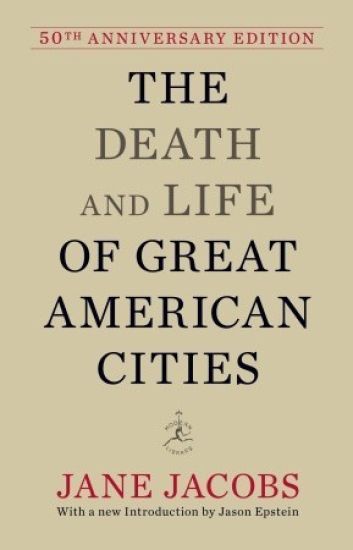
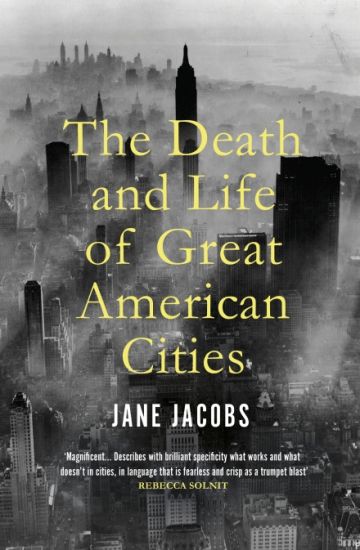
Published to coincide with the 50th anniversary of its initial publication, this special edition of Jane Jacobs's masterpiece, The Death and Life of Great American Cities, features a new Introduction by Jason Epstein, the book's original editor, who provides an intimate perspective on Jacobs herself and unique insights into the creation and lasting influence of this classic. The Death and Life of Great American Cities was described by The New York Times as -perhaps the most influential single work in the history of town planning. . . . It] can also be seen in a much larger context. It is first of all a work of literature; the descriptions of street life as a kind of ballet and the bitingly satiric account of traditional planning theory can still be read for pleasure even by those who long ago absorbed and appropriated the book's arguments.- Jane Jacobs, an editor and writer on architecture in New York City in the early sixties, argued that urban diversity and vitality were being destroyed by powerful architects and city planners. Rigorous, sane, and delightfully epigrammatic, Jane Jacobs's tour de force is a blueprint for the humanistic management of cities. It remains sensible, knowledgeable, readable, and indispensable.
Dark Age Ahead

Dark Age Ahead

Jane Jacobs

Random House USA Inc
2005
pokkari
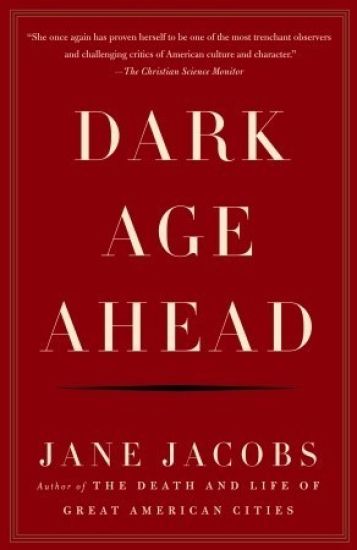
In this indispensable book, urban visionary Jane Jacobs argues that as agrarianism gives way to a technology-based future, we're at risk of cultural collapse. Jacobs--renowned author of The Death and Life of Great American Cities and The Economy of Cities--pinpoints five pillars of our culture that are in serious decay: community and family; higher education; the effective practice of science; taxation, and government; and the self-regulation of the learned professions. The corrosion of these pillars, Jacobs argues, is linked to societal ills such as environmental crisis, racism, and the growing gulf between rich and poor. But this is a hopeful book as well as a warning. Drawing on a vast frame of reference--from fifteenth-century Chinese shipbuilding to Ireland's cultural rebirth--Jacobs suggests how the cycles of decay can be arrested and our way of life renewed. Invigorating and accessible, Dark Age Ahead is not only the crowning achievement of Jane Jacobs' career, but one of the most important works of our time.