Kuvakirja Jari Saarion uskomattomasta soutumatkasta!Mitä kaikkea tapahtui Jari Saarion hurjalla matkalla Atlantin yli vuonna 2023? Kuvakirja uskomattomasta soutumatkasta sopii täydellisesti seikkailutarinoita janoaville lapsille.Kaikki suomalaiset tuntevat Jari Saarion, soutajan, joka ylitti yksin Atlantin valtameren. Tämä uljaasti kuvitettu kirja kertoo hänen tarinansa lapsille sopivan jännittävällä tavalla ja kertoo matkasta kiinnostavia yksityiskohtia. Mistä koko suuri soutumatka sai alkunsa? Millaista on soutaa päivä toisensa perästä yksin keskellä merta? Entä mitä veneessä oikein syödään? Kirjailija-toimittaja Mikko Kalajoki kertoo tositarinan soutumatkan ihmeellisistä vaiheista perustuen Saarion kanssa käymiinsä keskusteluihin. Tarinaa tukevat Petteri Mattilan valtameren suuruuden upeasti tavoittavat kuvat.Jari Saario singahti suomalaisten suosikiksi soudettuaan yksin Atlantin valtameren yli. Pian hän on lähdössä uudelle uhkarohkealle soutumatkalle. Kirjailija Mikko Kalajoki on julkaissut kiitettyjä teoksia lasten- ja nuortenkirjoista rikosromaaneihin. Petteri Mattila on kuvittaja ja kokenut purjehtija.
Paula ja Jari rakentavat taloa. Jari on Paulaa vanhempi, jalat maassa oleva insinööri. Paula opiskelee ja etsii vielä itseään. Pakkaa sekoittaa lapsuudessa ja nuoruudessa koetut vääryydet tai oikeammin väärinkäsitykset. Paula etsii vastausta meediolta, jonne hänet on houkutellut petollinen ystävä Sofia. Jari kipuilee murtuneena omien muistojensa kanssa. Hän pettää Paulaa Sofian kanssa, vain yhden kerran, hän vannoo. Paula joutuu sairaalaan. Jari makaa sohvalla ja itkee lapsuuttaan. Paula astuu remmiin ja huolehtii, että talo valmistuu ajallaan. Näytelmän lopussa selviää, että molemmat naiset ovat raskaana ja tilanne ratkeaa pahimmalla mahdollisella tavalla. Kyseessä on puhdas ihmissuhdedraama. Ikäero ja luonteiden erilaisuus ei välttämättä selitä kaikkea.
This book is aimed at postgraduate students in applied mathematics as well as at engineering and physics students with a ?rm background in mathem- ics. The ?rst four chapters can be used as the material for a ?rst course on inverse problems with a focus on computational and statistical aspects. On the other hand, Chapters 3 and 4, which discuss statistical and nonstati- ary inversion methods, can be used by students already having knowldege of classical inversion methods. There is rich literature, including numerous textbooks, on the classical aspects of inverse problems. From the numerical point of view, these books concentrate on problems in which the measurement errors are either very small or in which the error properties are known exactly. In real-world pr- lems, however, the errors are seldom very small and their properties in the deterministic sensearenot wellknown.For example,inclassicalliteraturethe errornorm is usuallyassumed to be a known realnumber. In reality,the error norm is a random variable whose mean might be known.
Radio Frequency IDentification (RFID) is an automatic identification method, relying on storing and remotely retrieving data using devices called RFID tags or transponders. An RFID tag is a small object that can be attached to or incorporated into a product, animal or person. An RFID tag contains an antenna to enable it to receive and respond to Radio-Frequency (RF) queries from an RFID reader or interrogator. Passive tags require no internal power source, whereas active tags require a power source. As of today (2006), the concepts of ubiquitous computing and ambient intelligence are becoming widespread. In order for these to become a reality, a number of key technologies are required. In brief, these technologies need to be sensitive, responsive, interconnected, contextualised, transparent and intelligent. RFID, and in particular passive RFID tags, are such a technology. In order to deliver the necessary characteristics that could lead to ambient intelligence, however, there are some challenges that need to be addressed. Remote powering of the tags is probably the most important challenge. Issues concerning the antenna-tag interface and the rectifier design, that allow the RF signal to be converted to Direct Current (DC) are top priorities. Secondly, the communication link and the reader should be optimized. The RF signal that contains the tag data suffers from a power of four decay with the distance between tag and reader. As a result, both the reader sensitivity and the tag backscattered power efficiency have to be maximized. Long-range powering, as well as sufficient communication quality, are the guidelines of this work. This work proposes a linear two-port model for an N-stage modified-Greinacher full wave rectifier. It predicts the overall conversion efficiency at low power levels where the diodes are operating near their threshold voltage. The output electrical behavior of the rectifier is calculated as a function of the received power and the antenna parameters. Moreover, the two-port parameter values are computed for particular input voltages and output currents for the complete N-stage rectifier circuit, using only the measured I-V and C-V characteristics of a single diode. Also presented in this work is an experimental procedure to measure how the impedance modulation at the tag side affects the signal at the reader. The method allows the tag designer to efficiently predict the effect of a modulator design at the system level and gives a useful instrument to choose the most appropriate impedances. Finally, the design of a fully-integrated, remotely powered and addressable RFID tag working at 2.45GHz is described. The achieved operating range at a 4W Effective Isotropically Radiated Power (EIRP) reader transmit power is at most 12 m. The Integrated Circuit (IC) is implemented in a 0.5 um silicon-on-sapphire technology. A state-of-the-art rectifier design is embedded to supply energy to the transponder. Inductive matching and a folded-dipole antenna are key elements for achieving this performance.
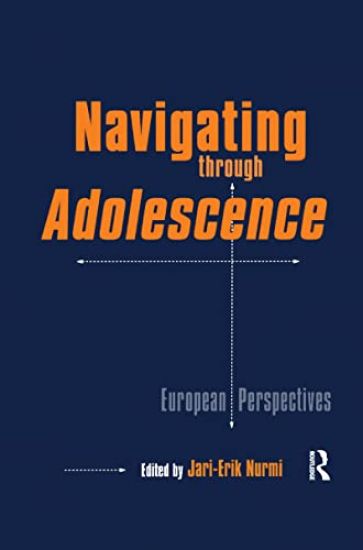
Adolescence is a journey to adulthood. This book seeks to examine the ways in which young people navigate through this period of their lives, and the consequences their efforts have on their well-being and problem behaviours. In twelve chapters, European researchers will conceptualize, present data and discuss the following: 1) the explorations and commitments adolescents construct as tools with which to direct their lives across the diversity of pathways to adulthood 2) the kinds of identities and self-concepts they develop during this process 3) the role of significant others, such as parents and peers, play in this navigation through adolescence.
This book offers an illuminating account of the development of Soviet music and music political discussions in the 1920s and the 1930s. With its innovative conceptual historical approach, the work examines the discussions on Soviet music in close relation both to pre-revolutionary cultural ideas of Russia and political demands of the newly established Soviet state. By analyzing the use and transformations of such political concepts as democracy, people, Russia, and Europe in the context of Soviet music, the book sheds light on the complex negotiations on the role of music and culture in a revolutionary society. Consequently, the idea and the concept of the ‘revolution’ itself comes to be seen in a new light. Furthermore, as the key political concepts in the Soviet Union were the same as in other modern societies of the early 20th century, the book proposes that Soviet cultural ideas should not be viewed in isolation but rather in a close dialogical connection with the cultural ideas in other parts of Europe. The book is beneficial to scholars and students on Russian and Soviet music, music history, Soviet political and cultural history, and Russian area studies.
This important book investigates the emergence and development of a distinct concept of self-awareness in post-classical, pre-modern Islamic philosophy. Jari Kaukua presents the first extended analysis of Avicenna's arguments on self-awareness - including the flying man, the argument from the unity of experience, the argument against reflection models of self-awareness and the argument from personal identity - arguing that all these arguments hinge on a clearly definable concept of self-awareness as pure first-personality. He substantiates his interpretation with an analysis of Suhrawardi's use of Avicenna's concept and Mulla Sadra's revision of the underlying concept of selfhood. The study explores evidence for a sustained, pre-modern and non-Western discussion of selfhood and self-awareness, challenging the idea that these concepts are distinctly modern, European concerns. The book will be of interest to a range of readers in history of philosophy, history of ideas, Islamic studies and philosophy of mind.
This important book investigates the emergence and development of a distinct concept of self-awareness in post-classical, pre-modern Islamic philosophy. Jari Kaukua presents the first extended analysis of Avicenna's arguments on self-awareness - including the flying man, the argument from the unity of experience, the argument against reflection models of self-awareness and the argument from personal identity - arguing that all these arguments hinge on a clearly definable concept of self-awareness as pure first-personality. He substantiates his interpretation with an analysis of Suhrawardi's use of Avicenna's concept and Mulla Sadra's revision of the underlying concept of selfhood. The study explores evidence for a sustained, pre-modern and non-Western discussion of selfhood and self-awareness, challenging the idea that these concepts are distinctly modern, European concerns. The book will be of interest to a range of readers in history of philosophy, history of ideas, Islamic studies and philosophy of mind.
Adolescence is a journey to adulthood. This book seeks to examine the ways in which young people navigate through this period of their lives, and the consequences their efforts have on their well-being and problem behaviours. In twelve chapters, European researchers will conceptualize, present data and discuss the following: 1) the explorations and commitments adolescents construct as tools with which to direct their lives across the diversity of pathways to adulthood 2) the kinds of identities and self-concepts they develop during this process 3) the role of significant others, such as parents and peers, play in this navigation through adolescence.
5G INNOVATIONS FOR INDUSTRY TRANSFORMATION Authoritative resource providing insight on real-life industrial 5G use cases in driving customer value, productivity, and sustainability ambitions With 5G innovations rapidly expanding to different areas within technology, 5G Innovations for Industry Transformation provides key information on how 5G technology can positively impact digital transformation in the industry sectors, discussing new data-driven business opportunities, including green digital transition, new standards for sustainability, and real-time data-driven services, introducing case studies that cover a variety of industries, from the oil & gas industry to the telecom industry, along with the lessons learned from these case studies, and providing insights into how 5G technology will transform businesses by sharing real-time customer solutions, fair data sharing principles, and ecosystem and change management. The book summarizes novelty aspects in a compact and practical way to benefit users and specialists in the field who want to understand some of the very key aspects of 5G. To aid in reader comprehension, the book contains tables, figures of technical principles and architectural block diagrams, and photographs further explaining key topics. Sample topics covered in 5G Innovations for Industry Transformation include: 5G SA technology with new capabilities, 5G private networks, and how smart, connected products are transforming competition Implications of 5G applied to your particular business and/or industry, and how to scale up and industrialize based on these implications How to lead the charge in relation to optimizing business practices based on the advent of 5G, and details on navigating the platform economy How 5G affects data privacy and security, and other integrated capabilities of 5G, such as processes, data, technology, and competencies Based on real-world experiences and high-quality research and presenting practical examples that serve as a useful guiding hand, 5G Innovations for Industry Transformation is an essential resource for change leaders, enterprise architects, and software developers of any industrial enterprise seeking to drive digitalization forward in their value chain and organization.
Common themes become uncommon rendered into poetry in this work which includes forty three years of family and imagination in relationships, illness and health, parents living their last days, and a range of themes prevalent among us to gift to our children and our grandchildren in the years to come.
This book is aimed at postgraduate students in applied mathematics as well as at engineering and physics students with a ?rm background in mathem- ics. The ?rst four chapters can be used as the material for a ?rst course on inverse problems with a focus on computational and statistical aspects. On the other hand, Chapters 3 and 4, which discuss statistical and nonstati- ary inversion methods, can be used by students already having knowldege of classical inversion methods. There is rich literature, including numerous textbooks, on the classical aspects of inverse problems. From the numerical point of view, these books concentrate on problems in which the measurement errors are either very small or in which the error properties are known exactly. In real-world pr- lems, however, the errors are seldom very small and their properties in the deterministic sensearenot wellknown.For example,inclassicalliteraturethe errornorm is usuallyassumed to be a known realnumber. In reality,the error norm is a random variable whose mean might be known.
Radio Frequency IDentification (RFID) is an automatic identification method, relying on storing and remotely retrieving data using devices called RFID tags or transponders. An RFID tag is a small object that can be attached to or incorporated into a product, animal or person. An RFID tag contains an antenna to enable it to receive and respond to Radio-Frequency (RF) queries from an RFID reader or interrogator. Passive tags require no internal power source, whereas active tags require a power source. As of today (2006), the concepts of ubiquitous computing and ambient intelligence are becoming widespread. In order for these to become a reality, a number of key technologies are required. In brief, these technologies need to be sensitive, responsive, interconnected, contextualised, transparent and intelligent. RFID, and in particular passive RFID tags, are such a technology. In order to deliver the necessary characteristics that could lead to ambient intelligence, however, there are some challenges that need to be addressed. Remote powering of the tags is probably the most important challenge. Issues concerning the antenna-tag interface and the rectifier design, that allow the RF signal to be converted to Direct Current (DC) are top priorities. Secondly, the communication link and the reader should be optimized. The RF signal that contains the tag data suffers from a power of four decay with the distance between tag and reader. As a result, both the reader sensitivity and the tag backscattered power efficiency have to be maximized. Long-range powering, as well as sufficient communication quality, are the guidelines of this work. This work proposes a linear two-port model for an N-stage modified-Greinacher full wave rectifier. It predicts the overall conversion efficiency at low power levels where the diodes are operating near their threshold voltage. The output electrical behavior of the rectifier is calculated as a function of the received power and the antenna parameters. Moreover, the two-port parameter values are computed for particular input voltages and output currents for the complete N-stage rectifier circuit, using only the measured I-V and C-V characteristics of a single diode. Also presented in this work is an experimental procedure to measure how the impedance modulation at the tag side affects the signal at the reader. The method allows the tag designer to efficiently predict the effect of a modulator design at the system level and gives a useful instrument to choose the most appropriate impedances. Finally, the design of a fully-integrated, remotely powered and addressable RFID tag working at 2.45GHz is described. The achieved operating range at a 4W Effective Isotropically Radiated Power (EIRP) reader transmit power is at most 12 m. The Integrated Circuit (IC) is implemented in a 0.5 um silicon-on-sapphire technology. A state-of-the-art rectifier design is embedded to supply energy to the transponder. Inductive matching and a folded-dipole antenna are key elements for achieving this performance.
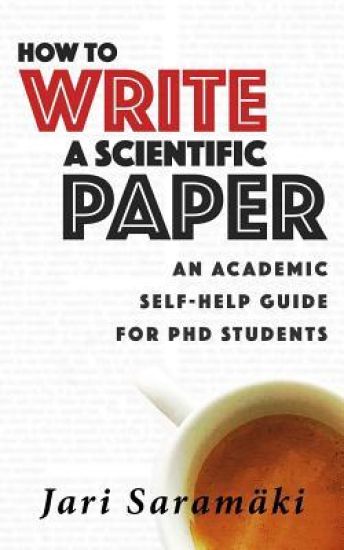
What if writing scientific papers was faster, easier, and a bit less painful?This book provides a step-by-step, top-down approach that makes it easier to turn your hard-won results into research papers that are focused, exciting, and readable.The book's systematic approach builds on what I've learned through coauthoring close to 100 research papers with students. You'll learn how to outline your paper from top to down, how to develop your story, and how to think about what to write before you write it. You'll also learn how to deal with many issues that writers of science commonly face, from the fear of the blank page to dealing with critical reviews.Here's what you get: A complete step-by-step plan for writing a scientific paper, from choosing which results to include to wrapping up the paper in the Discussion sectionConcrete, actionable, and practical advice, from a paragraph-level template for the Introduction to guidance on preparing plots and figuresLots of writing tips, from placing signposts in your text to shortening and straightening your sentencesThis book has been written for the PhD student who is aiming to write a journal article on her research results, but it should also be useful to any scientist who has ever found writing difficult. Whatever the stage of your career, if you'd like to learn how to write research papers systematically and efficiently, this is the book for you The book includesPART I: STORY1. How To Choose The Key Point Of Your Paper2. How To Choose The Supporting Results3. How To Write The Abstract4. How To Choose The TitlePART II: OUTLINE5. The Power Of Outlining6. How To Write The Introduction, Part I: Structure7. How To Write The Introduction, Part II: A Four-Paragraph Template8. How To Write The Introduction, Part III: The Lede9. How To Write The Materials And Methods10. How To Write The Results, Part I: Figures11. How To Write The Results, Part II: Text12. How To Write The DiscussionPART III: WORDS13. How Does Your Reader Read?14. How To Write Your First Draft15. How To Edit Your First Draft16. Tips For Revising Content And Structure17. Tips For Editing SentencesPART IV: IT'S NOT OVER YET18. How To Write The Cover Letter19. How To Deal With ReviewsAbout the authorI am a professor of computational science and an experienced academic with around 100 published papers. My research is interdisciplinary, to say the least: I have studied the social fabric of smartphone users, the genetic structure of ant supercolonies, the connectome of the human brain, networks of public transport, and the molecular biology of the human immune system, to name a few. So one could say that I have a broad range of scientific interests (or that I simply cannot choose). But that's exactly the way I like it
Weet jij waarom het DASH-dieet jaar na jaar wordt uitgeroepen tot het "Beste Dieet"?Het is simpel: het DASH-dieet is een makkelijke en duurzame tool om een gezonde levensstijl te cre ren.Gebaseerd op onderzoek door de National Institutes of Health en door U.S. News & World Report gekozen als de nummer 1 keuze in de beste di ten in het algemeen, de beste di ten voor gezond eten en de beste diabetesdi ten, stijgt het DASH-dieet uit boven het geluid van andere gimmicky-gewichten - verliesplannen.Gezond eten betekent niet dat je jezelf je favoriete voedsel moet onthouden, zelfs als je last hebt van hypertensie en hoge bloeddruk.U hoeft alleen te weten hoe u voedingsmiddelen kunt mixen en matchen en de juiste portiegroottes hebt om ervoor te zorgen dat u de gezonde dagelijkse limiet van calorie n en natrium die geschikt is voor uw gezondheid niet overschrijdt.DASH, wat Dietary Approaches to Stop Hypertension betekent, helpt u om een gezond bloeddrukniveau te behouden. Het verlaagt ook het risico op darmproblemen en kanker.Het verlaagt het slechte cholesterol in je bloed en maakt je botten sterker.Bij dit eetplan draait alles om de juiste verhoudingen. Het vereist dat u groenten eet die rijk zijn aan eiwitten, uw zoutinname beperkt tot 200 mg per dag, uw consumptie van rood vlees, snoep en gezoete dranken vermindert en voedsel consumeert met een laag cholesterol- en totaal vetgehalte.Met zoveel recepten om te proberen, zal het gemakkelijker voor je zijn om je aan het eetplan te houden. Dit zal je gedachten afleiden van het eten van te veel bewerkte en zoute voedingsmiddelen.Het DASH-eetplan is een levensstijl. Het vereist geleidelijke veranderingen in uw eetgewoonten en toewijding om andere gezondheidstechnieken te volgen om de effecten ervan te versterken.Waar wacht je nog op?Pak nu jouw exemplaar
The Well-Behaved Teenager (and Other Myths)Is your teenager's behaviour a major source of stress?Are issues like verbal conflicts, put-downs, blank refusals and 'just not caring' beginning to get you down?In this book, you'll discover 4 Golden Rules that will reduce the turbulence in your household - for good.And: - How our changing culture has brought big changes to parents' and teenagers'lives- How to understand the impacts of teenagers' neurological development, andof your own behaviour style- How to build young people who are emotionally skilled, connected andcapable- How to garner supportive resources for your teen from outside your family- How to build agency and self-esteem in your child- How to respond to difficult behaviours in the moment with calmness andclarity....while swiftly ending the motivations for negative behaviours- (Note - you don't have to be well-off or in a comfortable life position for thisto work)With 20 years of experience as a clinical psychologist Dr Jari Evertsz has built supportive methods which clarify the problem set for families. Her work with violent offenders, at-risk children and hundreds of everyday families has helped her forge simple tracks which help teens move out of hostility and isolation towards their real selves. A national award-recipient in the anti-violence field, she (like you) doesn't accept that conflict and disruption should be an everyday feature of family life. Usethis book and find your way back to the fun, love and connection with your teenaged children that your whole family deserves.The Well-Behaved Teenager (and Other Myths) Dr Jari Evertsz