Kirjojen hintavertailu. Mukana 12 390 323 kirjaa ja 12 kauppaa.

Kirjahaku

Etsi kirjoja tekijän nimen, kirjan nimen tai ISBN:n perusteella.

1000 tulosta hakusanalla Jay Lang

Hands-On Large Language Models: Language Understanding and Generation

Hands-On Large Language Models: Language Understanding and Generation

Jay Alammar; Maarten Grootendorst

Ascent Audio
2025
Paperback
AI has acquired startling new language capabilities in just the past few years. Driven by rapid advances in deep learning, language AI systems are able to write and understand text better than ever before. This trend is enabling new features, products, and entire industries. With this book, listeners will learn practical tools and concepts they need to use these capabilities today. You'll understand how to use pretrained large language models for use cases like copywriting and summarization; create semantic search systems that go beyond keyword matching; and use existing libraries and pretrained models for text classification, search, and clusterings. This book also helps you understand the architecture of Transformer language models that excel at text generation and representation; build advanced LLM pipelines to cluster text documents and explore the topics they cover; build semantic search engines that go beyond keyword search, using methods like dense retrieval and rerankers; explore how generative models can be used, from prompt engineering all the way to retrieval-augmented generation; and gain a deeper understanding of how to train LLMs and optimize them for specific applications using generative model fine-tuning, contrastive fine-tuning, and in-context learning.
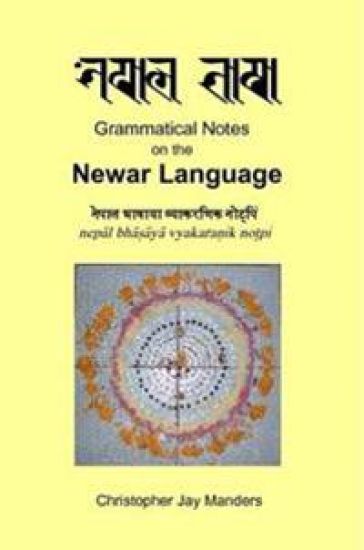
Grammatical Notes on the Newar Language

Grammatical Notes on the Newar Language

Christopher Jay Manders

Lulu.com
2011
nidottu
This book is a compilation of grammatical notes about the language of the Newars, known as Nepal Bhasha and Newari, particularly that form spoken in Kathmandu. This book also provides an introduction to two of the more popular non-Devanagari writing systems, Newar phonetics, and a brief history of the language.
Esthétique de la langue française (Edition1)
The Myth of a Guilty Nation, a classical book, was published more than a century ago and has been considered important throughout the human history, and so that this work is never forgotten we at Alpha Editions have made efforts in its preservation by republishing this book in a modern format for present and future generations. This whole book has been reformatted, retyped and designed. These books are not made of scanned copies of their original work and hence the text is clear and readable.
The Auditory Perception of Rhythmic Patterns in Language Acquisition
What is language for ? For communication or self-instruction? I believe communicating essential needs can be done without language but to identify ideas language is essential. Most children within the normal range of intelligence acquire language early, easily and rapidly. The exception is deaf children. Given that language involves the rhythmic patterning of sound and that sound is understood in a framework of time and sequencing, the early acquisition of language presents a challenge to those, like me who worked with deaf and partially hearing children. Presented here is the novel idea that applying existing theories of rhythmic patterning can improve our understanding of the process of language acquisition in all children whether deaf or not. This document represents a researched, referenced and hopefully, plausible discussion on the topic. It is for others to take this proposition forward whether in terms of testing the ideas at an experimental level or by incorporating them in further research.
Mastering Conversational Hypnosis: Learn the Principles of Hypnotic Language Patterns
Conversational hypnosis is used by a variety of people to improve their communication skills so when they are communicating, they can clearly get their point across. More importantly, you can use conversational hypnosis to be able to influence and persuade others, improving your chances of hearing a positive response instead of a negative one. If you have already learned the basics of conversational hypnosis but you really want to take your skills to the next level, this is the book you want. This book will go beyond the basics, giving you the tools you need to be a master influencer. Once you understand the principles of hypnotic language, you can begin using hypnotic language patterns to your advantage. What you say is just as important as how you say it. Learn the secrets great speakers already know, the language secrets that will make you a compelling and charismatic speaker, who is able to turn "no" responses into "yes" responses.
Mastering Influence: Learn the Power of Mind Control and Hypnotic Language Patterns (Basic to Advanced Conversational Hypnosis)
Would you like to learn how to increase the impact of your conversation? Would you like to stop hearing people tell you no and start hearing them tell you yes? Stop wishing for it and make it happen, thanks to conversational hypnosis. This book takes you through the steps and techniques for both basic and advanced conversational hypnosis. With this book, you will be able to use the principles of language and communication combined with hypnotic language and hypnotic language patterns to get people to sit up and take notice when you speak. You will learn how to get their attention, hold it, and get them to easily be persuaded and influenced by you. If you have ever wanted to boost your communication skills, this is the way. It does not matter if you are in sales and want to increase your sales or if you are a business owner who wants to create an impact with your presentations and meetings, this book and the conversational techniques included will help you succeed.
Little Miss Fon Sat On Her Kon: A Sanook Guide to the Thai Language

Little Miss Fon Sat On Her Kon: A Sanook Guide to the Thai Language

Jay Walken

Createspace Independent Publishing Platform
2015
nidottu
An uncensored, non-pc, sometimes uncharacteristically witty Thai language guide: written by a non-academic, unpretentious expat for non-uptight tourists and expats with a sense of humor, this book could conceivably help: --As a conversation starter to make Thais smile, and also to invite help.--Because words you look up in dictionaries are often easily forgotten; this book sometimes makes them memorable.--The nearly 200 words are explained with more than 10,000 words of context and commentary.--As an economic aid. When you can speak a few crucial Thai words, prices drop quite fast, and you may recover many times the price of this book With its humorous approach and its title, this book is what it is. There is no substitute for actually speaking Thai words and learning by making mistakes, and accepting any corrections with good humor. For those accepting these limitations, the e-book version (enhanced with a partial reverse glossary) is now titled "Little Miss Noi: A Sanook Guide to the Thai Language", and it has an additional glossary.
The History of Language Teaching from The Spanish-American War Until the Sputnik Moment
This book highlights the lively exchanges that shaped foreign-language pedagogy and educational policy during the first fifty years of the twentieth century. It is critically important to revivify our past, particularly in a field where innovation is conceptualized as progress and where knowledge production is a criterion for success. Modern language teaching began its ascendancy shortly before the turn of the twentieth century. In the academy, this impulse was marked by the founding of the Modern Language Association in 1883. Modern languages were increasingly recognized as possessing the mental and humanistic values that had formerly been the sole province of Greek and Latin. The book provides an overview of the historical, political, and social concerns that preoccupied the nation from 1898 and provides a context for analyzing the developments in the teaching of foreign languages over the course of the following century.
How To Analyze People: The Guide You Need To Read Instantly Human Behaviour, Body Language, Personality Types Using Psychological Techniques,
"Every human is different, but not so different that you cannot understand what makes them who they are." How to Analyze People, is a guide to understand people and human behavior leading to more fruitful relationships and business affiliations. It is said that 80% of our communication is non-verbal, that is from the movements of the body and each person gives out what they are thinking through these movements, though they might say something else. Reading the body language is the key to reading people. With science, we have come to a point where we can divide people into categories. Yes, each human is different, and everyone acts differently, but understanding the common traits helps you categorize and relate different people. Understanding the people is not only the way to have a better social life, but a way to climb the corporate ladder speedily and have smooth relationships. The book guides the readers about: The Benefits of Analyzing People The Basics of Human Psychology How Childhood Experiences Shape Personalities How to Analyze People Through the Choice of Words Tips on Reading and Understanding Body Language How to Determine Different Types of Personalities Lots of Illustrative Examples With the expertise of the author in the subject, illustrative examples in the book and real-life application "get unfair advantage" over people.
Éloge de Montaigne, Discours Qui a Obtenu l'Accessit Au Jugement de la Classe de la Langue
Eloge de Montaigne, discours qui a obtenu l'accessit au jugement de la classe de la langue et de la litterature francaise de l'Institut, dans sa seance du 9 avril 1812, par M. Jay...Date de l'edition originale: 1812Ce livre est la reproduction fidele d'une oeuvre publiee avant 1920 et fait partie d'une collection de livres reimprimes a la demande editee par Hachette Livre, dans le cadre d'un partenariat avec la Bibliotheque nationale de France, offrant l'opportunite d'acceder a des ouvrages anciens et souvent rares issus des fonds patrimoniaux de la BnF.Les oeuvres faisant partie de cette collection ont ete numerisees par la BnF et sont presentes sur Gallica, sa bibliotheque numerique.En entreprenant de redonner vie a ces ouvrages au travers d'une collection de livres reimprimes a la demande, nous leur donnons la possibilite de rencontrer un public elargi et participons a la transmission de connaissances et de savoirs parfois difficilement accessibles.Nous avons cherche a concilier la reproduction fidele d'un livre ancien a partir de sa version numerisee avec le souci d'un confort de lecture optimal. Nous esperons que les ouvrages de cette nouvelle collection vous apporteront entiere satisfaction.Pour plus d'informations, rendez-vous sur www.hachettebnf.fr
Fate, Time, and Language

Fate, Time, and Language

David Wallace; Jay L. Garfield

Columbia University Press
2010
sidottu
In 1962, the philosopher Richard Taylor used six commonly accepted presuppositions to imply that human beings have no control over the future. David Foster Wallace not only took issue with Taylor's method, which, according to him, scrambled the relations of logic, language, and the physical world, but also noted a semantic trick at the heart of Taylor's argument. Fate, Time, and Language presents Wallace's brilliant critique of Taylor's work. Written long before the publication of his fiction and essays, Wallace's thesis reveals his great skepticism of abstract thinking made to function as a negation of something more genuine and real. He was especially suspicious of certain paradigms of thought-the cerebral aestheticism of modernism, the clever gimmickry of postmodernism-that abandoned "the very old traditional human verities that have to do with spirituality and emotion and community." As Wallace rises to meet the challenge to free will presented by Taylor, we witness the developing perspective of this major novelist, along with his struggle to establish solid logical ground for his convictions. This volume, edited by Steven M. Cahn and Maureen Eckert, reproduces Taylor's original article and other works on fatalism cited by Wallace. James Ryerson's introduction connects Wallace's early philosophical work to the themes and explorations of his later fiction, and Jay Garfield supplies a critical biographical epilogue.
Fate, Time, and Language

Fate, Time, and Language

David Wallace; Jay L. Garfield

Columbia University Press
2010
pokkari
In 1962, the philosopher Richard Taylor used six commonly accepted presuppositions to imply that human beings have no control over the future. David Foster Wallace not only took issue with Taylor's method, which, according to him, scrambled the relations of logic, language, and the physical world, but also noted a semantic trick at the heart of Taylor's argument. Fate, Time, and Language presents Wallace's brilliant critique of Taylor's work. Written long before the publication of his fiction and essays, Wallace's thesis reveals his great skepticism of abstract thinking made to function as a negation of something more genuine and real. He was especially suspicious of certain paradigms of thought-the cerebral aestheticism of modernism, the clever gimmickry of postmodernism-that abandoned "the very old traditional human verities that have to do with spirituality and emotion and community." As Wallace rises to meet the challenge to free will presented by Taylor, we witness the developing perspective of this major novelist, along with his struggle to establish solid logical ground for his convictions. This volume, edited by Steven M. Cahn and Maureen Eckert, reproduces Taylor's original article and other works on fatalism cited by Wallace. James Ryerson's introduction connects Wallace's early philosophical work to the themes and explorations of his later fiction, and Jay Garfield supplies a critical biographical epilogue.
The Heat Kernel and Theta Inversion on SL2(C)

The Heat Kernel and Theta Inversion on SL2(C)

Jay Jorgenson; Serge Lang

Springer-Verlag New York Inc.
2008
sidottu
The worthy purpose of this text is to provide a complete, self-contained development of the trace formula and theta inversion formula for SL(2,Z[i])\SL(2,C). Unlike other treatments of the theory, the approach taken here is to begin with the heat kernel on SL(2,C) associated to the invariant Laplacian, which is derived using spherical inversion. The heat kernel on the quotient space SL(2,Z[i])\SL(2,C) is arrived at through periodization, and further expanded in an eigenfunction expansion. A theta inversion formula is obtained by studying the trace of the heat kernel. Following the author's previous work, the inversion formula then leads to zeta functions through the Gauss transform.