

Kirjahaku
Etsi kirjoja tekijän nimen, kirjan nimen tai ISBN:n perusteella.
1000 tulosta hakusanalla Jean Kerr





Jean
Outlook Verlag
2023
pokkari

Jean
Outlook Verlag
2023
sidottu

Jean
Outlook Verlag
2024
pokkari

Jean
Outlook Verlag
2024
sidottu

Jean
Outlook Verlag
2024
pokkari

Jean
Outlook Verlag
2024
sidottu

Reprint of the original, first published in 1875.

Reprint of the original, first published in 1875.


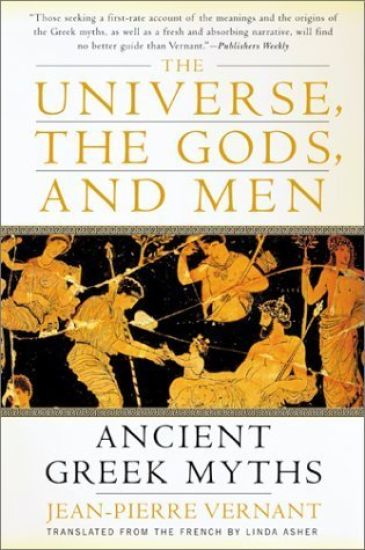
The Universe, the Gods, and Men: Ancient Greek Myths Told by Jean-Pierre Vernant
Jean-Pierre Vernant
HARPER PERENNIAL
2002
nidottu
In this enchanting retelling of Greek myth, Jean-Pierre Vernant combines his deep knowledge of the subject with an original storytelling style. Beginning with the creation of Earth out of Chaos, Vernant continues with the castration of Uranus, the war between the Titans and the Olympian gods, the wily ruses of Prometheus and Zeus, and the creation of Pandora, the first woman. His narrative takes readers from the Trojan War to the voyage of Odysseus, from the story of Dionysus to the terrible destiny of Oedipus, to Perseus's confrontation with the Gorgons.Jean-Pierre Vernant has devoted himself to the study of Greek mythology. In recounting these tales, he unravels for us their multiple meanings and brings to life the beloved figures of legend whose narratives lie at the origin of our civilization.

Translated by Peter ConstantineEdited and with an new introduction by Leo Damrosch'Man is born free, and everywhere he is in chains' is the dramatic opening line of The Social Contract, published in 1762.

Jean Sibelius's Violin Concerto is the story of Sibelius as performer and composer, of violin performing traditions, of histories of musical transmission, and of virtuosity itself. It investigates the history and legacy of one of the most recorded concertos in the violin repertoire. Sibelius, a celebrated and influential composer of the late 19th and 20th centuries, was an accomplished violinist, whose enduring interest in the instrument has been paralleled by the broad success of the only concerto in his oeuvre: his violin concerto (premiered in 1904 and revised in 1905). Considering how violinists engage with the work, author Tina K. Ramnarine discusses technology's central role in the concerto's transmission from Jascha Heifetz's seminal 1935 recording to contemporary online performances, gender issues in violin solo careers, and nature-based musical aesthetics that lead to thinking about the ecology of virtuosity in an era of environmental crisis. Beginning with Sibelius's early training as a violinist and his aspirations as a performer, Ramnarine traces the dramatic historical context of the violin concerto. It was composed as Finland underwent a period of heightened self-determination, nationalism, and protest against Russian imperial policies, and it heralded intense political dynamics relating to Europe's East-West border that have extended to the present. This story of the violin concerto points to the notion of Sibelius - and the virtuoso more generally - as a political figure.

Jean Sibelius's Violin Concerto is the story of Sibelius as performer and composer, of violin performing traditions, of histories of musical transmission, and of virtuosity itself. It investigates the history and legacy of one of the most recorded concertos in the violin repertoire. Sibelius, a celebrated and influential composer of the late 19th and 20th centuries, was an accomplished violinist, whose enduring interest in the instrument has been paralleled by the broad success of the only concerto in his oeuvre: his violin concerto (premiered in 1904 and revised in 1905). Considering how violinists engage with the work, author Tina K. Ramnarine discusses technology's central role in the concerto's transmission from Jascha Heifetz's seminal 1935 recording to contemporary online performances, gender issues in violin solo careers, and nature-based musical aesthetics that lead to thinking about the ecology of virtuosity in an era of environmental crisis. Beginning with Sibelius's early training as a violinist and his aspirations as a performer, Ramnarine traces the dramatic historical context of the violin concerto. It was composed as Finland underwent a period of heightened self-determination, nationalism, and protest against Russian imperial policies, and it heralded intense political dynamics relating to Europe's East-West border that have extended to the present. This story of the violin concerto points to the notion of Sibelius - and the virtuoso more generally - as a political figure.
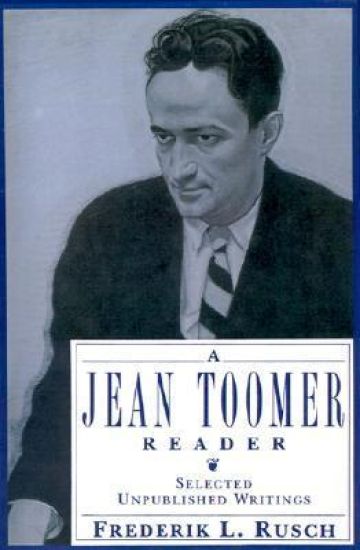
Includes correspondence, poetry, short fiction, and essays.