Kirjojen hintavertailu. Mukana 12 459 402 kirjaa ja 12 kauppaa.

Kirjahaku

Etsi kirjoja tekijän nimen, kirjan nimen tai ISBN:n perusteella.

1000 tulosta hakusanalla Jean Rhys

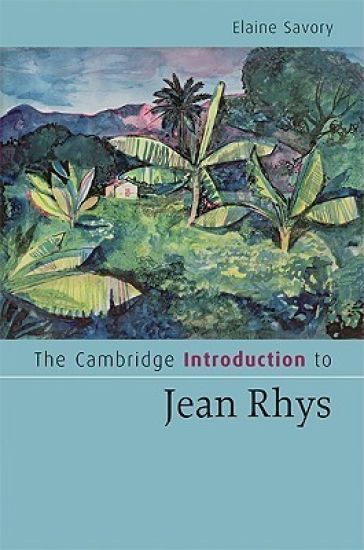
The Cambridge Introduction to Jean Rhys

The Cambridge Introduction to Jean Rhys

Elaine Savory

Cambridge University Press
2009
sidottu
Since her death in 1979, Jean Rhys's reputation as an important modernist author has grown. Her finely crafted prose fiction lends itself to multiple interpretations from radically different critical perspectives; formalism, feminism, and postcolonial studies among them. This Introduction offers a reliable and stimulating account of her life, work, contexts and critical reception. Her masterpiece, Wide Sargasso Sea, is analyzed together with her other novels, including Quartet and After Leaving Mr Mackenzie, and her short stories. Through close readings of the works, Elaine Savory reveals their common themes and connects these to different critical approaches. The book maps Rhys's fictional use of the actual geography of Paris, London and the Caribbean, showing how key understanding her relationships with the metropolitan and colonial spheres is to reading her texts. In this invaluable introduction for students, Savory explains the significance of Rhys as a writer both in her lifetime and today.
Exploring Cultural Identities in Jean Rhys’ Fiction
Using a theoretical approach and a critical summary, combining the perspectives in the postcolonial theory, psychoanalysis and narratology with the tools of hermeneutics and deconstruction, this book argues that Jean Rhys’s work can be subsumed under a poetics of cultural identity and hybridity. It also demonstrates the validity of the concept of hybridization as the expression of identity formation; the cultural boundaries variability; the opposition self-otherness, authenticity-fiction, trans-textuality; and the relevance of an integrated approach to multiple cultural identities as an encountering and negotiation space between writer, reader and work. The complexity of ontological and epistemological representation involves an interdisciplinary approach that blends a literary interpretive approach to social, anthropological, cultural and historical perspectives. The book concludes that in the author’s fictional universe, cultural identity is represented as a general human experience that transcends the specific conditionalities of geographical contexts, history and culture. The construction of identity by Jean Rhys is represented by the dichotomy of marginal identity and the identification with a human ideal designed either by the hegemonic discourse or metropolitan culture or by the dominant ideology. The identification with a pattern of cultural authenticity, of racial, ethnic, or national purism is presented as a purely destructive cultural projection, leading to the creation of a static universe in opposition to the diversity of human feelings and aspirations. Jean Rhys’s fictional discourse lies between “the anxiety of authorship” and “the anxiety of influence” and shows the postcolonial era of uprooting and migration in which the national ownership diluted the image of a “home” ambiguous located at the boundary between a myth of origins and a myth of becoming. The relationship between the individual and socio-cultural space is thus shaped in a dual hybrid position.
Territories of the Psyche: The Fiction of Jean Rhys
Jean Rhys is widely credited for exposing issues of gender, nationality, race, and class in technically sophisticated, arresting narratives. Her lifelong exploration of the dynamics of the human psyche has, however, gone unrecognized. This examination places Rhys' fiction for the first time within the context of theories that reflect the interrelated perspectives of modern psychoanalysis. In clarifying accounts of many approaches that are new to literary scholars, as well as those that display the rich legacy of Freudian thought, Simpson shows that the paradigms of psychoanalysis illuminate the interpretation of Rhys' art. With insightful references to the short stories and close readings of her five novels, this study testifies to a remarkable achievement as Rhys recorded, with unflinching candor, the powerful drama of emotional life.
Territories of the Psyche: The Fiction of Jean Rhys
Jean Rhys is widely credited for exposing issues of gender, nationality, race, and class in technically sophisticated, arresting narratives. Her lifelong exploration of the dynamics of the human psyche has, however, gone unrecognized. This examination places Rhys' fiction for the first time within the context of theories that reflect the interrelated perspectives of modern psychoanalysis. In clarifying accounts of many approaches that are new to literary scholars, as well as those that display the rich legacy of Freudian thought, Simpson shows that the paradigms of psychoanalysis illuminate the interpretation of Rhys' art. With insightful references to the short stories and close readings of her five novels, this study testifies to a remarkable achievement as Rhys recorded, with unflinching candor, the powerful drama of emotional life.
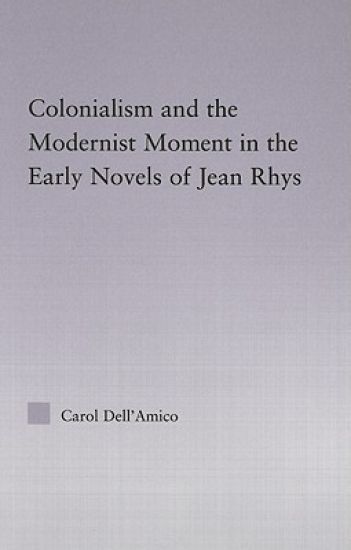
Colonialism and the Modernist Moment in the Early Novels of Jean Rhys
Colonialism and the Modernist Moment in the Early Novels of Jean Rhys explores the postcolonial significance of Rhys’s modernist period work, which depicts an urban scene more varied than that found in other canonical representations of the period. Arguing against the view that Rhys comes into her own as a colonial thinker only in the post-WWII period of her career, this study examines the austere insights gained by Rhys’s active cultivation of her fringe status vis-à-vis British social life and artistic circles, where her sharp study of the aporias of marginal lives and the violence of imperial ideology is distilled into an artistic statement positing the outcome of the imperial venture as a state of homelessness across the board, for colonized and ‘metropolitans’ alike. Bringing to view heretofore overlooked émigré populations, or their children, alongside locals, Rhys’s urbanites struggle to construct secure lives not simply as a consequence of commodification, alienation, or voluntary expatriation, but also as a consequence of marginalization and migration. This view of Rhys’s early work asserts its vital importance to postcolonial studies, an importance that has been overlooked owing to an over hasty critical consensus that only one of her early novels contains significant colonial content. Yet, as this study demonstrates, proper consideration of colonial elements long considered only incidental illuminates a colonial continuum in Rhys’s work from her earliest publications.
Colonialism and the Modernist Moment in the Early Novels of Jean Rhys
Colonialism and the Modernist Moment in the Early Novels of Jean Rhys explores the postcolonial significance of Rhys’s modernist period work, which depicts an urban scene more varied than that found in other canonical representations of the period. Arguing against the view that Rhys comes into her own as a colonial thinker only in the post-WWII period of her career, this study examines the austere insights gained by Rhys’s active cultivation of her fringe status vis-à-vis British social life and artistic circles, where her sharp study of the aporias of marginal lives and the violence of imperial ideology is distilled into an artistic statement positing the outcome of the imperial venture as a state of homelessness across the board, for colonized and ‘metropolitans’ alike. Bringing to view heretofore overlooked émigré populations, or their children, alongside locals, Rhys’s urbanites struggle to construct secure lives not simply as a consequence of commodification, alienation, or voluntary expatriation, but also as a consequence of marginalization and migration. This view of Rhys’s early work asserts its vital importance to postcolonial studies, an importance that has been overlooked owing to an over hasty critical consensus that only one of her early novels contains significant colonial content. Yet, as this study demonstrates, proper consideration of colonial elements long considered only incidental illuminates a colonial continuum in Rhys’s work from her earliest publications.
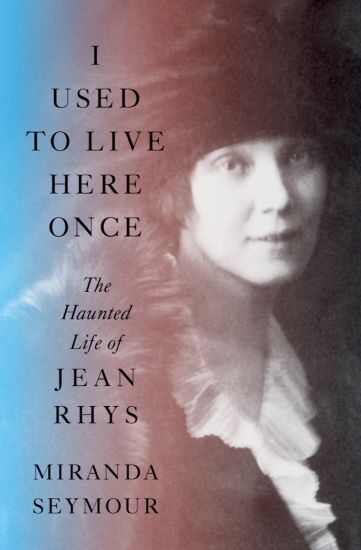
I Used to Live Here Once: The Haunted Life of Jean Rhys
Jean Rhys is one of the most compelling writers of the twentieth century. Memories of her Caribbean girlhood haunt the four short and piercingly brilliant novels that Rhys wrote during her extraordinary years as an exile in 1920s Paris and later in England, a body of fiction--above all, the extraordinary Wide Sargasso Sea--that has a passionate following today. And yet her own colorful life, including her early years on the Caribbean island of Dominica, remains too little explored, until now.In I Used to Live Here Once, Miranda Seymour sheds new light on the artist whose proud and fiercely solitary life profoundly informed her writing. Rhys experienced tragedy and extreme poverty, alcohol and drug dependency, romantic and sexual turmoil, all of which contributed to the "Rhys woman" of her oeuvre. Today, readers still intuitively relate to her unforgettable characters, vulnerable, watchful, and often alarmingly disaster-prone outsiders; women with a different way of moving through the world. And yet, while her works often contain autobiographical material, Rhys herself was never a victim. The figure who emerges for Seymour is cultured, self-mocking, unpredictable--and shockingly contemporary.Based on new research in the Caribbean, a wealth of never-before-seen papers, journals, letters, and photographs, and interviews with those who knew Rhys, I Used to Live Here Once is a luminous and penetrating portrait of a fascinatingly elusive artist.
I Used to Live Here Once: The Haunted Life of Jean Rhys
Jean Rhys is one of the most compelling writers of the twentieth century. Memories of her Caribbean girlhood haunt the four short and piercingly brilliant novels that Rhys wrote during her extraordinary years as an exile in 1920s Paris and later in England, a body of fiction--above all, the extraordinary Wide Sargasso Sea--that has a passionate following today. And yet her own colorful life, including her early years on the Caribbean island of Dominica, remains too little explored, until now.In I Used to Live Here Once, Miranda Seymour sheds new light on the artist whose proud and fiercely solitary life profoundly informed her writing. Rhys experienced tragedy and extreme poverty, alcohol and drug dependency, romantic and sexual turmoil, all of which contributed to the "Rhys woman" of her oeuvre. Today, readers still intuitively relate to her unforgettable characters, vulnerable, watchful, and often alarmingly disaster-prone outsiders; women with a different way of moving through the world. And yet, while her works often contain autobiographical material, Rhys herself was never a victim. The figure who emerges for Seymour is cultured, self-mocking, unpredictable--and shockingly contemporary.Based on new research in the Caribbean, a wealth of never-before-seen papers, journals, letters, and photographs, and interviews with those who knew Rhys, I Used to Live Here Once is a luminous and penetrating portrait of a fascinatingly elusive artist.
Virginia Woolf, Jean Rhys, and the Aesthetics of Trauma
This is a study of modernism, sexuality, and subjectivity in the work of two leading women modernists. Each confronted the aspects of her culture and personal history that resulted in a degraded sense of female sexuality and explored how traumatic childhood sexual experiences informed their relationship to female corporeality and fiction-writing.
Virginia Woolf, Jean Rhys, and the Aesthetics of Trauma
This is a study of modernism, sexuality, and subjectivity in the work of two leading women modernists. Each confronted the aspects of her culture and personal history that resulted in a degraded sense of female sexuality and explored how traumatic childhood sexual experiences informed their relationship to female corporeality and fiction-writing.