Kirjojen hintavertailu. Mukana 11 699 587 kirjaa ja 12 kauppaa.

Kirjahaku

Etsi kirjoja tekijän nimen, kirjan nimen tai ISBN:n perusteella.

1000 tulosta hakusanalla Jean-Baptiste Lully

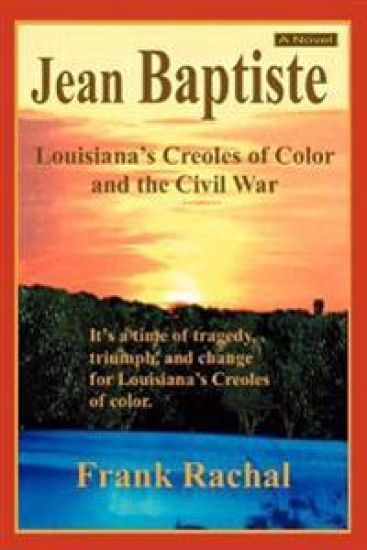
Jean Baptiste

Jean Baptiste

ALPHA EDITION
2022
pokkari
This book has been considered important throughout the human history, and so that this work is never forgotten we have made efforts in its preservation by republishing this book in a modern format for present and future generations. This whole book has been reformatted, retyped and designed. These books are not made of scanned copies and hence the text is clear and readable.
Jean-Baptiste Say and Political Economy

Jean-Baptiste Say and Political Economy

Jean-Baptiste Say

Routledge
2019
nidottu
Jean-Baptiste Say (1767–1832) was one of the first great economists to have laid down the foundations of economic science. Author of the famous Treatise on Political Economy in 1803, which was revised and re-edited on several occasions, he published numerous other works including a voluminous Complete Course in Practical Political Economy in 1828–9. He also taught political economy successively from 1815 until his death in three Parisian establishments: the Athénée, the Conservatory of Arts and Trades, and the Collège de France.The texts in which Say exposes his approach to political economy have not been available in the English language until now except for the fourth edition of the ‘Preliminary Discourse’ which serves as an introduction to the Treatise. This book presents a translation which renders his works accessible to the English speaking world. For the first time, English readers will be able to become directly immersed in Say’s principal texts, where he develops his conception of political economy. Jean-Baptiste Say and Political Economy proposes a translation of a selection of eleven of Say’s texts. The first three are versions of the ‘Preliminary Discourse’ from the Treatise’s editions of 1803, 1814 and 1826 with the variations of the editions of 1817, 1819 and 1841. The following four texts are the opening discourses pronounced at the Conservatory in 1820 and 1828 and the Collège de France in 1831 and 1832. The eighth text is the ‘General Considerations’ which open the Complete Course in Practical Political Economy of 1828, with the variations of the 1840 re-edition. The final three texts are those Say devotes to ‘the progress of political economy’ in what is akin to a history of economic thought.This volume is of great importance to economic historians and people studying Jean-Baptiste Say, as well as those who are interested in economic theory and philosophy
Jean-Baptiste Say
Jean-Baptiste Say (1767-1832) is remembered primarily for Say's Law, one of the cornerstones of classical economics. The success of his Traite d'economie Politique made Say the best-known expositor of Adam Smith in Europe and America, and he became France's first professor of political economy.The set covers the following themes:* Say in the history of economics* classical statements on Say's Law* later statements on Say's Law (the prelude to the General Theory)* the Keynesian Revolution and the attack on Say's Law* Lange, Say's Law and the demand for money* modern reconstructions of Say's Law* commentaries on classical views relating to Say's Law* Retrieving the classical understanding of Say's Law.
Jean-Baptiste Say and the Classical Canon in Economics
This book explores the perceived paradigmatic conflict within British classical economics between the so called 'Ricardo School' and the contemporary French Economics of Jean-Baptiste Say. Samuel Hollander provides the reader with extensive evidence, utilizing all editions of Say's main texts and his lesser-known writings in order to demonstrate his adherence to much of Ricardian theory. This intriguing book focuses on selected doctorinal issues and surrounding debates, and will interest all serious historians of economic thought, finding a place on the bookshelves of many economists across the world.
Jean-Baptiste Say and the Classical Canon in Economics
This book explores the perceived paradigmatic conflict within British classical economics between the so called 'Ricardo School' and the contemporary French Economics of Jean-Baptiste Say. Samuel Hollander provides the reader with extensive evidence, utilizing all editions of Say's main texts and his lesser-known writings in order to demonstrate his adherence to much of Ricardian theory. This intriguing book focuses on selected doctorinal issues and surrounding debates, and will interest all serious historians of economic thought, finding a place on the bookshelves of many economists across the world.
Jean-Baptiste Say

Jean-Baptiste Say

Evert Schoorl

Routledge
2012
sidottu
This volume is the first full-length biography of Jean-Baptiste Say (1767-1832), the most famous French classical economist. During his lifetime Say actively took part in three revolutions: the French Revolution, the Industrial Revolution and the establishment of economics as an academic discipline. He struggled with Bonaparte, was the owner of a cotton spinning mill, and published his famous Treatise of political economy and many other economic writings.
Jean-Baptiste Say and Political Economy

Jean-Baptiste Say and Political Economy

Jean-Baptiste Say

Routledge
2016
sidottu
Jean-Baptiste Say (1767–1832) was one of the first great economists to have laid down the foundations of economic science. Author of the famous Treatise on Political Economy in 1803, which was revised and re-edited on several occasions, he published numerous other works including a voluminous Complete Course in Practical Political Economy in 1828–9. He also taught political economy successively from 1815 until his death in three Parisian establishments: the Athénée, the Conservatory of Arts and Trades, and the Collège de France. The texts in which Say exposes his approach to political economy have not been available in the English language until now except for the fourth edition of the ‘Preliminary Discourse’ which serves as an introduction to the Treatise. This book presents a translation which renders his works accessible to the English speaking world. For the first time, English readers will be able to become directly immersed in Say’s principal texts, where he develops his conception of political economy. Jean-Baptiste Say and Political Economy proposes a translation of a selection of eleven of Say’s texts. The first three are versions of the ‘Preliminary Discourse’ from the Treatise’s editions of 1803, 1814 and 1826 with the variations of the editions of 1817, 1819 and 1841. The following four texts are the opening discourses pronounced at the Conservatory in 1820 and 1828 and the Collège de France in 1831 and 1832. The eighth text is the ‘General Considerations’ which open the Complete Course in Practical Political Economy of 1828, with the variations of the 1840 re-edition. The final three texts are those Say devotes to ‘the progress of political economy’ in what is akin to a history of economic thought. This volume is of great importance to economic historians and people studying Jean-Baptiste Say, as well as those who are interested in economic theory and philosophy and political economy.
Jean-Baptiste Cléry

Jean-Baptiste Cléry

H Will Bashor

Diderot Press
2011
pokkari
While tending his family's garden one September morning in 1779, a young commoner encountered a prince in a chance meeting that would change both of their lives.The young man certainly never imagined that he was setting out on a journey that would take him from the quaint village where he was born to the magnificent courts of Russia, Poland and England. But neither could the young farm boy have imagined that he would one day also witness firsthand the horrific treatment of the royal family imprisoned in a dark medieval prison during the mayhem of the French Revolution. Cl ry, born Jean-Baptiste Cant Hanet, was the only personal servant to remain with King Louis XVI and his family in the tower of the Temple Prison. Although Cl ry himself was closely scrutinized in the tower and even threatened with the guillotine, he managed to secretly record the guards' cruel and merciless treatment of the king, Queen Marie-Antoinette, their two children, and the king's sister. JEAN-BAPTISTE CL RY is the first non-fiction work to provide insight into the cultural and psychological world of this tragic royal family from a very different perspective, that of a dedicated servant. Cl ry was the only personal servant permitted to accompany and remain with Louis and his family in the Temple where they were imprisoned in 1792. Isolated from his family, accused of spying, and eventually imprisoned himself for his loyalty, Cl ry spent his final days in exile in Austria.Was Cl ry wrongly accused of infidelity to the royal family? Was he an agent of the revolutionaries? JEAN-BAPTISTE CL RY separates fact from rumor, and finally unravels the truth about this ordinary man in an extraordinary setting with very extraordinary actors. The biography also exposes the inner struggles of the young servant who served as the personal valet to King Louis XVI and Queen Marie-Antoinette before their tragic rendezvous with the guillotine.Incorporating findings from research based on journals and memoirs from the late 18th and early 19th century France, the compelling story sheds light on the often neglected aspects of the lives of royal servants including their steadfast loyalty and dedication to the king's family as well as concern for their own personal well-being in dangerous, terrifying circumstances.
Lettres � Son Fils, Suivies de Lettres de Jean Baptiste Racine � Louis Racine; Introduction Et Notes de Gonzague Tru?
Trieste Publishing has a massive catalogue of classic book titles. Our aim is to provide readers with the highest quality reproductions of fiction and non-fiction literature that has stood the test of time. The many thousands of books in our collection have been sourced from libraries and private collections around the world.The titles that Trieste Publishing has chosen to be part of the collection have been scanned to simulate the original. Our readers see the books the same way that their first readers did decades or a hundred or more years ago. Books from that period are often spoiled by imperfections that did not exist in the original. Imperfections could be in the form of blurred text, photographs, or missing pages. It is highly unlikely that this would occur with one of our books. Our extensive quality control ensures that the readers of Trieste Publishing's books will be delighted with their purchase. Our staff has thoroughly reviewed every page of all the books in the collection, repairing, or if necessary, rejecting titles that are not of the highest quality. This process ensures that the reader of one of Trieste Publishing's titles receives a volume that faithfully reproduces the original, and to the maximum degree possible, gives them the experience of owning the original work.We pride ourselves on not only creating a pathway to an extensive reservoir of books of the finest quality, but also providing value to every one of our readers. Generally, Trieste books are purchased singly - on demand, however they may also be purchased in bulk. Readers interested in bulk purchases are invited to contact us directly to enquire about our tailored bulk rates.
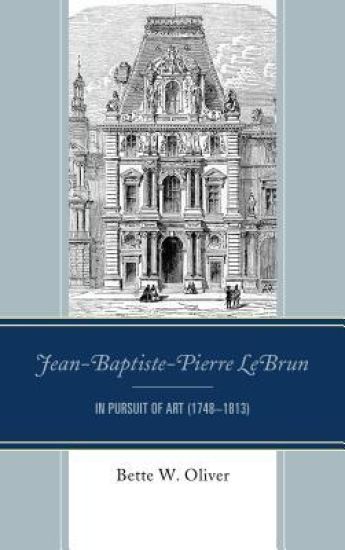
Jean-Baptiste-Pierre LeBrun

Jean-Baptiste-Pierre LeBrun

Bette W. Oliver

Hamilton Books
2018
sidottu
Jean-Baptiste Pierre LeBrun's life was marked by his intense interest in art, first as an artist, and then from 1770 until his death in 1813, as an art dealer/connoisseur and as a participant in the transformation of the Louvre into a national museum during the French Revolution. He managed to accommodate whichever regime assumed power, from monarchy to republic to empire. He married the artist Elisabeth Vigée in 1776 and together they figured prominently in the pre-revolutionary cultural world of Paris. LeBrun travelled widely, buying art for his gallery and contributing to a number of aristocratic collections. His expertise in attributions of 17th-century Dutch and Flemish paintings was acknowledged internationally, while his reference work on the subject was considered the most comprehensive ever written. LeBrun, the grand-nephew of the illustrious artist Charles LeBrun, became one of the most successful art dealers in Paris. He played an active role in the politics of art between 1789 and 1802, serving as an expert-commissioner in restoration at the national museum. His inventories of artworks, confiscated from all over Europe by Napoleon's armies, have provided a valuable record of the development of the French national museum. In addition, his inventories have been useful in the identification and recovery of Nazi confiscations during World War II. LeBrun's accomplishments during a tumultuous period of political and artistic change present evidence of his contributions to the concept of the modern art museum, notably in the areas of conservation, restoration, and arrangement.