Kirjojen hintavertailu. Mukana 11 244 527 kirjaa ja 12 kauppaa.

Kirjahaku

Etsi kirjoja tekijän nimen, kirjan nimen tai ISBN:n perusteella.

1000 tulosta hakusanalla Jefferson Hack

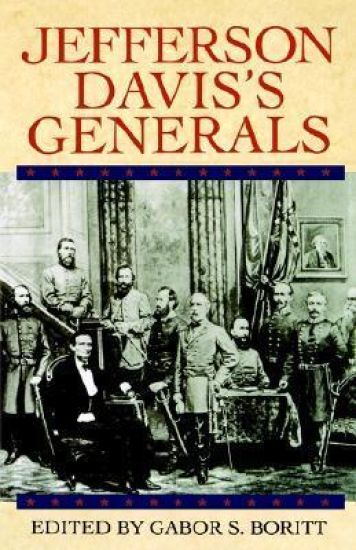
Jefferson Davis's Generals

Jefferson Davis's Generals

Oxford University Press Inc
2000
nidottu
Confederate General P.G.T.Beauregard once wrote that "no people ever warred for independence with more relative advantages than the Confederates." If there was any doubt as to what Beauregard sought to imply, he later to chose to spell it out: the failure of the Confederacy lay with the Confederate president Jefferson Davis. In Jefferson Davis's Generals, a team of America's most distinguished Civil War historians present fascinating examinations of the men who led the South through the nation's bloodiest conflict, focusing in particular on Jefferson Davis's relationships with five key generals who held independent commands: Joseph E. Johnston, Robert E. Lee, P.G.T. Beauregard, Braxton Bragg, and John Bell Hood. Craig Symonds examines the underlying implications of a withering trust between Johnston and his friend Jefferson Davis. And was there really harmony between Davis and Robert E. Lee? A tenuous harmony at best, according to Emory Thomas. Michael Parrish explores how Beauregard and Davis worked through a deep and mutual loathing, while Steven E. Woodworth and Herman Hattaway make contrasting evaluations of the competence of Generals Braxton Bragg and John Bell Hood. Taking a different angle on Davis's ill-fated commanders, Lesley Gordon probes the private side of war through the roles of the generals' wives, and Harold Holzer investigates public perceptions of the Confederate leadership through printed images created by artists of the day. Pulitzer Prize-winner James M. McPherson's final chapter ties the individual essays together and offers a new perspective on Confederate strategy as a whole. Jefferson Davis's Generals provides stimulating new insights into one of the most vociferously debated topics in Civil War history.
Jefferson Pugley V: Bad Medicine

Jefferson Pugley V: Bad Medicine

Eamon Standing

Lulu.com
2018
nidottu
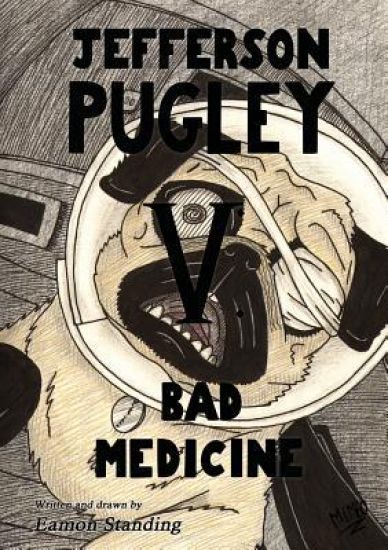
Jefferson Pugley V: Bad MedicineThey say if you love a pug dog and treat it with respect it will return that love tenfold. In the otherwise mundane life of graduate Alex Turner, who else is there but his faithful dog 'Jefferson Pugley' to 'make things interesting'. After suffering an eye injury, Pugley's adventurous spirit is shattered, but as things get worse on his road to recovery, it seems there is nothing he can trust, including his senses...The second book of the second Jefferson Pugley trilogy. The first four books can be read in any order whereas books five and six are recommended to be read sequentially:The complete list of Jefferson Pugley titles:Jefferson Pugley's Pyroclastic HoobajoobJefferson Pugley: Brollercoaster ExtraordinaireJefferson Pugley Versus Jeffreson PugsleyJefferson Pugley Takes To The SkiesJefferson Pugley V: Bad MedicineThe Trial and Sentence Of Jefferson Pugley
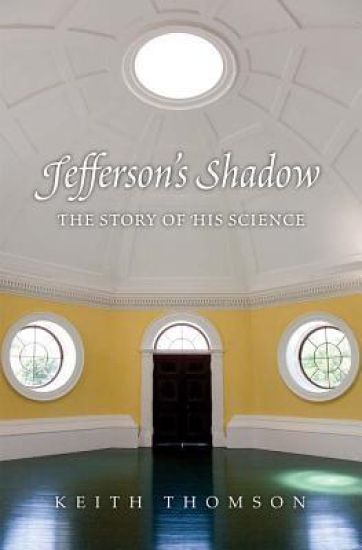
Jefferson's Shadow

Jefferson's Shadow

Keith Stewart Thomson

Yale University Press
2015
pokkari
A unique account of Thomas Jefferson’s passion for science, the influence of science on his vision for America, and the amazing extent of his scientific contributions In the voluminous literature on Thomas Jefferson, little has been written about his passionate interest in science. This new and original study of Jefferson presents him as a consummate intellectual whose view of science was central to both his public and his private life. Keith Stewart Thomson reintroduces us in this remarkable book to Jefferson’s eighteenth-century world and reveals the extent to which Jefferson used science, thought about it, and contributed to it, becoming in his time a leading American scientific intellectual. With a storyteller’s gift, Thomson shows us a new side of Jefferson. He answers an intriguing series of questions—How was Jefferson’s view of the sciences reflected in his political philosophy and his vision of America’s future? How did science intersect with his religion? Did he make any original contributions to scientific knowledge?—and illuminates the particulars of Jefferson’s scientific endeavors. Thomson discusses Jefferson’s theories that have withstood the test of time, his interest in the practical applications of science to societal problems, his leadership in the use of scientific methods in agriculture, and his contributions toward launching at least four sciences in America: geography, paleontology, climatology, and scientific archaeology. A set of delightful illustrations, including some of Jefferson’s own sketches and inventions, completes this impressively researched book.
Jefferson Davis

Jefferson Davis

Jefferson Davis

Da Capo Press Inc
1995
pokkari
This fascinating collection of intimate letters from and to Jefferson Davis (1808-1889) illuminates the character and personality of the President of the Confederacy. These letters (the majority appearing fully in print for the first time) range widely over one of the most turbulent periods in American history, from his fifteenth year to his death at eighty-one. Here is Jefferson Davis in all aspects: in love and in house slippers as wounded war hero at dramatic heights of statesmanship in grief over four dead sons refusing Lee's resignation after Gettysburg and expressing unwavering confidence as shackled prisoner, stoic survivor, generous friend, adoring father and husband. Equally revealing are the letters written to him by such notable figures as Franklin Pierce, Zachary Taylor, Judah P. Benjamin, General and Mrs. Robert E. Lee, Davis's children, and of course his spirited wife, Varina. From this rich, varied correspondence there emerges a unique biography in letters, adding new dimensions and highlights to one of the most exalted, maligned, and remarkable men in American history.
Jefferson's America

Jefferson's America

Julie M. Fenster

Random House Inc
2017
pokkari
The surprising story of how Thomas Jefferson commanded an unrivaled age of American exploration--and in presiding over that era of discovery, forged a great nation. At the dawn of the nineteenth century, as Britain, France, Spain, and the United States all jockeyed for control of the vast expanses west of the Mississippi River, the stakes for American expansion were incalculably high. Even after the American purchase of the Louisiana Territory, Spain still coveted that land and was prepared to employ any means to retain it. With war expected at any moment, Jefferson played a game of strategy, putting on the ground the only Americans he could: a cadre of explorers who finally annexed it through courageous investigation. Responsible for orchestrating the American push into the continent was President Thomas Jefferson. He most famously recruited Meriwether Lewis and William Clark, who led the Corps of Discovery to the Pacific, but at the same time there were other teams who did the same work, in places where it was even more crucial. William Dunbar, George Hunter, Thomas Freeman, Peter Custis, and the dauntless Zebulon Pike--all were dispatched on urgent missions to map the frontier and keep up a steady correspondence with Washington about their findings. But they weren't always well-matched--with each other and certainly not with a Spanish army of a thousand soldiers or more. These tensions threatened to undermine Jefferson's goals for the nascent country, leaving the United States in danger of losing its foothold in the West. Deeply researched and inspiringly told, Jefferson's America rediscovers the robust and often harrowing action from these seminal expeditions and illuminates the president's vision for a continental America.
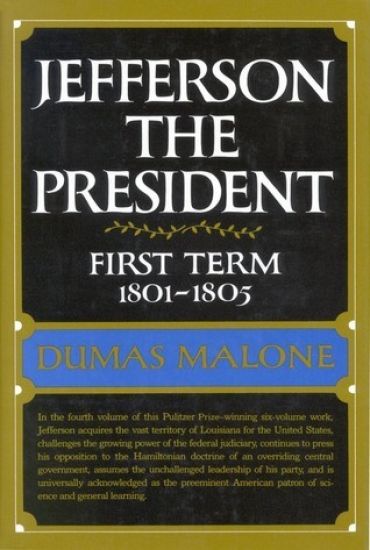
Jefferson the President: First Term 1801 - 1805 - Volume IV
In the fourth volume of this comprehensive study, Jefferson acquires the vast territory of Louisiana for the United States, challenges the growing power of the federal judiciary, continues to press his opposition to the Hamiltonian doctrine of an overriding central government, assumes the unchallenged leadership of his party, and is universally acknowledged as the preeminent American patron of science and general learning.
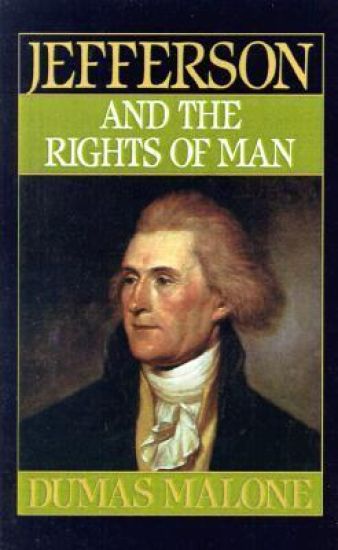
Jefferson and the Rights of Man - Volume II
The second volume in this Pulitzer Prize-winning biography tells the story of the eventful middle years in the life of Thomas Jefferson: his ministry to France in the years just before the French Revolution and during the early stages of that conflict; his service as secretary of state in President George Washington's first cabinet; the crucial period of his first differences with Alexander Hamilton and the beginnings of his long struggle with the Federalists. .
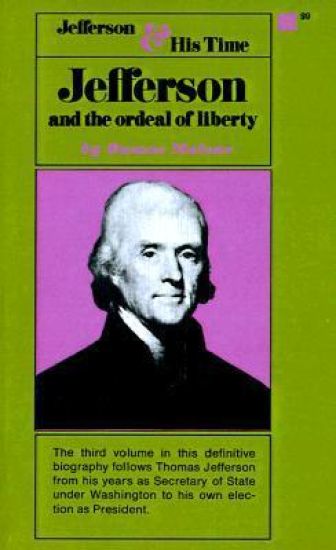
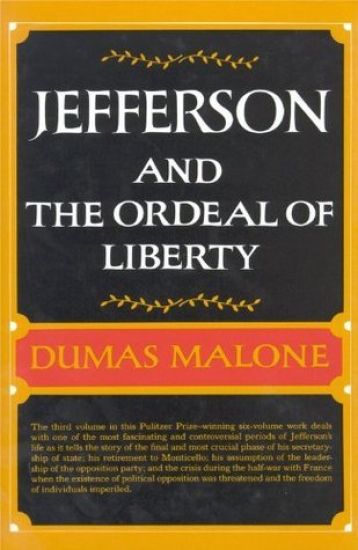
Jefferson & the Ordeal of Liberty

Jefferson & the Ordeal of Liberty

Dumas Malone

Little, Brown and Company
1962
sidottu
The third volume in Dumas Malone's distinguished study of Thomas Jefferson and his time deals with one of the most fascinating and controversial periods of Jefferson's life. It includes the story of the final and most crucial phase of his secretaryship of state; his retirement to Monticello; his assuption of the leadership of the opposition party; and the crisis during the half-war with France when the existence of political opposition was threatened and the freedom of individuals imperiled.
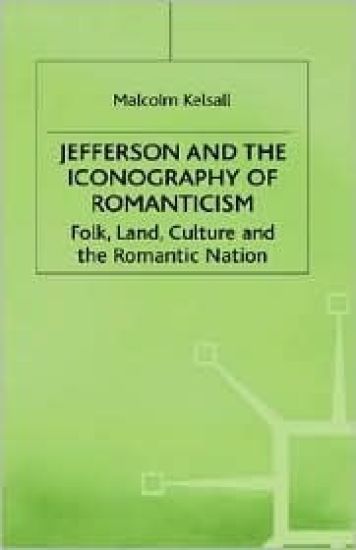
Jefferson and the Iconography of Romanticism
Jefferson and the Iconography of Romanticism is the first full-length study to examine how Jefferson, in the process of inventing the USA as the first new nation of the Romantic era, sought to find an appropriate imagery to represent the people, their homeland and the cultural ideal to which they should aspire. It examines in detail the role of his villa at Monticello in embodying the national ideal, shows how those ideals emerged and how they were subsequently challenged by the reinterpretation of Jefferson's iconography.
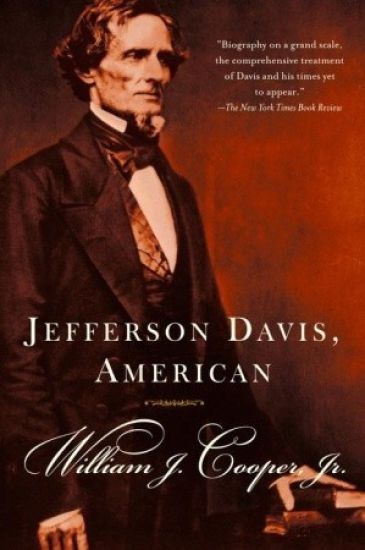
Jefferson Davis, American

Jefferson Davis, American

William J. Cooper

Vintage Books
2001
pokkari
From a distinguished historian of the America South comes this thoroughly human portrait of the complex man at the center of our nation's most epic struggle. Jefferson Davis initially did not wish to leave the Union-as the son of a veteran of the American Revolution and as a soldier and senator, he considered himself a patriot. William J. Cooper shows us how Davis' initial reluctance turned into absolute commitment to the Confederacy. He provides a thorough account of Davis' life, both as the Confederate President and in the years before and after the war. Elegantly written and impeccably researched, Jefferson Davis, American""is the definitive examination of one of the most enigmatic figures in our nation's history.
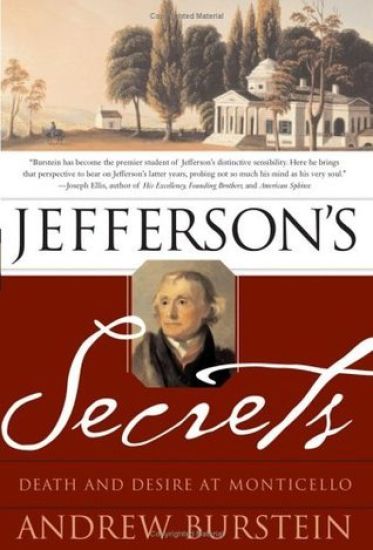
Jefferson's Secrets

Jefferson's Secrets

Andrew Burstein

Basic Books
2006
pokkari
When Thomas Jefferson died on July 4, 1826, he left behind a series of mysteries that have captured the imaginations of historical investigators for generations. In Jefferson's Secrets, Andrew Burstein draws on sources previous biographers have glossed over or missed entirely. Beginning with Jefferson's last days, Burstein shows how Jefferson confronted his own mortality. Burstein also tackles the crucial questions history has yet to answer: Did Jefferson love Sally Hemings? What were his attitudes towards women? Did he believe in God? How did he wish to be remembered? The result is a profound and nuanced portrait of the most complex of the Founding Fathers.
Jefferson: Political Writings

Jefferson: Political Writings

Thomas Jefferson

Cambridge University Press
1999
pokkari
Thomas Jefferson is among the most important and controversial of American political thinkers: his influence (libertarian, democratic, participatory, and agrarian-republican) is still felt today. A prolific writer, Jefferson left 18,000 letters, Notes on the State of Virginia, an Autobiography, and numerous other papers. Joyce Appleby and Terence Ball have selected the most important of these for presentation in the Cambridge Texts series: Jefferson’s views on topics such as revolution, self-government, the role of women and African-American and Native Americans emerge to give a fascinating insight into a man who owned slaves, yet advocated the abolition of slavery. The texts are supported by a concise introduction, suggestions for further reading and short biographies of key figures, all providing invaluable assistance to the student encountering the breadth and richness of Jefferson’s thought for the first time.