Kirjojen hintavertailu. Mukana 11 699 587 kirjaa ja 12 kauppaa.

Kirjahaku

Etsi kirjoja tekijän nimen, kirjan nimen tai ISBN:n perusteella.

1000 tulosta hakusanalla Jeffrey D Barbieri

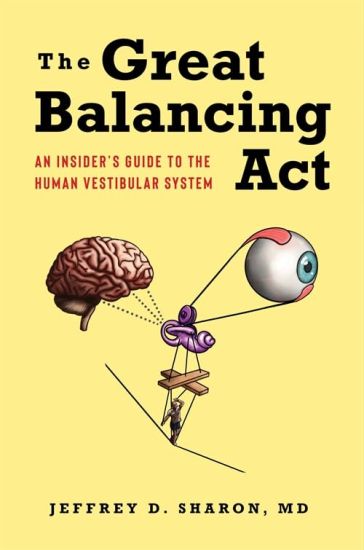
The Great Balancing Act

The Great Balancing Act

Jeffrey D. Sharon

Columbia University Press
2025
pokkari
What’s the secret to keeping your balance? The ear does more than hear: it helps us stay stable by perceiving movements and gravity. Elegant sensors deep within the skull detect every twist, turn, and tumble, powering swift reflexes that keep vision and balance steady. This is the vestibular system. It’s primordial and ubiquitous: every animal has one, and even plants have a rudimentary version. It works so well that we take it for granted—until it fails. How does this remarkable system function? What happens when it goes haywire? How can modern medicine treat vestibular disease?The Great Balancing Act tells the story of the vestibular system, from T. rex hearing organs to cochlear implants, and from the unsung power of hair cells to inner-ear problems in outer space. Combining neuroscience, history, and medicine, Jeffrey D. Sharon—a vestibular doctor and researcher—explains the sense of balance using accessible language and wry humor. He recounts how pioneering scientists solved the mysteries of the vestibular system and shows why it is necessary for spatial reasoning and abstract thought. Sharon explores the devastating consequences of vestibular problems such as vertigo, dizziness, and imbalance, offering an expert, patient-friendly look at emerging and future treatments. Engaging and entertaining, this book invites readers to discover a little-known yet vital part of ourselves.

The Terrorist Trap, Second Edition

The Terrorist Trap, Second Edition

Jeffrey D. Simon

Indiana University Press
2001
pokkari
The bombings of the Murrah Federal Building in Oklahoma City and of the World Trade Center in New York City have joined a long history of terrorists acts against the United States. In this newly updated edition of his book, Jeffrey Simon reaches back to the founding days of the Republic to tell a story that is both instructive and alarming. Simon uncovers the dynamics of a deadly conflict that affects all Americans. His in-depth interviews with terrorists and their victims, with reporters, government officials, and others bring to life a tale of presidents and terrorists, media and society, all entangled in a drama of international violence. The Terrorist Trap traces the government response to terrorism from the days of Thomas Jefferson and the Barbary Pirates to William Jefferson Clinton's confrontation with homegrown terrorism. It explores the terrorist trap: the psychological, political, and social elements that make terrorism unlike any other conflict. With the end of the Cold War and the defeat of Saddam Hussein's army in the Gulf War, many believed that the threat of terrorism had been significantly reduced. But Simon shows how terrorism grows out of political, economic, and social grievances that can never be fully resolved, as events in Israel and elsewhere continue to demonstrate. Living with terrorism will be an inescapable part of life in the twenty-first century. Simon calls on officials to move away from the useless rhetoric of defeating terrorism and to focus instead on achievable goals in combating this global problem.
Rise and Fall of Theological Enlightenment

Rise and Fall of Theological Enlightenment

Jeffrey D. Burson; Dale K. Van Kley

University of Notre Dame Press
2010
sidottu
In The Rise and Fall of Theological Enlightenment, Jeffrey D. Burson analyzes the history of the French Enlightenment and its relationship to the French Revolution by casting it as a diverse constellation of Theological Enlightenment discourses, compromised between about 1730 and 1762 by high-stakes cultural and political controversies involving the royal court, the government, and the Catholic Church. Burson places the Abbé Jean-Martin de Prades at the center of the storm. In 1749, Prades was working on his doctorate in theology at the University of Paris. An ambitious young theologian, Prades, like his teachers at the Sorbonne and like many lay and clerical apologists in mid-eighteenth-century France, had been deeply inspired by the spirit of the Enlightenment. Burson reinterprets the Jesuit Enlightenment and its influence on French society, arguing that Jesuits had pioneered ways of synthesizing Locke, Malebranche, and Newton in light of the expansion of the public sphere. Hoping to defend Catholic theology against the Radical Enlightenment by adapting these Jesuit Enlightenment discourses with natural history and Enlightenment theological debates, Prades inadvertently sparked a public scandal that galvanized members of the royal court and the Parlement of Paris, Jansenists, Jesuits, and philosophes, alike—all of whom refashioned the person and work of Prades to suit their own ends. Ultimately, the controversy polarized the cultural politics of pre-Revolutionary France into two camps, that of a self-consciously secular Enlightenment and that of a staunchly opposed Counter-Enlightenment. Prades's history provides Burson with a lens through which to reevaluate the intersections of theology and Enlightenment philosophy, of French politics and the French Catholic church, and of conservatives, moderates, and radicals on all sides in order to provide us with a newly-capacious Enlightenment historiography.
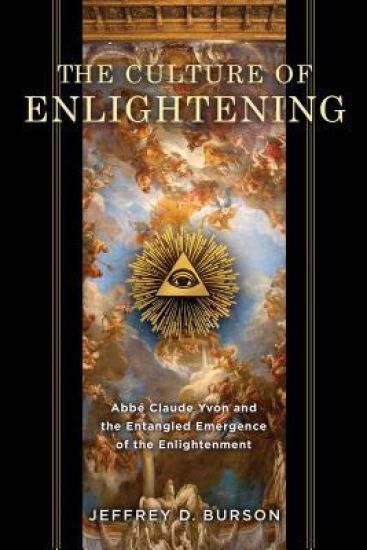
Culture of Enlightening

Culture of Enlightening

Jeffrey D. Burson

University of Notre Dame Press
2019
sidottu
Recent scholarly and popular attempts to define the Enlightenment, account for its diversity, and evaluate its historical significance suffer from a surprising lack of consensus at a time when the social and political challenges of today cry out for a more comprehensive and serviceable understanding of its importance. This book argues that regnant notions of the Enlightenment, the Radical Enlightenment, and the multitude of regional and religious enlightenments proposed by scholars all share an entangled intellectual genealogy rooted in a broader revolutionary "culture of enlightening" that took shape over the long-arc of intellectual history from the waning of the sixteenth-century Reformations to the dawn of the Atlantic Revolutionary era. Generated in competition for a changing readership and forged in dialog and conflict, dynamic and diverse notions of what it meant to be enlightened constituted a broader culture of enlightening from which the more familiar strains of the Enlightenment emerged, often ironically and accidentally, from originally religious impulses and theological questioning. By adapting, for the first time, methodological insights from the scholarship of historical entanglement (l'histoire croisée) to the study of the Enlightenment, this book provides a new interpretation of the European republic of letters from the late 1600s through the 1700s by focusing on the lived experience of the long-neglected Catholic theologian, historian, and contributor to Diderot's Encyclopédie, Abbé Claude Yvon. The ambivalent historical memory of Yvon, as well as the eclectic and global array of his sources and endeavors, Burson argues, can serve as a gauge for evaluating historical transformations in the surprisingly diverse ways in which eighteenth-century individuals spoke about enlightening human reason, religion, and society. Ultimately, Burson provocatively claims that even the most radical fruits of the Enlightenment can be understood as the unintended offspring of a revolution in theology and the cultural history of religious experience.
Coagulopathy, An Issue of Oral and Maxillofacial Surgery Clinics of North America

Coagulopathy, An Issue of Oral and Maxillofacial Surgery Clinics of North America

Jeffrey D. Bennett; Elie M. Ferneini

Elsevier - Health Sciences Division
2016
sidottu
This issue of Oral and Maxillofacial Surgery Clinics of North America focuses on Coagulopathy, and is edited by Drs. Jeffrey Bennett and Elie Ferneini. Articles will include: Perioperative Patient Evaluation: What the Oral Surgeon Needs to Know; Hypercoagulable States: What the Oral Surgeon Needs to Know; ASA, Plavix, and Other Antiplatelet Medications: What the Oral Surgeon Needs to Know; Heparin and Lovenox: What the Oral Surgeon Needs to Know; Blood Products: What the Oral Surgeon Needs to Know; Interventional Radiology and Bleeding Disorders: What the Oral Surgeon Needs to Know; Platelet Disorders: What the Oral Surgeon Needs to Know; Systemic Disease and Bleeding disorders: What the Oral Surgeon Needs to Know; Hemophilia: What the Oral Surgeon Needs to Know; Damage Control Resuscitation: What the Oral Surgeon Needs to Know; Hemostasis Agents: What the Oral Surgeon Needs to Know; Coumadin and Newer Agents: What the Oral Surgeon Needs to Know; and more!
The Antarctic Treaty System

The Antarctic Treaty System

Jeffrey D Myhre

Routledge
2019
sidottu
Because negotiations for the Antarctic Treaty were kept secret, the issues that shaped the treaty system have been poorly understood. Dr. Myhre breaks new ground by examining the records of the first Antarctic Treaty Consultative Meetings and evaluating the events of the Special Consultative Meetings on Antarctic Mineral Resources. Introducing the reader to Antarctic politics, Dr. Myhre examines legal and political problems arising from some nations' claims to sovereignty in Antarctica, reviews initial efforts to create an international administration for the region, and studies in detail the terms of the treaty and the rules of procedure for the consultative meetings. Turning to the diplomatic events that molded the treaty system, he concentrates on the issues that emerged in the 1960s: conservation, the role of Meetings of Experts, the position of the Scientific Committee on Antarctic Research within the treaty system, the obligations of acceding states to uphold previous agreements, and the Consultative Powers' failure to establish an Antarctic Secretariat. Finally, he reviews the two main challenges to the system's survival—mineral extraction and Third World opposition to the present structure.
The Antarctic Treaty System

The Antarctic Treaty System

Jeffrey D Myhre

Routledge
2021
nidottu
Because negotiations for the Antarctic Treaty were kept secret, the issues that shaped the treaty system have been poorly understood. Dr. Myhre breaks new ground by examining the records of the first Antarctic Treaty Consultative Meetings and evaluating the events of the Special Consultative Meetings on Antarctic Mineral Resources. Introducing the reader to Antarctic politics, Dr. Myhre examines legal and political problems arising from some nations' claims to sovereignty in Antarctica, reviews initial efforts to create an international administration for the region, and studies in detail the terms of the treaty and the rules of procedure for the consultative meetings. Turning to the diplomatic events that molded the treaty system, he concentrates on the issues that emerged in the 1960s: conservation, the role of Meetings of Experts, the position of the Scientific Committee on Antarctic Research within the treaty system, the obligations of acceding states to uphold previous agreements, and the Consultative Powers' failure to establish an Antarctic Secretariat. Finally, he reviews the two main challenges to the system's survival—mineral extraction and Third World opposition to the present structure.
Fundamentals of Medical Practice Investigation
Fundamentals of Medical Practice Investigation fills an important gap in the resources for criminal investigators. Appropriate for novice medical investigators as well as seasoned investigators looking to sharpen their skills, this book unites step-by-step fundamentals with up-to-date research reviews of critical issues in the field, including sexual misconduct, patient abuse, drug use among medical practitioners, and unethical or illegal prescription practices. An essential tool for law enforcement and other criminal justice professionals, Fundamentals of Medical Practice Investigation will improve the quality of all types of medical investigation.
Corporations Are Not People

Corporations Are Not People

Jeffrey D Clements

Readhowyouwant
2017
pokkari
Since the Supreme Court's Citizens United ruling that the rights of thingsmoney and corporationsmatter more than the rights of people, America has faced a crisis of democracy. In this timely and thoroughly updated second edition, Jeff Clements describes the strange history of this bizarre ruling, its ongoing destructive effects, and the growing movement to reverse it. He includes a new chapter, ';Do Something , ' showing howstate by state and community by communityAmericans are using creative strategies and tools to renew democracy and curb unbalanced corporate power. Since the first edition, 16 states, 160 members of Congress, and 500 cities and towns have called for a constitutional amendment to overturn Citizens United, and the list is growing. This is a fight we can win
Evaluating a Large Group Awareness Training

Evaluating a Large Group Awareness Training

Jeffrey D. Fisher; Roxane C. Silver; Jack M. Chinsky; Barry Goff; Yechiel Klar

Springer-Verlag New York Inc.
1990
nidottu
Large Group Awareness Training: An Historical Context Groups associated with the human potential movement have been a controversial feature of American life during the last three decades. In the 1950's and 1960's, the movement was dominated by various types of small groups (SGs), which included sensitivity training groups, encounter groups, as well as several others (see Lieberman, Yalom, & Miles, 1973). Some people viewed SGs as an effective means for attaining personal and organizational growth, and Carl Rogers, one of the founders of this movement, labeled small groups as . . the most rapidly spreading social invention of the century, and probably the most potent" (Rogers, 1970). In contrast, others attacked SGs as "the most extreme exhibition thus far of man's talent for reducing, distorting, evading, and vulgarizing his own reality" (Koch, 1973, p. 639). Nevertheless, SGs generally became an accepted tool for personal development and were incorporated into university curricula and mana­ gerial training programs. During the 1970's the prevalence and appeal of SGs declined (cf. Back, 1978), and at about the same time, large group awareness training programs (LGATs) appeared. ' LGATs are offered to the general public by profit-making or­ ganizations and examine philosophical, psychological and ethical issues concern­ ing personal effectiveness, decision-making, personal responsibility and commit­ ment After addressing these topics, participants are encouraged to apply their recently attained insights to their lives.
The 1980 Presidential Election

The 1980 Presidential Election

Jeffrey D. Howison

Routledge
2013
sidottu
Ronald Reagan’s victory in the 1980 presidential election marked a watershed moment in the history of the United States, heralding the triumph of the American conservative movement. Once a supporter of the New Deal, Reagan had come to symbolize the union of three diverse forms of conservatism—anti-communism, social traditionalism, and libertarianism—that were increasingly intertwined under the banner of the Republican Party. The unlikely development of this new conservative coalition was based upon the larger impacts of the civil rights movement in reshaping the dynamics of the Democratic and Republican parties, the social "backlash" of the Nixon era, the emergence of the religious right, and the economic and political crises that directly set the stage for Reagan’s stunning victory.In five original, engaging chapters, The 1980 Presidential Election shows how Reagan’s journey to the White House was connected to the wider transformations of post-1945 American history. Supplemented by a fresh collection of primary documents—including previously unpublished transcripts of Reagan’s radio addresses of the late-1970s—this book is an ideal introduction to the origins and impact of the American conservative movement.
The 1980 Presidential Election

The 1980 Presidential Election

Jeffrey D. Howison

Routledge
2013
nidottu
Ronald Reagan’s victory in the 1980 presidential election marked a watershed moment in the history of the United States, heralding the triumph of the American conservative movement. Once a supporter of the New Deal, Reagan had come to symbolize the union of three diverse forms of conservatism—anti-communism, social traditionalism, and libertarianism—that were increasingly intertwined under the banner of the Republican Party. The unlikely development of this new conservative coalition was based upon the larger impacts of the civil rights movement in reshaping the dynamics of the Democratic and Republican parties, the social "backlash" of the Nixon era, the emergence of the religious right, and the economic and political crises that directly set the stage for Reagan’s stunning victory.In five original, engaging chapters, The 1980 Presidential Election shows how Reagan’s journey to the White House was connected to the wider transformations of post-1945 American history. Supplemented by a fresh collection of primary documents—including previously unpublished transcripts of Reagan’s radio addresses of the late-1970s—this book is an ideal introduction to the origins and impact of the American conservative movement.
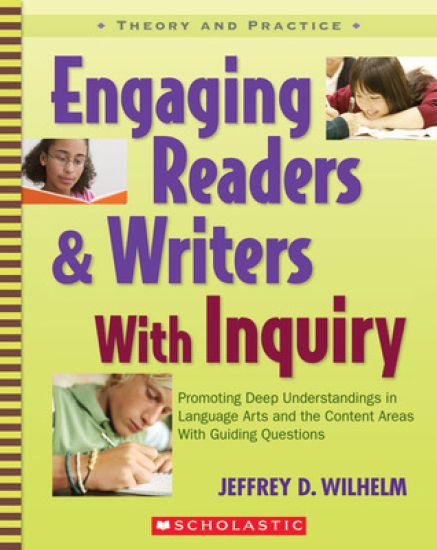
Engaging Readers & Writers With Inquiry

Engaging Readers & Writers With Inquiry

Jeffrey D. Wilhelm

Scholastic Professional
2007
nidottu
What makes a good relationship? How does flight influence behavior for humans and birds? Is it ever permissible to lie? Reframing our units and lessons with questions such as these makes learning more exciting for students. Wilhelm debunks the myth that teaching through inquiry is hard. He shares practical, easy ideas for turning state standards into engaging authentic questions that propel students toward deep understandings. Includes sample lessons, discussion techniques, and questioning schemes for all the content areas.
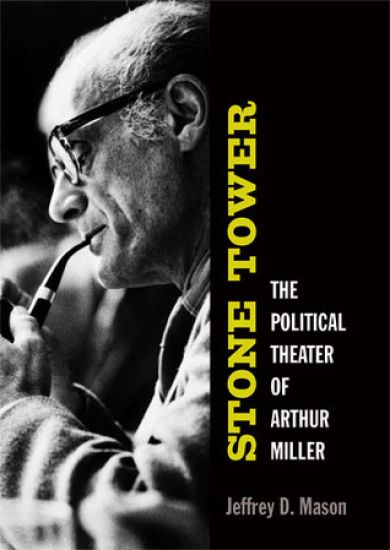
Stone Tower

Stone Tower

Jeffrey D. Mason

The University of Michigan Press
2008
sidottu
Jeffrey D. Mason's Stone Tower sets out to enrich---and challenge---traditional views of playwright Arthur Miller. While Miller has long been acclaimed as a social dramatist, this fresh appraisal clearly establishes him as an essentially political playwright. The book pays close attention not only to the public and private power relations in Miller's dramatic works but also in his nondramatic writings.Stone Tower begins with a detailed critique of Miller's 1956 testimony before the House Committee on Un-American Activities and of his published essays on topics ranging from Nazism to the contested presidential election of 2000. Mason moves on to explore Miller's dramatic works, presenting All My Sons and Death of a Salesman as plays that stage the political in personal terms, then offering The Crucible and The Archbishop's Ceiling as explorations of the personal in political terms.The book provides invaluable insights on Miller's theatrical response to the Holocaust in Incident at Vichy, Broken Glass, Playing for Time, and After the Fall. It offers revealing analyses of Miller's treatment of women throughout his plays and aspects of male domination in The Ride Down Mt. Morgan. Mason concludes with Miller's late satire Resurrection Blues as evidence that the playwright's mistrust of authority and social power remained unresolved. With attention to staging issues, social history, and dramatic analysis, the book explores the impact of this canonical American dramatist, breaks new ground in Miller studies, and suggests the deeper implications and extensive engagement of the American theater of the latter twentieth century.Stone Tower opens up new territory in Miller studies by exploring the political impact of this canonical American dramatist. This book should be useful to theater scholars and students, as well as readers who want to familiarize themselves with Miller's work.Jeffrey D. Mason is Professor of Theater and Dance and Dean of the College of Arts and Letters at California State University, Sacramento. His previous books include Performing America: Cultural Nationalism in American Theatre (co-edited with J. Ellen Gainor) and Melodrama and the Myth of America, which received an honorable mention for the Barnard Hewitt Award for Outstanding Research in Theatre History. "An imaginative study of a major figure and one of the first really thoughtful treatments of Miller since his death . . . a significant addition to the literature."---Barry Witham, University of Washington
A Tropical Belle Epoque

A Tropical Belle Epoque

Jeffrey D. Needell

Cambridge University Press
2010
pokkari
This book, originally published in 1987, is a socio-cultural analysis of a tropical belle epoque: Rio de Janeiro between 1898 and 1914. It relates how the city's elite evolved from the semi-rural, slave-owning patriarchy of the coffee-port seat of a monarchy into an urbane, professional, rentier upper crust dominating the centre of a 'modernising' oligarchical republic. It explores such varied topics as architecture, literature, prostitution, urban reform, the family, secondary schools, and the salon. It evokes a milieu increasingly marked by Europe, demonstrating how French and English culture permeated the lives of elite members who adapted it to their needs and perspectives as a dominant stratum of relatively recent and varied origin. This exploration of cultural 'dependency' in a unique, cosmopolitan, fin-de-siecle urban culture will also interest those concerned with the broader questions of culture and colonialism during the high tide of European imperialism.
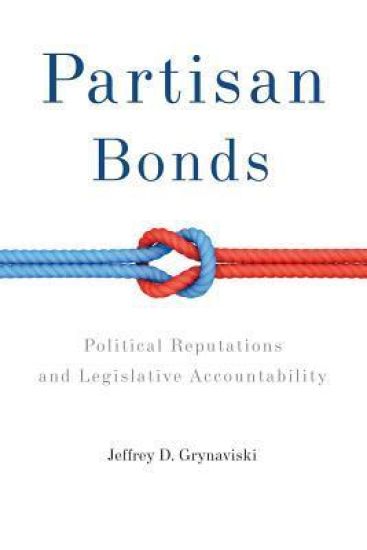
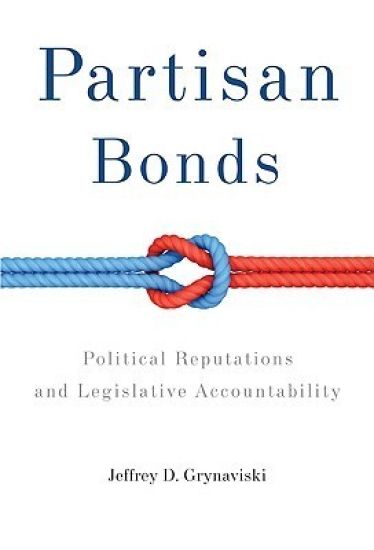
Partisan Bonds

Partisan Bonds

Jeffrey D. Grynaviski

Cambridge University Press
2013
pokkari
Political scientists have long painted American voters' dependence on partisan cues at the ballot box as a discouraging consequence of their overall ignorance about politics. Taking on this conventional wisdom, Jeffrey D. Grynaviski advances the provocative theory that voters instead rely on these cues because party brand names provide credible information about how politicians are likely to act in office, despite the weakness of formal party organization in the United States. Among the important empirical implications of his theory, which he carefully supports with rigorous data analysis, are that voter uncertainty about a party's issue positions varies with the level of party unity it exhibits in government, that party preferences in the electorate are strongest among the most certain voters, and that party brand names have meaningful consequences for the electoral strategies of party leaders and individual candidates for office.
Partisan Bonds

Partisan Bonds

Jeffrey D. Grynaviski

Cambridge University Press
2010
sidottu
Political scientists have long painted American voters' dependence on partisan cues at the ballot box as a discouraging consequence of their overall ignorance about politics. Taking on this conventional wisdom, Jeffrey D. Grynaviski advances the provocative theory that voters instead rely on these cues because party brand names provide credible information about how politicians are likely to act in office, despite the weakness of formal party organization in the United States. Among the important empirical implications of his theory, which he carefully supports with rigorous data analysis, are that voter uncertainty about a party's issue positions varies with the level of party unity it exhibits in government, that party preferences in the electorate are strongest among the most certain voters, and that party brand names have meaningful consequences for the electoral strategies of party leaders and individual candidates for office.
Fresh Takes on Teaching Literary Elements

Fresh Takes on Teaching Literary Elements

Jeffrey D. Wilhelm; Michael W. Smith

Scholastic Professional
2010
nidottu
Bring new power and purpose to the study of literature with innovative tools and strategies that deepen students' understanding of literary elements and help them apply that understanding to their reading as well as their writing. Rich, original passages illuminate the intricacies of character, setting, point of view, and theme, and deeply engaging activities framed by inquiry enable students to transfer what they learn to new reading situations as well as to the way they think through problems and live their lives.