Kirjahaku
Etsi kirjoja tekijän nimen, kirjan nimen tai ISBN:n perusteella.
1000 tulosta hakusanalla Jennifer L. Burrell
The past two decades of politics in Washington have seen increased partisanship, prolonged stalemates, and numerous scandals. For today's teenagers and young adults, years of ineffective and inefficient political leadership have completely eroded any sense that politicians or government have the ability to do good or effect positive change. Worse, the mean-spirited, dysfunctional political system that has come to characterize American politics has turned young people off to the idea of running for office. With more than 500,000 elected positions in the United States, what will happen when this generation is expected to take the reins of political power? Through an original, national survey of more than 4,000 high school and college students, as well as more than 100 in-depth interviews, Jennifer L. Lawless and Richard L. Fox find that young Americans feel completely alienated from contemporary politics and express little ambition or aspiration to run for office in the future. The overwhelming majority see nothing particularly noble about those currently in office, viewing most as dishonest, self-interested, and disinterested in helping their constituents. These young people want to improve their communities and enact change in the world; but they don't think politics is the way to achieve these goals. In fact, they look disdainfully upon the prospects of growing up to be a mayor, governor, senator, or even president of the United States. Running from Office explores young people's opinions about contemporary politics and their political ambition (or lack of it). The book paints a political profile of the next generation that should sound alarm bells about the long-term, deeply embedded damage contemporary politics has wrought on U.S. democracy and its youngest citizens. As disheartening as their conclusions sound, Lawless and Fox end with practical suggestions for how new technologies, national service programs, and well-strategized public service campaigns could generate political ambition in young people. Today's high school and college students care deeply about improving the future, and it's not too late to ensure that they view running for office as an effective way to do so.
Methods in Observational Epidemiology
Jennifer L. Kelsey; Alice S. Whittemore; Alfred S. Evans; W. Douglas Thompson
Oxford University Press Inc
1996
sidottu
Providing a comprehensive picture of the design, conduct, analysis, and interpretation of non-experimental studies of both infectious and non-infectious diseases, the Second Edition of this widely used text has been thoroughly updated to take into account the numerous developments in epidemiology over the past decade. Since the first edition was published in 1986, additional sources of data have become available through the increasing use of computerized records for health-related purposes. Also, a better understanding of the uses and limitations of certain epidemiologic concepts has been gained. Modifications of traditional study designs, including nested case-control studies and case-cohort studies, are now more frequently employed. Biological markers of exposure, disease susceptibility, and disease itself are used in many studies and methods of statistical analysis have been further developed. All of these developments have been considered in writing the Second Edition. The authors cover the full scope of observational studies, describing in detail cohort studies, case-control studies, cross-sectional studies, and epidemic investigation. The use of statistical procedures is described in easy-to-understand terms. Sample size estimation, sampling, measurement, and measurement error are fully discussed. Each chapter in the second edition has been updated and several chapters have been expanded. Chapter 3, which summarizes sources of data on disease occurrence, includes several additional sources of data. Chapter 5, which describes modifications of traditional study designs, now contains nested case-control and case-cohort studies. Chapter 15, on other types of measurement, has been expanded to include sections on measurement in epidemiologic studies of the elderly and on biological markers since these have become major areas of epidemiologic research in recent years. Much of the material in Chapters 6, 7, and 9 on the analysis of data from epidemiologic studies is also new to this edition. Perhaps the greatest challenge for the authors in writing this Second Edition was to make some of the modern, frequently used methods of statistical analysis understandable to readers with a limited mathematical or statistical background. Although this book is intended for readers who have had introductory courses in epidemiology and biostatistics, even readers who do not fully comprehend the theory behind some of the techniques should understand the rationale for their use and be able to interpret results when they appear on a computer printout or in the literature. The Second Edition of this widely used text will serve as a practical resource for students and practitioners of epidemiology, public health and biostatistics.
The American Dream and the Public Schools
Jennifer L. Hochschild; Nathan Scovronick
OXFORD UNIVERSITY PRESS INC
2003
muu
The American Dream and the Public Schools examines issues that have excited and divided Americans for years, including desegregation, school funding, testing, vouchers, bilingual education, and ability grouping. While these are all separate problems, much of the contention over them comes down to the same thing—an apparent conflict between policies designed to promote each student's ability to succeed and those designed to insure the good of all students or the nation as a whole. The authors show how policies to promote individual success too often benefit only those already privileged by race or class, and often conflict with policies that are intended to benefit everyone. They propose a framework that builds on our nation's rapidly changing population in order to help Americans get past acrimonious debates about schooling. Their goal is to make public education work better so that all children can succeed.
The American Dream and the Public Schools
Jennifer L. Hochschild; Nathan Scovronick
Oxford University Press Inc
2004
nidottu
The American Dream and the Public Schools examines issues that have excited and divided Americans for years, including desegregation, school funding, testing, vouchers, bilingual education, and ability grouping. While these are all separate problems, much of the contention over them comes down to the same thing--an apparent conflict between policies designed to promote each student's ability to succeed and those designed to insure the good of all students or the nation as a whole. The authors show how policies to promote individual success too often benefit only those already privileged by race or class, and often conflict with policies that are intended to benefit everyone. They propose a framework that builds on our nation's rapidly changing population in order to help Americans get past acrimonious debates about schooling. Their goal is to make public education work better so that all children can succeed.
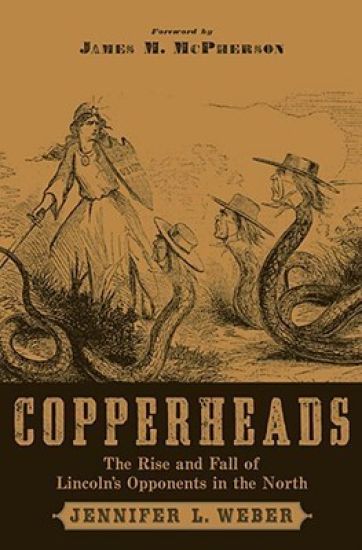
If Civil War battlefields saw vast carnage, the Northern home-front was itself far from tranquil. Fierce political debates set communities on edge, spurred secret plots against the Union, and triggered widespread violence, such as the New York City draft riots. And at the heart of all this turmoil stood Northern anti-war Democrats, nicknamed "Copperheads." Now, Jennifer L. Weber offers the first full-length portrait of this powerful faction to appear in almost half a century. Weber reveals how the Copperheads came perilously close to defeating Lincoln and ending the war in the South's favor. Indeed, by the summer of 1864, they had grown so strong that Lincoln himself thought his defeat was "exceedingly likely." Passionate defenders of civil liberties and states' rights - and often virulent racists - the Copperheads deplored Lincoln's suspension of habeas corpus, his liberal interpretation of the Constitution, and, most vehemently, his moves toward emancipation. Weber reveals how the battle over these issues grew so heated, particularly in the Midwest, that Northerners feared their neighbors would destroy their livestock, burn their homes, even kill them. Indeed, some Copperheads went so far as to conspire with Confederate forces and plan armed insurrections, including an attempt to launch an uprising during the Democratic convention in Chicago. Finally, Weber illuminates the role of Union soldiers, who, furious at Copperhead attacks on the war effort, moved firmly behind Lincoln. The soldiers' support for the embattled president kept him alive politically in his darkest times, and their victories on the battlefield secured his re-election. Disgraced after the war, the Copperheads melted into the shadows of history. Here, Jennifer L. Weber illuminates their dramatic story. Packed with sharp observation and fresh interpretations, Copperheads is a gripping account of the fierce dissent that Lincoln called "the fire in the rear."
Practical Implementation in Social Work Practice
Jennifer L. Bellamy; Danielle E. Parish
Oxford University Press Inc
2020
nidottu
How can someone determine whether to implement an evidence-supported intervention? What can be done to make sure any intervention is implemented well? Is there a foolproof way to adapt interventions for different client groups? In this book, Jennifer L. Bellamy and Danielle E. Parrish take readers through the implementation of interventions, offering insight into the steps necessary before intervening and what to do after one has taken place. The book centers itself on evidence-based practice (EBP), and Bellamy and Parrish provide readers with a clear understanding of the ways EBP can be used to make informed decisions about the selection of interventions and the evaluation of practice decisions. Practical Implementation in Social Work Practice is a helpful guide that showcases the benefits of EBP, with an emphasis on the implementation of high-quality interventions. The book expands on the EBP process from the applied and practical lenses, beginning with an overview of the process of EBP and the relationship between EBP and implementation. Within the chapters, readers will find specialized insight, practical industry tips, and adaptable implementation frameworks and tools to use on their own. This is a foundational text for social work practitioners, students, and intervention developers who are looking to implement high-quality interventions in real-world situations, and those who dive into the pages of this book will walk away with everything from the history of EBP to the continuing challenges facing the practice and field as a whole.
Public Health Law in Practice
Jennifer L. Pomeranz; Thomas G. Merrill; Kevin R.J. Schroth
OXFORD UNIVERSITY PRESS INC
2023
nidottu
Public Health Law in Practice offers an accessible deep dive into public health law for public health students and practitioners with or without a legal background. It provides a detailed overview of the American legal system with clear explanation of the government's abilities and limitations to promote public health through policies and programs. Chapters further describe the influence of law by subject, with excerpts from real legal cases across topical areas like tobacco, firearms, reproductive health, and nutrition policies. The volume concludes with practical strategies for legislation drafting and coalition building with government and community groups. Enriched with insights into the inner workings of public health departments, Public Health Law in Practice is the crucial public health law textbook that prepares public health students for work in the field of public health outside the classroom.
A high quality, well-functioning democracy demands that the next generation hears -- and then heeds -- a call to public service. With more than 500,000 elected positions in the United States, the political system can sustain itself and succeed only if a large number of citizens eventually put themselves forward as candidates. But Washington's dreadful performance over the past two decades has taken a toll on the young Americans who have come to know politics through this spectacle. The mean-spirited, dysfunctional political system that has come to characterize American politics turns young people off to the idea of running for office. It discourages them from aspiring, one day, to be elected leaders. It alienates them from even thinking about a career in politics. Running from Office is the first analysis of young people's political ambition, based on a national poll of over 4,000 high school and college students. In it, Jennifer L. Lawless and Richard L. Fox delve into how young people view political figures, what traits they see as necessary for political success, and how they view their own suitability to run for office. The overwhelming majority of young people have no interest whatsoever in running for office in the future. Actually, they would rather do almost anything else. And who can blame them? Most young people are not particularly tuned into politics. But when they are exposed -- at home, at school, with friends, or through the media -- they see derisive accounts of government inefficiency, ineffectiveness, and immorality. Lawless and Fox paint a political profile of the next generation that should sound alarm bells about the long-term, deeply embedded damage contemporary politics has wrought on U.S. democracy and its youngest citizens. But the message of Running from Office is not one of all gloom and doom. The young women and men Lawless and Fox surveyed and interviewed want to effect change, and they have clear ideas for how the American political system can steer a new course. Running from Office provides suggestions for ways to generate heightened levels of political ambition among today's young people, including better governance, civic education, voluntary community and national service programs, and political and media campaigns geared to mobilize young people.
This work is a wide-ranging and sensitive examination of the lived experience of intimate stalking victimization. It explores how it feels and what it means to be stalked by a former intimate and how this situation creates dilemmas for victims and their advocates. What is it like to try to become a "victim" in the eyes of the law and then to remain one, when almost anything a woman does to manage the violent emotions of an ex-husband or ex-boyfriend can backfire and discredit her claims? The author draws upon a broad array of rich data, including a survey of college women, courtroom testimony, prosecutors' case files, interviews with victims and observations in a prosecutor's office and a stalking survivor's support group to illustrate the difficulties women face as they work to cope with danger - and to negotiate the hazardous terrain of legal systems - simultaneously. For some victims, Dunn shows, prosecution processes are more traumatic than the events that brought them to seek legal help and her analysis of the historical, cultural and gendered frameworks in which stalking victimization and prosecution takes place accounts for the additional trauma. Definitions of situations and identities are contested rather than given in these arenas where lives and self-concepts rest in the balance. The ways in which we socially construct and confer meaning upon intimate violence and its victims profoundly shape what happens to ordinary women facing extraordinary circumstances. "Courting Disaster" illuminates what we can learn from their experience, whether we are working in these arenas or theorizing about how they do, and sometimes do not, work.
This book is about women who are coerced, intimidated, and stalked by former intimates. It is about the things these women do to manage this situation, and what happens to them as a consequence. Stalking is a behavior that has relatively recently been defined as problematic, and as criminal when violence or the threat of violence occurs. This new category of crime has created a new type of victim. How such victims come into being, interact with their former partners, and seek help, is the subject of this book. It is also about living through what some women consider a form of secondary victimization by the criminal justice system.The definition of someone as a victim is not self-evident, but is contingent upon interpretation. Thus this book is also an account of how women come to decide they are victims of stalking and seek to convince others of this. It uses a variety of data and methods to examine this phenomenon from the perspectives of both victims and law enforcement agents, and adds to our understanding of responsibility and blame when violence occurs between intimates. By examining social constructions of this particular type of victimization and the choices stalking victims make, the readers learn more about the forces constraining human decisions. Stalking victimization is complicated because it is an ongoing process. It often does not stop once the criminal justice system is involved. Women who are being stalked by their former partners face a profound dilemma in their efforts to manage their pursuers and to pursue their cases through the criminal justice system. Dunn offers a wide-ranging, thought-provoking, and sensitive examination of the lived experience of intimate stalking victimization. In exploring the ways in which we socially construct and confer meaning upon intimate violence, the author draws upon interviews with stalkers and victims, courtroom testimony, analyses of case reports, and an independent survey instrument that reveals ambivalence of the prevailing culture to the problem. Courting Disaster will be valuable in women's studies and counseling courses and a useful text in sociology and criminology.
The 1890s have long been thought one of the most male-oriented eras in American history. But in reading such writers as Frank Norris with Mary Wilkins Freeman and Charlotte Perkins Gilman with Stephen Crane, Jennifer L. Fleissner boldly argues that feminist claims in fact shaped the period's cultural mainstream. ?Women, Compulsion, Modernity? reopens a moment when the young American woman embodied both the promise and threat of a modernizing world. Fleissner shows that this era's expanding opportunities for women were inseparable from the same modern developments--industrialization, consumerism--typically believed to constrain human freedom. With ?Women, Compulsion, and Modernity?, Fleissner creates a new language for the strange way the writings of the time both broaden and question individual agency.
Democracy at Risk
Jennifer L. Merolla; Elizabeth J. Zechmeister
University of Chicago Press
2009
sidottu
How do threats of terrorism affect the opinions of citizens? Speculation abounds, but until now no one had marshaled hard evidence to explain the complexities of this relationship. Drawing on data from surveys and original experiments they conducted in the United States and Mexico, Jennifer L. Merolla and Elizabeth J. Zechmeister demonstrate how our strategies for coping with terrorist threats significantly influence our attitudes toward fellow citizens, political leaders, and foreign nations. The authors reveal, for example, that some people try to restore a sense of order and control through increased wariness of others - especially of those who exist outside the societal mainstream. Additionally, voters under threat tend to prize 'strong leadership' more highly than partisan affiliation, making some politicians seem more charismatic than they otherwise would. The authors show that a wary public will sometimes continue to empower such leaders after they have been elected, giving them greater authority even at the expense of institutional checks and balances. Having demonstrated that a climate of terrorist threat also increases support for restrictive laws at home and engagement against terrorists abroad, Merolla and Zechmeister conclude that our responses to such threats can put democracy at risk.
Democracy at Risk
Jennifer L. Merolla; Elizabeth J. Zechmeister
University of Chicago Press
2009
nidottu
How do threats of terrorism affect the opinions of citizens? Speculation abounds, but until now no one had marshaled hard evidence to explain the complexities of this relationship. Drawing on data from surveys and original experiments they conducted in the United States and Mexico, Jennifer L. Merolla and Elizabeth J. Zechmeister demonstrate how our strategies for coping with terrorist threats significantly influence our attitudes toward fellow citizens, political leaders, and foreign nations. The authors reveal, for example, that some people try to restore a sense of order and control through increased wariness of others - especially of those who exist outside the societal mainstream. Additionally, voters under threat tend to prize 'strong leadership' more highly than partisan affiliation, making some politicians seem more charismatic than they otherwise would. The authors show that a wary public will sometimes continue to empower such leaders after they have been elected, giving them greater authority even at the expense of institutional checks and balances. Having demonstrated that a climate of terrorist threat also increases support for restrictive laws at home and engagement against terrorists abroad, Merolla and Zechmeister conclude that our responses to such threats can put democracy at risk.
An examination of the nineteenth-century American novel that argues for a new genealogy of the concept of the will. What if the modern person were defined not by reason or sentiment, as Enlightenment thinkers hoped, but by will? Western modernity rests on the ideal of the autonomous subject, charting a path toward self-determination. Yet novelists have portrayed the will as prone to insufficiency or excess—from indecision to obsession, wild impulse to melancholic inertia. Jennifer Fleissner’s ambitious book shows how the novel’s attention to the will’s maladies enables an ongoing interrogation of modern premises from within. Maladies of the Will reveals the nineteenth-century American novel’s relation to a wide-ranging philosophical tradition, highly relevant to our own tumultuous present. In works from Moby-Dick and The Scarlet Letter to Elizabeth Stoddard’s The Morgesons and Charles W. Chesnutt’s The Marrow of Tradition, the will’s grandeur and its perversity emerge as it alternately aligns itself with and pits itself against a bigger Will—whether of God, the state, society, history, or life itself. Today, when invocations of autonomy appear beside the medicalization of many behaviors, and democracy’s tenet of popular will has come into doubt, Maladies of the Will provides a map to how we got here, and how we might think these vital dilemmas anew.
Iconic as a novelist and popular cultural figure, Zora Neale Hurston remains underappreciated as an anthropologist. Is it inevitable that Hurston’s literary authority should eclipse her anthropological authority? If not, what socio-cultural and institutional values and processes shape the different ways we read her work? Jennifer L. Freeman Marshall considers the polar receptions to Hurston’s two areas of achievement by examining the critical response to her work across both fields. Drawing on a wide range of readings, Freeman Marshall explores Hurston’s popular appeal as iconography, her elevation into the literary canon, her concurrent marginalization in anthropology despite her significant contributions, and her place within constructions of Black feminist literary traditions. Perceptive and original, Ain’t I an Anthropologist is an overdue reassessment of Zora Neale Hurston’s place in American cultural and intellectual life.
Mothers, Comrades, and Outcasts in East German Women's Film
Jennifer L. Creech
Indiana University Press
2016
sidottu
Mothers, Comrades, and Outcasts in East German Women's Film merges feminist film theory and cultural history in an investigation of "women's films" that span the last two decades of the former East Germany. Jennifer L. Creech explores the ways in which these films functioned as an alternative public sphere where official ideologies of socialist progress and utopian collectivism could be resisted. Emerging after the infamous cultural freeze of 1965, these women's films reveal a shift from overt political critique to a covert politics located in the intimate, problem-rich experiences of everyday life under socialism. Through an analysis of films that focus on what were perceived as "women's concerns"—marital problems, motherhood, emancipation, and residual patriarchy—Creech argues that the female protagonist served as a crystallization of socialist contradictions. By framing their politics in terms of women's concerns, these films used women's desire and agency to contest the more general problems of social alienation and collectivism, and to re-imagine the possibilities of self-fulfillment under socialism.
Mothers, Comrades, and Outcasts in East German Women's Film
Jennifer L. Creech
Indiana University Press
2016
pokkari
Mothers, Comrades, and Outcasts in East German Women's Film merges feminist film theory and cultural history in an investigation of "women's films" that span the last two decades of the former East Germany. Jennifer L. Creech explores the ways in which these films functioned as an alternative public sphere where official ideologies of socialist progress and utopian collectivism could be resisted. Emerging after the infamous cultural freeze of 1965, these women's films reveal a shift from overt political critique to a covert politics located in the intimate, problem-rich experiences of everyday life under socialism. Through an analysis of films that focus on what were perceived as "women's concerns"—marital problems, motherhood, emancipation, and residual patriarchy—Creech argues that the female protagonist served as a crystallization of socialist contradictions. By framing their politics in terms of women's concerns, these films used women's desire and agency to contest the more general problems of social alienation and collectivism, and to re-imagine the possibilities of self-fulfillment under socialism.