Kirjahaku
Etsi kirjoja tekijän nimen, kirjan nimen tai ISBN:n perusteella.
173 tulosta hakusanalla Jere Clemens King
Movement and Music gives you the knowledge and skills you need to make informed decisions on helping children develop the intrinsic motivation to move throughout their lives. Guiding principles focus on meeting individual needs, integrating movement and music, and much more. Pearson eText is an easy-to-use digital textbook that you can purchase on your own or instructors can assign for their course. The mobile app lets you keep on learning, no matter where your day takes you -- even offline. You can also add highlights, bookmarks, and notes in your Pearson eText to study how you like. NOTE: This ISBN is for the Pearson eText access card. Pearson eText is a fully digital delivery of Pearson content. Before purchasing, check that you have the correct ISBN. To register for and use Pearson eText, you may also need a course invite link, which your instructor will provide. Follow the instructions provided on the access card to learn more.
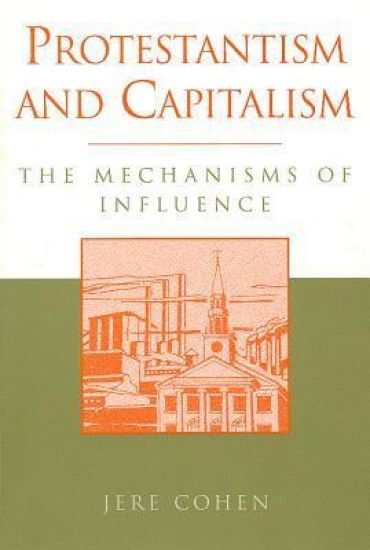
Arguably, the most important single work in classical sociology is Max Weber's thesis on how Protestantism makes its impact on capitalism. Cohen's argument is that Protestantism affects capitalism in several different ways. Each is linked as a separate mechanism of influence, and may therefore be assessed separately. Weber himself stated or suggested several possible mechanisms of influence. Protestantism gave the spirit of capitalism its duty to profit and thus helped to legitimate capitalism. Its religious asceticism also produced personalities well-suited for work discipline. Finally, the new turn in Christian doctrine contributed to the quest to prove one's salvation, because God's favor could be shown through business success.Cohen's argument is that some of these processes worked as Weber indicated and others did not. This makes a blanket assessment of his famous thesis inappropriate. The Weber thesis has been difficult to prove or disprove because the refutation of some suggested mechanisms still leaves others viable. Only a comprehensive testing of all of Weber's sub-hypotheses can provide a proper assessment of his work. By simultaneously examining these sub-texts, the author pulls together Weber's arguments and points of criticism. The book juxtaposes historical evidence pro and con.Cohen revisits, reexamines, and tests the classic Weberian thesis that the beliefs and presuppositions of the English Puritans, rather than the forces of economic determinism, ushered in the era of modern capitalism. He divides Weber's single argument into two main mechanisms of influence: one behavioral, confined to which Puritan tenets in particular affected a believer's economic activity; the other, a more prevalent and far-reaching cultural mechanism, which became part of the mainstream. By taking advantage of present day information, including recently discovered diaries of two seventeenth-century Puritan merchants, Cohen's text sums up many years of argument in the journal literature. The book will find a place in a wide range of courses, from sociology of religion, sociological theory, social economics, political science, to European history.Jere Cohen, a sociologist at the University of Maryland in Baltimore County, is the author of numerous journal articles, many of them also dealing with Max Weber and his Protestant Ethic thesis.
From Parent to Child
Jere R. Behrman; Robert A. Pollak; Paul Taubman
University of Chicago Press
1995
sidottu
How do parents allocate human capital among their children? To what extent do parental decisions about resource allocation determine children's eventual economic success? The analyses in this text explore these questions by developing and testing a model in which the earnings of children with different genetic endowments respond differently to investments in human capital. Behrman, Pollak, and Taubman use this model to investigate issues such as parental bias in resource allocations based on gender or birth order; the extent of intergenerational mobility in income, earnings, and schooling in the United States; the relative importance of environmental and genetic factors in determining variations in schooling; and whether parents' distributions offset the intended effects of government programmes designed to subsidize children. In allocating scarce resources, parents face a trade-off between equity and efficiency, between the competing desires to equalize the wealth of their children and to maximize the sum of their earnings.
From Parent to Child
Jere R. Behrman; Robert A. Pollak; Paul Taubman
University of Chicago Press
1995
nidottu
How do parents allocate human capital among their children? To what extent do parental decisions about resource allocation determine children's eventual economic success? The analyses in this text explore these questions by developing and testing a model in which the earnings of children with different genetic endowments respond differently to investments in human capital. Behrman, Pollak and Taubman use this model to investigate issues such as: parental bias in resource allocations based on gender or birth order; the extent of intergenerational mobility in income, earnings and schooling in the United States; the relative importance of environmental and genetic factors in determining variations in schooling; and whether parents' distributions offset the intended effects of government programmes designed to subsidize children. In allocating scarce resources, parents face a trade-off between equity and efficiency, between the competing desires to equalize the wealth of their children and to maximize the sum of their earnings.
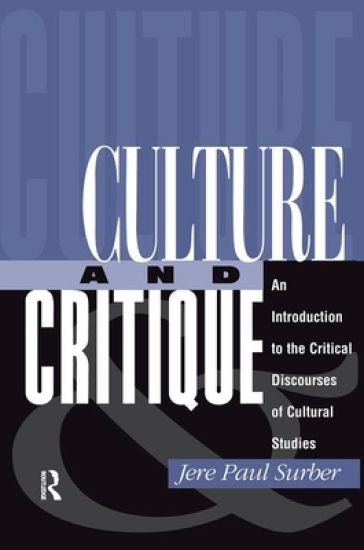
Written by philosopher Jere Surber, Culture and Critique familiarizes students with both the broad and specialized meanings of cultural studies, providing detailed explanations of theoretical terms, critical strategies, and discursive traditions upon which it is based. In its broad and more theoretical sense, cultural studies indicates a range of m
The Social Benefits of Education
Jere R. (EDT) Behrman; Nevzer (EDT) Stacey
Univ of Michigan Pr
1997
sidottu
In Afghanistan is the story of a young man, searching for adventure and self-discovery in war-torn Afghanistan during the time of the Soviet invasion. It is also a portrait of an exotic land and people desperately struggling for survival during that war, as they are today. In 1981, with a letter and some financial backing from The New York Times, Van Dyk, bearded and dressed as an Afghan, sneaked into Afghanistan , then off-limits to foreigners, and lived in the ruggedly-beautiful mountains and desert of this country with the Mujahideen, the men then fighting the Soviet Union. “My spine tingled like a boy’s. I felt the sensation of adventure…The Turbans of ten laughing young men, armed to the teeth, flapped in the wind…I would not have traded this moment for all the money in the world. It was suicidal, magnificent, and I knew we’d be all right.” But it was close. He lived through Soviet ground and helicopter attacks, saw death and suffering, but also laughter. He had much to learn about Islam, tribal traditions and the holy war the guerrillas were waging. He was accused of being a Soviet spy, but ultimately won the trust of his Afghan guides. He saw a strong, courageous, often frightened people fighting to protect the only thing they knew--their homes, their families, their way of life. The author, a former runner, a fledgling politician and writer, who grew up in a fundamentalist Christian family in a small town in the Northwest, also went looking for something deep among these men who shouted “God is Great” and went into battle against the Red Army. His story is about the people he met and his journey.
The Tree Story Coloring Book offers a perfect fun-filled activity for children 8 to 14 years of age.
Causes, Correlates and Consequences of Death Among Older Adults
Jere R. Behrman; Robin C. Sickles; Paul Taubman
Springer
1998
sidottu
All humans eventually die, but life expectancies differ over time and among different demographic groups. Teasing out the various causes and correlates of death is a challenge, and it is one we take on in this book. A look at the data on mortality is both interesting and suggestive of some possible relationships. In 1900 life expectancies at birth were 46. 3 and 48. 3 years for men and women respectively, a gender differential of a bit less than 5 percent. Life expectancies for whites then were about 0. 3 years longer than that of the whole population, but life expectancies for blacks were only about 33 years for men and women. At age 65, the remaining life expectancies were about 12 and 11 years for whites and blacks respectively. Fifty years later, life expectancies at birth had grown to 66 and 71 years for males and females respectively. The percentage differential between the sexes was now almost up to 10 percent. The life expectancies of whites were about one year longer than that for the entire population. The big change was for blacks, whose life expectancy had grown to over 60 years with black females living about 5 percent longer than their male counterparts. At age 65 the remaining expected life had increased about two years with much larger percentage gains for blacks.
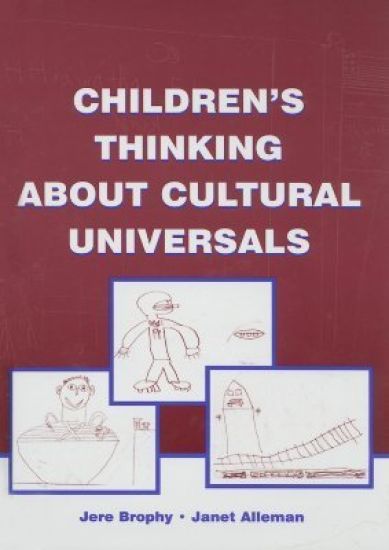
Children's Thinking About Cultural Universals
Jere Brophy; Janet Alleman
Routledge Member of the Taylor and Francis Group
2005
sidottu
Drawing on interview data, the authors describe K-3 students' knowledge and thinking about basic aspects of the social world that are addressed in the elementary social studies curriculum. The interviews focused on human activities relating to nine cultural universals that are commonly addressed in the elementary social studies curriculum: food, clothing, shelter, communication, transportation, family living, childhood, money, and government. This volume synthesizes findings from the research and discusses their implications for curriculum and instruction in early social studies.Children's Thinking About Cultural Universals significantly expands the knowledge base on developments in children's social knowledge and thinking and, in addition, provides a wealth of information to inform social studies educators' and curriculum developers' efforts to match instruction to students' prior knowledge, both by building on already developed valid knowledge and by addressing common misconceptions. It represents a quantum leap in the availability of information on the trajectories of children's knowledge about common topics in primary elementary social studies education.
Children's Thinking About Cultural Universals
Jere Brophy; Janet Alleman
Routledge Member of the Taylor and Francis Group
2005
nidottu
Drawing on interview data, the authors describe K-3 students' knowledge and thinking about basic aspects of the social world that are addressed in the elementary social studies curriculum. The interviews focused on human activities relating to nine cultural universals that are commonly addressed in the elementary social studies curriculum: food, clothing, shelter, communication, transportation, family living, childhood, money, and government. This volume synthesizes findings from the research and discusses their implications for curriculum and instruction in early social studies.Children's Thinking About Cultural Universals significantly expands the knowledge base on developments in children's social knowledge and thinking and, in addition, provides a wealth of information to inform social studies educators' and curriculum developers' efforts to match instruction to students' prior knowledge, both by building on already developed valid knowledge and by addressing common misconceptions. It represents a quantum leap in the availability of information on the trajectories of children's knowledge about common topics in primary elementary social studies education.
Inside the Social Studies Classroom
Jere Brophy; Janet Alleman; Barbara Knighton
Routledge Member of the Taylor and Francis Group
2008
sidottu
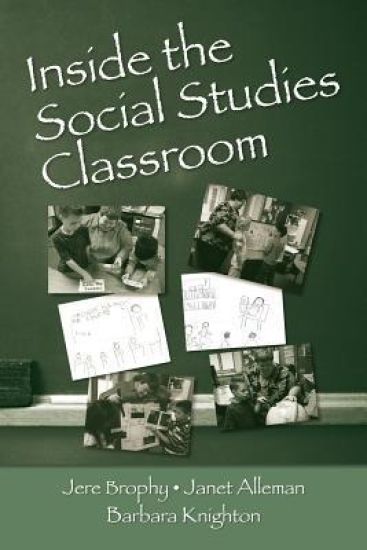
EDUCATION/ SOCIAL STUDIES "… a much-needed addition to elementary social studies that will move the field ahead."Keith C. Barton, University of Cincinnati"This text fills a valuable niche and should quickly become a leading reference for teachers and teacher educators."Linda S. Levstik, University of KentuckyThis book, resulting from a collaboration among an educational psychologist, a social studies educator, and a primary teacher, describes in rich detail and illustrates with excerpts from recorded lessons how primary teachers can engage their students in social studies lessons and activities that are structured around powerful ideas and have applications to their lives outside of school. The teaching portrayed connects concepts and skills emphasized in national and state standards, taught in ways that build on students’ prior experiences in their local communities and connect with their family backgrounds and home cultures.The analyses include rich descriptions of the teacher-student interactions that occur during lessons, detailed information about how and why the teacher adapted lesson plans to meet her students’ background experiences and adjusted these plans to take advantage of teachable moments that emerged during lessons, and what all of this might imply concerning principles of practice. The principles are widely applicable in elementary schools across the country, as well as across the curriculum (not just in social studies) and across the elementary grades (not just the primary grades).
Inside the Social Studies Classroom
Jere Brophy; Janet Alleman; Barbara Knighton
Routledge Member of the Taylor and Francis Group
2008
nidottu
EDUCATION/ SOCIAL STUDIES "… a much-needed addition to elementary social studies that will move the field ahead."Keith C. Barton, University of Cincinnati"This text fills a valuable niche and should quickly become a leading reference for teachers and teacher educators."Linda S. Levstik, University of KentuckyThis book, resulting from a collaboration among an educational psychologist, a social studies educator, and a primary teacher, describes in rich detail and illustrates with excerpts from recorded lessons how primary teachers can engage their students in social studies lessons and activities that are structured around powerful ideas and have applications to their lives outside of school. The teaching portrayed connects concepts and skills emphasized in national and state standards, taught in ways that build on students’ prior experiences in their local communities and connect with their family backgrounds and home cultures.The analyses include rich descriptions of the teacher-student interactions that occur during lessons, detailed information about how and why the teacher adapted lesson plans to meet her students’ background experiences and adjusted these plans to take advantage of teachable moments that emerged during lessons, and what all of this might imply concerning principles of practice. The principles are widely applicable in elementary schools across the country, as well as across the curriculum (not just in social studies) and across the elementary grades (not just the primary grades).
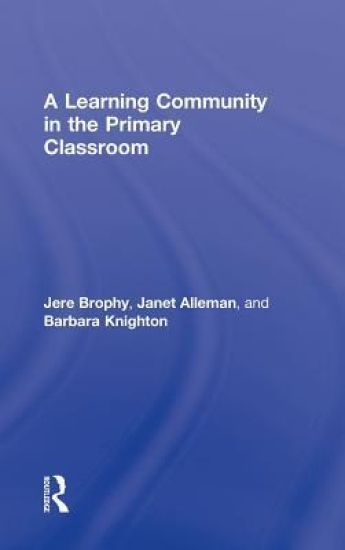
A Learning Community in the Primary Classroom
Jere Brophy; Janet Alleman; Barbara Knighton
Routledge Member of the Taylor and Francis Group
2010
sidottu
This richly detailed description and analysis of exemplary teaching in the primary grades looks at how a teacher establishes her classroom as a collaborative learning community, how she plans curriculum and instruction that features powerful ideas and applications to life outside of school, and how, working within this context, she motivates her students to learn with a sense of purpose and thoughtful self-regulation. The supporting analyses, which ground the teacher’s practice in principles from curriculum and instruction, educational psychology, and related sources of relevant theory and research, are designed to allow teacher-readers to develop coherent understanding and appreciation of the subtleties of her practice and how they can be applied to their own practice. Resulting from a lengthy collaboration among an educational psychologist, a social studies educator, and a classroom teacher, the aspects and principles of good teaching this book details are widely applicable across elementary schools, across the curriculum, and across the primary grade levels. To help readers understand the principles and adapt them to their particular teaching situations, an Appendix provides reflection questions and application activities.
A Learning Community in the Primary Classroom
Jere Brophy; Janet Alleman; Barbara Knighton
Routledge Member of the Taylor and Francis Group
2010
nidottu
This richly detailed description and analysis of exemplary teaching in the primary grades looks at how a teacher establishes her classroom as a collaborative learning community, how she plans curriculum and instruction that features powerful ideas and applications to life outside of school, and how, working within this context, she motivates her students to learn with a sense of purpose and thoughtful self-regulation. The supporting analyses, which ground the teacher’s practice in principles from curriculum and instruction, educational psychology, and related sources of relevant theory and research, are designed to allow teacher-readers to develop coherent understanding and appreciation of the subtleties of her practice and how they can be applied to their own practice. Resulting from a lengthy collaboration among an educational psychologist, a social studies educator, and a classroom teacher, the aspects and principles of good teaching this book details are widely applicable across elementary schools, across the curriculum, and across the primary grade levels. To help readers understand the principles and adapt them to their particular teaching situations, an Appendix provides reflection questions and application activities.
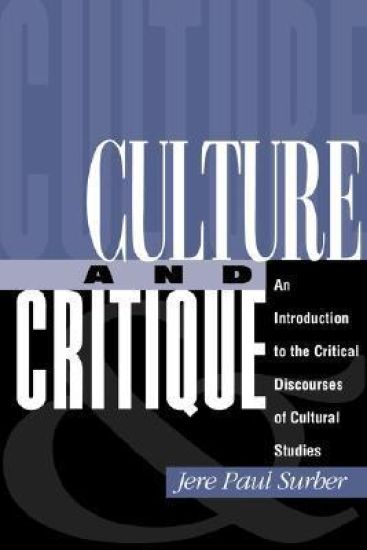
Written by philosopher Jere Surber, Culture and Critique familiarizes students with both the broad and specialized meanings of cultural studies, providing detailed explanations of theoretical terms, critical strategies, and discursive traditions upon which it is based. In its broad and more theoretical sense, cultural studies indicates a range of modern discourses which, beyond disciplines and their particular theories, employ the notion of culture in a distinctive way and specify certain critical practices as appropriate for analyzing given cultural activities, products, and institutions. In its narrower sense, cultural studies is a recently developed type of discourse, first appearing in several British universities in the 1950s, which, while eclectically drawing on certain theoretical aspects of earlier forms of critical cultural discourse, orients itself toward the analysis and practical critique of concrete contemporary cultural distinctions based on economic and political inequities.A useful reference for reading works in cultural studies, Culture and Critique puts unfamiliar terms and ideas into historical perspective and explains how the founding texts of the discipline first appeared.