Kirjojen hintavertailu. Mukana 11 717 486 kirjaa ja 12 kauppaa.

Kirjahaku

Etsi kirjoja tekijän nimen, kirjan nimen tai ISBN:n perusteella.

1000 tulosta hakusanalla Jeremy Lewis

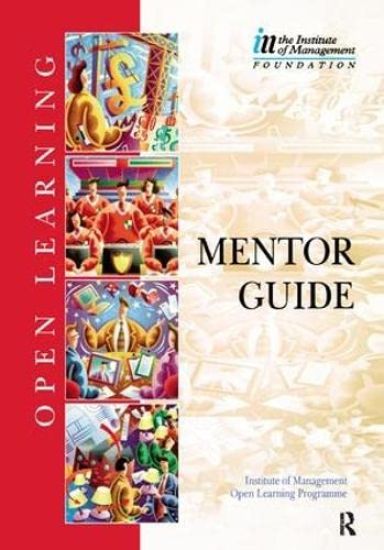
Mentor Guide

Mentor Guide

Gareth Lewis; Jeremy Kourdi

Routledge
2017
sidottu
The structure of the programme:There are two main guiding principles for the way in which the programme is organized:Firstly, the workbooks are grouped according to the Key Roles of Management.There are two core modules which focus on the personal skills required by all managers to help underwrite competence in all areas.Manage Activities describes the principles of managing the processes and activities of any organisation in its efforts to satisfy the needs of their customers.Manage Resources looks at the acquisition, control and monitoring of financial and other resources.Manage People looks at the principles of leadership, managing performance and developing people.Manage Information looks at the acquisition, storage and use of information for communication, problem solving and decision making.Together, these key roles provide a comprehensive description of the fundamental principles of management as it applies in all organisations.Secondly, the workbooks are grouped according to levels of management. The series is organised on two levels - representing different levels of management seniority and responsibility.Level 4 represents first line management. In accredited programmes this is equivalent to N/SVQ level 4, Certificate in Management or CMS. Level 5 is equivalent to middle/senior management and is accredited at N/SVQ level 5, Diploma in Management or DMS.Finally, the programme covers all of the knowledge and principles in respect of all units of competence in the MCI standards at levels 4 and level 5. These links are shown in the maps provided in the User Guide. The Programme is designed to satisfy the requirements of awarding bodies for qualifications in
How Children Develop Social Understanding

How Children Develop Social Understanding

Jeremy Carpendale; Charlie Lewis

Wiley-Blackwell (an imprint of John Wiley Sons Ltd)
2006
sidottu
This book provides a critical review of research into how children come to understand the social world, an area often known as children's "theories of mind". Takes an integrated approach to the development of children's social understandingBrings out the connections between mental state understanding and children's understanding of language, social skills, morality and emotions. Sets research within a historical and theoretical contextContributes unique insights and perspectives, particularly in its discussions of Piaget and Vygotsky, and in its Wittgensteinian focus on the role of language.
How Children Develop Social Understanding

How Children Develop Social Understanding

Jeremy Carpendale; Charlie Lewis

Wiley-Blackwell (an imprint of John Wiley Sons Ltd)
2006
nidottu
This book provides a critical review of research into how children come to understand the social world, an area often known as children's "theories of mind". Takes an integrated approach to the development of children's social understandingBrings out the connections between mental state understanding and children's understanding of language, social skills, morality and emotions. Sets research within a historical and theoretical contextContributes unique insights and perspectives, particularly in its discussions of Piaget and Vygotsky, and in its Wittgensteinian focus on the role of language.
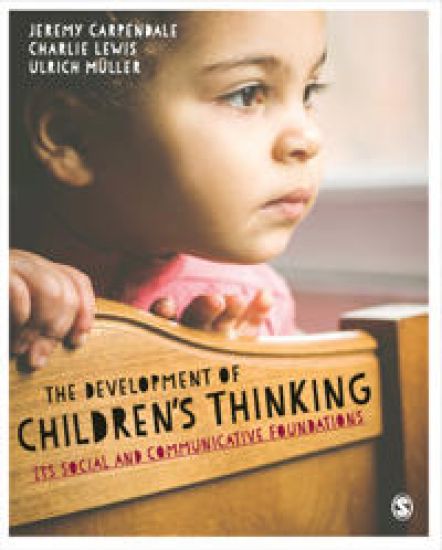
The Development of Children’s Thinking

The Development of Children’s Thinking

Jeremy Carpendale; Ulrich Muller; Charlie Lewis

SAGE Publications Ltd
2017
sidottu
The Development of Children’s Thinking offers undergraduate and graduate students in psychology and other disciplines an introduction to several core areas of developmental psychology. It examines recent empirical research within the context of longstanding theoretical debates. In particular, it shows how a grasp of classic theories within developmental psychology is vital for a grasp of new areas of research such as cognitive neuroscience that have impacted on our understanding of how children develop. The focus of this book will be on infancy and childhood, and it looks at: Theories and context of development How developmental psychology attempts to reconcile influences of nature and nurture Communication in infancy as a precursor to later thinking Language development in primates and young children Cognitive and social development, including the child’s understanding of the mind How studies of moral reasoning reflect upon our understanding of development
The Development of Children’s Thinking

The Development of Children’s Thinking

Jeremy Carpendale; Ulrich Muller; Charlie Lewis

SAGE Publications Ltd
2017
nidottu
The Development of Children’s Thinking offers undergraduate and graduate students in psychology and other disciplines an introduction to several core areas of developmental psychology. It examines recent empirical research within the context of longstanding theoretical debates. In particular, it shows how a grasp of classic theories within developmental psychology is vital for a grasp of new areas of research such as cognitive neuroscience that have impacted on our understanding of how children develop. The focus of this book will be on infancy and childhood, and it looks at: Theories and context of development How developmental psychology attempts to reconcile influences of nature and nurture Communication in infancy as a precursor to later thinking Language development in primates and young children Cognitive and social development, including the child’s understanding of the mind How studies of moral reasoning reflect upon our understanding of development
Enactment in Psychoanalysis: Frenis Zero Press

Enactment in Psychoanalysis: Frenis Zero Press

Jeremy D. Safran; Lewis Aron; Efrat Ginot

Frenis Zero
2020
nidottu
The book, dedicated to the memory of Lewis Aron and Jeremy Safran, explores the subject of enactment in relation to boundaries in psychoanalysis, referring to a series of viewpoints that lead to many crucial areas. In her foreword, Galit Atlas writes that enactment has become a widely-employed term in contemporary psychoanalysis across schools, a term that speaks to the unique way in which the analyst is affectively pulled into and discovers himself/herself as a participant in the patient's relational matrix in ways that the analyst had not predicted and might not recognize until later. Moreover, she analyzes the concept of "generative enactment", suggesting that enactments in the analytic dyad are not only restrictive and repetitive, with therapeutic benefit resulting from their resolution, but that enactments themselves may also be generative and growth-enhancing. Giuseppe Leo, one of the editors of the book, examines the concept of enactment from the following points of view: intra-psychic, inter-psychic, intra-disciplinary, inter-disciplinary, inter-cultural, and trans- generational. Jeremy Safran's and Jessica Kraus's chapter deals with alliance ruptures, impasses, and transference-countertransference enactments which are inevitable in therapy. Since a growing body of evidence suggests that repairing ruptures in the alliance is related to positive outcome, the authors promote the development of training methods to enhance therapists' abilities to detect and work constructively with alliance ruptures and negative therapeutic process. In his chapter Jay Greenberg emphasizes how, despite the relational approach opens the possibility of tailoring technique to individual analysands, so that it is easier to negotiate the best way of working within each unique analytic dyad, many clinical vignettes in the recent literature underline the analyst's risk-taking, engaging patients in a highly personal way that breaks the traditional analytic frame. The author discusses various implications of the tendency of relational analysts to emphasize this sort of intervention, and questions raised about the way this may affect how relational thinking is received. Efrat Ginot in her chapter shows how, in spite of the seeming experiential incongruity between enactments and empathy, neuroscience has started to delineate neuropsychological processes that similarly shape and underpin both enactments and therapeutic empathy, illuminating what mechanisms they have in common. Finally, Giuseppe Riefolo, the other editor of the book, suggests that the analytic dialogue develops as a continuous movement called "Dissociative Process", and that this process is the continuous oscillation between defensive positions (repression) and creative positions. Dissociation, as a defense, is a Freudian theoretical stance, while Dissociation, as a possibility for new and creative solutions, is a theory emanating from Janet and was adopted, especially, by relational and inter-subjective psychoanalysis. The analyst has to respect the Defensive Dissociations of the patient, but, at the same time, he has to be particularly careful to support potential solutions, never made real before, that emerge as new associative aggregates deriving from the dissociation of the frustrating or traumatic experience, which he proposes calling "Creative Dissociations". The dissociative solutions (defensive and creative) are not sequential but simultaneous.
Signal Transduction: Principles, Pathways, and Processes

Signal Transduction: Principles, Pathways, and Processes

Lewis Cantley; Tony Hunter; Richard Sever; Jeremy Thorner

Cold Spring Harbor Laboratory Press,U.S.
2013
nidottu
Cells must respond to a wide variety of signals. These include hormones, growth factors, morphogens, and environmental stress, as well as signals from internal regulators and checkpoints. A complex network of signal transduction pathways within the cell ensures that these signals are relayed to the correct molecular targets and that the cell responds appropriately. This textbook provides a comprehensive view of signal transduction, covering both the fundamental mechanisms involved and their roles in key biological processes. Taking a novel approach, it first lays out the basic principles of signal transduction, explaining how different receptors receive information and transmit it via signaling proteins, ions, and second messengers. It then surveys the major signaling pathways that operate in cells, before examining in detail how these function in processes such as cell growth and division, cell movement, metabolism, development, reproduction, the nervous system, and immune function. The book is essential reading for students learning about signal transduction for the first time. It will also be a vital reference for all cell, molecular, and developmental biologists and pharmacologists, neurobiologists, and immunologists studying processes regulated by cell signaling.
Human-Computer Interaction and International Public Policymaking

Human-Computer Interaction and International Public Policymaking

Jonathan Lazar; Julio Abascal; Simone Barbosa; Jeremy Barksdale; Batya Friedman; Jens Grossklags; Jan Gulliksen; Jeff Johnson; Tom McEwan; Loïc Martínez-Normand; Wibke Michalk; Janice Tsai; Gerrit van der Veer; Hans von Axelson; Ake Walldius; Gill Whitney; Marco Winckler; Volker Wulf; Elizabeth F. Churchill; Lorrie Cranor; Janet Davis; Alan Hedge; Harry Hochheiser; Juan Pablo Hourcade; Clayton Lewis; Lisa Nathan; Fabio Paterno; Blake Reid; Whitney Quesenbery; Ted Selker; Brian Wentz

now publishers Inc
2016
nidottu
This monograph lays out a discussion framework for understanding the role of human-computer interaction (HCI) in public policymaking. It takes an international view, discussing potential areas for research and application and their potential for impact. The aim is to provide a solid foundation for discussion, cooperation and collaborative interaction, and to outline future programs of activity.It starts with an introduction to HCI and public policy and goes on to discuss how HCI research and practices already inform public policy, providing representative examples. It then discusses how public policy influences HCI and provides representative public policy areas that are relevant to HCI, and where HCI could have even more impact in the future. It concludes by laying out a framework for involvement and suggested actions by the HCI community in public policy internationally.This monograph summarizes the observations and recommendations from a daylong workshop at the CHI 2013 conference in Paris, France. The workshop invited the community’s perspectives regarding the intersection of governmental policies, international and domestic standards, recent HCI research discoveries, and emergent considerations and challenges. It also incorporates contributions made after the workshop by workshop participants and by individuals who were unable to participate in the workshop but whose work and interests were highly related and relevant.
The Collected Works of Jeremy Bentham: Legislator of the World
Bentham's central concern during the 1810s and 1820s was with the codification of the law. Rejecting both the common law and the historical approach to codification, he argued that a code of law should be based on a rigorous logical analysis of the categories of human action, and that each enactment should be followed by the reasons which justified it. Such an `all-comprehensive' code containing an `interwoven rationale' would signal a new era in legislation. Once one state had adopted such a code, other states would be obliged to follow its example, and Bentham would become in effect 'legislator of the world'. Bentham attempted to persuade legislative authorities in the United States of America, Russia, Spain, Portugal, Greece, South and Central America, and elsewhere, to invite him to draft a code of law for them. The works presented in this volume record in fascinating detail Bentham's dealings with such eminent figures as James Madison, John Quincy Adams, Emperor Alexander I, Prince Adam Czartoryski, Alexander Mavrokordatos, Bernadino Rivadavia, and José del Valle. The production of a methodology for codification ranks as one of Bentham's outstanding theoretical achievements. Through the materials presented in this volume he emerges as a seminal figure in the development of liberalism throughout Europe and America in the early nineteenth century.
An Introduction to the Principles of Morals and Legislation. Printed in the Year 1780, and Now First Published. by Jeremy Bentham,
The 18th century was a wealth of knowledge, exploration and rapidly growing technology and expanding record-keeping made possible by advances in the printing press. In its determination to preserve the century of revolution, Gale initiated a revolution of its own: digitization of epic proportions to preserve these invaluable works in the largest archive of its kind. Now for the first time these high-quality digital copies of original 18th century manuscripts are available in print, making them highly accessible to libraries, undergraduate students, and independent scholars.Delve into what it was like to live during the eighteenth century by reading the first-hand accounts of everyday people, including city dwellers and farmers, businessmen and bankers, artisans and merchants, artists and their patrons, politicians and their constituents. Original texts make the American, French, and Industrial revolutions vividly contemporary.++++The below data was compiled from various identification fields in the bibliographic record of this title. This data is provided as an additional tool in helping to insure edition identification: ++++British LibraryT101752With a half-title. The last 33 pages contain 'Corrections and additions' and a table of contents.London: printed for T. Payne, and Son, 1789. 4],9, 1], cccxxxv, 33]p.; 4
The Collected Works of Jeremy Bentham: An Introduction to the Principles of Morals and Legislation
The new critical edition of the works and correspondence of Jeremy Bentham (1748-1832) is being prepared and published under the supervision of the Bentham Committee of University College London. In spite of his importance as jurist, philosopher, and social scientist, and leader of the Utilitarian reformers, the only previous edition of his works was a poorly edited and incomplete one brought out within a decade or so of his death. Eight volumes of the new Collected Works, five of correspondence, and three of writings on jurisprudence, appeared between 1968 and 1981, published by the Athlone Press. Further volumes in the series since then are published by Oxford University Press. The overall plan and principles of the edition are set out in the General Preface to The Correspondence of Jeremy Bentham, vol. 1, which was the first volume of the Collected Works to be published. An Introduction to the Principles of Morals and Legislation, Jeremy Bentham's best-known work, is a classic text in modern philosophy and jurisprudence. First published in 1789, it contains the important statement of the foundations of utilitarian philosophy and a pioneering study of crime and punishment, both of which remain at the heart of contemporary debates in moral and political philosophy, economics, and legal theory. Printed here in full is the definitive edition, edited by the distinguished scholars J. H. Burns and H. L. A. Hart. An introductory essay by Hart, first published in 1982 and a widely acknowledged classic in its own right, is reprinted here. It contains an important analysis of Bentham's principle of utility, theory of action, and an account of the relationship between law and morality. A new introduction by the leading Bentham scholar F. Rosen, specially written for this Clarendon Paperback edition, provides students with a helpful survey of Bentham's main ideas and an extensive bibliographical study of recent critical work on Bentham. Professor Rosen's essay also contains a new analysis of the principle of utility in Bentham's philosophy which is compared with its use in Hume and J. S. Mill.