

Kirjahaku
Etsi kirjoja tekijän nimen, kirjan nimen tai ISBN:n perusteella.
1000 tulosta hakusanalla Jerry Nathan

"Jerry Junior" is a 1907 novel by American writer Jean Webster's. Her third novel, it follows a wealthy upper-class American called Jerry who sets about to woo an attractive American woman whilst waiting for his sister to arrive in an Italian village. Set in the 1900s, this romantic comedy will appeal to those with an interest in romantic fiction and Italy at the turn of the twentieth century. "Jean Webster" is the pseudonym of Alice Jane Chandler Webster (1876 - 1916), an American writer who authored many well-known books including "Daddy-Long-Legs" and "Dear Enemy". Her most famous works are often characterised by powerful, likeable young female main characters who experience a maturation and intellectual coming-of-age morally and socially. Including witty humour, snappy dialogue, and social commentary, her works are still read and enjoyed by readers today the world over. Many vintage books such as this are increasingly scarce and expensive. It is with this in mind that we are republishing this volume now in an affordable, modern, high-quality edition complete with a specially-commissioned new biography of the author.

Jean Webster (pseudonym for Alice Jane Chandler Webster, July 24, 1876 - June 11, 1916) was an American writer and author of many books including Daddy-Long-Legs and Dear Enemy. Her best-known books feature lively and likeable young female protagonists who come of age intellectually, morally, and socially, but with enough humor, snappy dialogue, and gently biting social commentary to make her books palatable and enjoyable to contemporary readers. Alice Jane Chandler Webster was born in Fredonia, New York. She was the eldest child of Annie Moffet Webster and Charles Luther Webster. She lived her early childhood in a strongly matriarchal and activist setting, with her great-grandmother, grandmother and mother all living under the same roof. Her great-grandmother worked on temperance issues and her grandmother on racial equality and women's suffrage.

Never before in the history of his connection with the Hotel du Lac had Gustavo encountered such a munificent, companionable, expansive, entertaining, 'thoroughly' unique and inexplicable guest Even the fact that he was American scarcely accounted for everything. Yesterday this guest had rung the bell and demanded a partner to play lawn tennis - as if the hotel kept partners laid away in drawers like so many sheets. The guest, Jerymn Hilliard, Jr., is unexpectedly at loose ends in tiny Valedolmo. He has seen all the 'Baedeker' sights already... Then he learns that in a rose-colored villa, surrounded with cypress and with a 'terrazzo' on the lake, lives another American - one with a daughter: a Signorina Constantina: 'beautiful like the angels in Paradise,

Reproduction of the original: Jerry by Jean Webster

Reproduction of the original: Jerry by Jean Webster






New York Times BestsellerThe greatest Southern storyteller of our time, New York Times bestselling author Rick Bragg, tracks down the greatest rock and roller of all time, Jerry Lee Lewis--and gets his own story, from the source, for the very first time.A monumental figure on the American landscape, Jerry Lee Lewis spent his childhood raising hell in Ferriday, Louisiana, and Natchez, Mississippi; galvanized the world with hit records like "Whole Lotta Shakin' Goin' On" and "Great Balls of Fire," that gave rock and roll its devil's edge; caused riots and boycotts with his incendiary performances; nearly scuttled his career by marrying his thirteen-year-old second cousin--his third wife of seven; ran a decades-long marathon of drugs, drinking, and women; nearly met his maker, twice; suffered the deaths of two sons and two wives, and the indignity of an IRS raid that left him with nothing but the broken-down piano he started with; performed with everyone from Elvis Presley to Keith Richards to Bruce Springsteen to Kid Rock--and survived it all to be hailed as "one of the most creative and important figures in American popular culture and a paradigm of the Southern experience."Jerry Lee Lewis: His Own Story is the Killer's life as he lived it, and as he shared it over two years with our greatest bard of Southern life: Rick Bragg. Rich with Lewis's own words, framed by Bragg's richly atmospheric narrative, this is the last great untold rock-and-roll story, come to life on the page.

The greatest Southern storyteller of our time, New York Times bestselling author Rick Bragg, tracks down the greatest rock and roller of all time, Jerry Lee Lewis--and gets his own story, from the source, for the very first time.A monumental figure on the American landscape, Jerry Lee Lewis spent his childhood raising hell in Ferriday, Louisiana, and Natchez, Mississippi; galvanized the world with hit records like "Whole Lotta Shakin' Goin' On" and "Great Balls of Fire," that gave rock and roll its devil's edge; caused riots and boycotts with his incendiary performances; nearly scuttled his career by marrying his thirteen-year-old second cousin--his third wife of seven; ran a decades-long marathon of drugs, drinking, and women; nearly met his maker, twice; suffered the deaths of two sons and two wives, and the indignity of an IRS raid that left him with nothing but the broken-down piano he started with; performed with everyone from Elvis Presley to Keith Richards to Bruce Springsteen to Kid Rock--and survived it all to be hailed as "one of the most creative and important figures in American popular culture and a paradigm of the Southern experience."Jerry Lee Lewis: His Own Story is the Killer's life as he lived it, and as he shared it over two years with our greatest bard of Southern life: Rick Bragg. Rich with Lewis's own words, framed by Bragg's richly atmospheric narrative, this is the last great untold rock-and-roll story, come to life on the page.
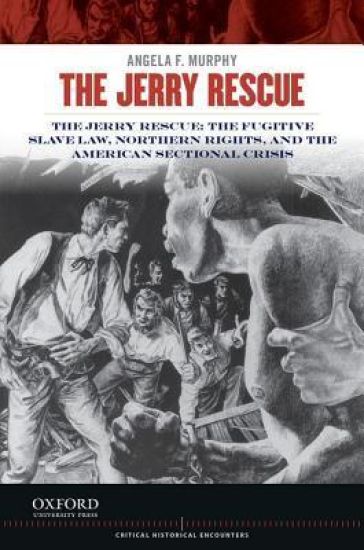
Jerry Rescue: The Fugitive Slave Law, Northern Rights, and the American Sectional Crisis
Angela F. Murphy
Oxford University Press
2014
nidottu
This compelling micro-history explores how the passage of the Fugitive Slave Law of 1850 affected fugitive slaves, free blacks, abolitionists, and northern white citizens. The Jerry Rescue: The Fugitive Slave Law, Northern Rights, and the American Sectional Crisis is a narrative of the events surrounding the arrest of William "Jerry" Henry on October 1, 1851. Jerry, who thought he was to be charged with a minor infraction committed in Syracuse, went peacefully with the officials who arrested him; but he soon realized that he was in far more trouble than they had indicated. They were detaining him under the provisions of the recently passed Fugitive Slave Law of 1850, and federal officials intended to hold a hearing to determine whether Jerry would remain a free man in New York or if he would be sent to the slave state of Missouri as the property of John McReynolds, who claimed Jerry as his slave. Because of the actions of a variety of individuals in Syracuse, that hearing was abruptly cut short and Jerry was forcibly removed from the custody of his captors. The Jerry Rescue provides an absorbing narrative of the events that the arrest of Jerry set in motion, illuminates the motives and concerns of those who were involved in those events, and places the story in the wider context of the American sectional crisis. Examining such topics as northern defiance of the Fugitive Slave Law, the growth of sectional tension in the United States, antislavery debates about how best to attack the institution of slavery, black and white cooperation in the movement to end slavery, and the question of northern states' rights, The Jerry Rescue is eminently rich with historical details, clarity, and objective analysis.
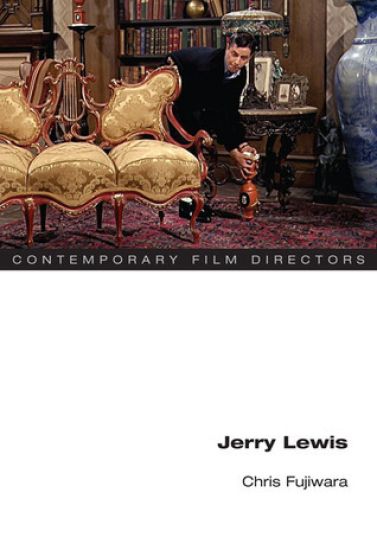
Well known for his slapstick comedic style, Jerry Lewis has also delighted worldwide movie audiences with a directing career spanning five decades. One of American cinema's great innovators, Lewis made unmistakably personal films that often focused on an ideal masculine image and an anarchic, manic acting out of the inability to assume this image. Films such as The Bellboy, The Errand Boy, Three on a Couch, and The Big Mouth present a series of thematic variations on this tension, in which such questions as how to be a man, how to be popular, and how to maintain relationships are posed within frameworks that set up a liberating and exhilarating confusion of roles and norms. The Nutty Professor and The Patsy are especially profound and painful examinations of the difficulty experienced by Lewis's character in reconciling loving himself and being loved by others. With sharp, concise observations, Chris Fujiwara examines this visionary director of self-referential comedic masterpieces. The book also includes an enlightening interview with Lewis that offers unique commentary on the creation and study of comedy.
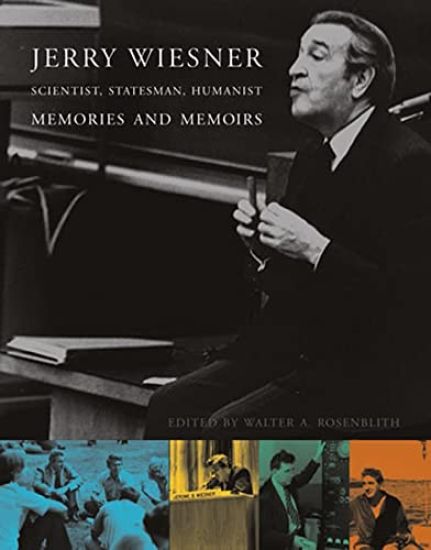
How Jerry Wiesner, presidential science adviser and president of MIT, worked to make a better and safer world, as told by friends and colleagues and in his own autobiographical writings.The recurring theme in Jerry Wiesner's varied and distinguished career was what Senator Edward M. Kennedy calls in the foreword to this book a "passionate involvement to make a better world, and a safer world." His odyssey as a public citizen included work as an acoustician for folklorist Alan Lomax in the Library of Congress, research at MIT's Radiation Lab and at Los Alamos, service as President John F. Kennedy's Special Assistant for Science and Technology, and his years at MIT as professor, dean, provost, and president. At Los Alamos he received what he called "a valuable education on issues that were to occupy a large part of my life." The lessons learned informed his later work on nuclear disarmament; he was a pivotal adviser on both the 1963 partial Nuclear Test Ban Treaty and the 1972 ABM Treaty and an early member of the Pugwash group, an organization of scientists from both sides of the Iron Curtain. His many accomplishments as president of MIT similarly reflected his conviction that science and technology cannot be separate from society.Jerry Wiesner had long planned an autobiographical book that would combine personal experience and historical interpretation, covering the wide range of interests that he compared to "the many parts of a giant jigsaw puzzle," but the commitments of his postretirement life and a serious stroke in 1989 kept him from completing it. Jerry Wiesner, Scientist, Statesman, Humanist, conceived by Wiesner's longtime colleague and friend Walter Rosenblith, fills the gap between the unwritten autobiography and the still-to-be-written biography, assembling reminiscences of Wiesner by such friends as Alan Lomax, Theodore C. Sorensen, and John Kenneth Galbraith, and writings by Wiesner himself, including the autobiographical pieces that would have been the basis of his own book.
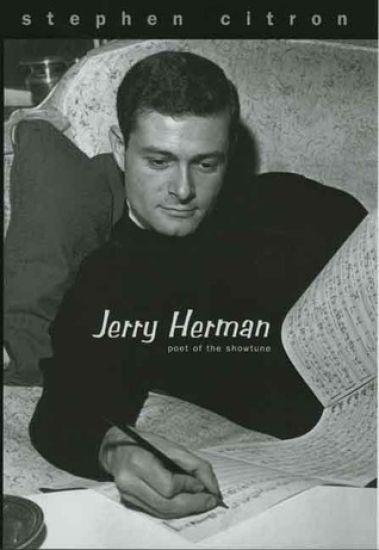
The first in-depth biography of the celebrated composer/lyricist who created Hello, Dolly!, Mame, and La Cage aux Folles This revealing and comprehensive book tells the full story of Jerry Herman’s life and career, from his early work in cabaret to his recent compositions for stage, screen, and television. Stephen Citron draws on extensive open-ended interviews with Jerry Herman as well as with scores of his theatrical colleagues, collaborators, and close friends. The resulting book—which sheds new light on each of Herman’s musicals and their scores—abounds in fascinating anecdotes and behind-the-scenes details about the world of musical theater. Readers will find a sharply drawn portrait of Herman’s private life and his creative talents. Citron’s insights into Herman’s music and lyrics, including voluminous examples from each of his musicals, are as instructive as they are edifying and entertaining.
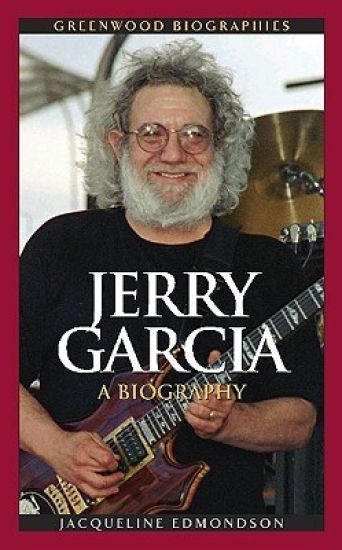
This biography offers students and general readers an insightful look into Jerry Garcia's creative genius as a founding member of The Grateful Dead and the various influences on his work as he contributed to the countercultural movement in the United States. As a founding member of The Grateful Dead, Jerry Garcia became famous for his work as a key creative force in this band. Known for free flowing jam sessions, psychedelic drug use, and a loyal fan base, The Grateful Dead combined a variety of genres, including blues, folk and country rock to create new and different sounds than those used by other popular bands at the time, including The Rolling Stones and The Beatles. Garcia contributed significantly to an era in American music that was influenced by social changes, war, and political strife. Yet Garcia's creative genius expanded beyond the fame that came as lead guitarist and vocalist for the Dead. From the time he was a young boy learning to play the piano in the Excelsior district of San Francisco, Garcia explored various genres and forms of music and visual art. This biography offers students and general readers an insightful look into Garcia's creative genius and the various influences on his work as he contributed to the counter-cultural movement in the United States.

Just Jerry: How Drawing Shaped My Life
Jerry Pinkney
Little, Brown Books for Young Readers
2023
sidottu
An inspiring memoir of a Caldecott-winning artist and one of the most acclaimed children's book illustrators of all time, sharing the story of a young artist who finds the courage to follow his passion against all odds. * "A moving work from a legend of children's literature and a testament to his legacy of visual storytelling." --Kirkus Reviews, starred review Jerry Pinkney--creator of Caldecott Medal-winning The Lion & the Mouse and The Little Mermaid--drew everywhere, all the time. Since childhood, it was how he made sense of the world--how he coped with the stress of being a sensitive child growing up in crowded spaces, struggling with a learning disability, in a time when the segregation of Black Americans was the norm. Only drawing could offer him a sense of calm, control, and confidence. When friends and siblings teased him about having the nickname "Jerry" as his only name, his mother always said, "Just 'Jerry' is enough. He'll make something of that name someday." And so he did, eventually becoming one of the most celebrated children's book illustrators of all time and paving the way for countless other Black artists. Jerry's vivid recollections and lively sketchbook drawings of his youth in postwar America tell an inspiring story of how a hardworking boy pursued his passion in less-than-ideal circumstances and became a legendary artist against all odds.

Released by the Jerry Garcia Family estate and made available to the public for the first time, these are some of the most candid, intimate interviews with Jerry Garcia ever published. Here, Garcia speaks openly about everything from growing up in the San Francisco Bay Area and his first encounters with early R&B to his thoughts on songwriting, LSD, the Beats and Neal Cassady, government, movies, and more. Illustrated with family photographs, ephemera, and Jerry's artwork, Jerry of Jerry presents uniquely poignant, unguarded, and astute moments, showing a side of Jerry that even his biggest fans have not known.