In a world where media companies hack into personal communications at will, Adam and Isobel are pursued by faceless, unknown men.Riots and civil unrest have turned the country upside down. Meanwhile, a mysterious group of insiders is attempting to use the spreading anarchy to further their own agenda. Crooked practices operate within the police force, and government contracts are bought and sold by those who have the Prime Minister's ear.Dragged into this nightmare scenario, Adam and Isobel face two choices: try to escape... or stand their ground and fight for their future.This is the large print edition of A Plague of Dissent, with a larger font / typeface for easier reading.
Jim Crow Sociology: The Black and Southern Roots of American Sociology is an extraordinary new volume that examines the origin, development, and significance of Black Sociology through the accomplishments of early African American sociologists at Historically Black Colleges and Universities (HBCUs) such as Atlanta University, Tuskegee Institute, Fisk University, and Howard University. Black Sociology is a concept that weaponizes the discipline for that which is “right and good” and prioritizes scholar-activist inspired research directed at impacting real world conditions of African Americans. Guided by this approach, this book debunks the idea that the sociology practiced by early African Americans does not exemplify scholarly excellence. Instead, Earl Wright demonstrates that Tuskegee Institute, under the leadership of Booker T. Washington, established the first applied program of rural sociology. Fisk University, first under the guidance of George Edmund Haynes then Charles S. Johnson, developed one of the earliest and most impactful programs of applied urban sociology. Wright extends our understanding of W. E. B. Du Bois’s Atlanta Sociological Laboratory with an articulation of the contributions of women to the first American school of sociology. Jim Crow Sociology forces contemporary scholars to grapple with who are and who are not included in the disciplinary canon. Specifically, this book forces us to ask why early African American sociologists and HBCUs are not canonized. What makes this book most consequential is that it provides evidence supporting the proposition that sociology began in earnest in the United States as a Black and southern enterprise.
* How did the poetic ending of Abraham Lincoln's first inaugural address get written?* Why is William Tecumseh Sherman so much a part of the American psyche after more than a century since his death?* What is John Roberts in addition to being Chief Justice of the U.S. Supreme Court?* How can you be an author and not write anything?These are just a few of the questions that get answered in this delightful second volume of Jim Stovall's The Writing Wright series. Stovall, a long-time journalism instructor from the days when newspapers were the chief conveyor of good reporting and editing (alas, no more ) discusses the elements of good writing, gives some tips on how to do it, and -- most importantly -- tells some rollicking good stories that sometimes go beyond the writing life.Sit back and read this delightful book, laugh at the stories and the illustrations (executed by the author himself), and maybe even learn a thing or two in the process.Jim Stovall is a retired journalism professor, beekeeper, woodworker, avid reader, and commentator on whatever interests him. His website is JPROF.com. His latest gig is writer-in-residence at the Blount County Public Library in Maryville, Tennessee.
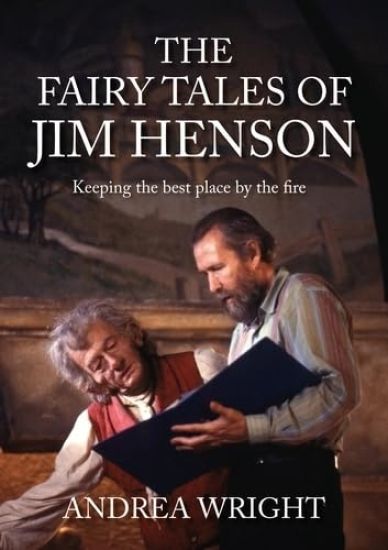
The Fairy Tales of Jim Henson: The best place by the fire is the first book to specifically consider Henson, best known for the immensely popular The Muppet Show, as an important creator of screen fairy tales. In a chronological overview of Henson’s career from the late 1950s to his death in 1990, it explores key themes, artistic practices and innovations that make his contribution to the genre unique. Drawing upon a range of fairy tale scholarship, it also situates Henson’s work within the wider context of the genre, specifically its conventions, themes and inherent intertextuality.
Deindustrialisation is the central feature of Scotland's economic, social and political history since the 1950s, when employment levels peaked in the established sectors of coal, shipbuilding, metals and textiles, along with the railways and docks. This book moves analysis beyond outmoded tropes of economic decline and industrial catastrophe, and instead examines the political economy of deindustrialisation with a sharp eye on cultural and social dimensions that were not uniformly negative, as often assumed.Viewing the long-term process of deindustrialisation through a moral economy framework, the book carefully reconstructs the impact of economic change on social class, gender relations and political allegiances, including a reawakened sense of Scottish national identity. In doing so, it reveals deindustrialisation as a more complex process than the customary body count of closures and job losses suggests, and demonstrates that socioeconomic change did not just happen, but was influenced by political agency.
Exploring the social, cultural and political implications of deindustrialisation in twentieth-century Scotland Examines deindustrialisation as long-running, phased and politicised process Draws on documentary source material from a range of industrial sectors, as well as transcripts from over 20 exclusive interviews with industry professionals Relates Scottish Home Rule to long-running debates about economic security and working class welfare Analyses longer history of deindustrialisation, with emergence of assembly goods manufacturing alongside shrinkage of established sectors such as shipbuilding Deindustrialisation is the central feature of Scotland's economic, social and political history since the 1950s, when employment levels peaked in the established sectors of coal, shipbuilding, metals and textiles, along with the railways and docks. This book moves analysis beyond outmoded tropes of economic decline and industrial catastrophe, and instead examines the political economy of deindustrialisation with a sharp eye on cultural and social dimensions that were not uniformly negative, as often assumed. Viewing the long-term process of deindustrialisation through a moral economy framework, the book carefully reconstructs the impact of economic change on social class, gender relations and political allegiances, including a reawakened sense of Scottish national identity. In doing so, it reveals deindustrialisation as a more complex process than the customary body count of closures and job losses suggests, and demonstrates that socioeconomic change did not just happen, but was influenced by political agency.
A Journey Through Time and IdentityNew Yesterdays is a story that takes readers on an extraordinary journey through history, blending elements of time travel, historical fact, and the deeply personal struggle of finding one's true place in the world. Set against the rich backdrop of early 19th-century America, this novel explores the lives of the Cherokee and Seminole people during a pivotal moment in their history, just before the Great Removal and the infamous Trail of Tears.The story follows Jim, a young boy from modern-day America, who accidentally stumbles through a mysterious portal and finds himself transported back more than a hundred years. Thrust into a world on the brink of great change, Jim must navigate a society that is both unfamiliar and deeply fascinating. As he forms bonds with the Cherokee people, particularly a group of children his age, Jim begins to feel a sense of belonging he never expected. But as he becomes more connected to his new life, he is faced with a profound challenge-one that will not only test his loyalty but could change the course of history forever.A Tale of Adventure, Friendship, and Cultural Preservation At its core, New Yesterdays is an adventure, but it's also a story of friendship and cultural preservation. Jim's journey with the Cherokee and Seminole tribes not only highlights the struggles these Native American nations faced but also showcases their resilience, intelligence, and the depth of their cultural traditions. Throughout the novel, real historical figures like Chief John Ross and President John Quincy Adams are woven into the narrative, giving readers a vivid sense of the political tensions and broken promises of the time.As Jim introduces the Cherokee and Seminole to future knowledge and technology, the story presents a "what if" scenario, imagining how history might have unfolded differently. Through these changes, New Yesterdays reimagines the sovereignty and strength of the Native American nations, offering a powerful and thought-provoking commentary on the impact of colonization and the importance of self-determination.
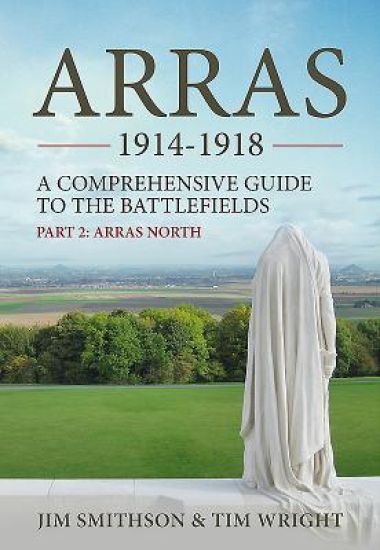
Arras is known by some as the forgotten battle, because of this it’s not one of the most written about or visited First World War areas on the Western Front; in fact, it lacks the general awareness levels when compared to the iconic battlefields of the Somme or Passchendaele. Nevertheless, The Arras battlefields hold much to interest both the seasoned and curious visitor alike, with many visual reminders of the war over 100 years on. This guide is designed to both educate and guide the visitor around four years of conflict that the city of Arras and its surrounding area endured. Organised geographically in sectors to aid the visitor, all the major engagements of the war in the Arras area are described and locations chosen to enable the visitor to gain a greater understanding of the battle; from the French on the Lorette Ridge in 1914 & 1915, the British from 1916-18 and the Canadians on Vimy Ridge in 1917, north of the city, to the Australians at Bullecourt in the south, the visitor will find the battlefield described in detail. The guide uses key observation points to ensure that the visitor is correctly orientated to get a fuller understanding of the battles and the ground they were fought over. The visitor can for example stand on Observation Ridge, look towards the city of Arras and using the description of the battle and the detailed maps and photographs taken from that key location, gain a full understanding of the attack of 12th Division on the morning of the 9th April. A detailed modern map then allows the visitor to turn and move to one of the many cemeteries in the area and again be able to read a detailed description of what he or she can see. This is not a guide that will tell you where to go or give prescribed routes but by clearly marked key locations will allow the visitor to plan their own itinerary according to time, interest or inclination. Each location has photographs and a clear description of what can be seen and what happened at key moments of the war at that place. Advice is also given as to the accessibility (car, bicycle or on foot) for each location to aid the visitor when planning. Lavishly provided with maps and photographs, this guide will be the essential companion to anyone visiting the Arras battlefields and hopefully bring them back to the area again and again. This volume deals with the area south of the River Scarpe where the British attacked in April and May 1917, the Germans in March 1918 and then the Anglo-Canadian offensive leading to the end of the war.
Arras is known by some as the forgotten battle, because of this it’s not one of the most written about or visited First World War areas on the Western Front; in fact, it lacks the general awareness levels when compared to the iconic battlefields of the Somme or Passchendaele. Nevertheless, The Arras battlefields hold much to interest both the seasoned and curious visitor alike, with many visual reminders of the war over 100 years on. This guide is designed to both educate and guide the visitor around four years of conflict that the city of Arras and its surrounding area endured. Organised geographically in sectors to aid the visitor, all the major engagements of the war in the Arras area are described and locations chosen to enable the visitor to gain a greater understanding of the battle; from the French on the Lorette Ridge in 1914 & 1915, the British from 1916-18 and the Canadians on Vimy Ridge in 1917, north of the city, to the Australians at Bullecourt in the south, the visitor will find the battlefield described in detail. The guide uses key observation points to ensure that the visitor is correctly orientated to get a fuller understanding of the battles and the ground they were fought over. The visitor can for example stand on Observation Ridge, look towards the city of Arras and using the description of the battle and the detailed maps and photographs taken from that key location, gain a full understanding of the attack of 12th Division on the morning of the 9th April. A detailed modern map then allows the visitor to turn and move to one of the many cemeteries in the area and again be able to read a detailed description of what he or she can see. This is not a guide that will tell you where to go or give prescribed routes but by clearly marked key locations will allow the visitor to plan their own itinerary according to time, interest or inclination. Each location has photographs and a clear description of what can be seen and what happened at key moments of the war at that place. Advice is also given as to the accessibility (car, bicycle or on foot) for each location to aid the visitor when planning. Lavishly provided with maps and photographs, this guide will be the essential companion to anyone visiting the Arras battlefields and hopefully bring them back to the area again and again. This volume deals with the area south of the River Scarpe where the British attacked in April and May 1917, the Germans in March 1918 and then the Anglo-Canadian offensive leading to the end of the war.
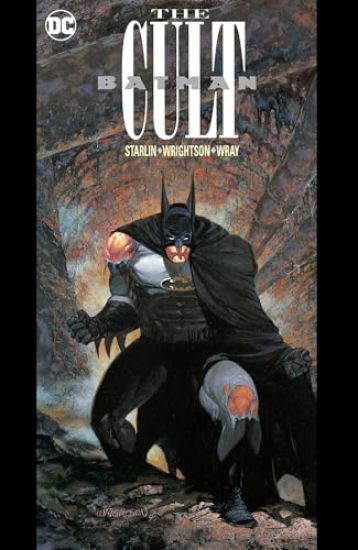
One of the most acclaimed and unique Batman stories is back in print, from comics legends Jim Starlin and Bernie Wrightson! Deacon Blackfire, a charismatic shaman with roots as old as Gotham City itself, has amassed the city's homeless into an army, one he seemingly uses to fight crime. But Blackfire has a hidden agenda! In 1988, comics legends Jim Starlin (creator of Thanos) and Bernie Wrightson (co-creator of Swamp Thing) teamed for the thrilling four-issue series Batman: The Cult, one of the most celebrated Batman stories that stands next to other classics of its era like Batman: Death in the Family and Batman: The Killing Joke. In Batman: The Cult, Deacon Blackfire, a charismatic shaman with roots as old as Gotham City itself, has amassed the city's homeless into an army, one he seemingly uses to fight crime. But Blackfire has a hidden agenda... With Batman brainwashed by Blackfire and Gotham in chaos, can the Dark Knight s city be saved? This volume collects Batman: The Cult #1-4.
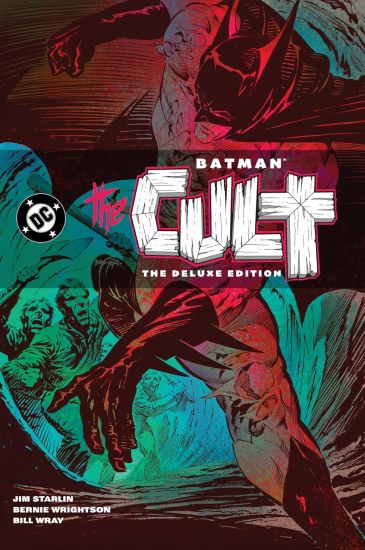
One of the most influential Batman stories of all time is back in print for the first time in more than a decade, now available as an oversize deluxe edition hardcover! In 1988, comics legends Jim Starlin (creator of Thanos) and Bernie Wrightson (co-creator of Swamp Thing) teamed for the thrilling four-issue series Batman: The Cult, one of the most celebrated Batman stories that stands next to other classics of its era like Batman: Death in the Family and Batman: The Killing Joke. Now, after years out of print, fans can once again enjoy the story that helped influence The Dark Knight Rises, Batman: Arkham Knight, and more! In Batman: The Cult, Deacon Blackfire, a charismatic shaman with roots as old as Gotham City itself, has amassed the city's homeless into an army, one he seemingly uses to fight crime. But Blackfire has a hidden agenda... With Batman brainwashed by Blackfire and Gotham in chaos, can the Dark Knight s city be saved? This volume collects Batman: The Cult #1-4.
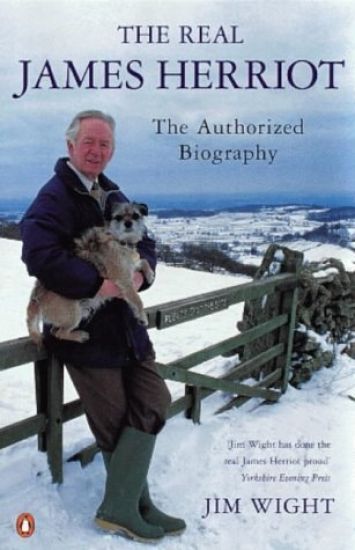
Take a trip down memory lane and read about the life of Britain's most beloved vet, who charmed us all with his bestselling tales of veterinary life in Yorkshire.'A wonderful, glorious insight into the life of the man behind the books' 5***** Reader Review'Moving . . . A book I shall treasure and read several times' 5***** Reader Review______ After qualifying as a vet in 1939, Alf Wight, aka James Herriot, moved to a veterinary practice in Thirsk, Yorkshire. It wasn't until he was over fifty when his first book of stories about life as a Yorkshire vet, If Only They Could Talk, was published, giving birth to some of Yorkshire's most famous and much-loved literary characters, and later becoming the popular BBC television series All Creatures Great and Small.Not only did his books have great success, but they also inspired many to take up the profession, in what was known as the 'Herriot effect'. Although he brought fame and fortune to himself and those around him, he remained an intensely private person, respected and trusted by those whose animals he cared for, and adored by millions of fans.Written by his son with touching insight, this illuminating biography reveals the real man behind the title 'The World's Most Famous Vet'.______Readers are captivated by The Real James Herriot:'Fascinating . . . A wonderful and worthy testament' 5***** Reader Review'A real insight into the life of someone you feel you knew and loved' 5***** Reader Review'Extremely poignant, gives great insight into those unforgettable tales of a Yorkshire Vet' 5***** Reader Review