Kirjojen hintavertailu. Mukana 11 699 587 kirjaa ja 12 kauppaa.

Kirjahaku

Etsi kirjoja tekijän nimen, kirjan nimen tai ISBN:n perusteella.

1000 tulosta hakusanalla Jin Li

Dynamical Behaviors of Multiweighted Complex Network Systems

Dynamical Behaviors of Multiweighted Complex Network Systems

Jin-Liang Wang; Shun-Yan Ren; Huai-Ning Wu; Tingwen Huang

JOHN WILEY SONS INC
2024
sidottu
Highly comprehensive resource for studying neural networks, complex networks, synchronization, passivity, and associated applications Dynamical Behaviors of Multiweighted Complex Network Systems discusses the dynamical behaviors of various multiweighted complex dynamical networks, with detailed insight on synchronization for directed and undirected complex networks (CNs) with multiple state or delayed state couplings subject to recoverable attacks, along with passivity and synchronization for coupled neural networks with multi-weights (CNNMWs) by virtue of devised proportional-integral-derivative (PID) controllers. The book also investigates finite-time synchronization (FTS) and H-infinity synchronization for two types of coupled neural networks (CNNs) and focuses on finite-time passivity (FTP) and finite-time synchronization (FTS) for complex dynamical networks with multiple state/derivative couplings based on the proportional-derivative (PD) control method. Final chapters consider finite-time output synchronization and H-infinity output synchronization problems, and multiple weighted coupled reaction-diffusion neural networks (CRDNNs) with and without coupling delays. Other topics covered in Dynamical Behaviors of Multiweighted Complex Network Systems include: Criteria of FTP for complex dynamical networks with multiple state couplings (CDNMSCs), formulated by utilizing the PD controller Finite-time passivity (FTP) concepts for the spatially and temporally systems with different dimensions of output and input FTS and finite time H-infinity synchronization problems for CDNs with multiple state/derivative couplings by utilizing state feedback control approach and selecting suitable parameter adjustment schemes Adaptive output synchronization and output synchronization of CDNs with multiple output or output derivative couplings, and other adaptive control schemes Enabling readers to understand foundational concepts and grasp the latest research, Dynamical Behaviors of Multiweighted Complex Network Systems is essential for all who study neural networks, complex networks, synchronization, passivity, and their applications.

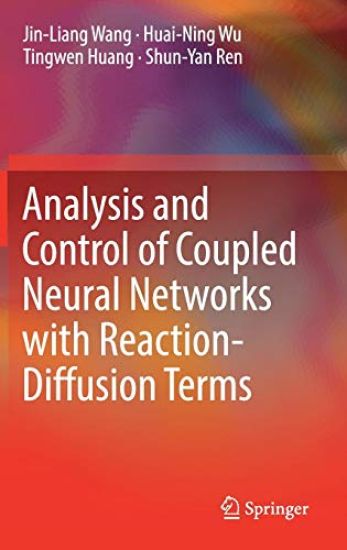
Analysis and Control of Coupled Neural Networks with Reaction-Diffusion Terms

Analysis and Control of Coupled Neural Networks with Reaction-Diffusion Terms

Jin-Liang Wang; Huai-Ning Wu; Tingwen Huang; Shun-Yan Ren

Springer Verlag, Singapore
2017
sidottu
This book introduces selected recent findings on the analysis and control of dynamical behaviors for coupled reaction-diffusion neural networks. It presents novel research ideas and essential definitions concerning coupled reaction-diffusion neural networks, such as passivity, adaptive coupling, spatial diffusion coupling, and the relationship between synchronization and output strict passivity. Further, it gathers research results previously published in many flagship journals, presenting them in a unified form. As such, the book will be of interest to all university researchers and graduate students in Engineering and Mathematics who wish to study the dynamical behaviors of coupled reaction-diffusion neural networks.
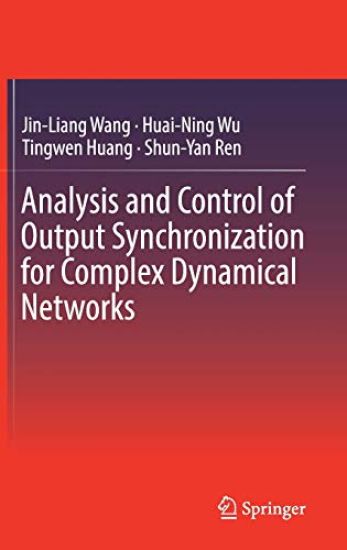
Analysis and Control of Output Synchronization for Complex Dynamical Networks

Analysis and Control of Output Synchronization for Complex Dynamical Networks

Jin-Liang Wang; Huai-Ning Wu; Tingwen Huang; Shun-Yan Ren

Springer Verlag, Singapore
2018
sidottu
This book introduces recent results on output synchronization of complex dynamical networks with single and multiple weights. It discusses novel research ideas and a number of definitions in complex dynamical networks, such as H-Infinity output synchronization, adaptive coupling weights, multiple weights, the relationship between output strict passivity and output synchronization. Furthermore, it methodically edits the research results previously published in various flagship journals and presents them in a unified form. The book is of interest to university researchers and graduate students in engineering and mathematics who wish to study output synchronization of complex dynamical networks.
Analysis and Control of Output Synchronization for Complex Dynamical Networks

Analysis and Control of Output Synchronization for Complex Dynamical Networks

Jin-Liang Wang; Huai-Ning Wu; Tingwen Huang; Shun-Yan Ren

Springer Verlag, Singapore
2019
nidottu
This book introduces recent results on output synchronization of complex dynamical networks with single and multiple weights. It discusses novel research ideas and a number of definitions in complex dynamical networks, such as H-Infinity output synchronization, adaptive coupling weights, multiple weights, the relationship between output strict passivity and output synchronization. Furthermore, it methodically edits the research results previously published in various flagship journals and presents them in a unified form. The book is of interest to university researchers and graduate students in engineering and mathematics who wish to study output synchronization of complex dynamical networks.
Analysis and Control of Coupled Neural Networks with Reaction-Diffusion Terms

Analysis and Control of Coupled Neural Networks with Reaction-Diffusion Terms

Jin-Liang Wang; Huai-Ning Wu; Tingwen Huang; Shun-Yan Ren

Springer Verlag, Singapore
2019
nidottu
This book introduces selected recent findings on the analysis and control of dynamical behaviors for coupled reaction-diffusion neural networks. It presents novel research ideas and essential definitions concerning coupled reaction-diffusion neural networks, such as passivity, adaptive coupling, spatial diffusion coupling, and the relationship between synchronization and output strict passivity. Further, it gathers research results previously published in many flagship journals, presenting them in a unified form. As such, the book will be of interest to all university researchers and graduate students in Engineering and Mathematics who wish to study the dynamical behaviors of coupled reaction-diffusion neural networks.
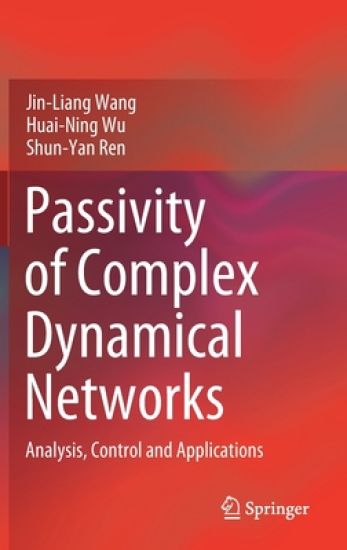
Passivity of Complex Dynamical Networks

Passivity of Complex Dynamical Networks

Jin-Liang Wang; Huai-Ning Wu; Shun-Yan Ren

Springer Verlag, Singapore
2020
sidottu
This book intends to introduce some recent results on passivity of complex dynamical networks with single weight and multiple weights. The book collects novel research ideas and some definitions in complex dynamical networks, such as passivity, output strict passivity, input strict passivity, finite-time passivity, and multiple weights. Furthermore, the research results previously published in many flagship journals are methodically edited and presented in a unified form. The book is likely to be of interest to university researchers and graduate students in Engineering and Mathematics who wish to study the passivity of complex dynamical networks.
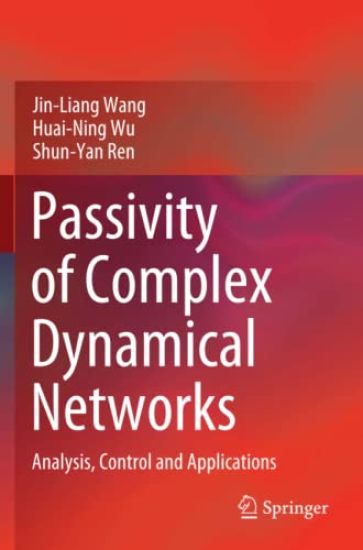
Passivity of Complex Dynamical Networks

Passivity of Complex Dynamical Networks

Jin-Liang Wang; Huai-Ning Wu; Shun-Yan Ren

SPRINGER VERLAG, SINGAPORE
2021
nidottu
This book intends to introduce some recent results on passivity of complex dynamical networks with single weight and multiple weights. The book collects novel research ideas and some definitions in complex dynamical networks, such as passivity, output strict passivity, input strict passivity, finite-time passivity, and multiple weights. Furthermore, the research results previously published in many flagship journals are methodically edited and presented in a unified form. The book is likely to be of interest to university researchers and graduate students in Engineering and Mathematics who wish to study the passivity of complex dynamical networks.
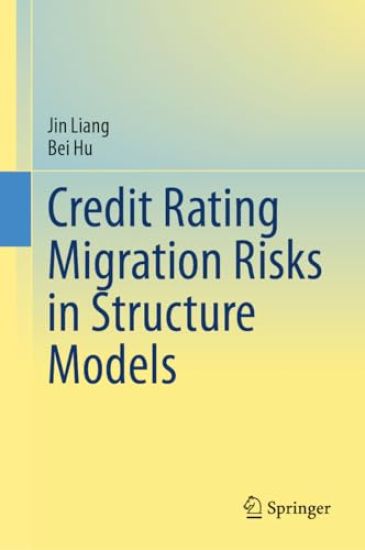
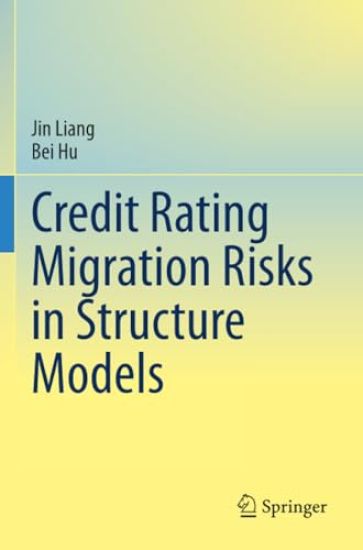
Credit Rating Migration Risks in Structure Models

Credit Rating Migration Risks in Structure Models

Jin Liang; Bei Hu

SPRINGER VERLAG, SINGAPORE
2024
sidottu
The book provides the latest research results on measuring Credit Rating Migration by mathematical methods. It brings about most popular mathematical models, methods and applications on this area, especially presents the latest development on structure models. It is systematically collects the models, methods and results in this area. The book first introduced the financial background and preliminary mathematical theory. Then two mainstream mathematical models for measuring default risks, the reduced form model and structure model, are presented. The structure model for measuring credit rating migration risks is the main part of the book and authors prove the existence, uniqueness, regularities, asymptotic behavior, traveling wave and other properties of the solutions of the model. The structural credit rating migration model is also extended to more general case, such as stochastic interest rate, multiple ratings, region switch and so on. Some credit derivatives, and numerical analysis, parameter calibration and estimate of the migration boundary of the models are given in the last two chapters. The book focuses on theoretical financial investigators, especially financial mathematical researchers and students. The book is involved various mathematical models, such as PDE, numerical simulation etc., some of them are interesting mathematical problems, so that, and a good reference book to study mathematical modeling in credit rating migration. It might also be used as a textbook for students in financial credit risks.
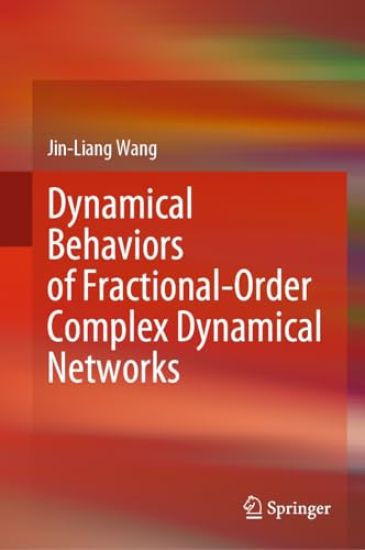
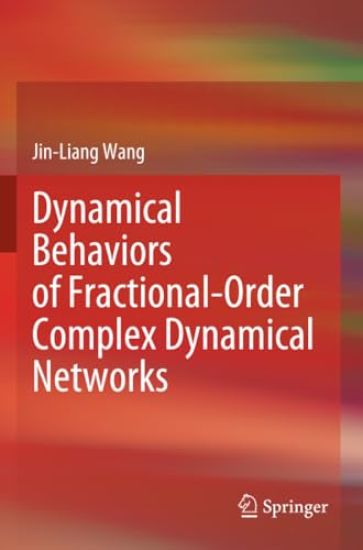
Dynamical Behaviors of Fractional-Order Complex Dynamical Networks
This book benefits researchers, engineers, and graduate students in the field of fractional-order complex dynamical networks. Recently, the dynamical behaviors (e.g., passivity, finite-time passivity, synchronization, and finite-time synchronization, etc.) for fractional-order complex networks (FOCNs) have attracted considerable research attention in a wide range of fields, and a variety of valuable results have been reported. In particular, passivity has been extensively used to address the synchronization of FOCNs.
Credit Rating Migration Risks in Structure Models

Credit Rating Migration Risks in Structure Models

Jin Liang; Bei Hu

SPRINGER VERLAG, SINGAPORE
2025
nidottu
The book provides the latest research results on measuring Credit Rating Migration by mathematical methods. It brings about most popular mathematical models, methods and applications on this area, especially presents the latest development on structure models. It is systematically collects the models, methods and results in this area. The book first introduced the financial background and preliminary mathematical theory. Then two mainstream mathematical models for measuring default risks, the reduced form model and structure model, are presented. The structure model for measuring credit rating migration risks is the main part of the book and authors prove the existence, uniqueness, regularities, asymptotic behavior, traveling wave and other properties of the solutions of the model. The structural credit rating migration model is also extended to more general case, such as stochastic interest rate, multiple ratings, region switch and so on. Some credit derivatives, and numerical analysis, parameter calibration and estimate of the migration boundary of the models are given in the last two chapters. The book focuses on theoretical financial investigators, especially financial mathematical researchers and students. The book is involved various mathematical models, such as PDE, numerical simulation etc., some of them are interesting mathematical problems, so that, and a good reference book to study mathematical modeling in credit rating migration. It might also be used as a textbook for students in financial credit risks.
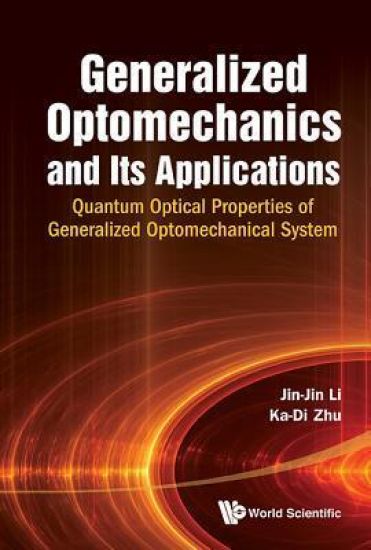
Generalized Optomechanics And Its Applications: Quantum Optical Properties Of Generalized Optomechanical System
A mechanical oscillator coupled to the optical field in a cavity is a typical cavity optomechanical system. In our textbook, we prepare to introduce the quantum optical properties of optomechanical system, i.e. linear and nonlinear effects. Some quantum optical devices based on optomechanical system are also presented in the monograph, such as the Kerr modulator, quantum optical transistor, optomechanical mass sensor, and so on. But most importantly, we extend the idea of typical optomechanical system to coupled mechanical resonator system and demonstrate that the combined two-level structure and resonator system can serve as a generalized optomechanical system. The quantum optical properties, which exist in typical system, are also presented in the combined two-level structure and resonator system.
My Korean: Step 1

My Korean: Step 1

Byung-Jin Lim; Jieun Kim; Ji-Hye Kim

Routledge
2019
sidottu
The My Korean series of textbooks offers a learner-centered, communicative task-based, interactive approach to learning contemporary Korean. My Korean: Step 1 and My Korean: Step 2 are arranged thematically around topics that any novice learner of Korean is likely to encounter in their first year of study. Each lesson contains two dialogues showing contemporary Korean in use, followed by succinct grammar and vocabulary explanations.The focus throughout the books is on communicative in-class activities and tasks that encourage students’ active participation. Video clips of the lesson dialogues are available as an online resource, and each unit contains communicative activities based on the dialogue themes.The engaging structure and communicative approach make My Korean: Step 1 an ideal text for first-semester Korean courses. It is also a great resource for individual study or one-on-one tutorials on Korean language and culture.
My Korean: Step 1

My Korean: Step 1

Byung-Jin Lim; Jieun Kim; Ji-Hye Kim

Routledge
2019
nidottu
The My Korean series of textbooks offers a learner-centered, communicative task-based, interactive approach to learning contemporary Korean. My Korean: Step 1 and My Korean: Step 2 are arranged thematically around topics that any novice learner of Korean is likely to encounter in their first year of study. Each lesson contains two dialogues showing contemporary Korean in use, followed by succinct grammar and vocabulary explanations.The focus throughout the books is on communicative in-class activities and tasks that encourage students’ active participation. Video clips of the lesson dialogues are available as an online resource, and each unit contains communicative activities based on the dialogue themes.The engaging structure and communicative approach make My Korean: Step 1 an ideal text for first-semester Korean courses. It is also a great resource for individual study or one-on-one tutorials on Korean language and culture.
My Korean: Step 2

My Korean: Step 2

Byung-Jin Lim; Jieun Kim; Ji-Hye Kim

Routledge
2024
sidottu
The My Korean series of textbooks is user-friendly and accessible, taking a student-centered and interactive approach to learning Korean through popular culture. Engaging themes, real-life situations, and cultural insights allow learners to connect with all aspects of Korean life, from K-pop and dramas to authentic cuisine and travel experiences, while building a strong foundation in the language.My Korean: Step 2 uses authentic dialogues based on real-life and interactive activities and tasks that encourage students' active participation. The textbook is arranged thematically around topics that high-beginner- and intermediate-low-level learners of Korean are likely to encounter in their studies. Each lesson contains dialogues, definitions of new words, clear explanations of grammar and expressions, grammar-related exercises, task-based activities, cultural notes, and expanded vocabulary related to each theme. Video clips of lesson dialogues are also available as an online resource.The engaging structure and communicative approach make My Korean: Step 2 an ideal textbook for beyond first-semester-level Korean courses and is a valuable resource for individual self-study and one-on-one or group tutorials on the Korean language and culture.