Kirjojen hintavertailu. Mukana 11 699 587 kirjaa ja 12 kauppaa.

Kirjahaku

Etsi kirjoja tekijän nimen, kirjan nimen tai ISBN:n perusteella.

1000 tulosta hakusanalla Joan Crombie

Joan

Joan

Joni Järvi-Laturi

BoD - Books on Demand
2023
pokkari
Joan on Joni J rvi-Laturin yhdestoista runokokoelma. Hollywoodin legendan Joan Crawfordin mukaan nimetty runoteos on ihmeellinen sekoitus eri maailmoja ja tunnelmia. Runojen kirjoitustyyli on addiktoiva ja kirjalliset el mykset ikimuistoisia. "tuhkan ja tupakkateollisuuden avioliitossa, amerikkalaisen alamaailman foorumilla, monet tiesiv t kaiken Rockefellerist , Vietnamista, nuortamperelaisen alamaailman alitajunnassa"
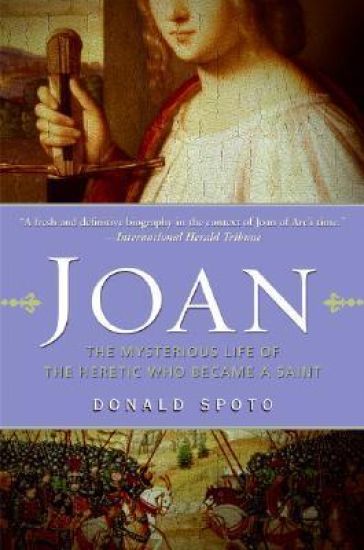
Joan: The Mysterious Life of the Heretic Who Became a Saint
Since her death at the age of nineteen in 1431, Joan of Arc has maintained a remarkable hold on our collective imagination. She was a teenager of astonishing common sense and a national heroine who led men in to battle as a courageous warrior. Yet she was also abandoned by the king whose coronation she secured, betrayed by her countrymen, and sold to the enemy. In this meticulously researched landmark biography, Donald Spoto captures her astonishing life and the times in which she lived. Neither wife nor nun, queen nor noblewoman, philosopher nor stateswoman, Joan of Arc demonstrates that everyone who follows their heart has the power to change history.
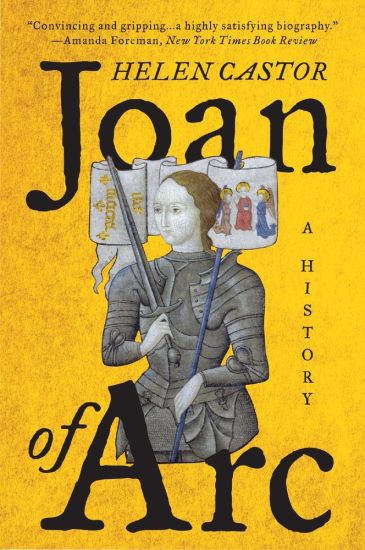
Joan of Arc

Joan of Arc

Helen Castor

HARPER PERENNIAL
2016
nidottu
From the author of the acclaimed She-Wolves, the complex, surprising, and engaging story of one of the most remarkable women of the medieval world--as never told before.Helen Castor tells afresh the gripping story of the peasant girl from Domremy who hears voices from God, leads the French army to victory, is burned at the stake for heresy, and eventually becomes a saint. But unlike the traditional narrative, a story already shaped by the knowledge of what Joan would become and told in hindsight, Castor's Joan of Arc: A History takes us back to fifteenth century France and tells the story forwards. Instead of an icon, she gives us a living, breathing woman confronting the challenges of faith and doubt, a roaring girl who, in fighting the English, was also taking sides in a bloody civil war. We meet this extraordinary girl amid the tumultuous events of her extraordinary world where no one--not Joan herself, nor the people around her--princes, bishops, soldiers, or peasants--knew what would happen next.Adding complexity, depth, and fresh insight into Joan's life, and placing her actions in the context of the larger political and religious conflicts of fifteenth century France, Joan of Arc: A History is history at its finest and a surprising new portrait of this remarkable woman.Joan of Arc: A History features an 8-page color insert.
Joan of Arc

Joan of Arc

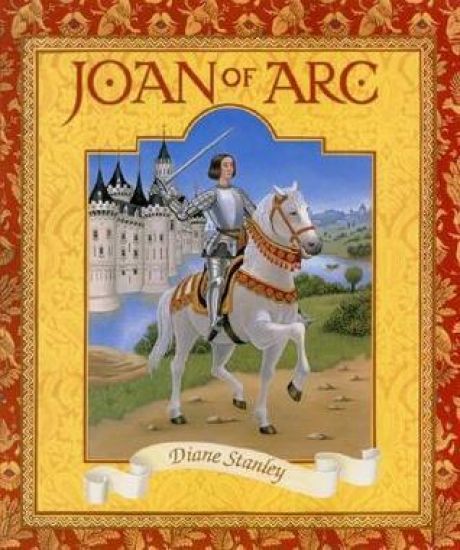
Diane Stanley

Harpercollins
2002
nidottu
Against the fascinating tapestry of Frances history during the Hundred Years' War, Diane Stanley unfolds the story of the simple thirteen-year-old village girl who in Just a few years would lead France to independence from English rule, and thus become a symbol of France's national pride. It is a story of vision and bravery, fierce determination, and tragic martyrdom. Diane Stanley's extraordinary gift to present historical information in an accessible and child-friendly format has never been more impressive, nor her skillful, beautifully realized illustrations (here imitating medieval illuminated manuscripts) more exquisite.
Joan of Arc

Joan of Arc

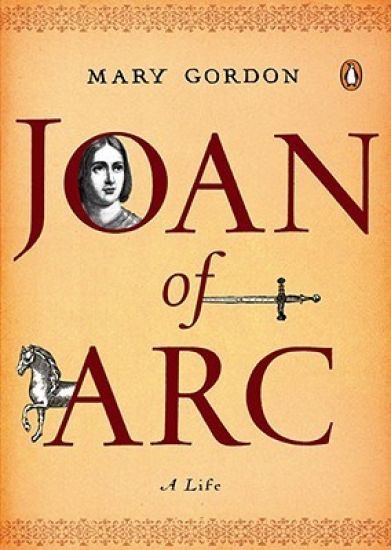
Mary Gordon

The Penguin Press
2008
pokkari
A master of the story form (The New York Times) offers a fresh, revealing portrait of the legendary saint Celebrated novelist Mary Gordon brings Joan of Arc alive as a complex figure full of contradictions and desires, as well as spiritual devotion. A humble peasant girl, Joan transformed herself into the legendary Maid of Orl ans, knight, martyr, and saint. Following the voice of God, she led an army to victory and crowned the king of France, only to be captured and burned at the stake as a heretic--all by the age of nineteen. Gordon does more than tell this gripping story--she explores Joan's mystery and the many facets of her inspiring life.
Joan of Arc

Joan of Arc

Marina Warner

Oxford University Press
2016
nidottu
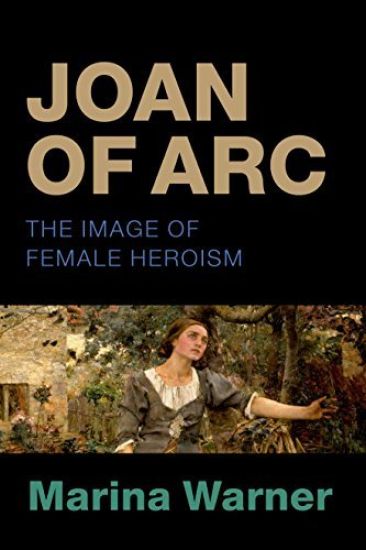
The fame of Joan of Arc began in her lifetime and, though it has dipped a little now and then, she has never vanished from view. Her image acts as a seismograph for the shifts and settlings of personal and political ideals: Joan of Arc is the heroine every movement has wanted as their figurehead. In France, anti-semitic, xenophobic, extreme right parties have claimed her since the Action Francaise in the 19th century. By contrast, Socialists, feminists, and liberal Catholics rallied to her as the champion of the dispossessed and the wrongly accused. Joan of Arc has also played a crucial role in changing visions of female heroism. She has proved an inexhaustible source of inspiration for writers, playwrights, film-makers, performers, and composers. In a single, brief life, several of the essential mythopoiec characteristics that throughout history have defined the charismatic leader and saint are powerfully and intensely condensed. Even while Joan of Arc was still alive, but far more so after her death, the heroic part of her story sparked narratives of all kinds, in pictures, ballads, plays, and also satires. This was only heightened in 1841-9 by the publication of the Inquisition trial which had examined Joan for witchcraft and heresy. The transcript of the interrogations gives us the voice of this young woman across the centuries with almost unbearable immediacy; her spirit leaps from the page, uncompromising in its frankness, good sense, courage, and often breathtaking in its simple effectiveness. Joan of Arc into one of the most fully and vividly present personalities in history, about whom a great more is known, in her own words and at first hand, than is, for example, about Shakespeare. However, this has not stopped the flow of fictions and fantasies about her. Marina Warner analyses the symbolism of the Maid in her own time and in her rich afterlife in popular culture. The cultural expressions are part of an ongoing historical struggle to own the symbol - you could say, the brand. In a new preface to her study, Marina Warner takes stock of the continuing contention, in politics and culture, for this powerful symbol of virtue. Joan of Arc's multiple resurrections and transformations show how vigorous the need for figures like her remains, and how crucial it is to meet that need with thoughtfulness. She argues that abandoning the search to identify heroes and define them, out of a kind of high-minded distaste for propaganda, lets dangerous political factions manipulate them to their own ends. When Marine Le Pen calls on Joan of Arc's name, she needs to be confronted about her bad faith and her abuse of history.
Joan of Arc

Joan of Arc

Marina Warner

Oxford University Press
2013
sidottu
The fame of Joan of Arc began in her lifetime and, though it has dipped a little now and then, she has never vanished from view. Her image acts as a seismograph for the shifts and settlings of personal and political ideals: Joan of Arc is the heroine every movement has wanted as their figurehead. In France, anti-semitic, xenophobic, extreme right parties have claimed her since the Action Francaise in the 19th century. By contrast, Socialists, feminists, and liberal Catholics rallied to her as the champion of the dispossessed and the wrongly accused. Joan of Arc has also played a crucial role in changing visions of female heroism. She has proved an inexhaustible source of inspiration for writers, playwrights, film-makers, performers, and composers. In a single, brief life, several of the essential mythopoiec characteristics that throughout history have defined the charismatic leader and saint are powerfully and intensely condensed. Even while Joan of Arc was still alive, but far more so after her death, the heroic part of her story sparked narratives of all kinds, in pictures, ballads, plays, and also satires. This was only heightened in 1841-9 by the publication of the Inquisition trial which had examined Joan for witchcraft and heresy. The transcript of the interrogations gives us the voice of this young woman across the centuries with almost unbearable immediacy; her spirit leaps from the page, uncompromising in its frankness, good sense, courage, and often breathtaking in its simple effectiveness. Joan of Arc into one of the most fully and vividly present personalities in history, about whom a great more is known, in her own words and at first hand, than is, for example, about Shakespeare. However, this has not stopped the flow of fictions and fantasies about her. Marina Warner analyses the symbolism of the Maid in her own time and in her rich afterlife in popular culture. The cultural expressions are part of an ongoing historical struggle to own the symbol - you could say, the brand. In a new preface to her study, Marina Warner takes stock of the continuing contention, in politics and culture, for this powerful symbol of virtue. Joan of Arc's multiple resurrections and transformations show how vigorous the need for figures like her remains, and how crucial it is to meet that need with thoughtfulness. She argues that abandoning the search to identify heroes and define them, out of a kind of high-minded distaste for propaganda, lets dangerous political factions manipulate them to their own ends. When Marine Le Pen calls on Joan of Arc's name, she needs to be confronted about her bad faith and her abuse of history.

Joan Myers Brown and the Audacious Hope of the Black Ballerina

Joan Myers Brown and the Audacious Hope of the Black Ballerina

Brenda Dixon Gottschild; Robert Farris Thompson

Palgrave Macmillan
2012
sidottu
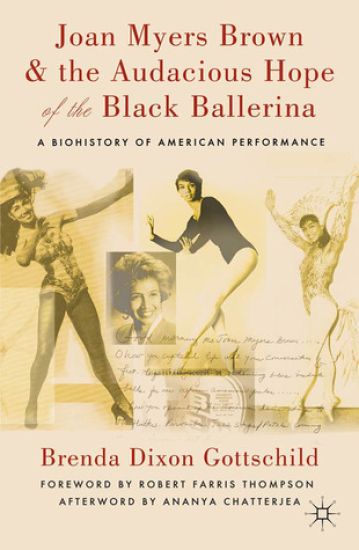
Founder of the Philadelphia Dance Company (PHILADANCO) and the Philadelphia School of Dance Arts, Joan Myers Brown's personal and professional histories reflect the hardships as well as the advances of African-Americans in the artistic and social developments of the second half of the twentieth and the early twenty-first centuries.
Joan Myers Brown and the Audacious Hope of the Black Ballerina

Joan Myers Brown and the Audacious Hope of the Black Ballerina

Brenda Dixon Gottschild; Robert Farris Thompson

Palgrave Macmillan
2012
nidottu
Founder of the Philadelphia Dance Company (PHILADANCO) and the Philadelphia School of Dance Arts, Joan Myers Brown's personal and professional histories reflect the hardships as well as the advances of African-Americans in the artistic and social developments of the second half of the twentieth and the early twenty-first centuries.
Joan de Valence

Joan de Valence

Linda E. Mitchell

Palgrave Macmillan
2015
sidottu
Heir to an earldom, and wife and widow of William de Valence (half-brother of King Henry III), Joan de Valence was an important actor in the volatile political world of thirteenth-century England, Wales, Scotland, and Ireland. Yet, astonishingly, her story of survival, perseverance, and influence has never been told until now. Joan de Valence: The Life and Influence of a Thirteenth-Century Noblewoman draws on archival research, as well as tools of historical analysis and gender studies, to peel back the layers of this remarkable noblewoman's life. From her survival of the wars between king and baronage at mid-century to her life as a widow and magnate of the realm, the story of Joan de Valance, as Mitchell argues, exemplifies the range of experiences of noblewomen during the middle ages.
Joan's Story

Joan's Story

Joan Dudman

Lulu.com
2020
nidottu
Joan's Story is Joan Dudman's testament to what the Lord has done in her life. A Sheffield lass, Joan has known her share of life's ups and downs, but Joan, now an octogenarian, doesn't grumble about the hard times; she marvels at the ways in which she has been transformed and how she has been able to overcome adversity. Joan's repeating refrain rings in the reader's ears: 'God is so good!' In this delightful little book you will find nuggets of gold, which might just transform your life too!
Joan of Arc and Sacrificial Authorship

Joan of Arc and Sacrificial Authorship

Ann W. Astell

University of Notre Dame Press
2003
nidottu
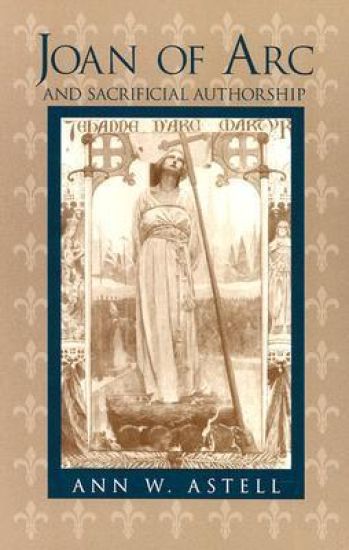
A host of modern authors have portrayed Joan of Arc as a heroine. Identifying with the medieval saint and martyr as a figure of the artist, they tell her story as a way of commenting on their own situation in a world where the aura of art has decayed. Blending the theoretical insights of Walter Benjamin, Roland Barthes, and René Girard, Ann W. Astell persuasively argues that many modern authors have seen their own artistic vocation in the visions and voices that inspired Joan. Astell's pathbreaking study explores the treatment of Joan of Arc in the works of such renowned and diverse authors as Mark Twain, Samuel Coleridge, Virginia Woolf, Friedrich Schiller, George Bernard Shaw, Bertolt Brecht, and Lillian Helman. Astell contends that in Joan's problematic identity as a peasant woman, these writers find an image for their own status as outsiders and potential scapegoats. Joan's condemnation and cruel death by fire mirror the anxious fears of artists who find themselves in a philistine marketplace. By depicting Joan's miraculous victories and ultimate canonization as a saint, these writers seek to imbue their own work with a quasi-religious aura and to secure for themselves a lasting place in the literary canon. Joan of Arc and Sacrificial Authorship offers the most comprehensive, comparative treatment to date of modern renditions of the medieval story of Joan of Arc. By connecting the societal roles of nineteenth- and twentieth-century authors and Saint Joan, Astell explains the continuing importance of the Middle Ages in the quest for a modern self-understanding.
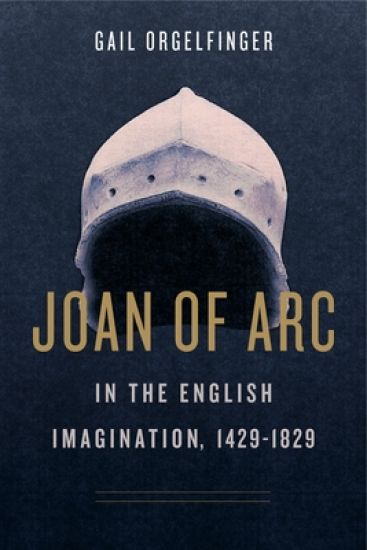
Joan of Arc in the English Imagination, 1429–1829

Joan of Arc in the English Imagination, 1429–1829

Gail Orgelfinger

Pennsylvania State University Press
2019
sidottu
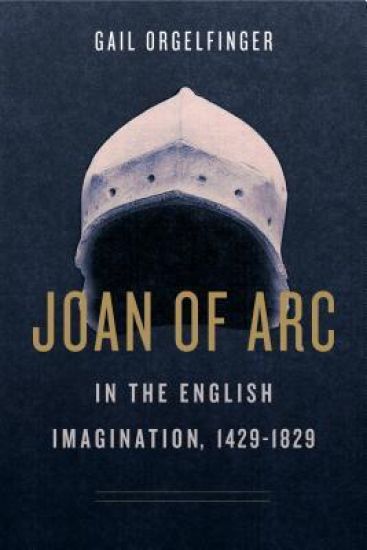
In this book, Gail Orgelfinger examines the ways in which English historians and illustrators depicted Joan of Arc over a period of four hundred years, from her capture in 1429 to the early nineteenth century.The variety of epithets attached to Joan of Arc—from “witch” and “Medean virago” to “missioned Maid” and “shepherd’s child”—attests to England’s complicated relationship with the saint. While portrayals of Joan in English popular culture evolved over the centuries, they do not follow a straightforward trajectory from vituperation to adulation. Focusing primarily on descriptions of Joan’s captivity, trial, and execution, this study shows how the exigencies of politics and the demands of genre shaped English retellings of her military successes, gender transgressions, and execution at the hands of her English enemies. Orgelfinger’s research illuminates how and why English writers and artists used the memory of Joan of Arc to grapple with issues such as England’s relationship with France, emerging protofeminism in the early modern era, and the sense of national guilt over her execution. A systematic analysis of Joan’s English historiography in its political and social contexts, this volume sheds light on four centuries of English thought on Joan of Arc. It will be welcomed by specialist and general readers alike, especially those interested in women’s studies.
Joan of Arc in the English Imagination, 1429–1829

Joan of Arc in the English Imagination, 1429–1829

Gail Orgelfinger

Pennsylvania State University Press
2020
pokkari
In this book, Gail Orgelfinger examines the ways in which English historians and illustrators depicted Joan of Arc over a period of four hundred years, from her capture in 1429 to the early nineteenth century.The variety of epithets attached to Joan of Arc—from “witch” and “Medean virago” to “missioned Maid” and “shepherd’s child”—attests to England’s complicated relationship with the saint. While portrayals of Joan in English popular culture evolved over the centuries, they do not follow a straightforward trajectory from vituperation to adulation. Focusing primarily on descriptions of Joan’s captivity, trial, and execution, this study shows how the exigencies of politics and the demands of genre shaped English retellings of her military successes, gender transgressions, and execution at the hands of her English enemies. Orgelfinger’s research illuminates how and why English writers and artists used the memory of Joan of Arc to grapple with issues such as England’s relationship with France, emerging protofeminism in the early modern era, and the sense of national guilt over her execution. A systematic analysis of Joan’s English historiography in its political and social contexts, this volume sheds light on four centuries of English thought on Joan of Arc. It will be welcomed by specialist and general readers alike, especially those interested in women’s studies.
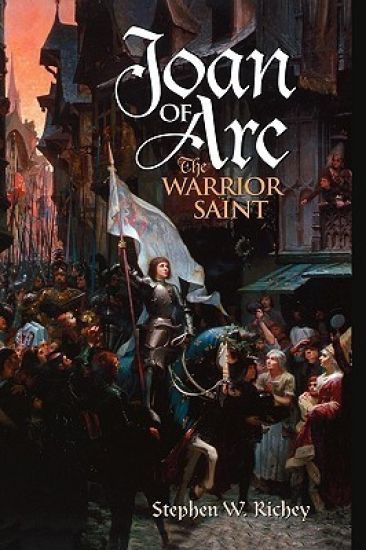
Joan of Arc

Joan of Arc

Stephen W. Richey

Praeger Publishers Inc
2003
sidottu
It began with voices—St. Michael, St. Catherine, and St. Margaret speaking to an ordinary farmer's daughter. Inspired to aid the future King Charles VII, whose right to the throne had been denied by the English in the Hundred Years War, Joan of Arc made her journey clad in male attire. Theologians testified to the veracity of her divine claims, and she was furnished with a host of troops. But how did she achieve the military feats that made her a legend?Stephen W. Richey offers a unique look at this remarkable woman. Joan of Arc rapidly matured into a true battle commander who spoke forcefully in war councils, made decisions, and gave orders that were obeyed—resulting in a stunning series of victories for her army. She achieved this feat by virtue of her unschooled but intuitive genius for war, a charismatic personality that inspired her soldiers to heroic feats, and her ability to exploit a unique set of lucky circumstances.
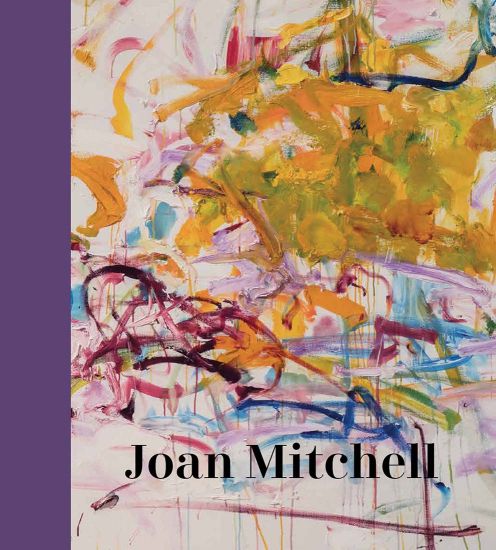
Joan Mitchell

Joan Mitchell

Sarah Roberts; Katy Siegel

Yale University Press
2021
sidottu
A sweeping retrospective exploring the oeuvre of an incandescent artist, revealing the ways that Mitchell expanded painting beyond Abstract Expressionism as well as the transatlantic contexts that shaped her Joan Mitchell (1925–1992) was fearless in her experimentation, creating works of unparalleled beauty, strength, and emotional intensity. This gorgeous book unfolds the story of an artistic master of the highest order, revealing the ways she expanded abstract painting and illuminating the transatlantic contexts that shaped her. Lavish illustrations cover the full arc of her artistic practice, from her exceptional New York paintings of the early 1950s to the majestic multipanel compositions she made in France later in her career. Signature works are represented here along with rarely seen paintings, works on paper, artist’s sketchbooks, and photographs of Mitchell’s life, social circle, and surroundings. Featuring scholarly texts, in-depth essays, and artistic and literary responses, this book is organized in ten chronological chapters. Each chapter centers on a closely related suite of paintings, illuminating a shifting inner landscape colored by experience, sensation, memory, and a deep sense of place. Presenting groundbreaking research and a variety of perspectives on her art, life, and connections to poetry and music, this unprecedented volume is an essential reference for Mitchell’s admirers and those just discovering her work.Published in association with the San Francisco Museum of Modern ArtExhibition Schedule:San Francisco Museum of Modern Art (September 4, 2021–January 17, 2022) Baltimore Museum of Art (March 6–August 14, 2022) Fondation Louis Vuitton (October 5, 2022–February 27, 2023)
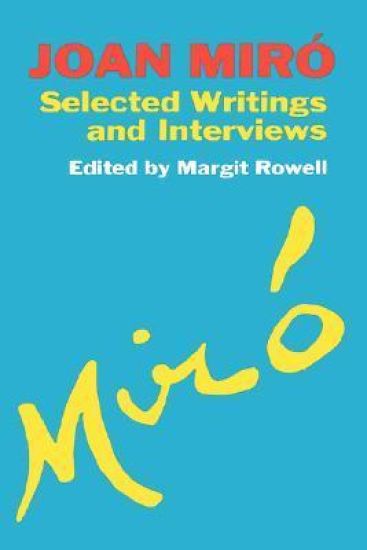
Joan Miro

Joan Miro

Margit Rowell

Da Capo Press Inc
1992
pokkari
For nearly seven decades the ebullient art of Joan Miro (1893-1983), Spanish painter, sculptor, ceramist and mythmaker, has intrigued and enchanted art lovers worldwide. This collection of his writings presents a portrait of the artist in his own words. Miro's notebooks, letters, and interviews reveal the work and life of a brilliant artist revered for his uncanny expression of the subconscious. "Joan Miro" centres on Paris during the vibrant era between the wars, when Miro became the intimate of almost everyone in that scene - boxing with young Hemingway, working with Max Ernst on the Ballets Russes, drinking, painting and arguing with Picasso, Braque, Dubuffet, Matisse, Breton and many others. Miro engagingly recounts all of this, as well as stories of his exile during World War II. Miro's virtuosity encompassed drawing, painting, sculpture, ceramics, poetry, stage sets, costumes, murals and tapestries; he vividly describes the creation of these artworks in these pages.