Kirjojen hintavertailu. Mukana 11 213 693 kirjaa ja 12 kauppaa.

Kirjahaku

Etsi kirjoja tekijän nimen, kirjan nimen tai ISBN:n perusteella.

1000 tulosta hakusanalla Job

Job

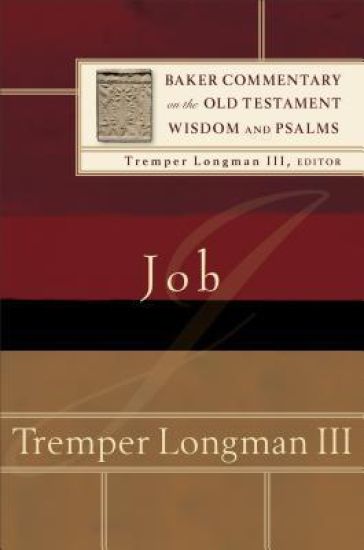
Job

I Longman

Baker Academic, Div of Baker Publishing Group
2016
nidottu
Explore the contemporary significance of the Old Testament and hear the Word of God afreshVeteran Old Testament scholar Tremper Longman offers an accessible commentary on one of Scripture's most intriguing books. With his deft exegetical and expositional skill, the resulting work is full of fresh insight into the meaning of the text.In addition to paragraph-level commentary, all volumes of the Baker Commentary on the Old Testament series feature:? A fresh translation of the Hebrew text? Incisive comments based on the author's translation? Linguistic, historical, and canonical insights? Concluding reflections? Footnotes addressing technical mattersPastors, teachers, and all serious students of the Bible will find here an accessible commentary that will serve as an excellent resource for their study.
Job

Job

Roy B. Zuck

Moody Publishers
1978
nidottu
Unfathomable loss. Unmerited suffering. Why is this happening to me? For centuries people have tried to understand the reasons for suffering and grief. When we cannot connect our woes to wrongs we have done, we conclude that our suffering is undeserved and unfair. Like Job, we struggle to understand our pain.The universality of suffering makes the book of Job appealing, but the treatment of that theme often makes the book difficult to comprehend. Nonetheless, this section of Scripture offers powerful lessons for your life.Dr. Roy Zuck directs his commentary toward the layman. His clear, organized insights can reveal important truths for the struggling Christian. The uncomplicated, outlined content is suitable for both individual and group study. You can learn from Job's suffering--as well as from your own.
Job

Job

Lindsay Wilson

William B Eerdmans Publishing Co
2015
nidottu
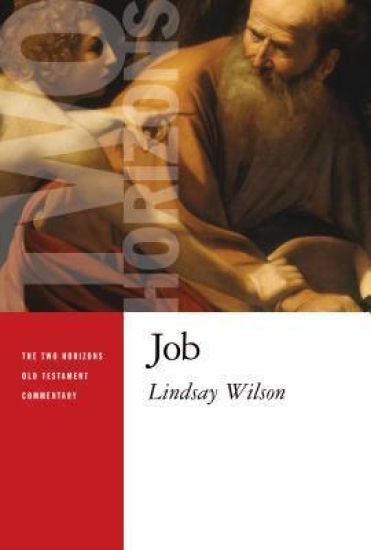
In this commentary Lindsay Wilson shows the book of Job to be a coherent literary work that addresses this question: Is it possible for humans to have genuine faith in God regardless of their circumstances? Wilson argues that Job's bold, sometimes questioning cries to God are portrayed as legitimate expressions of trust for a righteous person in adversity.Through critical exegesis of the text, Wilson focuses on the message of Job and its implications for practical ministry, examining such key issues as suffering, justice, lament, and faith. He also touches on various pertinent topics in Christian ethics, including individual character, wealth, suicide, and the environment. In a final section Wilson offers guidance on using Job as a resource book for pastoral care and prayer, and he discusses how to teach and preach from the book of Job.
Job

Job

J. Gerald Janzen

Westminster/John Knox Press,U.S.
1997
sidottu
In this volume, J. Gerald Janzen examines the text of the book of Job as a literary text within the context of the history of the religion of Israel and within the broader context of the universal human condition. He approaches the basic character of the book from a literary perspective which enables him to identify human existence as exemplified in Job and to expound on the mystery of good and evil, which gives human existence its experiential texture and which together drive humans to ask the same kind of questions asked by Job. This is the first full-length commentary to present Job systematically and literarily.Interpretation: A Bible Commentary for Teaching and Preaching is a distinctive resource for those who interpret the Bible in the church. Planned and written specifically for teaching and preaching needs, this critically acclaimed biblical commentary is a major contribution to scholarship and ministry.
Job

Job

René Girard

Stanford University Press
1987
sidottu
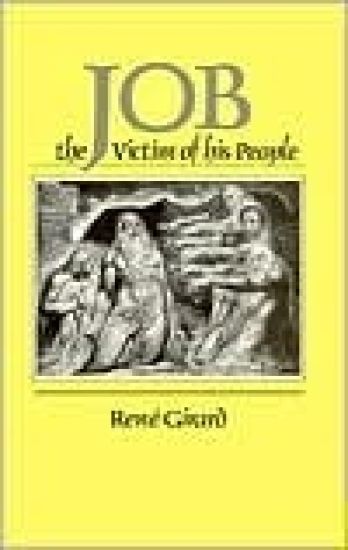
What do we know about the Book of Job? Not very much. The hero complains endlessly. He has just lost his children all his livestock. He scratches his ulcers. The misfortunes of which he complains are all duly enumerated in the prologue. They are misfortunes brought on him by Satan with God's permission. We think we know, but are we sure? Not once in the Dialogues does Job mention either Satan or anything about his misdeeds. Could it be that they are too much on his mind for him to mention them? Possibly, yet Job mentions everything else, and does much more than mention. He dwells heavily on the cause of his misfortune, which is none of those mentioned in the prologue. The cause is not divine, satanic nor physical, but merely human.
Job

Job

Robert Alden

Broadman Holman Publishers
1994
sidottu
THE NEW AMERICAN COMMENTARY is for the minister or Bible student who wants to understand and expound the Scriptures. Notable features include: * commentary based on THE NEW INTERNATIONAL VERSION;* the NIV text printed in the body of the commentary;* sound scholarly methodology that reflects capable research in the original languages;* interpretation that emphasizes the theological unity of each book and of Scripture as a whole;* readable and applicable exposition.
Job

Job

Kathleen M. O'Connor

Liturgical Press
2012
pokkari
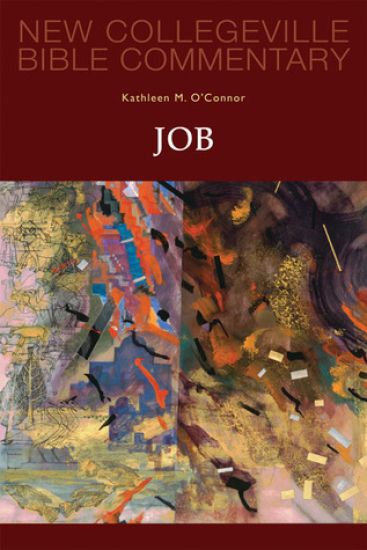
How can it be that good people suffer and yet God is just? For thousands of years, the profoundly moving story of Job has allowed people of faith to reflect on that question. Among the books of the Old Testament classified as “wisdom” literature, the book of Job never loses its freshness and power. Job is a righteous man, stripped of all he holds dear, who engages in a powerful dialogue with three friends on the nature and cause of suffering. Job’s friends struggle to justify Job’s suffering and advise him on a course of action. Job counters their arguments and then turns his attention to God in a desperate plea for justice. When God’s answer comes from the whirlwind it is not what we expect. In this commentary, Kathleen O’Connor makes the characters in the book of Job and their speeches come alive. She explores and illuminates the beliefs that undergird their perspectives, helping the reader contextualize this powerful tale. Then, O’Connor invites readers to engage with Job’s story personally and work to develop their own solution to the dilemmas faced by both Job and his friends. It is a unique approach that connects both head and heart with this powerful inquiry into suffering and God’s justice.
Job

Job

Marco (EDT) Conti; Thomas C. (EDT) Oden

Inter-Varsity Press,US
2006
sidottu
The book of Job presents its readers with a profound drama concerning innocent suffering. Such honest, forthright wrestling with evil and the silence of God has intrigued a wide range of readers, both religious and nonreligious. Surprisingly, the earliest fathers showed little interest in the book of Job. Not until Origen in the early third century is there much evidence of any systematic treatment of the book, and most of Origen's treatment is known to us only from the catenae. More intense interest came at the end of the fourth century and the beginning of the fifth. The excerpts in this collection focus on systematic treatment. Among Greek texts are those from Origen, Didymus the Blind, Julian the Arian, John Chrysostom, Hesychius of Jerusalem and Olympiodorus. Among Latin sources we find Julian of Eclanum, Philip the Priest and Gregory the Great. Among Syriac sources we find Ephrem the Syrian and Ishodad of Merv, some of whose work is made available here for the first time in English. In store for readers of this volume is once again a great feast of wisdom from the ancient resources of the church."
Job

Job

Francis I. Andersen

INTERVARSITY PRESS
2008
nidottu
Francis Andersen calls the book of Job "one of the bests gifts of God to men." It is the story of one man's agony "reaching out to the mystery of God, beyond words and explanations." He discusses Job's vast range of ideas, its broad coverage of human experience, the intensity of its passion and the immensity of its concept of God.
Job

Job

Manlio Simonetti; Marco Conti; Thomas C. Oden

IVP Academic
2019
nidottu
The book of Job presents its readers with a profound drama concerning innocent suffering. Such honest, forthright wrestling with the problem of evil and the silence of God has intrigued a wide gamut of readers both religious and nonreligious. Surprisingly, the earliest church fathers showed little interest in the book of Job. Not until Origen in the early third century is there much evidence of any systematic treatment of the book, and most of Origen's treatment is known to us only from the catenae. More intense interest came at the end of the fourth century and the beginning of the fifth. The excerpts in this Ancient Christian Commentary on Scripture volume focus on systematic treatment. Among Greek texts are those from Origen, Didymus the Blind, Julian the Arian, John Chrysostom, Hesychius of Jerusalem, and Olympiodorus. Among Latin sources we find Julian of Eclanum, Philip the Priest, and Gregory the Great. Among Syriac sources we find Ephrem the Syrian and Isho'dad of Merv, some of whose work is made available here for the first time in English. In store for readers of this volume is a great feast of wisdom from the ancient resources of the church with fresh relevance for today.
Job

Job

Smith

Inter-Varsity Press,US
2012
nidottu
Job will take you through a timeless and hauntingly beautiful poetic discussion of the nature of suffering and the causes of evil. The individual sessions follow the book's natural divisions and demonstrate its character as an unparalleled example of dramatic wisdom literature. You ll follow the extended conversation in the book step by step as Job's friends describe how God's ways are disclosed through the workings of nature and expressed in the accumulated wisdom of experience; as Job appeals in response to the mystery of unexplained suffering. Through this guide individuals and groups will better appreciate the complexities behind their own unanswered questions about suffering, and they will discover, with Job, that the universe is still governed by an all-knowing and compassionate God.
Job

Job

Richard Loper

Lulu.com
2024
pokkari
Many people have read the book of Job looking to answer the question: Why is there suffering? But that is not the subject of the book. The main question that Job addresses is: Will you continue to serve and worship God in the midst of suffering? Would you serve and worship God even if it seemed, from all outward appearances, that he had abandoned you? Despite our fickle feelings God's sovereignty brings us great comfort even in the midst of suffering. There are no accidents in the universe. God is in control of both the good, with which he blesses us, and the evil which he allows. Satan had no power to operate outside of God's authority. Satan has no independent authority of his own. No one can touch God's people without God's permission.