The Life of Napoleon Bonaparte is a comprehensive biography of one of the most iconic figures in world history. Written by John Abbott, this book chronicles the life of Napoleon from his humble beginnings in Corsica to his rise to power as Emperor of France. Abbott delves into Napoleon's military career, detailing his victories and defeats on the battlefield, as well as his political and diplomatic accomplishments. He also explores Napoleon's personal life, including his relationships with his family, his wives, and his mistresses.Throughout the book, Abbott provides insights into Napoleon's character, examining his strengths and weaknesses, his ambitions and fears, and his impact on the world. He also examines the historical context in which Napoleon lived, providing readers with a deeper understanding of the political and social forces that shaped his life and career.Overall, The Life of Napoleon Bonaparte is a fascinating and engaging portrait of one of history's most complex and enigmatic figures. It is a must-read for anyone interested in the history of France, Europe, or the world.This Is A New Release Of The Original 1883 Edition.This scarce antiquarian book is a facsimile reprint of the old original and may contain some imperfections such as library marks and notations. Because we believe this work is culturally important, we have made it available as part of our commitment for protecting, preserving, and promoting the world's literature in affordable, high quality, modern editions, that are true to their original work.
Ferdinand De Soto, The Discoverer of the Mississippi is a classic biography of the great Spanish explorer, Ferdinand De Soto. Mr. Theodore Irving, in his valuable history of the "Conquest of Florida," speaking of the astonishing achievements of the Spanish Cavaliers, in the dawn of the sixteenth century says: "Of all the enterprises undertaken in this spirit of daring adventure, none has surpassed, for hardihood and variety of incident, that of the renowned Ferdinand de Soto, and his band of cavaliers. It was poetry put in action. It was the knight-errantry of the old world carried into the depths of the American wilderness.
Henry IV is a classic English royal family biography by John Abbott. Henry IV (15 April 1367 1] - 20 March 1413), also known as Henry Bolingbroke, was King of England and Lord of Ireland from 1399 to 1413, and asserted the claim of his grandfather, Edward III, to the Kingdom of France. Henry was born at Bolingbroke Castle in Lincolnshire. His father, John of Gaunt, was the fourth son of Edward III and the third son to survive to adulthood, and enjoyed a position of considerable influence during much of the reign of Henry's cousin Richard II, whom Henry eventually deposed. Henry's mother was Blanche, heiress to the considerable Lancaster estates, and thus he became the first King of England from the Lancaster branch of the Plantagenets and the first King of England since the Norman Conquest whose mother tongue was English rather than French. One of Henry's elder sisters, Philippa, married John I of Portugal, and the other, Elizabeth, was the mother of John Holland, 2nd Duke of Exeter. His younger half-sister Catherine, the daughter of his father's second wife, Constance of Castile, was queen consort of Castile. He also had four half-siblings by Katherine Swynford, originally his sisters' governess, then his father's longstanding mistress, and later his third wife. These four children were given the surname Beaufort after a castle their father held in Champagne, France. 4] Henry's relationship with his stepmother, Katherine Swynford, was a positive one, but his relationship with the Beauforts varied. In youth he seems to have been close to all of them, but rivalries with Henry and Thomas Beaufort proved problematic after 1406. Ralph Neville, who had married Henry's half-sister Joan Beaufort, remained one of his strongest supporters, and so did his eldest half-brother John Beaufort, even though Henry revoked Richard II's grant to John of a marquessate. Thomas Swynford, a son from Katherine's first marriage to Sir Hugh Swynford, was another loyal companion. Thomas was Constable of Pontefract Castle, where King Richard II is said to have died. Henry's half-sister Joan Beaufort was the grandmother of Edward IV and Richard III. Joan's daughter Cecily married Richard, Duke of York and had several offspring, including Edward IV and Richard III, making Joan the grandmother of two Yorkist kings of England.
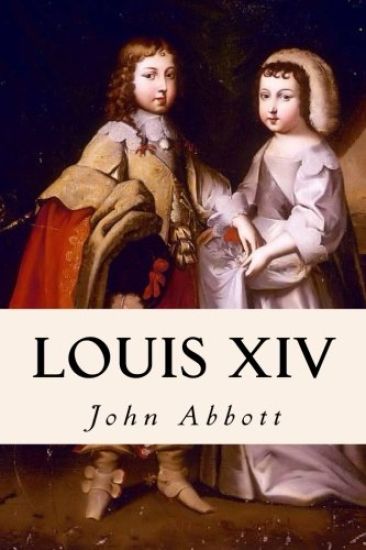
Louis XIV, by John Abbott, is a classic French history text detaling the life of King Louis XIV. We all live a double life: the external life which the world sees, and the internal life of hopes and fears, joys and griefs, temptations and sins, which the world sees not, and of which it knows but little. None lead this double life more emphatically than those who are seated upon thrones. Louis XIV (5 September 1638 - 1 September 1715), known as Louis the God-Given (Louis Dieudonn ), Louis the Great (Louis le Grand) or the Sun King (Roi Soleil), was a monarch of the House of Bourbon who reigned as King of France from 1643 until his death in 1715. Starting at the age of 4, his reign of 72 years and 110 days is the longest recorded of any monarch of a sovereign country in European history. 1] 2] In the age of absolutism in Europe, Louis XIV's France was a leader in the growing centralization of power. 3] Louis began his personal rule of France in 1661, after the death of his chief minister, the Italian Cardinal Mazarin. 4] An adherent of the concept of the divine right of kings, which advocates the divine origin of monarchical rule, Louis continued his predecessors' work of creating a centralized state governed from the capital. He sought to eliminate the remnants of feudalism persisting in parts of France and, by compelling many members of the nobility to inhabit his lavish Palace of Versailles, succeeded in pacifying the aristocracy, many members of which had participated in the Fronde rebellion during Louis' minority. By these means he became one of the most powerful French monarchs and consolidated a system of absolute monarchical rule in France that endured until the French Revolution. Louis encouraged and benefited from the work of prominent political, military, and cultural figures such as Mazarin, Colbert, Louvois, the Grand Cond , Turenne, and S bastien Le Prestre de Vauban, as well as Andr Charles Boulle, Moli re, Racine, Boileau, La Fontaine, Lully, Marais, Le Brun, Rigaud, Bossuet, Le Vau, Mansart, Charles and Claude Perrault, and Le N tre. Under his rule, the Edict of Nantes, which granted rights to Huguenots, was abolished. The revocation effectively forced Huguenots to emigrate or convert in a wave of dragonnades, which managed to virtually destroy the French Protestant minority. During Louis' reign, France was the leading European power, and it fought three major wars: the Franco-Dutch War, the War of the League of Augsburg, and the War of the Spanish Succession. There were also two lesser conflicts: the War of Devolution and the War of the Reunions. Warfare defined the foreign policy of Louis XIV, and his personality shaped his approach. Impelled "by a mix of commerce, revenge, and pique", Louis sensed that warfare was the ideal way to enhance his glory. In peacetime he concentrated on preparing for the next war. He taught his diplomats that their job was to create tactical and strategic advantages for the French military.
Madame Roland (17 March 1754 - 8 November 1793), was, together with her husband Jean-Marie Roland de la Plati re, a supporter of the French Revolution and influential member of the Girondist faction. She fell out of favour during the Reign of Terror and died on the guillotine. The history of Madame Roland embraces the most interesting events of the French Revolution, that most instructive tragedy which time has yet enacted. There is, perhaps, contained in the memoirs of no other woman so much to invigorate the mind with the desire for high intellectual culture, and so much to animate the spirit heroically to meet all the ills of this eventful life. Madame Roland, born Marie-Jeanne Phlippon, the sole surviving child of eight pregnancies, was born to Gratien Phlippon and Madame Phlippon in March 1754. From her early years she was a successful, enthusiastic, and talented student. In her youth she studied literature, music and drawing. From the beginning she was strong willed and frequently challenged her father and instructors as she progressed through an advanced, well-rounded education. Enthusiastically supporting her education, Jeanne's parents enrolled her in the convent school of the Sisterhood of the Congregation in Paris - for one year only. She was enthusiastically religious, leading John Abbott to state "God thus became in Jane's mind a vision of poetic beauty".Following her convent school education, she pursued her education independently, Abbott relating that "Heraldry and books of romance, lives of the saints and fairy legends, biography, travels, history, political philosophy, poetry, and treatises upon morals, were all read and meditated upon by this young child". 2] Several literary figures influenced Roland's philosophy, including Voltaire, Montesquieu, Plutarch, and others. Most significantly, Rousseau's literature strongly influenced Roland's understanding of feminine virtue and political philosophy, and she came to understand a woman's genius as residing in Rousseau's definition of feminine virtue as "a pleasurable loss of self-control", which for Roland meant the courage of maternal self-sacrifice and suffering. Manon Phlippon (as her close friends and relatives called her) also, as she traveled, developed an increasing awareness of the outside world. In 1774, on a trip to Versailles, some of her most famous letters were sent to her friend Sophie Cannet, wherein she first begins to display an interest in politics, describing admiringly (if not presciently) the enthronement of Louis XVI and his queen Marie Antoinette fifteen years before the start of the French Revolution: The ministers are enlightened and well disposed, the young prince docile and eager for good, the queen amiable and beneficent, the court kind and respectable, the legislative body honourable, the people obedient, wishing only to love their master, the kingdom full of resources. Ah but we are going to be happy