Kirjojen hintavertailu. Mukana 12 390 323 kirjaa ja 12 kauppaa.

Kirjahaku

Etsi kirjoja tekijän nimen, kirjan nimen tai ISBN:n perusteella.

1000 tulosta hakusanalla John Adam

Papers of John Adams

Papers of John Adams

John Adams

Harvard University Press
2020
sidottu
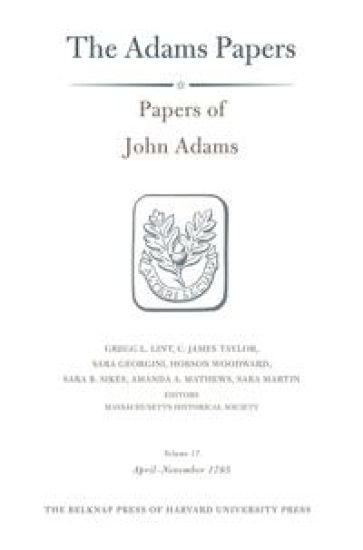
John Adams’s shaping of the vice presidency dominates this volume of the Papers of John Adams, which chronicles a formative era in American government spanning June 1789 to February 1791. As the first federal Congress struggled to interpret the US Constitution and implement a new economic framework, Adams held fast to federalist principles and staked out boundaries for his executive powers. Meeting in New York City, Adams and his colleagues warred over how to collect revenue and where to locate the federal seat. They established and staffed the departments of state, treasury, and war. Adams focused on presiding over the Senate, where he broke several ties. Enduring the daily grind of politics, he lauded the “National Spirit” of his fellow citizens and pledged to continue laboring for the needs of the American people. “If I did not love them now, I would not Serve them another hour—for I very well know that Vexation and Chagrine, must be my Portion, every moment I shall continue in public Life,” Adams wrote. He plunged back into writing, using his Discourses on Davila to synthesize national progress with republican history. Whether or not the union would hold, as regional interests impeded congressional action, remained Adams’s chief concern. “There is every Evidence of good Intentions on all sides but there are too many Symptoms of old Colonial Habits: and too few, of great national Views,” he observed. Once again, John Adams’s frank letters reveal firsthand the labor of nation-building in an age of constitutions.
Papers of John Adams

Papers of John Adams

John Adams

HARVARD UNIVERSITY PRESS
2022
sidottu
Vice President John Adams and the US government faced a turbulent world of rebellion in this volume of the Papers of John Adams, which chronicles the period from March 1791 to January 1797. The grim shadow of the French Revolution and the whirlwind of a massive European war left political leaders like Adams struggling to uphold the young nation’s neutrality. “I Suffer inexpressible Pains, from the bloody feats of War and Still more from those of Party Passions,” he observed. With the federal system newly in place, fresh challenges crept in on all sides. Adams and his colleagues sought to bolster the government against the effects of the Whiskey Rebellion, a seething partisan press, a brutal yellow fever epidemic in Philadelphia, and violent clashes with Native peoples on the Ohio frontier. Working with George Washington and an increasingly fractious cabinet, Adams approached a set of issues that defined US foreign policy for decades to come, including the negotiation, ratification, and funding of the controversial Jay Treaty, as well as the awkward cultivation of ties with France. Revealing exchanges to Adams from son John Quincy, a junior statesman who sent rich reports from war-torn Europe, underline the family’s enduring commitment to public service. Pausing on the cusp of his presidency, John Adams amplified his lifelong dedication to sustaining democracy, amid bouts of internal and external crisis: “I am happy that it has fallen to my share to do some thing towards setting the Machine in motion,” he wrote.
Papers of John Adams

Papers of John Adams

John Adams

HARVARD UNIVERSITY PRESS
2024
sidottu
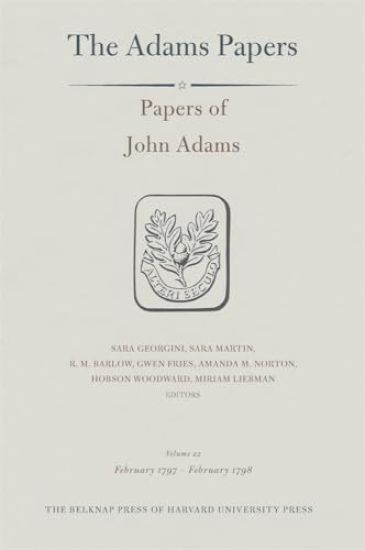
Entering the presidency in full service to the American people, John Adams vowed: “Their Confidence, which has been the Chief Consolation of my Life, is too prescious and Sacred a deposit ever to be considered lightly.” This volume of the Papers of John Adams charts the period from February 1797 to February 1798, exploring the United States’ diplomatic rupture with France and the Adams administration’s pivot toward the Quasi-War. Adams spent his first year in office struggling to uphold a form of neutrality that would shield American shipping and commerce from France’s mounting attacks. The US government labored to shift money and resources for military preparedness. “I should hold myself guilty of a neglect of Duty, if I forebore to recommend that We Should make every exertion to protect our Commerce, and to place our Country in a Suitable posture of defence,” he wrote. Adams kept careful watch over imperial tensions on the western frontiers, where Spain, France, Great Britain, Native nations, and the United States wrestled for local control. The second president faced a resurgence of yellow fever in Philadelphia, public debates in the press about his abilities, and an ambitious cabinet. From the opening moments of his inauguration to his headlong rush to heal the United States’ relations with France, this volume reveals how John Adams evolved the American presidency.
Legal Papers of John Adams

Legal Papers of John Adams

John Adams

Harvard University Press
1965
sidottu
Like many another statesman, John Adams entered the political arena by way of the legal profession. Here, gathered together in three volumes, is an inclusive presentation of the important legal cases in which he was involved. Student notes and Commonplace Book, which show the influences on the young law student in 1758 and 1759 are followed by Adams' Pleadings Book, a collection of forms providing a cross-section of the law in eighteenth-century Massachusetts and showing his work as teacher as well as student.The sixty-four cases documented are divided into sixteen legal categories such as Torts, Property, Domestic Relations, Town Government, Conservation, Religion, Slavery, and Admiralty. They are preceded by editorial headnotes which discuss the background, significance, and importance of each category and case. Careful and thorough footnotes explain textual and legal problems; a register of John Adams' contemporaries furnishes sketches of his colleagues on the bench and bar; and an exhaustive chronology records his growing practice. But the bulk of the material consists of Adams' own notes and minutes, supplemented by court records, letters, depositions of witnesses, and the minutes of other lawyers, as well as extracts from Adams' correspondence and diary to make the record of each case as full as possible. Many of the cases concern events, personalities, and legal struggles directly related to the American Revolution.The entire third volume of this imposing collection is devoted to the so-called "Boston Massacre." Confronted by a fascinating mass of conflicting evidence, charges and countercharges, and confused and confusing witnesses, many Americans will be surprised to discover that they must revise their notions about what actually happened on that March evening in 1770, why it did, and what ensued.These three books comprise the first segment of Series III of The Adams Papers. The William Nelson Cromwell Foundation has made possible the editing of these volumes by means of a generous grant to the Harvard Law School.
Papers of John Adams

Papers of John Adams

John Adams

The Belknap Press
2016
sidottu
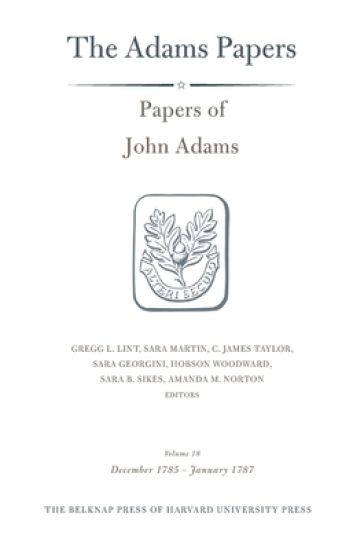
Volume 18 is the final volume of the Papers of John Adams wholly devoted to Adams’ diplomatic career. It chronicles fourteen months of his tenure as minister to Great Britain and his joint commission, with Thomas Jefferson, to negotiate treaties with Europe and North Africa. With respect to Britain, Adams found it impossible to do “any Thing Satisfactory, with this Nation,” and the volume ends with his decision to resign his posts. His diplomatic efforts, Adams thought, were too much akin to “making brick without straw.”John Adams’ ministerial efforts in London were disappointing, but other aspects of his life were not. He and Jefferson failed to finalize treaties with Portugal and Great Britain, but they did, through agent Thomas Barclay, conclude a treaty with Morocco. Barclay’s letters are the earliest and most evocative American accounts of that region. Adams witnessed the marriage of his daughter, Abigail 2d, to William Stephens Smith, promoted the ordination of American Episcopal bishops, and toured the English countryside, first with Thomas Jefferson and then with his family. Most significant perhaps was the publication of the first volume of Adams’ Defence of the Constitutions of Government of the United States of America. This work is often attributed to concern over Shays’ Rebellion, of which Adams knew little when he began drafting. In fact, it was Adams’ summer 1786 visit to the Netherlands that provoked his work. There, Dutch Patriot friends, involved in their own revolution, expressed interest in seeing “upon paper” his remarks “respecting Government.”
Papers of John Adams

Papers of John Adams

John Adams

The Belknap Press
2003
sidottu
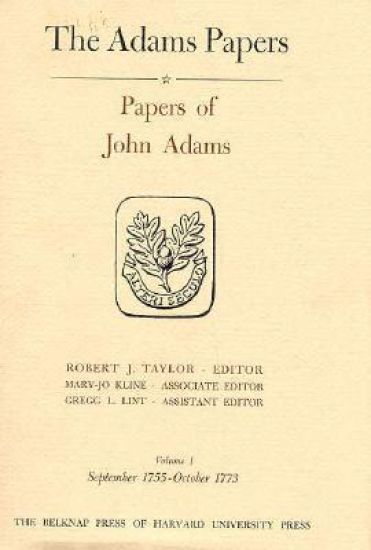
No family in three generations has contributed so much to American history as the Adamses. John Adams, John Quincy Adams, and Charles Francis Adams, despite periods of doubt, knew that history, if not their contemporaries, would recognize their accomplishments. When the Adams Papers series is complete, the writings of these three statesmen will have been examined thoroughly.Aside from the Legal Papers of John Adams, published in 1965, these two volumes are the first in Series III: General Correspondence and Other Papers of the Adams Statesmen. Volumes 1 and 2 of the Papers of John Adams include letters to and from friends and colleagues, reports of committees on which he served, his polemical writings, published and unpublished, and state papers to which he made a contribution.All of Adams’s newspaper writings, including “A Dissertation on the Canon and the Feudal Law,” are in these two volumes. In addition to being a condemnation of the Stamp Act, the “Dissertation” is shown to be one of the building blocks of the theory of a commonwealth of independent states under the king, which reaches complete statement in the Novanglus letters. For the first time, all thirteen of these letters appear in full with annotation.The period September 1755 to April 1775 covers Adams’s public service in Braintree and Boston town meetings, the Massachusetts House of Representatives, the First Continental Congress, and the First Provincial Congress of Massachusetts. During this time his political future was being shaped by circumstances not always of his choosing. He hesitated at first at the threshold of a public career, political ambition in conflict with concern for his family’s well-being. But as the confrontation with Great Britain sharpened, the crisis became acute; no choice remained. For Adams there was no shirking the path of duty.
Papers of John Adams

Papers of John Adams

John Adams

Harvard University Press
1980
sidottu
As the American colonies grew more restive, and a break with the mother country ceased to be unthinkable, John Adams was forced to spend less and less time with his beloved family. Although burdened by ever-expanding responsibilities in the Second Continental Congress, he found time for an amazing amount of correspondence. The majority of his letters were written to secure the facts that would enable this duty-ridden man to decide and act effectively on the issues being debated. Military affairs, a source of never-ending concern, provide some of the most fascinating subjects, including several accounts of the Battle of Bunker Hill, assessments of various high-ranking officers, and complaints about the behavior of the riflemen sent from three states southward to aid the Massachusetts troops.The heated question of pay for soldiers and officers strained relations between New England and southern colonies early. By refusing to confront the issue of slavery when it was raised by several correspondents, Adams sought to avoid exacerbating regional sensitivities further. When the question of independent governments for former colonies arose, at the request of several colleagues Adams sketched a model, Thoughts on Government, three versions of which are included here.His optimistic republicanism, however, was balanced by fear that a “Spirit of Commerce” would undermine the virtue requisite for republican institutions. Adams' important committee work included his draft in 1775 of rules for regulation of the Continental Navy, which have remained the basis for the governance of the United States Navy down into our own time, and his plan of treaties, which would guide American diplomats up to World War II. Both were derivative, but he skillfully adapted his materials to American needs and circumstances. These volumes reflect the spirit of those tumultuous years when the leaders emerging in America confronted each other, and exciting new ideas, as they tried to resolve the issues of a revolutionary period.
Papers of John Adams

Papers of John Adams

John Adams

The Belknap Press
1986
sidottu
These volumes document John Adams’s thinking and actions during the final years of his congressional service and take him through his first five months as a Commissioner in France in association with Benjamin Franklin and Arthur Lee.While Adams was still in Philadelphia, military matters continued to he his major concern. Most demanding was his presidency of the Board of War, which took up his “whole Time, every Morning and Evening.” In general, though, the documents and reports of his conduct reveal a commitment to a national outlook. Congress should be a national legislature, and personal, state, and regional rivalries should give way to concern for the greater good—these were his deeply held convictions.When chosen a Commissioner to France, Adams was reluctant to go. But duty and the honor of the position, along with the encouragement of an understanding and self-sacrificing wife, persuaded him to accept. With son John Quincy for a companion, he crossed the Atlantic to a new career. His initiation into the complexities of diplomacy brought a growing awareness of European affairs and the problems facing the new nation in the diplomatic arena. Letters deal with such varied topics as the supervision of American commercial agents in French ports, regulation of privateers, settlement of disputes between crews and officers, negotiation of loans, and help for American prisoners in England. Personal letters run the gamut from Adams’s views on the proper conduct of American diplomacy to strangers’ pleas for aid in locating relatives in America. Contrary to the usual impression of Adams as little more than a clerk for the Commission, evidence shows that he was its chief administrator.Acclimation to living abroad among diplomats did not stifle Adams’s yearning for the simplicities of private life in the midst of his family. Yet as the important and interesting documents of this volume show, the groundwork was being laid for his even more significant role in diplomacy.
Papers of John Adams

Papers of John Adams

John Adams

The Belknap Press
1989
sidottu
These volumes provide an unparalleled account of the conduct of American diplomacy in the early years of the republic, while the war with Britain continued and after the treaty of alliance with France was signed. John Adams served for ten months as a commissioner to France. Though he was the newest member of the three-man commission, he was its chief administrator, handling most of its correspondence, and his papers are the first full documentary record of the commission ever published. They provide a wealth of detail on every aspect of diplomacy, from negotiations with ministers of state to the arranging of prisoner exchanges.The documents throw new light on Adams’s relations with his fellow commissioners, Benjamin Franklin and Arthur Lee. Historians have depicted Adams as hostile to Franklin and supportive of Lee, but the record shows that he found himself increasingly in disagreement with Lee, while working harmoniously with Franklin from the outset. Moreover, after the commission was disbanded in February 1779 and Franklin was appointed Minister to France—a move Adams had advocated—he undertook an important mission at Franklin’s behest. It is now clear that the rift that developed between the two statesmen did not begin until after Adams’s return to Paris in 1780.Legal and constitutional scholars will find Volume 8 of particular interest. The Massachusetts Constitution of 1780, drafted by John Adams in 1779, served as a crucial source for the Constitution of the United States; today it is the oldest written constitution in the world still in effect. The earliest surviving version of Adams’s text, the Report of a Constitution for the Commonwealth of Massachusetts, is here published with full annotation for the first time. It is John Adams’s most enduring constitutional work.
Papers of John Adams

Papers of John Adams

John Adams

The Belknap Press
1996
sidottu
On the last day of December 1780, John Adams wrote that he had just spent “the most anxious and mortifying Year of my whole Life.” He had resided first at Paris, then at Amsterdam, attempting, without success, to open Anglo–American peace negotiations and to raise a Dutch loan. In volumes 9 and 10 of the Papers of John Adams, over 600 letters and documents that Adams sent to and received from numerous correspondents in Europe and America provide an unparalleled view of Adams’s diplomacy and a wealth of detail on the world in which he lived.These volumes chronicle Adams’s efforts to convince the British people and their leaders that Britain’s economic survival demanded an immediate peace; his “snarling growling” debate with the French foreign minister, the Comte de Vergennes, over the proper Franco–American relationship; and his struggle to obtain a loan in the Netherlands, where policies were dictated by Mammon rather than republican virtue. Adams’s writings, diplomatic dispatches, and personal correspondence all make clear the scope of his intelligence gathering and his propaganda efforts in the British, French, and Dutch press. The letters reflect his interest in Bordeaux wines, the fate of Massachusetts Constitution that he had drafted in 1779, and political developments in Philadelphia, Boston, London, and St. Petersburg. The volumes leave no doubt as to John Adams’s unwavering commitment to the American cause. Even in this most difficult year, he believed the revolution in America to be “the greatest that ever took Place among Men.” He felt honored to serve a new nation where “the Wisdom and not the Man is attended to,” whose citizens were fighting a “People’s War” from which the United States would inevitably emerge victorious to take its rightful place on the world stage.
Papers of John Adams

Papers of John Adams

John Adams

The Belknap Press
2014
sidottu
"You may well Suppose that I was the Focus of all Eyes," John Adams wrote on 2 June 1785 of his first audience with George III, which formally inaugurated the post of American minister to Great Britain. Eager to restore "the old good Nature and the old good Humour" between the two nations, Adams spent the following months establishing the U.S. legation at No. 8 Grosvenor Square. For Adams, it was a period of multiple responsibilities and mixed success. He remained minister to the Netherlands and one of the joint commissioners charged with negotiating commercial treaties with the nations of Europe and North Africa--sensitive duties that occasionally called for Adams to encode his correspondence with the aid of his new secretary and future son-in-law, Col. William Stephens Smith.Rebuffed by the British ministry in his mission to enforce the peace treaty of 1783 and renew Anglo-American commerce, Adams identified and achieved other goals. He preserved American credit despite the bankruptcy of a Dutch banking house that handled U.S. loans, petitioned for the release of impressed sailors, marked the ratification of the Prussian-American treaty, championed the needs of the American Episcopal Church, and laid the groundwork for negotiations with the Barbary States. His attention was not confined solely to foreign affairs. John Adams's letters from London, laced with his trademark candor, demonstrate his ripening Federalist view of the new American government's vulnerability and promise.
Papers of John Adams

Papers of John Adams

John Adams

The Belknap Press
2018
sidottu
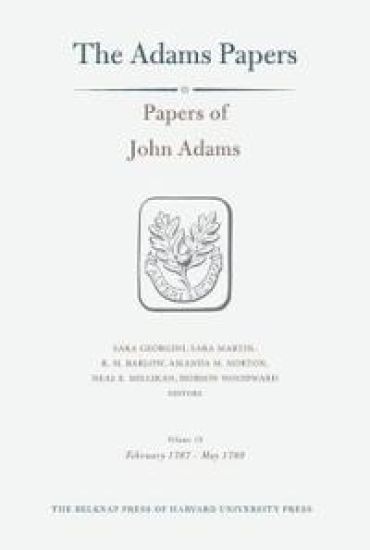
“Huzza for the new World and farewell to the Old One,” John Adams wrote in late 1787, wrapping up a decade’s worth of diplomatic service in Europe. Volume 19 of the Papers of John Adams chronicles Adams’s last duties in London and The Hague. In the twenty-eight months documented here, he petitioned the British ministry to halt impressment of American sailors, toured the English countryside, and observed parliamentary politics. Adams salvaged U.S. credit by contracting two new Dutch loans amid the political chaos triggered by William V’s resurgence. Correspondents like Thomas Jefferson and the Marquis de Lafayette mulled over the Anglo–American trade war that followed the Revolution and reported on the French Assembly of Notables—topics that Adams commented on with trademark candor. He wrote the final two volumes of his work, A Defence of the Constitutions of Government of the United States of America.Adams yearned to return home and see the American republic take shape. “For a Man who has been thirty Years rolling like a stone,” Adams wrote, the choice was whether to “set down in private Life to his Plough; or push into turbulent scenes of Sedition and Tumult; whether be sent to Congress, or a Convention or God knows what.” Back on his native soil of Massachusetts in June 1788, Adams settled into rural retirement with wife Abigail and watched the U.S. Constitution’s ratification evolve. By volume’s end, John Adams again resumes public life, ready to serve as America’s first vice president.
Diary and Autobiography of John Adams

Diary and Autobiography of John Adams

John Adams

Harvard University Press
1961
sidottu
John Adams' Diary, partially published in the 1850's, has proved a quarry of information on the rise of Revolutionary resistance in New England, the debates in the early Continental Congresses, and the diplomacy and financing of the American Revolution; but it has remained unfamiliar to the wider public. "It is an American classic," Zoltán Haraszti said recently, "about which Americans know next to nothing." Yet the Diary’s historical value may well prove secondary to its literary and human interest. Now that it is presented in full, we have for the first time a proper basis for comprehending John Adams—an extraordinary human being, a master of robust, idiomatic language, a diarist in the great tradition.The Autobiography, intended for John Adams' family, consists of three large sections. The first records his boyhood, his legal and political career, and the movement that culminated in American independence. The second and third parts deal with his diplomatic experiences, and serve among other things as a retrospective commentary on the Diary; they are studded with sketches of Adams' associates, which are as scintillating as they are prejudiced, parts and in some cases all of which were omitted from Charles Francis Adams' 19th-century edition.
Diary and Autobiography of John Adams

Diary and Autobiography of John Adams

John Adams

Harvard University Press
1961
sidottu
John Adams’s Diary, partially published in the 1850s, has proved a quarry of information on the rise of Revolutionary resistance in New England, the debates in the early Continental Congresses, and the diplomacy and financing of the American Revolution; but it has remained unfamiliar to the wider public. “It is an American classic,” Zoltán Haraszti said recently, “about which Americans know next to nothing.” Yet the Diary’s historical value may well prove secondary to its literary and human interest. Now that it is presented in full, we have for the first time a proper basis for comprehending John Adams—an extraordinary human being, a master of robust, idiomatic language, a diarist in the great tradition.The Autobiography, intended for John Adams’s family, consists of three large sections. The first records his boyhood, his legal and political career, and the movement that culminated in American independence. The second and third parts deal with his diplomatic experiences, and serve among other things as a retrospective commentary on the Diary; they are studded with sketches of Adams’s associates, which are as scintillating as they are prejudiced, parts and in some cases all of which were omitted from Charles Francis Adams’s nineteenth-century edition.
Diary and Autobiography of John Adams

Diary and Autobiography of John Adams

John Adams

Harvard University Press
1961
sidottu
John Adams’s Diary, partially published in the 1850s, has proved a quarry of information on the rise of Revolutionary resistance in New England, the debates in the early Continental Congresses, and the diplomacy and financing of the American Revolution; but it has remained unfamiliar to the wider public. “It is an American classic,” Zoltán Haraszti said recently, “about which Americans know next to nothing.” Yet the Diary’s historical value may well prove secondary to its literary and human interest. Now that it is presented in full, we have for the first time a proper basis for comprehending John Adams—an extraordinary human being, a master of robust, idiomatic language, a diarist in the great tradition.The Autobiography, intended for John Adams’s family, consists of three large sections. The first records his boyhood, his legal and political career, and the movement that culminated in American independence. The second and third parts deal with his diplomatic experiences, and serve among other things as a retrospective commentary on the Diary; they are studded with sketches of Adams’ associates, which are as scintillating as they are prejudiced, parts and in some cases all of which were omitted from Charles Francis Adams’s nineteenth-century edition.
Diary and Autobiography of John Adams

Diary and Autobiography of John Adams

John Adams

Harvard University Press
1961
sidottu
John Adams’s Diary, partially published in the 1850s, has proved a quarry of information on the rise of Revolutionary resistance in New England, the debates in the early Continental Congresses, and the diplomacy and financing of the American Revolution; but it has remained unfamiliar to the wider public. “It is an American classic,” Zoltán Haraszti said recently, “about which Americans know next to nothing.” Yet the Diary’s historical value may well prove secondary to its literary and human interest. Now that it is presented in full, we have for the first time a proper basis for comprehending John Adams—an extraordinary human being, a master of robust, idiomatic language, a diarist in the great tradition.The Autobiography, intended for John Adams’s family, consists of three large sections. The first records his boyhood, his legal and political career, and the movement that culminated in American independence. The second and third parts deal with his diplomatic experiences, and serve among other things as a retrospective commentary on the Diary; they are studded with sketches of Adams’s associates, which are as scintillating as they are prejudiced, parts and in some cases all of which were omitted from Charles Francis Adams’s nineteenth-century edition.
John Adams: Young Revolutionary

John Adams: Young Revolutionary

Jan Adkins

Aladdin Paperbacks
2002
nidottu
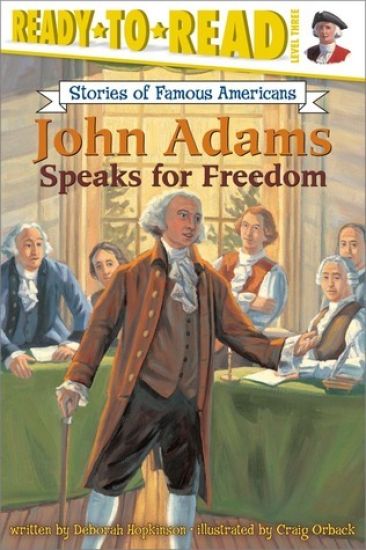
Dear Reader: The Childhood of Famous Americans series, seventy years old in 2002, chronicles the early years of famous American men and women in an accessible manner. Each book is faithful in spirit to the values and experiences that influenced the person s development. History is fleshed out with fictionalized details, and conversations have been added to make the stories come alive to today s reader, but every reasonable effort has been made to make the stories consistent with the events, ethics, and character of their subjects. These books reaffirm the importance of our American heritage. We hope you learn to love the heroes and heroines who helped shape this great country. And by doing so, we hope you also develop a lasting love for the nation that gave them the opportunity to make their dreams come true. It will do the same for you. Happy Reading The Editors
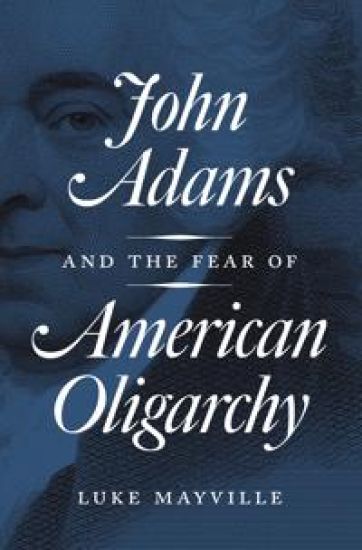
John Adams and the Fear of American Oligarchy

John Adams and the Fear of American Oligarchy

Luke Mayville

PRINCETON UNIVERSITY PRESS
2016
sidottu
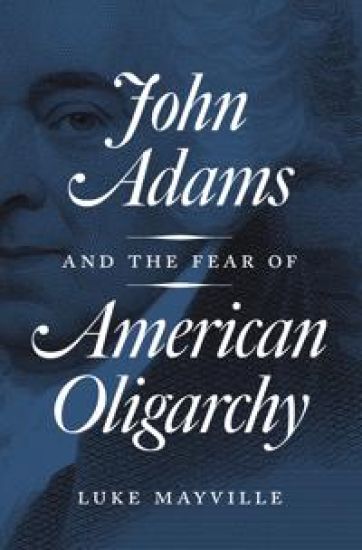
Long before "the one percent" became a protest slogan, American founding father John Adams feared the power of a class he called simply "the few"--the wellborn, the beautiful, and especially the rich. In John Adams and the Fear of American Oligarchy, Luke Mayville presents the first extended exploration of Adams's preoccupation with a problem that has a renewed urgency today: the way in which inequality threatens to corrode democracy and empower a small elite. By revisiting Adams's political writings, Mayville draws out the statesman's fears about the danger of oligarchy in America and his unique understanding of the political power of wealth--a surprising and largely forgotten theory that promises to illuminate today's debates about inequality and its political consequences. Adams believed that wealth is politically powerful in modern societies not merely because money buys influence, but also because citizens admire and even sympathize with the rich. He thought wealth is powerful in the same way that beauty is powerful--it distinguishes its possessor and prompts reactions of approval and veneration. Citizens vote for--and with--the rich not because, as is often said, they hope to be rich one day, but because they esteem the rich and submit to their wishes. Mayville explores Adams's theory of wealth and power in the context of his broader concern about social and economic inequality, and also examines his ideas about how oligarchy might be countered. A compelling work of intellectual history, John Adams and the Fear of American Oligarchy also has important lessons for today's world of increasing inequality.
John Adams and the Fear of American Oligarchy

John Adams and the Fear of American Oligarchy

Luke Mayville

Princeton University Press
2018
pokkari
Why American founding father John Adams feared the political power of the rich—and how his ideas illuminate today's debates about inequality and its consequencesLong before the "one percent" became a protest slogan, American founding father John Adams feared the power of a class he called simply "the few"—the wellborn, the beautiful, and especially the rich. In John Adams and the Fear of American Oligarchy, Luke Mayville explores Adams’s deep concern with the way in which inequality threatens to corrode democracy and empower a small elite. Adams believed that wealth is politically powerful not merely because money buys influence, but also because citizens admire and even identify with the rich. Mayville explores Adams’s theory of wealth and power in the context of his broader concern about social and economic disparities—reflections that promise to illuminate contemporary debates about inequality and its political consequences. He also examines Adams’s ideas about how oligarchy might be countered. A compelling work of intellectual history, John Adams and the Fear of American Oligarchy has important lessons for today’s world.