This is the 5th English edition of the only complete guidebook to the peaks of the Andes. It includes route information for all 100 of the major 6000m mountains, plus over 300 other peaks. With over 200 diagrams, 270 photos and 80 maps it also gives the best ski-mountaineering peaks in over 10 areas across 5 countries.
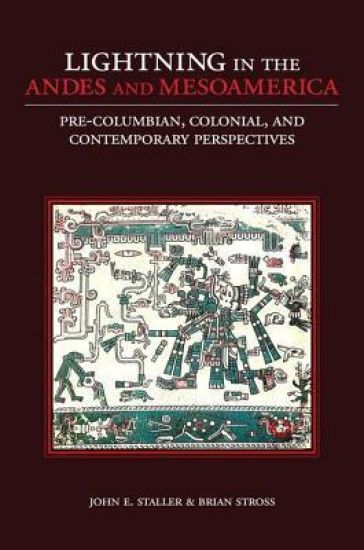
Lightning has evoked a numinous response as well as powerful timeless references and symbols among ancient religions throughout the world. Thunder and lightning have also taken on various symbolic manifestations, some representing primary deities, as in the case of Zeus and Jupiter in the Greco/Roman tradition, and Thor in Norse myth. Similarly, lightning veneration played an important role to the ancient civilizations of Mesoamerica and Andean South America. Lightning veneration and the religious cults and their associated rituals represent to varying degrees a worship of nature and the forces that shape the natural world. The inter-relatedness of the cultural and natural environment is related to what may be called a widespread cultural perception of the natural world as sacred, a kind of mythic landscape. Comparative analysis of the Andes and Mesoamerica has been a recurring theme recently in part because two of the areas of "high civilization" in the Americas have much in common despite substantial ecological differences, and in part because there is some evidence, of varying quality, that some people had migrated from one area to the other. Lightning in the Andes and Mesoamerica is the first ever study to explore the symbolic elements surrounding lightning in their associated Pre-Columbian religious ideologies. Moreover, it extends its examination to contemporary culture to reveal how cultural perceptions of the sacred, their symbolic representations and ritual practices, and architectural representations in the landscape were conjoined in the ancient past. Ethnographic accounts and ethnohistoric documents provide insights through first-hand accounts that broaden our understanding of levels of syncretism since the European contact. The interdisciplinary research presented herein also provides a basis for tracing back Pre-Columbian manifestations of lightning its associated religious beliefs and ritual practices, as well as its mythological, symbolic, iconographic, and architectural representations to earlier civilizations. This unique study will be of great interest to scholars of Pre-Columbian South and Mesoamerica, and will stimulate future comparative studies by archaeologists and anthropologists.
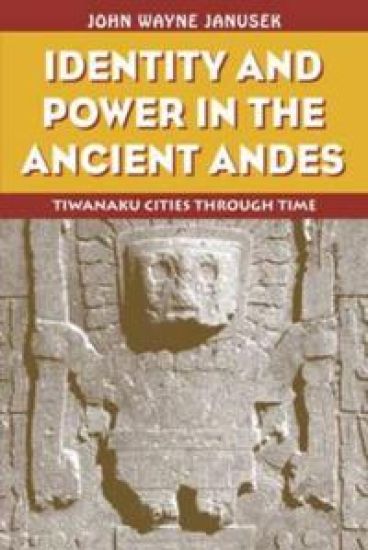
The Tiwanaku state was the political and cultural center of ancient Andean civilization for almost 700 years. Identity and Power is the result of ten years of research that has revealed significant new data. Janusek explores the origins, development, and collapse of this ancient state through the lenses of social identities--gender, ethnicity, occupation, for example--and power relations. He combines recent developments in social theory with the archaeological record to create a fascinating and theoretically informed exploration of the history of this important civilization.
The Tiwanaku state was the political and cultural center of ancient Andean civilization for almost 700 years. Identity and Power is the result of ten years of research that has revealed significant new data. Janusek explores the origins, development, and collapse of this ancient state through the lenses of social identities--gender, ethnicity, occupation, for example--and power relations. He combines recent developments in social theory with the archaeological record to create a fascinating and theoretically informed exploration of the history of this important civilization.
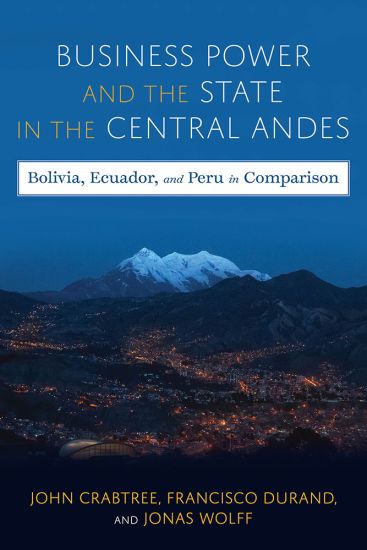
This coauthored monograph examines how business groups have interacted with state authorities in the three central Andean countries from the mid-twentieth century through the early twenty-first. This time span covers three distinct economic regimes: the period of state-led import substitutive industrialization from the 1950s through the 1970s, the neoliberalism of the 1980s and 1990s, and the post-neoliberal period since the earlier 2000s. These three countries share many similarities but also have important differences that reveal how power is manifested. Peru has had an almost unbroken hegemony of business elites who leverage their power over areas of state activity that affect them. Bolivia, by contrast, shows how strong social movements have challenged business dominance at crucial periods, reflecting a weaker elite class that is less able to exercise influence over decision-making. Ecuador falls in between these two, with business elites being more fragmented than in Peru and social movements being weaker than in Bolivia. The authors analyze the viability of these different regimes and economic models, why they change in specific circumstances, and how they affect the state and its citizen.
Now expanded and updated to reflect the most recent changes in the viva examination, this two volume series is an indispensable aid to success in the anaesthesia viva examinations and appropriate to both the Primary FRCA and the Final FRCA. This first volume covers the essentials of physiology, pharmacology, and statistics and gives the candidate a comprehensive range of possible questions and exemplary model answers to provide the perfect self-learning tool, and it is also useful as a concise reference for the established anaesthetist, being packed with up-to-date information on fundamental questions that face the anaesthetist on a daily basis.
This is the new edition of the second volume in this successful and well-known two volume series and covers physics, measurement, safety, and clinical anaesthesia. The book puts together over 200 commonly asked viva questions in these key areas as well as model short answers, supported with clear line diagrams.
This volume examines Johannine symbolism within the lens of Jesus’ relationship with the Father. After demonstrating that the Gospel narrative symbolically portrays Jesus as the Son of God who is relationally inseparable from his Father, the study shows how the Son-Father Relationship (SFR) is at the center of the network of Christological symbols in the Gospel of John. Using an innovative narrative framework, this book unveils the creative and symbolic introduction of the SFR in the Prologue (Jn. 1. 1-18), its development through the words and actions of Jesus’ teaching ministry within the Johannine narrative, and its culmination in the Prayer (Jn. 17); the SFR motif then concludes in the remainder of the Gospel. This narrative framework reveals how the SFR shapes the literary style and theological strategy of the Gospel, and acts as an integrative force by giving structure and cohesion to the Gospel’s symbolic system. Two key features presented in this book are a theory of symbolism and a network of symbols. The specially formulated ‘Theory of Johannine Symbolism’ explains the theoretical and theological underpinnings of the Gospel’s symbolic network, called ‘John’s Christological Symbology’. Through the symbolic network, the author of the Gospel fulfills the theological purpose stated in Jn. 20:31—that hearer-readers believe in Jesus the Christ, as the Son of God, and thereby experience eternal life.
This volume examines Johannine symbolism within the lens of Jesus’ relationship with the Father. After demonstrating that the Gospel narrative symbolically portrays Jesus as the Son of God who is relationally inseparable from his Father, the study shows how the Son-Father Relationship (SFR) is at the center of the network of Christological symbols in the Gospel of John. Using an innovative narrative framework, this book unveils the creative and symbolic introduction of the SFR in the Prologue (Jn. 1. 1-18), its development through the words and actions of Jesus’ teaching ministry within the Johannine narrative, and its culmination in the Prayer (Jn. 17); the SFR motif then concludes in the remainder of the Gospel. This narrative framework reveals how the SFR shapes the literary style and theological strategy of the Gospel, and acts as an integrative force by giving structure and cohesion to the Gospel’s symbolic system. Two key features presented in this book are a theory of symbolism and a network of symbols. The specially formulated ‘Theory of Johannine Symbolism’ explains the theoretical and theological underpinnings of the Gospel’s symbolic network, called ‘John’s Christological Symbology’. Through the symbolic network, the author of the Gospel fulfills the theological purpose stated in Jn. 20:31—that hearer-readers believe in Jesus the Christ, as the Son of God, and thereby experience eternal life.