Kirjojen hintavertailu. Mukana 12 363 183 kirjaa ja 12 kauppaa.

Kirjahaku

Etsi kirjoja tekijän nimen, kirjan nimen tai ISBN:n perusteella.

1000 tulosta hakusanalla John Barryman

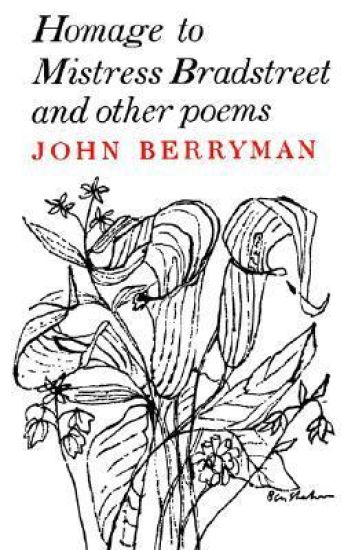
Homage to Mistress Bradstreet

Homage to Mistress Bradstreet

John Berryman

Farrar, Straus and Giroux
1956
nidottu
This volume represents the first appearance in paperback of one of America's most outstanding poets, John Berryman. It contains, besides the long title poem, Homage to Mistress Bradstreet, the major portion of Short Poems; a selection from The Dispossessed, which drew on two earlier collections; some poems from His Thought Made Pockets & The Plane Buckt; and one poem from Sonnets. "It seems to me the most distinguished long poem by an American since The Waste Land." - Edmund Wilson
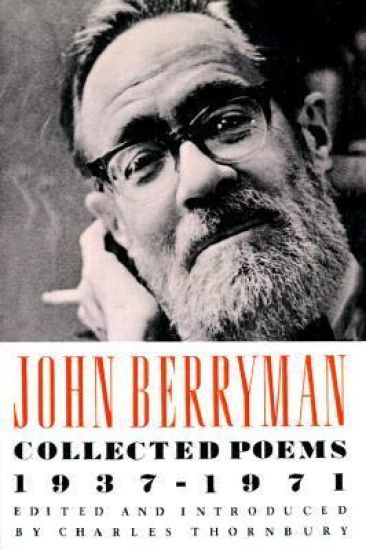
Collected Poems 1937-1971

Collected Poems 1937-1971

John Berryman

Farrar, Straus and Giroux
1991
nidottu
This volume brings together all of Berryman's poetry, except for his epic "The Dream Songs," ranging from his earliest unpublished poem (1934) to those written in the last months of his life (1972). A definitive edition of one of America's most distinguished poets.
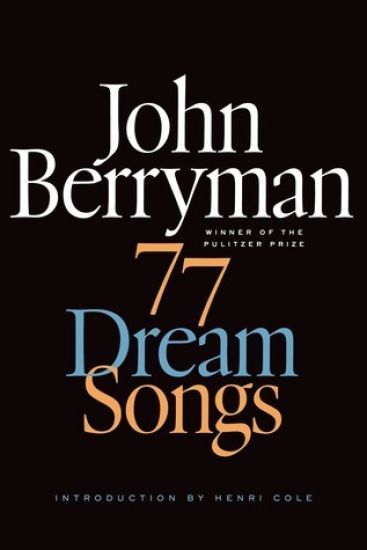
77 Dream Songs

77 Dream Songs

John Berryman

Farrar, Straus and Giroux
2014
nidottu
A wild, masterful Pulitzer Prize-winning cycle of poems that half a century later still shocks and astounds John Berryman was hardly unknown when he published 77 Dream Songs, but the volume was, nevertheless, a shock and a revelation. A "spooky" collection in the words of Robert Lowell-"a maddening work of genius." As Henri Cole notes in his elegant, perceptive introduction, Berryman had discovered "a looser style that mixed high and low dictions with a strange syntax." Berryman had also discovered his most enduring alter ego, a paranoid, passionate, depressed, drunk, irrepressible antihero named Henry or, sometimes, Mr. Bones: "We touch at certain points," Berryman claimed, of Henry, "But I am an actual human being." Henry may not be real, but he comes alive on the page. And while the most famous of the Dream Songs begins, "Life, friends, is boring," these poems never are. Henry lusts: seeing a woman "Filling her compact & delicious body / with chicken p prika" he can barely restrain himself: "only the fact of her husband & four other people / kept me from springing on her." Henry despairs: "All the world like a woolen lover / once did seem on Henry's side. / Then came a departure." Henry, afraid of his own violent urges, consoles himself: "Nobody is ever missing." 77 Dream Songs won the Pulitzer Prize in 1965, but Berryman's formal and emotional innovations-he cracks the language open, creates a new idiom in which to express eternal feelings-remain as alive and immediate today as ever.
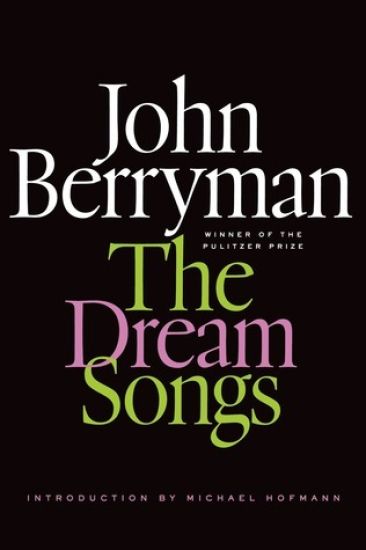
The Dream Songs

The Dream Songs

John Berryman

Farrar, Straus Giroux Inc
2014
nidottu
John Berryman's Dream Songs are perhaps the funniest, saddest, most intricately wrought cycle of poems by an American in the twentieth century. They are also, more simply, the vibrantly sketched adventures of a uniquely American antihero named Henry. Henry falls in and out of love, and is in and out of the hospital, he sings of joy and desire, and of beings at odds with the world. He is lustful; he is depressed. And while Henry is breaking down and cracking up and patching himself together again, Berryman is doing the same thing to the English language, crafting electric verses that defy grammar but resound with an intuitive truth: "if he had a hundred years," Henry despairs in "Dream Song 29," "& more, & weeping, sleepless, in all them time / Henry could not make good." This volume collects both 77 Dream Songs, which won Berryman the Pulitzer Prize in 1965, and their continuation, His Toy, His Dream, His Rest, which was awarded the National Book Award and the Bollingen Prize in 1969. The Dream Songs are witty and wild, an account of madness shot through with searing insight, winking word play, and moments of pure, soaring elation.This is a brilliantly sustained and profoundly moving performance that has not yet-and may never be-equaled.
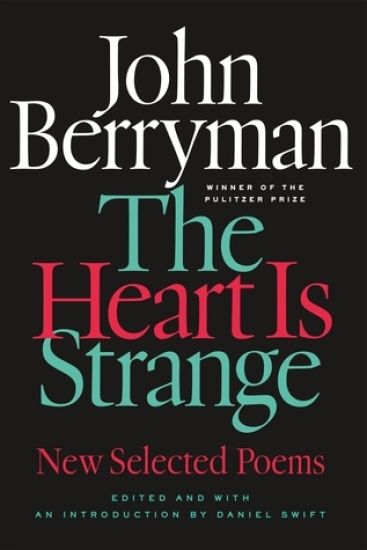
The Heart is Strange

The Heart is Strange

John Berryman

Farrar, Straus Giroux Inc
2016
nidottu
John Berryman was perhaps the most idiosyncratic American poet of the twentieth century. Known for the painfully sad and raucously funny cycle of Dream Songs, he wrote passionately of love and despair, of grief and laughter, of longing for a better world and coming to terms with this one. The hardcover publication of The Heart Is Strange, a new selection of his poems, along with reissues of Berryman's Sonnets, 77 Dream Songs, and the complete Dream Songs, marked the centenary of his birth. The Heart Is Strange includes a generous selection from across Berryman's varied career: from his earliest poems, which show him learning the craft, to his breakthrough masterpiece, "Homage to Mistress Bradstreet"; then to his mature verses, which find the poet looking back upon his lovers and youthful passions; and finally to his late poems, in which he battles with sobriety and an increasingly religious sensibility. The defiant joy and wild genius of Berryman's work has been obscured by his struggles with mental illness and alcohol, his tempestuous relationships with women, and his suicide. This volume, which includes three previously uncollected poems and an insightful introduction by the editor, Daniel Swift, celebrates the whole Berryman: tortured poet and teasing father, passionate lover and melancholy scholar. It is a perfect introduction to one of the finest bodies of work produced by an American poet.
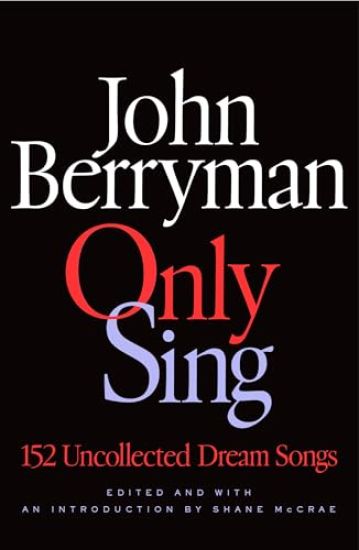
Only Sing: 152 Uncollected Dream Songs

Only Sing: 152 Uncollected Dream Songs

John Berryman

Farrar, Straus and Giroux
2025
sidottu
The never-before-published poems of one of the greatest American poets, John Berryman. John Berryman's Dream Songs are arguably the funniest, saddest, most intricately wrought cycle of poems by an American in the twentieth century. They are also, more simply, the vibrantly sketched adventures of a uniquely American antihero named Henry. Henry falls in and out of love, and is in and out of the hospital; he sings of joy and desire, and of being at odds with the world. He is lustful; he is depressed. The collected Dream Songs consists of 385 discrete poems, combining those from 77 Dream Songs, which was awarded the Pulitzer Prize for Poetry in 1965, and those from His Toy, His Dream, His Rest, which won the National Book Award for Poetry in 1969. But for Berryman, Henry lived on. Over the years, the poet wrote more than a hundred additional songs that didn't make it into the various published editions of the songs. As elucidated by Shane McCrae in the introduction to this edition, Berryman hoped that readers might slot these unpublished poems in among the rest. Only Sing, which includes both finished poems and drafts, isn't merely the scraps left on a cutting room floor; it is a continuation of the epic cycle, an additional set of poems that crack language open, an extension of Berryman's brilliant account of madness shot through with searing insight.
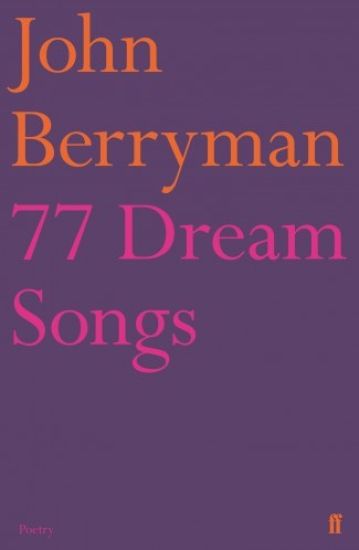
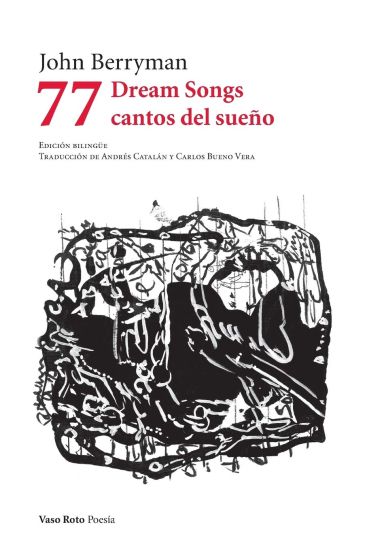
77 Dream Songs

77 Dream Songs

John Berryman

Faber Faber
2001
nidottu
Faber are pleased to announce the relaunch of the poetry list - starting in Spring 2001 and continuing, with publication dates each month, for the rest of the year. This will involve a new jacket design recalling the typographic virtues of the classic Faber poetry covers, connecting the backlist and the new titles within a single embracing cover solution. A major reissue program is scheduled, to include classic individual collections from each decade, some of which have long been unavailable: Wallace Stevens's Harmonium and Ezra Pound's Personae from the 1920s; W.H. Auden's Poems (1930); Robert Lowell's Life Studies from the 1950s; John Berryman's 77 Dream Songs and Philip Larkin's The Whitsun Weddings from the 1960s; Ted Hughes's Gaudete and Seamus Heaney's Field Work from the 1970s; Michael Hofmann's Acrimony and Douglas Dunn's Elegies from the 1980s. Timed to celebrate publication of Seamus Heaney's new collection, Electric Light, the relaunch is intended to re-emphasize the predominance of Faber Poetry, and to celebrate a series which has played a shaping role in the history of modern poetry since its inception in the 1920s.
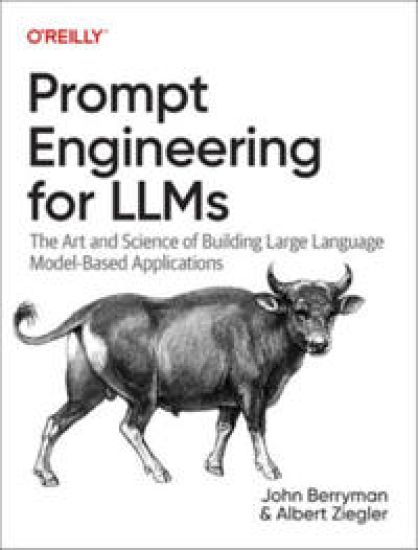
Prompt Engineering for LLMs

Prompt Engineering for LLMs

John Berryman; Albert Ziegler

O'Reilly Media
2024
pokkari
Large language models (LLMs) are revolutionizing the world, promising to automate tasks and solve complex problems. A new generation of software applications are using these models as building blocks to unlock new potential in almost every domain, but reliably accessing these capabilities requires new skills. This book will teach you the art and science of prompt engineering-the key to unlocking the true potential of LLMs.Industry experts John Berryman and Albert Ziegler share how to communicate effectively with AI, transforming your ideas into a language model-friendly format. By learning both the philosophical foundation and practical techniques, you'll be equipped with the knowledge and confidence to build the next generation of LLM-powered applications.Understand LLM architecture and learn how to best interact with it Design a complete prompt-crafting strategy for an application Gather, triage, and present context elements to make an efficient prompt Master specific prompt-crafting techniques like few-shot learning, chain-of-thought prompting, and RAG
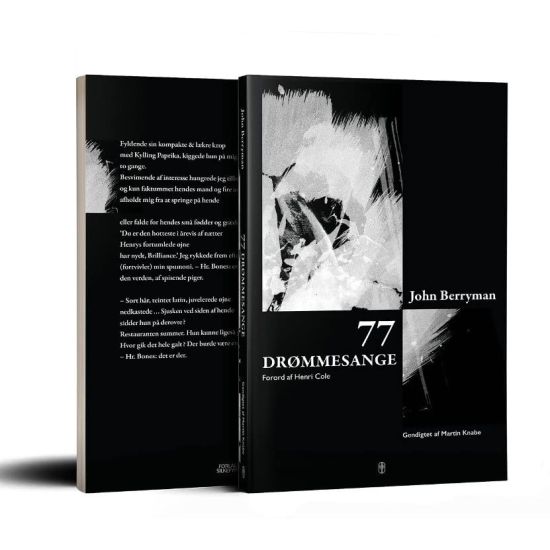
77 Drømmesange

77 Drømmesange

John Berryman

Forlaget Silkefyret
2021
nidottu
Der er ingen digter, der lyder som John Berryman lyder i hans 77 Drømmesange. Han er en undergrundsdigter, der har opfundet en ny slags digtning. I 1965, da han var halvtreds, modtog han Pulitzerprisen i poesi for sin vovede samling, og blot syv år senere, i Minneapolis, hoppede han i døden fra Washington Avenue Bridge ned på Mississippiflodens is. Berryman tilhørte den nye generation af digtere, der brød frem i 1940’erne, som inkluderede Robert Lowell, Sylvia Plath, Theodore Roethke og Delmore Schwartz. Som sine forgængere, skrev han stærke, intelligente digte, men han følte sig ikke længere beslægtet med T.S. Eliots upersonlige stemme. I stedet behandlede hans digte erfaring, ofte på kanten af opløsning og sammenbrud. I 77 Drømmesange fandt Berryman en løsere stil, som blandede høje og lave stilarter med en mærkelig syntaks i en caudatus-sonet bestående af 3 6-linjede strofer.