After its publication in 1667, John Milton's Paradise Lost was celebrated throughout Europe as a supreme achievement of the human spirit. Now it is little read. To bring readers back to Milton's masterpiece, John Carey has shortened it to a third of its original length. In this fascinating reinterpretation, Carey reveals new insights about Milton's sources of inspiration, while exploring divided readings of the work's key characters. The Essential Paradise Lost presents the epic's greatest poetry, with linking passages that preserve its cosmic sweep - from the superhuman defiance of a ruined archangel to a pair of tragic lovers, bewildered to find themselves responsible for the fate of the whole human race.
The 18th century was a wealth of knowledge, exploration and rapidly growing technology and expanding record-keeping made possible by advances in the printing press. In its determination to preserve the century of revolution, Gale initiated a revolution of its own: digitization of epic proportions to preserve these invaluable works in the largest archive of its kind. Now for the first time these high-quality digital copies of original 18th century manuscripts are available in print, making them highly accessible to libraries, undergraduate students, and independent scholars.Delve into what it was like to live during the eighteenth century by reading the first-hand accounts of everyday people, including city dwellers and farmers, businessmen and bankers, artisans and merchants, artists and their patrons, politicians and their constituents. Original texts make the American, French, and Industrial revolutions vividly contemporary.++++The below data was compiled from various identification fields in the bibliographic record of this title. This data is provided as an additional tool in helping to insure edition identification: ++++British LibraryW007576Attributed to John Carey by Evans, who notes that the copyright was issued to him. List of subscribers' names, p. 1-2], 2nd count. Philadelphia]: Entered according to act of Congress, and sold by H. and P. Rice, no. 50. Market-Street, Philadelphia, 1793. 2],16p., 2leaves of plates (1folded): ill.; 12
In 1953, William Golding was a provincial schoolteacher writing books on his breaks, lunch hours and holidays. His work had been rejected by every major publisher--until an editor at Faber and Faber pulled his manuscript off the rejection pile. This was to become Lord of the Flies, a book that would sell in the millions and bring Golding worldwide recognition. Golding went on to become one of the most popular and influential British authors to have emerged since World War II. He received the Booker Prize for the novel Rites of Passage in 1980, and the Nobel Prize for Literature in 1983. Stephen King has stated that the Castle Rock in Lord of the Flies continues to inspire him, so much so that he named his entertainment company after it and has placed the Golding novel prominently in his novels Hearts in Atlantis and Cujo. Golding has been called a British Vonnegut--disheveled and darkly humorous, perverse when it would have been easier to be bitter, bitter when it would have been easier to be lazy, sometimes more disturbing than he is palatable and above all fascinating beyond measure. Yet despite the fame and acclaim, the renowned author saw himself as a monster--a reclusive depressive ruled by his fears and a man who battled alcoholism throughout his life. In addition to being a schoolteacher, Golding was a scientist, a sailor and a poet before becoming a bestselling author, and his embitterment and alienation, his family, the women in his past, along with his experiences in the war, inform his work. This is the first book to unpack the life and character of a man whose entire oeuvre dealt with the conflict between light and dark in the human soul, tracing the defects of society back to the defects of human nature itself. Drawing almost entirely on materials that have never before been made public, John Carey sheds new light on Golding. Through his exclusive access to Golding's family, Carey uses hundreds of letters, unpublished works and Golding's intimate journals to draw a revelatory and definitive portrait. An acclaimed critic, Carey enriches crucially our appreciation of the literary work of Golding, bringing us, as the best literary biographies do, back to the books. And with equal parts lyricism and driving emotion, Carey brings to light a life that is extraordinary to the point of transcendent and a writer who trusted the imagination above all things.
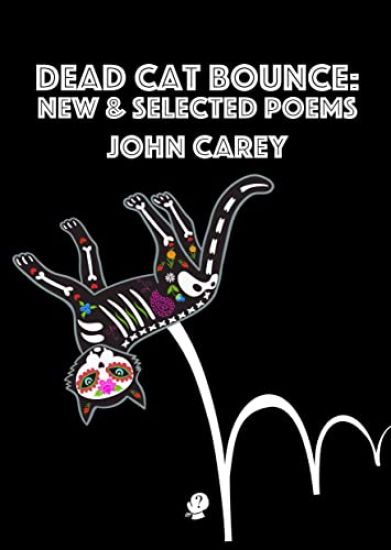
'Witty, finely crafted, genuinely funny, Carey's poems surprise with their clever double takes on society's faults and foibles. At once erudite and bitingly topical, Carey has a keen eye for the humorous detail and the deeper resonances of global stupidity. Carey shows himself adept at both the brief political quip like the Tony Abbot-inspired "Captain's Pick Haiku" or the longer reflective analysis of presidential egomania in "Another Day at the Office." I can think of very few poets with such a capacity for sustained humour and inventiveness. Underlying Carey's poems is a clear-sighted voice that registers the follies, pretensions and violence of humanity.' - Peter Boyle
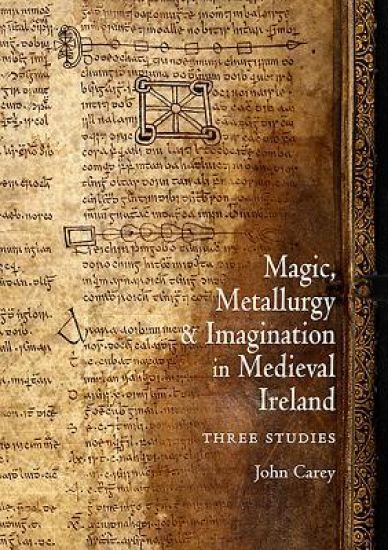
This book is a study of the rich and fascinating traditions found early Irish literature concerning smiths and the fashioning of metal. The smith had a special status within the traditional societies of early Ireland and elsewhere in the Celtic-speaking world. The figure is associated with magic and the supernatural, as well as having special legal status, and a marginal and ambiguous position within the community. John Carey is an internationally known expert on Old Irish language and literature and includes here texts and translations of magical spells, incantations, and narratives connected with smiths and their craft.
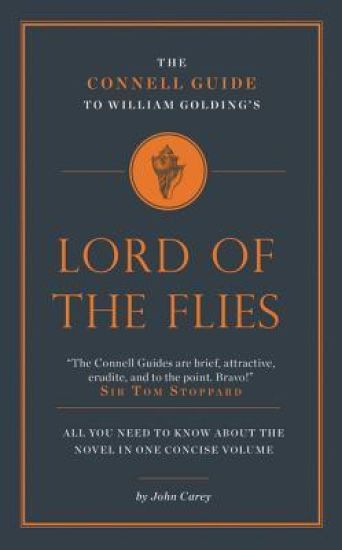
In 1954 William Golding was 43 years old and a nobody. He had been demobbed from the navy at the end of World War Two and returned to his pre-war job teaching English at Bishop Wordsworth's School in Salisbury. Always hard up, he lived in what he called a "lousy council flat" with his wife, Ann, and their two young children. In 1952 he finished the novel that was to become Lord of the Flies, and sent it to five publishers and a literary agency. They all rejected it. The sixth publisher he tried was Faber and Faber, and the professional reader wrote her opinion on the typescript: "Time the Future. Absurd & uninteresting fantasy about the explosion of an atom bomb on the Colonies. A group of children who land in jungle country near New Guinea. Rubbish & dull." But the novel was rescued from the reject pile by a new recruit to Faber, and when it was finally published in September 1954 the poet Stevie Smith greeted it as "this beautiful and desperate book". In the early 1960s cultural commentators noted that Lord of the Flies was replacing Salinger's Catcher in the Rye as the bible of the American adolescent. Its anti-war tenor helped to ensure its profound impact on the young at a time when the Cold War was hotting up. Since then, his masterpiece has established itself as a modern classic. In this short, compelling guide, John Carey tells us how and why.
John Carey possesses a wicked, intelligent sense of humour and a deft feel for the play of language. His poetry is a finely calibrated device for detecting and skewering absurtidy, cant, hypocrisy, humbug, mendacity, and institutional cruelty. Underlying the fun is the humanist's lament that we should and could be better than this. Though overshadowed by his satires, this New and Selected also contains lyrical and personal poems which are acutely affecting. - Brook EmeryJohn Carey writes a richly communal poetry, full of glimpses of the absurdity of our social lives. These poems are both playful and wise, moving from a surprising hilarity to a compassionate seriousness that re-envisions our world, until we see it with fresh eyes. Dead Cat Bounce includes all of Carey's most memorable work - poems to be savoured, shared and treasured. - Andy KissaneJohn Carey is a Sydney poet, ex-teacher of French and Latin and a former part-time actor. The latest of his five collections is Duck Soup & Swansongs (Ginninderra Press 2018)
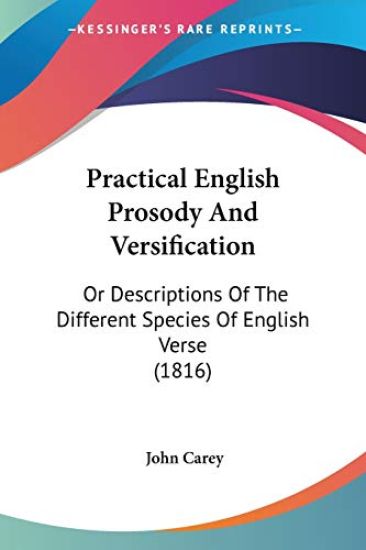
This book has been considered by academicians and scholars of great significance and value to literature. This forms a part of the knowledge base for future generations. So that the book is never forgotten we have represented this book in a print format as the same form as it was originally first published. Hence any marks or annotations seen are left intentionally to preserve its true nature.
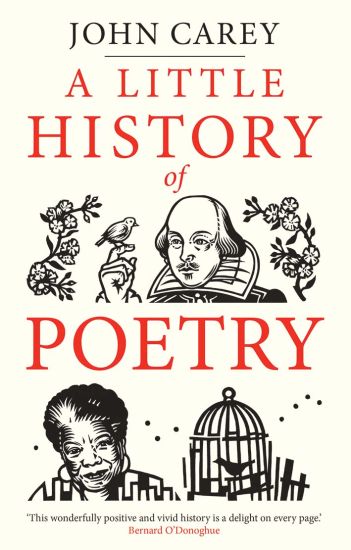
A vital, engaging, and hugely enjoyable guide to poetry, from ancient times to the present, by one of our greatest champions of literature--selected as the literature book of the year by the London Times “[A] fizzing, exhilarating book.”—Sebastian Faulks, Sunday Times, London “Delightful.’”—New York Times Book Review What is poetry? If music is sound organized in a particular way, poetry is a way of organizing language. It is language made special so that it will be remembered and valued. It does not always work—over the centuries countless thousands of poems have been forgotten. But this Little History is about some that have not. John Carey tells the stories behind the world’s greatest poems, from the oldest surviving one written nearly four thousand years ago to those being written today. Carey looks at poets whose works shape our views of the world, such as Dante, Chaucer, Shakespeare, Whitman, and Yeats. He also looks at more recent poets, like Derek Walcott, Marianne Moore, and Maya Angelou, who have started to question what makes a poem “great” in the first place. For readers both young and old, this little history shines a light for readers on the richness of the world’s poems—and the elusive quality that makes them all the more enticing.
"John Carey and Martin Elton are among the most skilled and insightful researchers studying the dynamic changes in technology and the impacts on consumer attitudes and behaviors. Their comprehensive and actionable observations make this a must read for anyone interested in understanding the current (and future) media environment."---Alan Wurtzel, President, Research and Media Development, NBC Universal"When Media Are New should be read by every media manager faced with disruptive change brought on by new technology. The book transcends the fashionable topics and themes that are here today and gone tomorrow and instead places emphasis on those areas of research and implementation where fatal mistakes are made. They capture something universal, and therefore highly useful, by stripping away the hype and focusing relentlessly on consumers and the ways they adopt or fail to adopt new media products and technologies into their lives."---Martin Nisenholtz, Senior Vice President, Digital Operations, The New York Times Company"The burgeoning development of the Internet has deflected attention from a wider history of new media innovations that has shaped its success. John Carey and Martin Elton demonstrate that earlier initiatives to launch videophones, two-way interactive cable systems, videotext and other media innovations can teach us much about the present state and future course of information and communication technologies. This is a key reference on the new media, and must reading for students of the Internet---the platform for continuing the new media revolution."---Professor William H. Dutton, Director, Oxford Internet Institute, University of OxfordThe world of communication media has undergone massive changes since the mid-1980s. Along with the extraordinary progress in technological capability, it has experienced stunning decreases in costs; a revolutionary opening up of markets (a phenomenon exemplified by but not limited to the rise of the Internet); the advent of new business models; and a striking acceleration in the rate of change. These technological, regulatory, and economic changes have attracted the attention of a large number of researchers, from industry and academe, and given rise to a substantial body of research and data. Significantly less attention has been paid to the actual and intended users of new media. When Media Are New addresses this research and publishing gap by investigating the human side of the technological changes of the last 50 years and the implications for current and future media. It will find a broad audience ranging from media scholars to policymakers to industry professionals.John Carey is Professor of Communications and Media Management at Fordham Business School and has extensive experience in conducting research about new media for companies such as AT&T, Cablevision, NBC Universal, and the New York Times (among many others) as well as foundations and government agencies. His extensive publications have focused on user adoption of new media and how consumers actually use new technologies. Martin C. J. Elton was Director of the Communication Studies Group in the UK, which pioneered in the study of user behavior with new media technologies, and founded the Interactive Telecommunication Program at New York University. He has published widely on user research, forecasting, and public policy and has conducted extensive research for many prominent foundations, companies, and government agencies in the USA and Europe.
"John Carey and Martin Elton are among the most skilled and insightful researchers studying the dynamic changes in technology and the impacts on consumer attitudes and behaviors. Their comprehensive and actionable observations make this a must read for anyone interested in understanding the current (and future) media environment."---Alan Wurtzel, President, Research and Media Development, NBC Universal"When Media Are New should be read by every media manager faced with disruptive change brought on by new technology. The book transcends the fashionable topics and themes that are here today and gone tomorrow and instead places emphasis on those areas of research and implementation where fatal mistakes are made. They capture something universal, and therefore highly useful, by stripping away the hype and focusing relentlessly on consumers and the ways they adopt or fail to adopt new media products and technologies into their lives."---Martin Nisenholtz, Senior Vice President, Digital Operations, The New York Times Company"The burgeoning development of the Internet has deflected attention from a wider history of new media innovations that has shaped its success. John Carey and Martin Elton demonstrate that earlier initiatives to launch videophones, two-way interactive cable systems, videotext and other media innovations can teach us much about the present state and future course of information and communication technologies. This is a key reference on the new media, and must reading for students of the Internet---the platform for continuing the new media revolution."---Professor William H. Dutton, Director, Oxford Internet Institute, University of OxfordThe world of communication media has undergone massive changes since the mid-1980s. Along with the extraordinary progress in technological capability, it has experienced stunning decreases in costs; a revolutionary opening up of markets (a phenomenon exemplified by but not limited to the rise of the Internet); the advent of new business models; and a striking acceleration in the rate of change. These technological, regulatory, and economic changes have attracted the attention of a large number of researchers, from industry and academe, and given rise to a substantial body of research and data. Significantly less attention has been paid to the actual and intended users of new media. When Media Are New addresses this research and publishing gap by investigating the human side of the technological changes of the last 50 years and the implications for current and future media. It will find a broad audience ranging from media scholars to policymakers to industry professionals.John Carey is Professor of Communications and Media Management at Fordham Business School and has extensive experience in conducting research about new media for companies such as AT&T, Cablevision, NBC Universal, and the New York Times (among many others) as well as foundations and government agencies. His extensive publications have focused on user adoption of new media and how consumers actually use new technologies. Martin C. J. Elton was Director of the Communication Studies Group in the UK, which pioneered in the study of user behavior with new media technologies, and founded the Interactive Telecommunication Program at New York University. He has published widely on user research, forecasting, and public policy and has conducted extensive research for many prominent foundations, companies, and government agencies in the USA and Europe.
Get started with C++ programming by learning how to build applications using its data structures and algorithmsKey FeaturesExplore data structures such as arrays, stacks, and graphs with real-world examplesStudy the trade-offs between algorithms and data structures and discover what works and what doesn'tDiscover how techniques such as bloom filters and multi-way heaps boost real-world applicationsBook DescriptionC++ is a mature multi-paradigm programming language that enables you to write high-level code with a high degree of control over the hardware. Today, significant parts of software infrastructure, including databases, browsers, multimedia frameworks, and GUI toolkits, are written in C++.This book starts by introducing C++ data structures and how to store data using linked lists, arrays, stacks, and queues. In later chapters, the book explains the basic algorithm design paradigms, such as the greedy approach and the divide-and-conquer approach, which are used to solve a large variety of computational problems. Finally, you will learn the advanced technique of dynamic programming to develop optimized implementations of several algorithms discussed in the book.By the end of this book, you will have learned how to implement standard data structures and algorithms in efficient and scalable C++ 14 code.What you will learnBuild applications using hash tables, dictionaries, and setsExplore how modern hardware affects the actual run-time performance of programsApply common algorithms such as heapsort and merge sort for string data typesUse C++ template metaprogramming to write code librariesImplement a URL shortening service using a bloom filterUse appropriate modern C++ idioms such as std:: array instead of C-style arraysWho this book is forThis book is for developers or students who want to revisit basic data structures and algorithm design techniques. Although no mathematical background is required, basic knowledge of complexity classes and Big O notation along with a qualification in an algorithms course will help you get the most out of this book. Familiarity with C++ 14 standard is assumed.