Kirjojen hintavertailu. Mukana 11 244 527 kirjaa ja 12 kauppaa.

Kirjahaku

Etsi kirjoja tekijän nimen, kirjan nimen tai ISBN:n perusteella.

1000 tulosta hakusanalla John Finlay

An Admonition to the People of all Countries. Book First. That our Saviour's Second Coming is at Hand, and the Establishment of his Kingdom on Earth; ... As Also, That Richard Brothers is the Prophet Sent by God Second Edition
The 18th century was a wealth of knowledge, exploration and rapidly growing technology and expanding record-keeping made possible by advances in the printing press. In its determination to preserve the century of revolution, Gale initiated a revolution of its own: digitization of epic proportions to preserve these invaluable works in the largest archive of its kind. Now for the first time these high-quality digital copies of original 18th century manuscripts are available in print, making them highly accessible to libraries, undergraduate students, and independent scholars.The Age of Enlightenment profoundly enriched religious and philosophical understanding and continues to influence present-day thinking. Works collected here include masterpieces by David Hume, Immanuel Kant, and Jean-Jacques Rousseau, as well as religious sermons and moral debates on the issues of the day, such as the slave trade. The Age of Reason saw conflict between Protestantism and Catholicism transformed into one between faith and logic -- a debate that continues in the twenty-first century.++++The below data was compiled from various identification fields in the bibliographic record of this title. This data is provided as an additional tool in helping to insure edition identification: ++++British LibraryT095215Edinburgh: printed for G. Ribeau, London; J. Robertson, Edinburgh; Brash and Reid, Glasgow; A. Brown, Aberdeen; E. Leslie, Dundee; T. Hill, Perth; and R. Tullis, Cupar, 1797. 71, 1]p.; 8
An Admonition to the People of all Countries. Book Second. That not Only our Saviour's Second Coming is at Hand, and the Restoration of the Hebrews Under Richard Brothers, but Also the Abolition of the Papac
The 18th century was a wealth of knowledge, exploration and rapidly growing technology and expanding record-keeping made possible by advances in the printing press. In its determination to preserve the century of revolution, Gale initiated a revolution of its own: digitization of epic proportions to preserve these invaluable works in the largest archive of its kind. Now for the first time these high-quality digital copies of original 18th century manuscripts are available in print, making them highly accessible to libraries, undergraduate students, and independent scholars.The Age of Enlightenment profoundly enriched religious and philosophical understanding and continues to influence present-day thinking. Works collected here include masterpieces by David Hume, Immanuel Kant, and Jean-Jacques Rousseau, as well as religious sermons and moral debates on the issues of the day, such as the slave trade. The Age of Reason saw conflict between Protestantism and Catholicism transformed into one between faith and logic -- a debate that continues in the twenty-first century.++++The below data was compiled from various identification fields in the bibliographic record of this title. This data is provided as an additional tool in helping to insure edition identification: ++++British LibraryT095216Edinburgh: printed for G. Ribeau, London; J. Robertson, Edinburgh; Brash and Reid, Glasgow; A. Brown, Aberdeen; E. Leslie, Dundee; T. Hill, Perth; and R. Tullis, Cupar, 1797. 84p.; 8
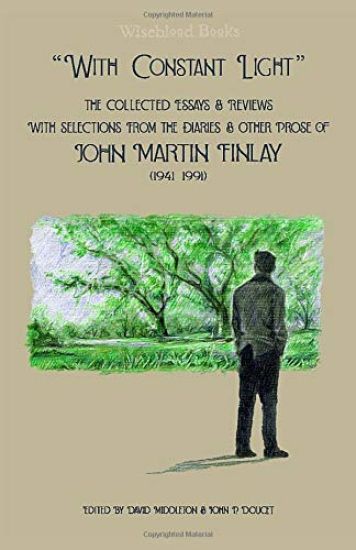
The Collected Poems of John Martin Finlay

The Collected Poems of John Martin Finlay

John Martin Finlay

Wiseblood Books
2023
sidottu
John Martin Finlay was born on January 24, 1941 in Ozark, Alabama. He died on February 17, 1991, in Dothan, Alabama. Finlay received his Ph.D. in English from Louisiana State University in Baton Rouge in 1980, the same year he converted to Roman Catholicism. This Wiseblood Books edition of Finlay's poetry and related writings is the most comprehensive edition to date, including many previously uncollected and unpublished materials.John Finlay's poems are almost all in traditional literary forms. He mainly wrote plain-style lyrics of direct statement, short narratives, and post-symbolist poems whose sensuous details exhibit controlled associationism in which definite ideas and feelings are indirectly yet logically presented. Whether plain-style, narrative, or post-symbolist, Finlay's poems are serious, simple, deep, direct, and often traumatically revealing of the human condition. The best of them are truly unforgettable.Finlay addresses such subjects as the origin of the mind, the relation of mind and matter, the mind and the irrational, the mind and God, the nature of evil, Thomistic theology, philosophical subjectivism, the inscrutability and beauty of the natural world, primitive religious rituals, and, especially in the later poems, family life in the South since the early nineteenth century, Indian life in the South, the nature of modern war, and the isolation of the serious thinker and the artist in the contemporary world.Particularly impressive are poems in which these themes are confronted by one or another of Finlay's heroes of the mind, including Odysseus, Oedipus, Solon, the exiled Ovid, a Benedictine monk, Samuel Johnson, Audubon, Henry James, or Sherlock Holmes and poems in which characters such as Narcissus, Spanish gold-hunters, Descartes, and Rimbaud suffer various forms of self-delusion which warp or destroy their moral nature. Among Finlay's most poignant and tragic figures are those who, through madness or disease, allow us to see beyond their suffering and unawareness the divinely ordained, objective moral grounding of the world. Examples of such characters are the mad women in "The Locked Wards," the shattered Confederate veteran in "The Blood of Shiloh," and the hate-filled, natural-law-denying novelist in "A Portrait of a Modern Artist."Readers who want serious poems that vividly present sensuous experience as understood by a mature mind steeped in classical and Christian tradition, yet fully aware of the problems of the contemporary world and of the perpetual threat of the primitive and the irrational, should find much here to contemplate. In their severe and uncompromising grandeur John Finlay's best poems are surely permanent additions to American literature.
The Orangeman

The Orangeman

John Henry Finlay

Palala Press
2018
pokkari
This work has been selected by scholars as being culturally important, and is part of the knowledge base of civilization as we know it. This work was reproduced from the original artifact, and remains as true to the original work as possible. Therefore, you will see the original copyright references, library stamps (as most of these works have been housed in our most important libraries around the world), and other notations in the work.This work is in the public domain in the United States of America, and possibly other nations. Within the United States, you may freely copy and distribute this work, as no entity (individual or corporate) has a copyright on the body of the work.As a reproduction of a historical artifact, this work may contain missing or blurred pages, poor pictures, errant marks, etc. Scholars believe, and we concur, that this work is important enough to be preserved, reproduced, and made generally available to the public. We appreciate your support of the preservation process, and thank you for being an important part of keeping this knowledge alive and relevant.
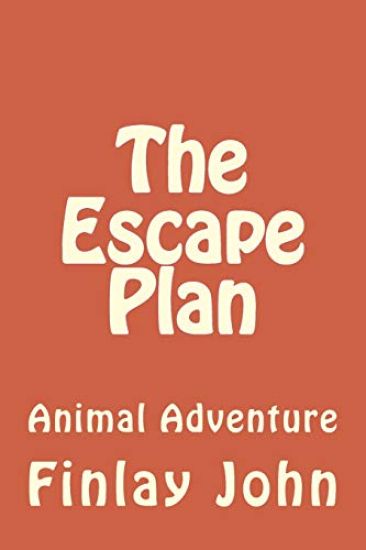
The Escape Plan

The Escape Plan

Finlay John

Createspace Independent Publishing Platform
2018
nidottu
This book is unique, but of course that can be said of every book, so let me explain. The idea of this short story came from the mind of a seven-year-old boy, who loves reading. Finlay came up with the title and the farm animal characters, and put his ideas onto a story-board to show his Mum and Dad and teacher. That was supposed to be all. Job done. It was his grandad, an amateur writer, who suggested he go one step further and turn it into a short book. The two of them sat in front of a computer and transferred the pictures and words on the story board to create a a book. All the words are Finlay's. Only a seven-year-old could imagine a chicken being able to fire hard-boiled eggs from its bottom or how Sam the bull could propel himself and his farm animal friends, around the world...by farting. The story is about three farm animals, Sam the bull, Henrietta the chicken and Martin the sheepdog, who live on a farm owned by a horrid farmer. They decide to escape and travel the world. Follow the adventures of the lovable trio as they visit Greece, India, New Zealand and Spain. This charming and endearing story will amuse and engage the reader. Only this description has been written by Grandad. The words in the book are all Finlay's
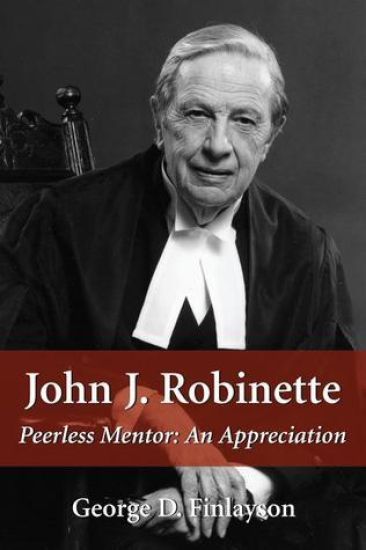
John J. Robinette

John J. Robinette

Finlayson George D.

Dundurn Group Ltd
2003
pokkari
J J Robinette, Canada's greatest trial lawyer, was admired and respected by the bench and his fellow lawyers alike. A quiet, unassuming man outside the courtroom, he was a consummate performer when appearing before a judge and jury. Robinette became a household name as the defender of Evelyn Dick, who was charged with killing her husband and infant son in Hamilton in 1946, and of Steven Suchan, a member of the infamous Boyd Gang. He was Canada's preeminent lawyer from the 1930s to the 1980s, showing unparalleled versatility and virtuosity whether acting as counsel in criminal, civil, or constitutional cases, at both the trial and appeal levels. This is the story of a great man, of the maturing of the legal profession in Canada, and of Canada in the twentieth century.
Social Credit

Social Credit

John L. Finlay

McGill-Queen's University Press
1972
sidottu
Although the fortunes of Social Credit in Canada have been well researched, a gap has existed in that no study has been made of the English origins of the movement. John L. Finlay fills that gap and also relates the movement to the wider currents of twentieth-century intellectual development. His purpose is primarily to explain the appeal of Social Credit rather than to present its history, although he certainly provides a wealth of interesting information and references for the historian. Having established the background and traced the different but overlapping critiques of orthodoxy that eventually fed into the Social Credit case, the author establishes that case, seeking to defend it against some of the unfair attacks made upon it and linking it to the personality of its founder, Major C. H. Douglas. He analyses the responses to Social Credit of well-known intellectuals, politicians, and clergymen and presents in vivid biographical sketches many of the "underground" political thinkers of whom little has hitherto been written. He suggests that a common thread of quasi anarchism has run through the movement and indicates that, far from being reactionary, the doctrine may in fact be very up to date.
Our Subversive Voice

Our Subversive Voice

John Street; Oskar Cox Jensen; Alan Finlayson; Angela McShane; Matthew Worley

MCGILL-QUEEN'S UNIVERSITY PRESS
2025
sidottu
Whether accompanying a march, a sit-in, or a confrontation with police, songs and protest are inextricably linked. As a tool for political activism, the protest song spells out the issues at the heart of each cause. Over a surprisingly long history, it has been used to spread ideas, inspire political imagination, and motivate political action.The protest song is - and has always been - a form of political oratory as vital to political representation as it is to performance. Investigating five centuries of English history, Our Subversive Voice establishes that the protest song is not merely the preserve of singer-songwriters; it is a mode of political communication that has been used to confront many systems of oppression across its many genres, from street ballads to art song, grime to hymns, and music hall to punk. Our Subversive Voice traces the history of the protest song, examines its rhetorical forms, and explores the conditions of its genesis. It recounts how these songs have addressed discrimination and inequality, exploitation and the environment, and immigration and identity, and how institutions and organizations have sought both to facilitate and to suppress them. Drawing on a large and diverse corpus of songwriters, this book argues that song does more than accompany protest: it choreographs and communicates it.The protest song, Our Subversive Voice shows, is an enduring, affecting, and effective means of expression and an essential element in understanding the drive to create political change, in the past and for the future.