There is growing popular fear over possible pesticide contamination of food and the microbiological safety of the food supply. This work explains why corporate agribusiness is a rising threat to farmers, the environment, and consumers. Ranging in subject from the politics of hunger to the new agricultural biotechnologies, the book addresses the reasons for the expansion of hunger despite the increase of world food supplies, and points the way toward organic, sustainable solutions to the problems of food supply and distribution.
There is growing popular fear over possible pesticide contamination of food and the microbiological safety of the food supply. This work explains why corporate agribusiness is a rising threat to farmers, the environment, and consumers. Ranging in subject from the politics of hunger to the new agricultural biotechnologies, the book addresses the reasons for the expansion of hunger despite the increase of world food supplies, and points the way toward organic, sustainable solutions to the problems of food supply and distribution.
Eberhard Arnold; Dietrich Bonhoeffer; Joan Chittister; Dorothy Day; Fyodor Dostoyevsky; Richard J. Foster; Jonathan Wilson-Hartgrove; David Janzen; Søren Kierkegaard; C. S. Lewis; Chiara Lubich; Thomas Merton; Henri J. M. Nouwen; John M. Perkins; Eugene H. Peterson; Christine D. Pohl; Howard A. Snyder; Mother Teresa; Saint Benedict; Jeremiah Barker; Amy Carmichael; Hans Denck; Andreas Ehrenpreis; Thomas R Kelly; Penelope Lawson; Juan Mateos; Kathleen Norris; Thomas E Powers; Peter Riedemann; Christopher C Smith; Ulrich Stadler
Fifty-two readings on living in intentional Christian community to spark group discussion.Gold Medal Winner, 2017 Illumination Book Awards, Christian LivingSilver Medal Winner, 2017 Benjamin Franklin Award in Religion, Independent Book Publishers AssociationWhy, in an age of connectivity, are our lives more isolated and fragmented than ever? And what can be done about it? The answer lies in the hands of God’s people. Increasingly, today’s Christians want to be the church, to follow Christ together in daily life. From every corner of society, they are daring to step away from the status quo and respond to Christ’s call to share their lives more fully with one another and with others. As they take the plunge, they are discovering the rich, meaningful life that Jesus has in mind for all people, and pointing the church back to its original calling: to be a gathered, united community that demonstrates the transforming love of God.Of course, such a life together with others isn’t easy. The selections in this volume are, by and large, written by practitioners—people who have pioneered life in intentional community and have discovered in the nitty-gritty of daily life what it takes to establish, nurture, and sustain a Christian community over the long haul.Whether you have just begun thinking about communal living, are already embarking on sharing life with others, or have been part of a community for many years, the pieces in this collection will encourage, challenge, and strengthen you. The book’s fifty-two chapters can be read one a week to ignite meaningful group discussion.Contributors include: John F. Alexander, Eberhard Arnold, J. Heinrich Arnold, Johann Christoph Arnold, Alden Bass, Benedict of Nursia, Christoph Friedrich Blumhardt, Leonardo Boff, Dietrich Bonhoeffer, Joan Chittister, Stephen B. Clark, Andy Crouch, Dorothy Day, Anthony de Mello, Elizabeth Dede, Catherine de Hueck Doherty, Fyodor Dostoyevsky, Jenny Duckworth, Friedrich Foerster, Richard J. Foster, Jodi Garbison, Arthur G. Gish, Helmut Gollwitzer, Adele J Gonzalez, Stanley Hauerwas, Joseph H. Hellerman, Roy Hession, David Janzen, Rufus Jones, Emmanuel Katongole, Arthur Katz, Søren Kierkegaard, C. Norman Kraus, C.S. Lewis, Gerhard Lohfink, Ed Loring, Chiara Lubich, George MacDonald, Thomas Merton, Hal Miller, José P. Miranda, Jürgen Moltmann, Charles E. Moore, Henri J. M. Nouwen, Elizabeth O’Connor, John M. Perkins, Eugene H.Peterson, Christine D. Pohl, Chris Rice, Basilea Schlink, Howard A. Snyder, Mother Teresa, Thomas à Kempis, Elton Trueblood, and Jonathan Wilson-Hartgrove.
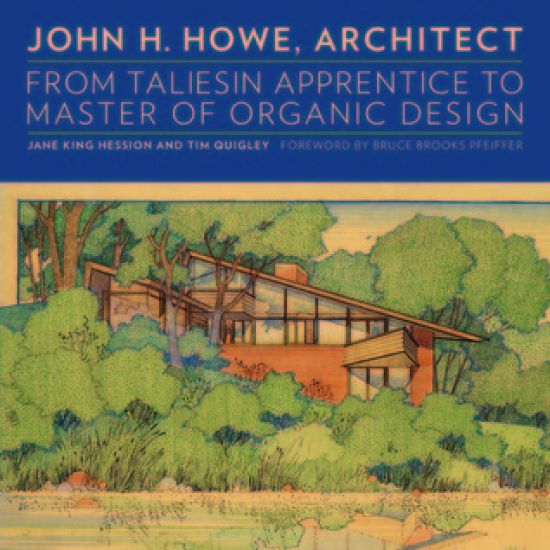
In 1932 nineteen-year-old John H. Howe arrived at Taliesin as a charter member of Frank Lloyd Wright’s Taliesin Fellowship. There he would remain for the next thirty-two years, earning a reputation as “the pencil in Wright’s hand” before establishing his own architectural practice in Minnesota. This is the first book to tell Howe’s story and also the first full account of his place in the history of modern architecture-as chief draftsman and valued interpreter of Wright’s designs and as a prolific architect in his own right. Illustrated throughout with Howe’s sublime drawings, this biography is a testament to the underappreciated architect’s extraordinary design and rendering skills.Influenced by Wright’s principles of organic architecture, Howe operated under the conviction that “the land is the beginning of architecture.” Architectural historians Jane King Hession and Tim Quigley show how this belief worked especially well for Howe in Minnesota, where his buildings appear to have grown naturally and organically from the landscape. Also remarkable are the visionary architectural schemes Howe created while serving time in prison during World War II as a conscientious objector-futuristic visions that anticipated Eero Saarinen’s later designs for airports and Victor Gruen’s for America’s first indoor shopping mall. An enlightening look at an exemplary life in architecture, this book finally brings the accomplishment-and significance-of John H. Howe to the fore and at the same time illuminates a fascinating chapter in American architectural history.
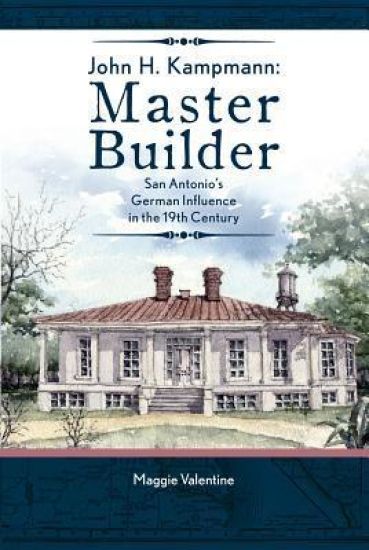
Although relatively unknown in modern day San Antonio, John H. Kampmann was an imposing force during his lifetime (1819-1885). Maggie Valentine explores the lasting legacy Kampmann had as a craftsman, builder, contractor, stonemason, construction supervisor, building designer, materials supplier, and business and civic leader for thirty-five years in San Antonio. He changed the face of the city from an adobe Spanish village to a city of stone and mortar.The book also looks at what it meant to be an architect, the business of building, and the role of immigrants. John and Caroline Bonnet Kampmann's descendants contributed much to the history of the city for generations. His client list reads like a Who's Who in 19th-century San Antonio. His work included the Menger Hotel, St. Joseph's Catholic Church, St. Mark's Episcopal Church, and the German-English School, as well as the Steves, Eagar, Halff, Groos, and Oppenheimer Houses.In addition, he ran businesses from a bank to a brewery, and served as city alderman and fire captain. This study brings to light an important chapter in the formation of the urban fabric of San Antonio and its evolution into a multicultural community. Valentine explores the built environment as it exemplified the social, political, and economic history.
John Makin experienced and wrote persuasively about many of the most important economic events of the post–Cold War period. A University of Chicago–trained economist, Makin brought to his writing the benefits of academe, domestic public- and private-sector experience, and close observation of international economic developments. An Economist’s Outlook: Essays by John H. Makin from a Transformative Era brings together some of his most important writings. They provide unique insights into economic events from 1992 to 2014, a tumultuous, transformative period beginning with the end of the Cold War. This collection begins with a look at fundamentals of economic policy, exploring concepts such as inflation, disinflation, and deflation. The second section applies Makin’s keen understanding to events in the US and abroad, with particular emphasis on Japan’s economic experience, the tech and housing bubbles, and the financial crash. Makin was an important voice on economic issues in the think tank and policy worlds. His perspective was always independent, earning him widespread respect across the political spectrum. This collection is an invaluable guide for both the beginner who wants to understand economic history, concepts, and policymaking and the seasoned expert who will appreciate Makin’s impressive range and always thoughtful perspective on a transformative economic period.
John Makin experienced and wrote persuasively about many of the most important economic events of the post–Cold War period. A University of Chicago–trained economist, Makin brought to his writing the benefits of academe, domestic public- and private-sector experience, and close observation of international economic developments. An Economist’s Outlook: Essays by John H. Makin from a Transformative Era brings together some of his most important writings. They provide unique insights into economic events from 1992 to 2014, a tumultuous, transformative period beginning with the end of the Cold War. This collection begins with a look at fundamentals of economic policy, exploring concepts such as inflation, disinflation, and deflation. The second section applies Makin’s keen understanding to events in the US and abroad, with particular emphasis on Japan’s economic experience, the tech and housing bubbles, and the financial crash. Makin was an important voice on economic issues in the think tank and policy worlds. His perspective was always independent, earning him widespread respect across the political spectrum. This collection is an invaluable guide for both the beginner who wants to understand economic history, concepts, and policymaking and the seasoned expert who will appreciate Makin’s impressive range and always thoughtful perspective on a transformative economic period.
This work has been selected by scholars as being culturally important and is part of the knowledge base of civilization as we know it.This work is in the public domain in the United States of America, and possibly other nations. Within the United States, you may freely copy and distribute this work, as no entity (individual or corporate) has a copyright on the body of the work.Scholars believe, and we concur, that this work is important enough to be preserved, reproduced, and made generally available to the public. To ensure a quality reading experience, this work has been proofread and republished using a format that seamlessly blends the original graphical elements with text in an easy-to-read typeface.We appreciate your support of the preservation process, and thank you for being an important part of keeping this knowledge alive and relevant.
Allen Tucker pays tribute to the life and legacy of John H. Twachtman, one of the most innovative American painters of the late 19th and early 20th centuries. Through detailed descriptions and beautiful reproductions of his work, Tucker provides a comprehensive overview of Twachtman's life and art.This work has been selected by scholars as being culturally important, and is part of the knowledge base of civilization as we know it.This work is in the "public domain in the United States of America, and possibly other nations. Within the United States, you may freely copy and distribute this work, as no entity (individual or corporate) has a copyright on the body of the work.Scholars believe, and we concur, that this work is important enough to be preserved, reproduced, and made generally available to the public. We appreciate your support of the preservation process, and thank you for being an important part of keeping this knowledge alive and relevant.
""John H. Glenn, Astronaut"" is a biography written by Philip N. Pierce that chronicles the life and career of John Herschel Glenn Jr., one of America's most famous astronauts. The book begins with Glenn's early life in Ohio, where he grew up during the Great Depression and developed a love of flying. It then follows his military career, including his time as a fighter pilot in World War II and the Korean War, and his transition to becoming a test pilot for the U.S. Navy and Air Force.The book also covers Glenn's selection as one of the original Mercury Seven astronauts, his historic flight as the first American to orbit the Earth in 1962, and his later political career as a senator from Ohio. Throughout the book, Pierce provides a detailed look at Glenn's personal and professional life, including his relationships with his family, fellow astronauts, and political colleagues.Overall, ""John H. Glenn, Astronaut"" offers a comprehensive and engaging portrait of one of America's most celebrated heroes, providing readers with a deeper understanding of the man behind the legend.This scarce antiquarian book is a facsimile reprint of the old original and may contain some imperfections such as library marks and notations. Because we believe this work is culturally important, we have made it available as part of our commitment for protecting, preserving, and promoting the world's literature in affordable, high quality, modern editions, that are true to their original work.