

Kirjahaku
Etsi kirjoja tekijän nimen, kirjan nimen tai ISBN:n perusteella.
1000 tulosta hakusanalla John Lane

First published in 1992. Aluminium is a relatively new material, first used on a commercial basis just over 100 years ago. Today it has taken its place alongside other traditional materials as an established building element. In this variable reference source, John Lane discusses the history and development of aluminium usage in the building industry. Its characteristics of strength, lightness and durability, coupled with easy formability, make it and ideal medium for this market. The first section of this book is a general discussion of the metal, covering such areas as its properties, alloys, fabrication, joining and finishing. The second part details the aspects of aluminium which are of particular importance in construction, while the final section highlights some of its major uses in architecture and building. The text is amply illustrated with diagrams and photographs, and the appendices provide the reader with comprehensive details of relevant standards and contact addresses.

First published in 1992. Aluminium is a relatively new material, first used on a commercial basis just over 100 years ago. Today it has taken its place alongside other traditional materials as an established building element. In this variable reference source, John Lane discusses the history and development of aluminium usage in the building industry. Its characteristics of strength, lightness and durability, coupled with easy formability, make it and ideal medium for this market. The first section of this book is a general discussion of the metal, covering such areas as its properties, alloys, fabrication, joining and finishing. The second part details the aspects of aluminium which are of particular importance in construction, while the final section highlights some of its major uses in architecture and building. The text is amply illustrated with diagrams and photographs, and the appendices provide the reader with comprehensive details of relevant standards and contact addresses.


Jimmy Buffet has his "Coconut Telegraph," but he's got nothing on nature writer John Lane, who sends his musings into the world each week in a popular newspaper column named after the ubiquitous green vine that's swallowing the South. Lane is a champion of the underdog, and what he seeks to protect is the character and the beauty of the place he lives. Lane, a much published poet and essayist, is a soldier for sustainability and a warrior for wildness. Using both wit and wisdom he takes on the environmental issues of our times, often by simply taking us on a walk through the woods or a drive up the highway. Just when he seems to write best about animals in his South Carolina Upcountry backyard-deer, tree frogs, and, yes, coyotes-he captivates us with a river adventure. He writes with as much intensity about old maps or a favorite pickup truck as he does about the socio-political issues that concern him-land use, urban planning, and conservation. These four dozen short essays, published by Community Journals in upstate South Carolina, will make you look more closely at the world around you and also, Lane hopes, will make you look ahead: to take actions, large and small, to protect the place you live.
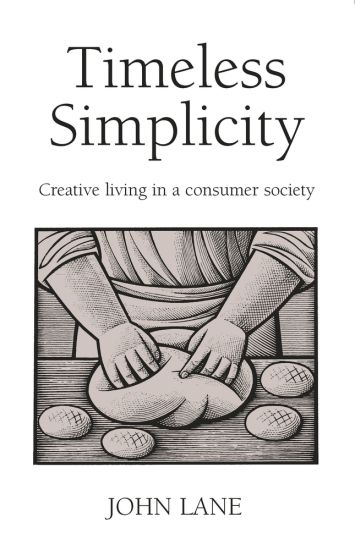
This is a book about simplicity, not destitution, not parsimoniousness, not self-denial, but the restoration of wealth in the midst of an affluence in which we are starving the spirit.

This book has been considered by academicians and scholars of great significance and value to literature. This forms a part of the knowledge base for future generations. We have represented this book in the same form as it was first published. Hence any marks seen are left intentionally to preserve its true nature.
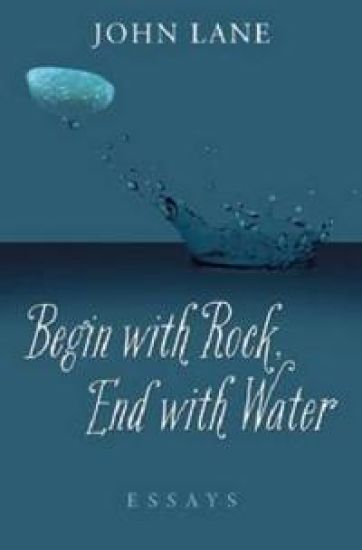
Begin with Rock, End with Water is John Lane’s third collection of essays. In this new gathering of seventeen narrative essays Lane pushes even deeper into a twenty-year lyrical consideration of his place (and the place of all of us) in the changing natural world. Though there are many themes and settings in this collection, rivers such as the Chattooga, Youghigheny, Dead, Reedy, Micos, Yuribamba, and Tallahatchie figure prominently in Lane’s understanding of place and culture.


A Defence of the Scots Highlanders, in General; And Some Learned Characters, in Particular
John Lane Buchanan
Gale Ecco, Print Editions
2010
pokkari
A Defence of the Scots Highlanders, in General; and Some Learned Characters, in Particular
John Lane Buchanan
Gale Ecco, Print Editions
2018
sidottu
The 18th century was a wealth of knowledge, exploration and rapidly growing technology and expanding record-keeping made possible by advances in the printing press. In its determination to preserve the century of revolution, Gale initiated a revolution of its own: digitization of epic proportions to preserve these invaluable works in the largest archive of its kind. Now for the first time these high-quality digital copies of original 18th century manuscripts are available in print, making them highly accessible to libraries, undergraduate students, and independent scholars.Delve into what it was like to live during the eighteenth century by reading the first-hand accounts of everyday people, including city dwellers and farmers, businessmen and bankers, artisans and merchants, artists and their patrons, politicians and their constituents. Original texts make the American, French, and Industrial revolutions vividly contemporary.++++The below data was compiled from various identification fields in the bibliographic record of this title. This data is provided as an additional tool in helping to insure edition identification: ++++British LibraryT144643With an errata slip and a final advertisement leaf.London: printed for J. Egerton; W. Stewart; and W. Richardson, 1794. vi, 2],286, 2]p.; 8
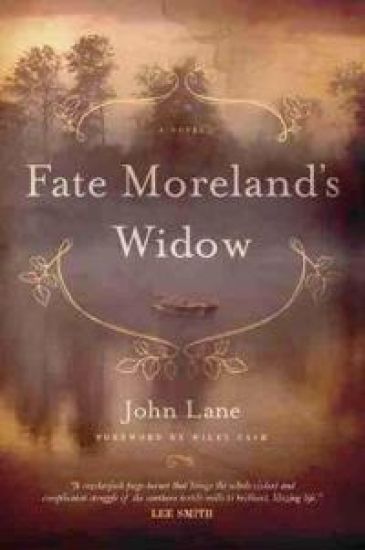
On a placid Blue Ridge mountain lake on Labor Day Weekend in 1935, three locals sightseeing in an overloaded boat drown, and the cotton mill scion who owns the lake is indicted for their murders. Decades later Ben Crocker - witness to and reluctant participant in the aftermath of this long-forgotten tragedy - is drawn once more into the morally ambiguous world of mill fortunes and foothills justice.The son of mill workers in Carlton, South Carolina, Crocker is caught between competing loyalties to his family and future. Crocker wanted more than a rough-hewn life on a factory floor, so he studied accounting at the local textile institute and was hired as bookkeeper to the owner, George McCane, a man as burdened by his familial ties as Crocker and even less prepared for the authority of his mantel.McCane’s decision to renovate the Carlton Mill and lay off families connected to the Uprising of ’34, one of the largest labor strikes in U.S. history, puts Crocker in the ill-fitting position as his boss’s enforcer. Days after the evictions, the surprise indictment lands McCane in a North Carolina mountain jail and sinks Crocker even deeper into the escalating tensions between mill workers and the owners.While traversing mountain communities in McCane’s defense, Crocker must also manage the forced renovation of the Carlton Mill, negotiate with labor organizers led by local hero Olin Campbell, collaborate with McCane’s besotted brother, Angus, and fend off his father’s and wife’s skepticism of his own social aspirations. Hanging distractingly over Crocker’s upended life is his burgeoning infatuation with Novie Moreland - the young widow of one of those McCane is accused of killing. Though unrequited, Croker’s relationship with Novie proves to be a beacon of hope amid the shadows of political and social machinations in the darkest chapter in his long life.As the union retaliates and the McCane murder trial is settled, it is uncertain who the winners and losers have been in this generational clash of workers and owners, labor and capital, those tied to the land and its people and those who exploit both. When Crocker looks back from 1988 at these two crucial years in his life in the mid-1930s, he is left to wonder if he did right by himself and those closest to him. Against all better judgment, Crocker knows he must seek out Novie Moreland once more if he is ever to find closure with the past.

Why do writers love dogs? Not always for the same reasons all the rest of us do. Dorothea Benton Frank's dog Henry teaches her about self-righteous indignation every time she leaves on a book tour. Ron Rash learns to appreciate his misanthropic mutt Pepper after he bites his daughter's suitor. For Tommy Hays the dog is something not even a psychic can separate from the family. For some writers, such as Mary Alice Monroe, a Bernese Mountain dog arrives via Swiss Air. For George Singleton, they just wander into his Pickens County yard. The connection between dogs and humans in the geographic region known as South Carolina goes back over 10,000 years. There's even a wild dog in the Lowcountry known as the Carolina Dog, whose ancestors may have accompanied the first Americans across the Bering ice bridge. In Literary Dogs & Their South Carolina Writers twenty-five of the Palmetto State's most beloved authors introduce you to their most memorable dogs. There is Padgett Powell's "Ode to Spode," Josephine Humphreys' paean to a poodle, and Roger Pinckney’s Daufuskie Dog-ageddon. Meet Marshall Chapman's Impy, Mindy Friddle's Otto, Beth Webb Hart's Bo Peep, and more. From bird dogs to bad dogs, wild dogs to café dogs, get to know these canines and their literary companions.

Travels in the Western Hebrides - From 1782 to 1790 is an unchanged, high-quality reprint of the original edition of 1793. Hansebooks is editor of the literature on different topic areas such as research and science, travel and expeditions, cooking and nutrition, medicine, and other genres. As a publisher we focus on the preservation of historical literature. Many works of historical writers and scientists are available today as antiques only. Hansebooks newly publishes these books and contributes to the preservation of literature which has become rare and historical knowledge for the future.

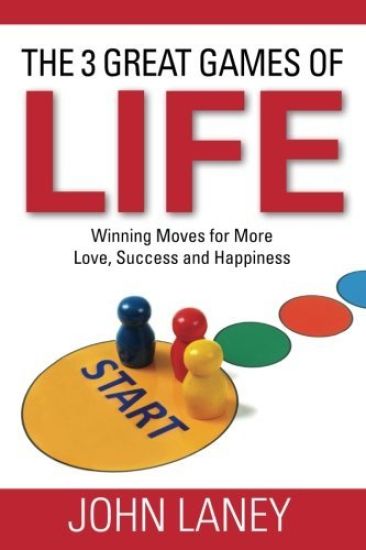
The Three Great Games of Life: Winning Moves For More Love, Success and Happiness
John Laney
Createspace Independent Publishing Platform
2012
nidottu