Kirjojen hintavertailu. Mukana 11 699 587 kirjaa ja 12 kauppaa.

Kirjahaku

Etsi kirjoja tekijän nimen, kirjan nimen tai ISBN:n perusteella.

1000 tulosta hakusanalla John Murray

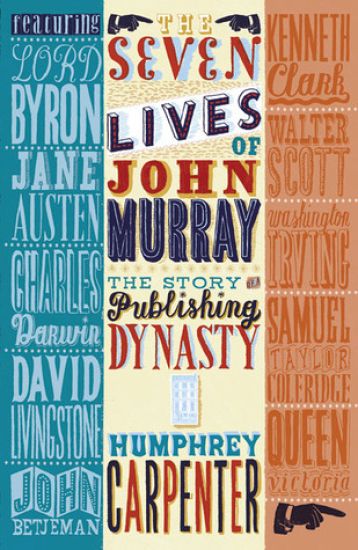
The Seven Lives of John Murray

The Seven Lives of John Murray

Humphrey Carpenter

Hodder Murray
2009
nidottu
From the burning of Byron's memoirs, Jane Austen's clipped businesslike manner, and the lucrative controversy caused by the publication of Darwin's Origin of Species, through to the discovery of the new young poet John Betjeman, the name John Murray has for more than two hundred years been synonymous with challenging, intelligent and progressive publishing. From its birth in 1768, when the first John Murray of Edinburgh came down to London, each of its seven leaders has made his own contribution to the dissemination of literature and the understanding of the world. One became Byron's publisher and confidante; another began the revolutionary series of Murray handbooks which transformed world travel in the early years of the railways; a third broke controversial new ground with the publication of Queen Victoria's letters. So the tradition progressed to the end of the twentieth century, and a list of literary giants including Patrick Leigh Fermor, Osbert Lancaster, Francoise Sagan and Poet Laureate, John Betjeman.Written in Carpenter's rollicking and iconoclastic style, it is an affectionate and vibrant account of the longest-surviving publishing house in the world.
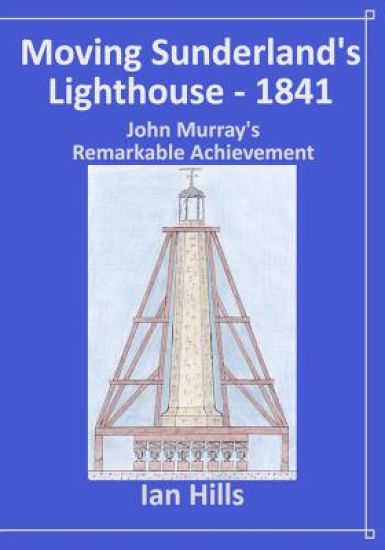
Moving Sunderland's Lighthouse: John Murray's Remarkable Achievement
In 1841, storm damage to Sunderland's old North Pier threatened to undermine the masonry lighthouse which had stood at its head since 1802. The lighthouse had to be moved and moved quickly if it was to be saved. The job was undertaken by John Murray, engineer to the River Wear Commissioners, who put forward a bold and novel plan to move the lighthouse in one piece. If simply moving a 300-ton masonry tower in one piece was not difficult enough, its route would require not only a major change in direction but negotiation of a curve and even ascent of an incline. However, this amazing effort has been almost totally forgotten. The book explains not only why saving the lighthouse was so important but shows exactly how, even with the very limited resources available 150 years ago, this remarkable feat was accomplished. Carefully illustrated with drawings to show in detail the techniques that Murray used and make them comprehensible to the reader, the book also provides an explanation of why and how these techniques were used.
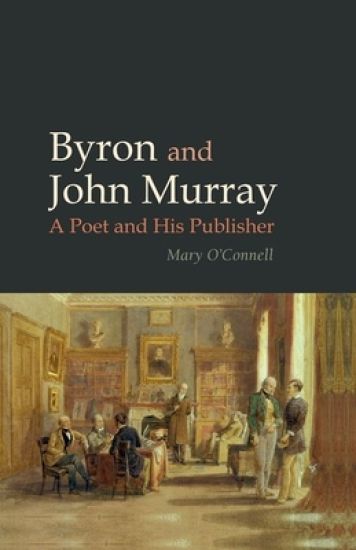
Byron and John Murray

Byron and John Murray

Mary O'Connell

Liverpool University Press
2015
sidottu
Byron and John Murray: A Poet and His Publisher is the first comprehensive account of the relationship between Byron and the man who published his poetry for over ten years. It is commonly seen as a paradox of Byron’s literary career that the liberal poet was published by a conservative publishing house. It is less of a paradox when, as this book illustrates, we see John Murray as a competitive, innovative publisher who understood how to deal with his most famous author. The book begins by charting the early years of Murray’s success prior to the publication of Childe Harold’s Pilgrimage, and describes Byron’s early engagement with the literary marketplace. The book describes in detail how Byron became one of Murray’s authors, before documenting the success of their commercial association and the eventual and protracted disintegration of their relationship. Byron wrote more letters to John Murray than anyone else and their correspondence represents a fascinating dialogue on the nature of Byron’s poetry, and particularly the nature of his fame. It is the central argument of this book that Byron’s ambivalent attitude towards professional writing and popular literature can be illuminated through an understanding of his relationship with John Murray.
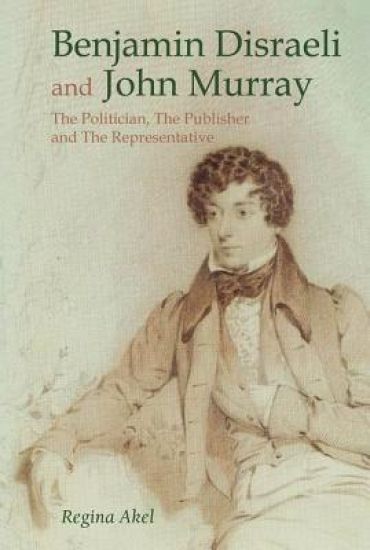
Benjamin Disraeli and John Murray: The Politician, The Publisher and The Representative
This book tells the story of an early nineteenth-century London newspaper, the Representative, more important for the people who took part in its inception than for its journalistic merits. The gallery of characters who appear in the narrative includes prominent figures of the age, literary as well as political, such as Sir Walter Scott and his son-in-law, John Gibson Lockhart; Foreign Secretary George Canning; and certainly publisher John Murray II. The pivotal figure is, however, a very young Benjamin Disraeli, whose brilliant mind already displayed great powers of observation, verbal expression and manipulation of his elders and betters. Written in a fluent style, and drawing upon previously untapped original sources at The Bodleian Library and The John Murray Archive at The National Library of Scotland, the book presents documented proof that the events narrated are quite different from what has traditionally been accepted as truth, at the same time it unveils hitherto unknown facets of well-known figures of the age.
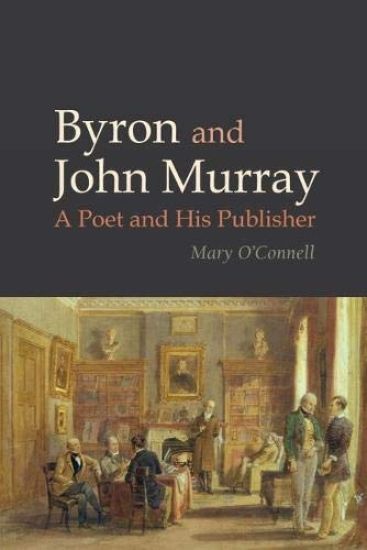
Byron and John Murray

Byron and John Murray

Mary O'Connell

Liverpool University Press
2021
nidottu
Byron and John Murray: A Poet and His Publisher is the first comprehensive account of the relationship between Byron and the man who published his poetry for over ten years. It is commonly seen as a paradox of Byron’s literary career that the liberal poet was published by a conservative publishing house. It is less of a paradox when, as this book illustrates, we see John Murray as a competitive, innovative publisher who understood how to deal with his most famous author. The book begins by charting the early years of Murray’s success prior to the publication of Childe Harold’s Pilgrimage, and describes Byron’s early engagement with the literary marketplace. The book describes in detail how Byron became one of Murray’s authors, before documenting the success of their commercial association and the eventual and protracted disintegration of their relationship. Byron wrote more letters to John Murray than anyone else and their correspondence represents a fascinating dialogue on the nature of Byron’s poetry, and particularly the nature of his fame. It is the central argument of this book that Byron’s ambivalent attitude towards professional writing and popular literature can be illuminated through an understanding of his relationship with John Murray.