John P. Marquand - American Writers 46 was first published in 1965. Minnesota Archive Editions uses digital technology to make long-unavailable books once again accessible, and are published unaltered from the original University of Minnesota Press editions.
John Potts Slough, the Union commander at the Battle of Glorieta Pass, lived a life of relentless pursuit for success that entangled him in the turbulent events of mid-nineteenth-century America. As a politician, Slough fought abolitionists in the Ohio legislature and during Kansas Territory's fourth and final constitutional convention. He organized the 1st Colorado Volunteer Infantry after the Civil War broke out, eventually leading his men against Confederate forces at the pivotal engagement at Glorieta Pass. After the war, as chief justice of the New Mexico Territorial Supreme Court, he struggled to reform corrupt courts amid the territory's corrosive Reconstruction politics.Slough was known to possess a volcanic temper and an easily wounded pride. These traits not only undermined a promising career but ultimately led to his death at the hands of an aggrieved political enemy who gunned him down in a Santa Fe saloon. Recounting Slough's timeless story of rise and fall during America's most tumultuous decades, historian Richard L. Miller brings to life this extraordinary figure.
John Potts Slough, the Union commander at the Battle of Glorieta Pass, lived a life of relentless pursuit for success that entangled him in the turbulent events of mid-nineteenth-century America. As a politician, Slough fought abolitionists in the Ohio legislature and during Kansas Territory's fourth and final constitutional convention. He organized the 1st Colorado Volunteer Infantry after the Civil War broke out, eventually leading his men against Confederate forces at the pivotal engagement at Glorieta Pass. After the war, as chief justice of the New Mexico Territorial Supreme Court, he struggled to reform corrupt courts amid the territory's corrosive Reconstruction politics.Slough was known to possess a volcanic temper and an easily wounded pride. These traits not only undermined a promising career but ultimately led to his death at the hands of an aggrieved political enemy who gunned him down in a Santa Fe saloon. Recounting Slough's timeless story of rise and fall during America's most tumultuous decades, historian Richard L. Miller brings to life this extraordinary figure.
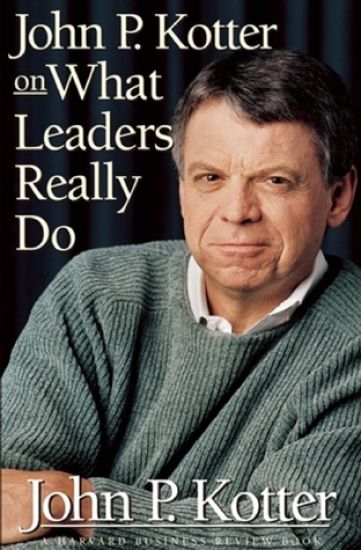
Widely acknowledged as the world's foremost authority on leadership, John Kotter has devoted his remarkable career to studying organizations and those who run them, and his bestselling books and essays have guided and inspired leaders at all levels. Here, in this collection of his acclaimed Harvard Business Review articles, is an astute assessment of the real work of leaders, as only John Kotter can offer. To complement the HBR articles, Kotter also contributes a new piece, a thoughtful reflection on the themes that have developed throughout his work. Convinced that most organizations today lack the leadership they need, Kotter's mission is to help us better understand what leaders--real leaders--do. True leadership, he reminds us, is an elusive quality, and too often we confuse management duties and personal style with leadership, or even mistake unworthy leaders for the real thing. Yet without leadership, organizations move too slowly, stagnate, and lose their way. With John Kotter on What Leaders Really Do, readers will learn how to become more effective leaders as they explore pressing issues such as power, influence, dependence, and strategies for change.
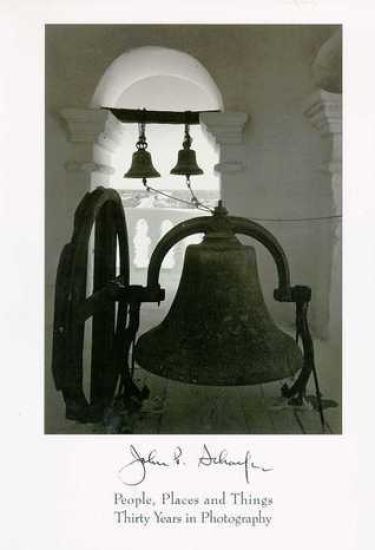
John Schaefer took up photography as a hobby thirty years ago, and has since become well recognized for his technical skill and has published exensively on photographic technique. While president of the University of Arizona from 1971 to 1982, he secured the cooperation of Ansel Adams in establishing the Center for Creative Photography. This retrospective of Schaefer's work features one hundred examples of his exquisite black-and-white photography most of them gelatin silver prints in subjects ranging from landscapes and peoples of the Southwest to images captured around the world. In studies of Mission San Xavier del Bac, details of cactus spines, and faces of Tarahumara children, appreciators of lenscraft will find ample evidence of Schaefer's sensitivity and skill."
This work has been selected by scholars as being culturally important and is part of the knowledge base of civilization as we know it.This work is in the public domain in the United States of America, and possibly other nations. Within the United States, you may freely copy and distribute this work, as no entity (individual or corporate) has a copyright on the body of the work.Scholars believe, and we concur, that this work is important enough to be preserved, reproduced, and made generally available to the public. To ensure a quality reading experience, this work has been proofread and republished using a format that seamlessly blends the original graphical elements with text in an easy-to-read typeface.We appreciate your support of the preservation process, and thank you for being an important part of keeping this knowledge alive and relevant.
This work has been selected by scholars as being culturally important and is part of the knowledge base of civilization as we know it.This work is in the public domain in the United States of America, and possibly other nations. Within the United States, you may freely copy and distribute this work, as no entity (individual or corporate) has a copyright on the body of the work.Scholars believe, and we concur, that this work is important enough to be preserved, reproduced, and made generally available to the public. To ensure a quality reading experience, this work has been proofread and republished using a format that seamlessly blends the original graphical elements with text in an easy-to-read typeface.We appreciate your support of the preservation process, and thank you for being an important part of keeping this knowledge alive and relevant.
A classic of maritime history updated with new information, John P. Holland, 1841–1914 is the sole full-length biography of the man whose technological innovations led to the launching of the first modern submarine in May 1897. While David Bushnell may be considered the father of the submarine, Holland devised the technical improvements that enabled a craft to operate equally effectively whether submerged or surfaced, and it was his design that the U.S. Navy purchased in 1900. Richard Knowles Morris draws on diaries and papers left by his grandfather, a longtime friend of Holland and an superintending engineer of the Holland Torpedo Boat Company (later Electric Boat), to trace the inventor's eventful life. Morris recounts Holland's early years, his frustration in dealing with the Fenians and the U.S. Navy, and his company's negotiations with Japan, Great Britain, and Russia for Holland boats. Of particular interest is the selection of photographs that offer an enlightening pictorial of early submarine history.
John P. McGovern held seventeen professorships, received twenty-nine honorary doctorates, and established the nation’s largest privately owned allergy and immunology clinic. He authored 252 professional publications including twenty-six books in the medical sciences and humanities, and served as president or chief elected officer of fifteen professional societies in medicine. In addition, the McGovern Foundation has given millions of dollars to various local and national health charities, and many Houston landmarks bear the McGovern name, including the McGovern Lake and McGovern Children’s Zoo (at Houston’s Hermann Park), the McGovern Health and Science Museum, and the McGovern Campus of the Texas Medical Center. Bryant Boutwell, a long-time friend and colleague, has captured the influential life of this visionary Texas physician in John P. McGovern, MD: A Lifetime of Stories . In captivating narrative, interlaced with revealing personal and family stories, Boutwell chronicles McGovern’s holistic approach to medicine, which transcended the traditional boundaries of institutional identities and medical specialties. McGovern worked tirelessly to bring together big institutions, the health professions, bold interdisciplinary ideas, and a team approach to healthcare that, though prescient at the time, is recognized today as imperative. This commitment led to his founding role in the American Osler Society, which promotes humanistic and ethical dimensions of the practice of medicine, and his establishment of humanities programs at the UT Health Science Center at Houston and the UT Medical Branch at Galveston.
Observera att förlaget som ger ut denna produkt baserar innehållet i sina produkter på fria källor som Wikipedia. Boken är med stor sannolikhet endast ett utdrag ur dessa informationskällor, alltså inte en vanlig bok i den bemärkelsen.
Observera att förlaget som ger ut denna produkt baserar innehållet i sina produkter på fria källor som Wikipedia. Boken är med stor sannolikhet endast ett utdrag ur dessa informationskällor, alltså inte en vanlig bok i den bemärkelsen.