Kirjojen hintavertailu. Mukana 11 342 296 kirjaa ja 12 kauppaa.

Kirjahaku

Etsi kirjoja tekijän nimen, kirjan nimen tai ISBN:n perusteella.

1000 tulosta hakusanalla John Schofield

London's Waterfront and Its World, 1666-1800

London's Waterfront and Its World, 1666-1800

John Schofield; Stephen Freeth

Archaeopress
2023
sidottu
London’s Waterfront and its World, 1666–1800 presents the results of archaeological excavations of 1974 to 1983 in the central waterfront area of the City of London. The archaeology of the port of London is considered on a wide scale, from the City down the Thames to Deptford. The Great Fire of London in 1666 prompted some changes to the topography of streets and buildings, but there were also many continuities in life and work. The waterfront changed during the 18th century as warehousing replaced houses. This process is illustrated by archaeological excavation, documentary study and the survival of plans of properties surveyed for land-owning institutions. The artefacts and pottery recovered from these sites include many pieces from overseas, and London’s waterfront can be compared with those of other port cities in Europe, North America and the Caribbean. Perhaps in late 17th- and 18th-century London we can study urban tastes and consumption from an archaeological viewpoint. During this period London became the hub of the new British empire, but contributed to the exploitation of people from other lands known as slavery. The waterfront on both sides of the Thames was at the centre of the new empire.
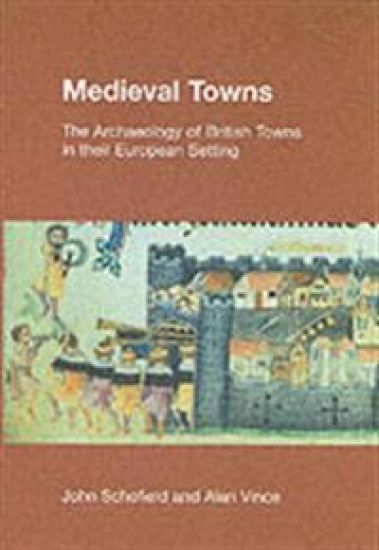
Medieval Towns

Medieval Towns

John Schofield; Alan Vince

Equinox Publishing Ltd
2005
nidottu
Archaeologists have shown that towns can claim to be more representative of the nature of society of which they formed part than any other type of site. In towns we are most likely to find archaeological evidence of both long-distance and local trade, of exploitation of natural resources, of specialization and of technological evidence in manufacturing, of social differentiation, of the means of political control, and of the religious aspirations of the population. Medieval Towns is the second and enlarged edition of the book Medieval Towns which was published in 1994 by Continuum. It surveys recent work on the archaeological study of medieval towns in Britain. Its emphasis is on the discoveries by archaeological teams, nearly always on sites to be developed or already under construction. From the vast haul of information now at our disposal, after thirty years of data gathering, we can begin to ask questions of many kinds. What went on in medieval towns? How did the rich and poor live, what nourished them, what did they die of? What was the weather like, the quality of life, the restrictions or special pleasures of living in towns?
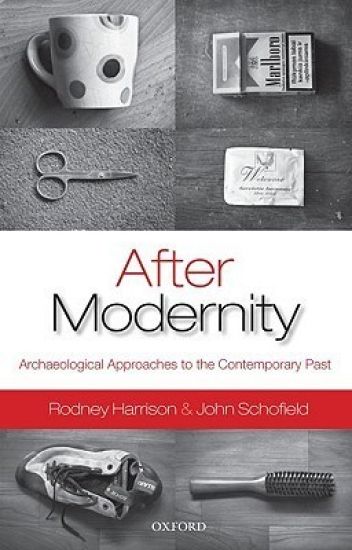
After Modernity

After Modernity

Rodney Harrison; John Schofield

Oxford University Press
2010
sidottu
This book summarizes archaeological approaches to the contemporary past, and suggests a new agenda for the archaeology of late modern societies. The principal focus is the archaeology of developed, de-industrialized societies during the second half of the twentieth century and the beginning of the twenty-first. This period encompasses the end of the Cold War and the beginning of the 'internet age', a period which sits firmly within what we would recognize to be a period of 'lived and living memory'. Rodney Harrison and John Schofield explore how archaeology can inform the study of this time period and the study of our own society through detailed case studies and an in-depth summary of the existing literature. Their book draws together cross-disciplinary perspectives on contemporary material culture studies, and develops a new agenda for the study of the materiality of late modern societies.
After Modernity

After Modernity

Rodney Harrison; John Schofield

Oxford University Press
2010
nidottu
This book summarizes archaeological approaches to the contemporary past, and suggests a new agenda for the archaeology of late modern societies. The principal focus is the archaeology of developed, de-industrialized societies during the second half of the twentieth century and the beginning of the twenty-first. This period encompasses the end of the Cold War and the beginning of the 'internet age', a period which sits firmly within what we would recognize to be a period of 'lived and living memory'. Rodney Harrison and John Schofield explore how archaeology can inform the study of this time period and the study of our own society through detailed case studies and an in-depth summary of the existing literature. Their book draws together cross-disciplinary perspectives on contemporary material culture studies, and develops a new agenda for the study of the materiality of late modern societies.
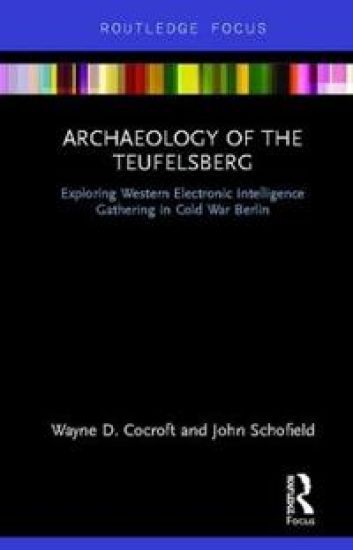
Archaeology of The Teufelsberg

Archaeology of The Teufelsberg

Wayne D Cocroft; John Schofield

Routledge
2020
nidottu
For over 50 years, the white radomes of the Teufelsberg have been one of Berlin’s most prominent landmarks. For half of this time the city lay over 100 miles behind an 'Iron Curtain' that divided East from West, and was surrounded by communist East Germany and the densest concentration of Warsaw Pact military forces in Europe. From the vantage point high on the Teufelsberg, British and American personnel constantly monitored the electronic emissions from the surrounding military forces, as well as high-level political intelligence. Today, the Teufelsberg stands as a contemporary and spectacular ruin, representing a significant relic of a lost cyber space of Cold War electronic emissions and espionage. Based on archaeological fieldwork and recently declassified documents, this book presents a new history of the Teufelsberg and other Western intelligence gathering sites in Berlin. At a time when intelligence gathering is once more under close scrutiny, when questions are being asked about the intelligence relationship between the United States and Russia, and amidst wider debate about the US’s National Security Agency (NSA) intelligence programmes, sites like the Teufelsberg raise questions that appear both important and timely.
Indigenous Concepts of Health and Healing in Andean Populations

Indigenous Concepts of Health and Healing in Andean Populations

Elizabeth Currie; John Schofield

TAYLOR FRANCIS LTD
2024
sidottu
This book uses archaeology and ethnohistory to explore the evidence for the survival of ancestral beliefs and practices related to health and healing in Indigenous Andean communities.The authors argue that through determining the nature of the survival of beliefs around health and healing, important insights are gained into how people develop adaptive strategies for survival in a way that allows a continuity of identity and integrity. The book works through various stages of research to arrive at its conclusions. Firstly, through archaeology and ethnohistory, it establishes a ‘baseline’ of key ancestral (pre-European) Indigenous Andean beliefs related to health, illness and healing. It then proceeds to review the evidence for the survival of these ancestral beliefs and practices related to Indigenous pre-European Andean epistemologies and ontologies. Analysing the results of the first two sections, the final part reflects on the narratives around ancestral beliefs and practices and how they influence lived experience in the contemporary world. In essence, this book deals with the question 'How do people manage change?', a universal question relevant to humanity at any time, and stresses the need to recognise the significance of cultural diversity, intangible heritage and plurality.This interdisciplinary study is for researchers in ethnohistory, anthropology, medical anthropology, archaeology, history, heritage and Indigenous studies.
Archaeology of The Teufelsberg

Archaeology of The Teufelsberg

Wayne D Cocroft; John Schofield

Routledge
2019
sidottu
For over 50 years, the white radomes of the Teufelsberg have been one of Berlin’s most prominent landmarks. For half of this time the city lay over 100 miles behind an 'Iron Curtain' that divided East from West, and was surrounded by communist East Germany and the densest concentration of Warsaw Pact military forces in Europe. From the vantage point high on the Teufelsberg, British and American personnel constantly monitored the electronic emissions from the surrounding military forces, as well as high-level political intelligence. Today, the Teufelsberg stands as a contemporary and spectacular ruin, representing a significant relic of a lost cyber space of Cold War electronic emissions and espionage. Based on archaeological fieldwork and recently declassified documents, this book presents a new history of the Teufelsberg and other Western intelligence gathering sites in Berlin. At a time when intelligence gathering is once more under close scrutiny, when questions are being asked about the intelligence relationship between the United States and Russia, and amidst wider debate about the US’s National Security Agency (NSA) intelligence programmes, sites like the Teufelsberg raise questions that appear both important and timely.
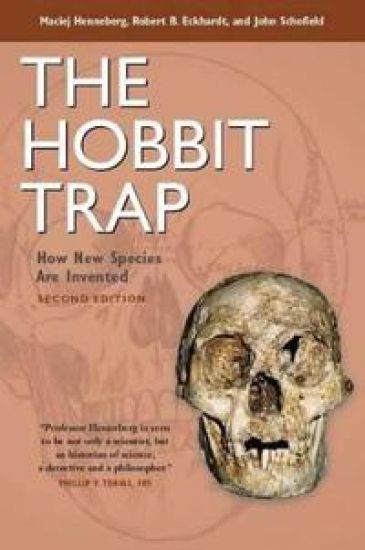
The Hobbit Trap

The Hobbit Trap

Maciej Henneberg; Robert B Eckhardt; John Schofield

Left Coast Press Inc
2010
sidottu
When scientists found the remains of a tiny hominid on an Indonesian in 2004, they claimed they found a totally new species of human ancestor (homo floresiensis), and called it a Hobbit. Film crews rolled in and the little creature took the world by storm, but a group of prominent scientists, including Maciej Henneberg and Robert Eckhardt, smelled a rat. They refuted the data—the size and shape of bones, the inferences about height—and they raised fundamental questions about scientific method, revealing cultural and political pressures that lead to the wide acceptance of unsupported theories. The Hobbit Trap describes how the case against the “new species” theory developed and offers an important critique of the species concept in evolution. In this thoroughly updated second edition, the authors include new data and analysis of the Flores fossils, and expand their important analysis of scientific practice, calling for a new movement to reverse the decline in scientific standards and the rise in scientific politics. This lively and important challenge to conventional wisdom is accessible to the general reader and makes a stimulating addition to courses on the history and philosophy of science, evolution and physical anthropology.
The Hobbit Trap

The Hobbit Trap

Maciej Henneberg; Robert B Eckhardt; John Schofield

Left Coast Press Inc
2010
nidottu
When scientists found the remains of a tiny hominid on an Indonesian in 2004, they claimed they found a totally new species of human ancestor (homo floresiensis), and called it a Hobbit. Film crews rolled in and the little creature took the world by storm, but a group of prominent scientists, including Maciej Henneberg and Robert Eckhardt, smelled a rat. They refuted the data—the size and shape of bones, the inferences about height—and they raised fundamental questions about scientific method, revealing cultural and political pressures that lead to the wide acceptance of unsupported theories. The Hobbit Trap describes how the case against the “new species” theory developed and offers an important critique of the species concept in evolution. In this thoroughly updated second edition, the authors include new data and analysis of the Flores fossils, and expand their important analysis of scientific practice, calling for a new movement to reverse the decline in scientific standards and the rise in scientific politics. This lively and important challenge to conventional wisdom is accessible to the general reader and makes a stimulating addition to courses on the history and philosophy of science, evolution and physical anthropology.
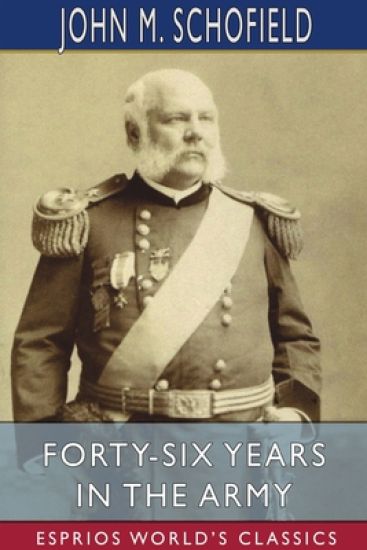
Forty-Six Years in the Army (Esprios Classics)
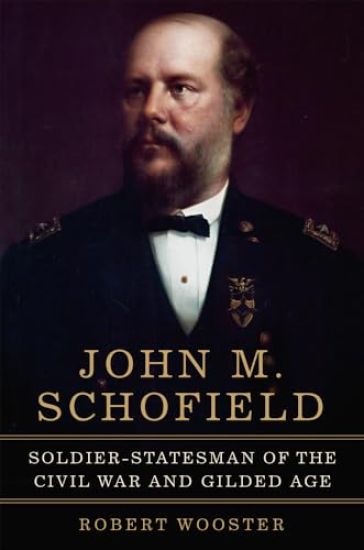
John McAllister Schofield (1831-1906) was an American soldier who held major commands during the American Civil War. He later served as US. Secretary of War under Presidents Andrew Johnson and Ulysses S. Grant, and Commanding General of the United States Army. When the Civil War broke out, Schofield helped assure Missouri did not join the Confederacy. He became a major in the 1st Missouri Infantry Regiment and served as chief of staff to Maj. Gen. Nathaniel Lyon until Lyon's death during the Battle of Wilson's Creek (Missouri) in August 1861. Schofield acted with "conspicuous gallantry" during the battle, and decades later received the Medal of Honor for that action.
John M. Schofield and the Politics of Generalship

John M. Schofield and the Politics of Generalship

Donald B. Connelly

The University of North Carolina Press
2014
nidottu
In the first full biography of Lieutenant General John McAllister Schofield (1831-1906), Donald B. Connelly examines the career of one of the leading commanders in the western theater during the Civil War. In doing so, Connelly illuminates the role of politics in the formulation of military policy, during both war and peace, in the latter half of the nineteenth century.Connelly relates how Schofield, as a department commander during the war, had to cope with contending political factions that sought to shape military and civil policies. Following the war, Schofield occupied every senior position in the army--including secretary of war and commanding general of the army--and became a leading champion of army reform and professionalism. He was the first senior officer to recognize that professionalism would come not from the separation of politics and the military but from the army's accommodation of politics and the often contentious American constitutional system. Seen through the lens of Schofield's extensive military career, the history of American civil-military relations has seldom involved conflict between the military and civil authority, Connelly argues. The central question has never been whether to have civilian control but rather which civilians have a say in the formulation and execution of policy.
Old Schofield Study Bible KJV

Old Schofield Study Bible KJV

John R Kohlenberger

Oxford University Press
1996
sidottu
Dr. C. I. Scofield's classic study system and 1917 notes form the core of this definitive resource. A crisp red- letter typeface enhances this Bible's usefulness. Large, 10-point print makes this edition particularly attractive for preacher and people with vision difficulties. Features include a protective two-piece box, book introductions, chronologies, concordance, subject-chain references, comprehensive and subject indexes and full-color Oxford Bible Maps, with index. * Clear, readable 10-point typeface. * 16 pages of full color. * Complete Scofield(R) Study Bible features. * Oxford Bible Maps, with index. * Red letter text.