
Kirjahaku
Etsi kirjoja tekijän nimen, kirjan nimen tai ISBN:n perusteella.
1000 tulosta hakusanalla John Stuart

The Letters Of John Stuart Mill
John Stuart Mill; Hugh S. R. (EDT) Elliot; Mary Taylor
Kessinger Pub
2007
pokkari

The Day-Book of John Stuart Blackie, Selected and Transcribed from the Manuscript by His Nephew Archibald Stodart-Walker
John Stuart Blackie
Trieste Publishing
2018
nidottu

John Stuart Mill is one of the hallowed figures of the liberal tradition, revered for his defense of liberal principles and expansive personal liberty. By examining Mill's arguments in On Liberty in light of his other writings, however, Joseph Hamburger reveals a Mill very different from the "saint of rationalism" so central to liberal thought. He shows that Mill, far from being an advocate of a maximum degree of liberty, was an advocate of liberty and control--indeed a degree of control ultimately incompatible with liberal ideals. Hamburger offers this powerful challenge to conventional scholarship by presenting Mill's views on liberty in the context of his ideas about, in particular, religion and historical development. The book draws on the whole range of Mill's philosophical writings and on his correspondence with, among others, Harriet Taylor Mill, Auguste Comte, and Alexander Bain to show that Mill's underlying goal was to replace the traditional religious basis of society with a form of secular religion that would rest on moral authority, individual restraint, and social control. Hamburger argues that Mill was not self-contradictory in thus championing both control and liberty. Rather, liberty and control worked together in Mill's thought as part of a balanced, coherent program of social and moral reform that was neither liberal nor authoritarian. Based on a lifetime's study of nineteenth-century political thought, this clearly written and forcefully argued book is a major reinterpretation of Mill's ideas and intellectual legacy.
John Stuart Mill and Representative Government
Dennis F. Thompson
Princeton University Press
2015
pokkari
Although Mill regarded Considerations on Representative Government as a mature statement of his theory of democracy, critics have tended to treat it less seriously than most of his other major works. Dennis Thompson argues that this neglect has led to inadequate interpretations of Mill's thought on democracy. Drawing where appropriate on other writings by Mill, the author restores a balanced view by studying the structure of the theory expounded in Representative Government. Representative Government is shown to be more coherent and systematic than has generally been assumed. In the first two chapters the author examines separately Mill's views of political participation and competence. He then considers the philosopher's effort to combine participation and competence at any particular time in a theory of government and to reduce conflict between them over time in a theory of development. Basic features of Mill's view are subjected to critical scrutiny, and modifications are suggested to overcome the deficiencies noted. Throughout, Mill's claims are compared with the ideas and findings of recent social science, leading to the conclusion that his theory remains a valuable resource for contemporary thinking about democracy. Originally published in 1976. The Princeton Legacy Library uses the latest print-on-demand technology to again make available previously out-of-print books from the distinguished backlist of Princeton University Press. These editions preserve the original texts of these important books while presenting them in durable paperback and hardcover editions. The goal of the Princeton Legacy Library is to vastly increase access to the rich scholarly heritage found in the thousands of books published by Princeton University Press since its founding in 1905.

John Stuart Mill and Representative Government
Dennis F. Thompson
Princeton University Press
2016
sidottu
Although Mill regarded Considerations on Representative Government as a mature statement of his theory of democracy, critics have tended to treat it less seriously than most of his other major works. Dennis Thompson argues that this neglect has led to inadequate interpretations of Mill's thought on democracy. Drawing where appropriate on other writings by Mill, the author restores a balanced view by studying the structure of the theory expounded in Representative Government. Representative Government is shown to be more coherent and systematic than has generally been assumed. In the first two chapters the author examines separately Mill's views of political participation and competence. He then considers the philosopher's effort to combine participation and competence at any particular time in a theory of government and to reduce conflict between them over time in a theory of development. Basic features of Mill's view are subjected to critical scrutiny, and modifications are suggested to overcome the deficiencies noted. Throughout, Mill's claims are compared with the ideas and findings of recent social science, leading to the conclusion that his theory remains a valuable resource for contemporary thinking about democracy. Originally published in 1976. The Princeton Legacy Library uses the latest print-on-demand technology to again make available previously out-of-print books from the distinguished backlist of Princeton University Press. These editions preserve the original texts of these important books while presenting them in durable paperback and hardcover editions. The goal of the Princeton Legacy Library is to vastly increase access to the rich scholarly heritage found in the thousands of books published by Princeton University Press since its founding in 1905.

In the early draft of his Autobiography (London, 1873), John Stuart Mill described himself as “a pupil of Plato, and cast in the mould of his dialectics.” However, how Plato’s influence came about, to what extent, and with regard to which aspects of Mill’s thought, form questions that do not usually preoccupy Mill scholarship. To fill this gap in critical attention, this book draws upon a variety of primary sources to pay particular attention to Mill’s concern with reform, method, character, virtue, and happiness through his reading of the ancient Greeks—particularly Plato. At the same time, this book focuses on the intellectual relationship between father and son, studying their responses to the prevalent trends as to the worth of classical studies and of Platonic philosophy in nineteenth-century Britain. Not only does John Stuart Mill’s “intoxication” with ancient Greece manifest itself in all those aspects of his works already mentioned; but—what is most important—it also permeates his unvarying aim: the improvement of mankind through the improvement of its individual members.

This book offers a clear and highly readable introduction to the ethical and social-political philosophy of John Stuart Mill. Dale E. Miller argues for a "utopian" reading of Mill's utilitarianism. He analyses Mill's views on happiness and goes on to show the practical, social and political implications that can be drawn from his utilitarianism, especially in relation to the construction of morality, individual freedom, democratic reform, and economic organization. By highlighting the utopian thinking which lies at the heart of Mill's theories, Miller shows that rather than allowing for well-being for the few, Mill believed that a society must do everything in its power to see to it that each individual can enjoy a genuinely happy life if the happiness of its members is to be maximized. Miller provides a cogent and careful account of the main arguments offered by Mill, considers the critical responses to his work, and assesses its legacy for contemporary philosophy. Lucidly and persuasively written, this book will be a valuable resource for students and scholars seeking to understand the continued importance of Mill's thinking.

This book offers a clear and highly readable introduction to the ethical and social-political philosophy of John Stuart Mill. Dale E. Miller argues for a "utopian" reading of Mill's utilitarianism. He analyses Mill's views on happiness and goes on to show the practical, social and political implications that can be drawn from his utilitarianism, especially in relation to the construction of morality, individual freedom, democratic reform, and economic organization. By highlighting the utopian thinking which lies at the heart of Mill's theories, Miller shows that rather than allowing for well-being for the few, Mill believed that a society must do everything in its power to see to it that each individual can enjoy a genuinely happy life if the happiness of its members is to be maximized. Miller provides a cogent and careful account of the main arguments offered by Mill, considers the critical responses to his work, and assesses its legacy for contemporary philosophy. Lucidly and persuasively written, this book will be a valuable resource for students and scholars seeking to understand the continued importance of Mill's thinking.

John Stuart Blackie was one of the most impressive and influential figures of nineteenth-century Scotland, as well as one of the most striking and flamboyant. As an intellectual he translated Goethe's Faust and brought first-hand knowledge of German philosophy to Scotland as a means of keeping the Enlightenment tradition alive. As first Professor of Humanity at Aberdeen from 1839 to 1852 and then as Professor of Greek at Edinburgh until 1882, he played a, perhaps the, central role in modernising the Scottish university curriculum, removing the dead hand of theological orthodoxy, raising standards (and the entry age), introducing tutorial teaching and establishing new chairs (including the Edinburgh chair of Celtic). His role in the reform of secondary school teaching was equally central. But Blackie was also a great 'public man', corresponding with great and famous throughout Great Britain and Europe, from Goethe and Carlyle to Ruskin and Gladstone, and filling the pages of newspapers and journals with writings on the major issues of the day. For the last thirty years of his life he became closely involved in issues of Scottish nationalism and home rule, and as champion of the crofters is largely responsible for their contemporary survival and unique status. Despite the existence of a rich archive of his papers and letters, there has been only one book devoted to his life: The Life of Professor John Stuart Blackie, the most distinguished Scotsman of the day, edited by J. G. Duncan and published in 1895.


In this well-researched, comprehensive study of J.S. Mill, Professor Habibi argues that the persistent, dominant theme of Mill's life and work was his passionate belief in human improvement and progress. Several Mill scholars recognize this; however, numerous writers overlook his 'growth ethic', and this has led to misunderstandings about his value system. This study defines and establishes the importance of Mill's growth ethic and clears up misinterpretations surrounding his notions of higher and lower pleasures, positive and negative freedom, the status of children, the legitimacy of authority, and support for British colonialism. Drawing from the entire corpus of Mill's writings, as well as the extensive secondary literature, Habibi has written the most focused, sustained analysis of Mill's grand, leading principle. This book will be useful to college students in philosophy and intellectual history as well as specialists in these fields.
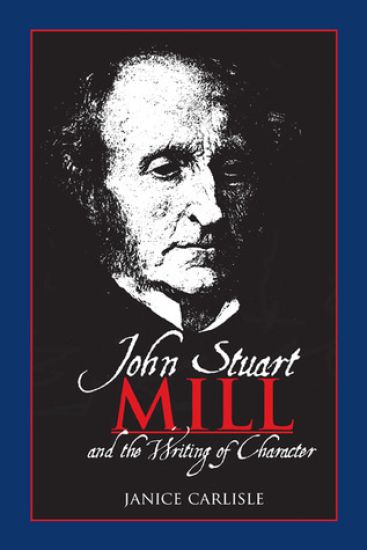
John Stuart Mill and the Writing of Character
Janice Carlisle
University of Georgia Press
2010
pokkari
In his essay On Liberty, John Stuart Mill writes that a person “whose desires and impulses are not his own, has no character, no more than a steamengine has a character.” Although Mill never devoted an essay or treatise solely to character, Janice Carlisle argues that the subject was central to his writings on politics, philosophy, science, literature, sociology, and psychology.This interdisciplinary study proposes a comprehensive reevaluation of the links between Mill’s experience and his writings, and it does so by examining such larger issues as the relation between gender and profession in Victorian culture and the nature of autobiographical writing. Moreover, the questions that interested Mill provide a historical perspective on current debates about the relative value of theory and practice or the construction of individuals by social and political forces beyond their control.Written with genuine sympathy for the conflicts between Mill’s ambitions and his circumstances, this study recognizes that his impulses toward self-defeat were confirmed and complicated by his culture. Far from the detached thinker that he strove to become in his writings, Mill emerges here as a man whose personal failures of vision on some issues are as revealing and compelling as his insights into others.
John Stuart Mill and the Religion of Humanity
Linda C. Raeder
University of Missouri Press
2002
sidottu
Today, I believe, one ought to keep total silence on the question of religion when writing for an English audience, though indirectly one may strike any blow one wishes at religious beliefs. - JOHN STUART MILL TO AUGUSTE COMTE (1845) John Stuart Mill and the Religion of Humanity introduces material that requires significant reevaluation of John Stuart Mill's contribution to the development of the liberal tradition. Through his influence, the radical anti-Christianity of the French tradition was incorporated into the Anglo-American political tradition. Linda C. Raeder examines the religious thought and aspirations of the philosopher and shows that, contrary to the conventional view of Mill as the prototypical ""secular"" liberal, religious preoccupations dominated his thought and structured his endeavors throughout his life. Raeder explores the influence of James Mill, Jeremy Bentham, Claude-Henri Saint-Simon, and Auguste Comte on John Stuart Mill's religious thought and aims. She treats Mill's Three Essays on Religion, discusses his participation in the ""Mansel Controversy,"" and offers a new interpretation of On Liberty and Utilitarianism. Raeder contends that the depth of Mill's animus toward traditional transcendent religion must be recognized, along with the seriousness of his intent to found a nontheological religion to serve as its replacement: the ""Religion of Humanity"" that he adopted, with revisions, from Comte. Mill intended his philosophical writings to assist in the realization of this aim, and they cannot adequately be comprehended without an awareness of their subterranean religious theme.

John Stuart Mill's Political Philosophy
John R. Fitzpatrick
Continuum International Publishing Group Ltd.
2006
sidottu
In the aftermath of the terrorist attacks of September 11, 2001, the philosophy of John Stuart Mill has never been more relevant. Can we reconcile individual liberty with the demands of the common good? Mill's central concern was to modify the Utilitarian ethical theory of Jeremy Bentham and his father, James Mill, in a manner that would safeguard human rights. However, many philosophers - most notably John Rawls - have argued that Mill's attempt was either inconsistent or incoherent. This new reading of Mill defends him against these charges, and shows the value of his approach to the world we live in today. John Fitzpatrick argues that, properly understood, Mill's liberal utilitarianism can indeed support a system of rights rich enough to guarantee individual liberty. Combining fresh interpretations of Mill's writings on ethics, politics, and political economy with the historical Mill that can found in his autobiography, the book will be of substantial interest to a wide audience.

Volume 10 includes such significant essays as Utilitarianism, Auguste Comte and Positivism, and Three Essays on Religion, as well as other works, which clarify Mill's enduring intellectual connection to Jeremy Bentham's utilitarian school. In Utilitarianism, Mill sought to refine utilitarian doctrine by exploring the qualitative differences in different types of pleasures and arguing that higher artistic and intellectual pleasures should be given greater value over lesser types of pleasure.
First published in 1848, 'Principles of Political Economy' established Mill as a leading economic thinker of his time, and this work endured as the principal economics textbook for the balance of the nineteenth century. As a comprehensive treatment of economic thought, the book touches on the full range of micro- and macroeconomic topics, including taxation, national debt, and theories of money, production, and prices. Volumes 2 and 3 are based on the seventh and final edition of this work published by Mill in 1871. Professor Robson and his editorial team allow the reader to seamlessly track the changes made through all seven editions of Principles of Political Economy, providing insight into the development of Mill's economic ideas.
Volumes 4 and 5 bring together a rich collection of Mill's writing on politics and the economy over the course of his intellectual career. Volume 4 includes, most significantly, 'Essays on Some Unsettled Questions of Political Economy'. Here, Mill grapples with issues related to foreign trade and the balancing of government's goal of promoting free trade with its interest in raising revenues from import duties and tariffs. Also included in these volumes are such early essays as 'The Silk Trade' and 'The Nature, Origin, and Progress of Rent' and such later works as Mill's petition on free trade and 'Chapters on Socialism' (posthumously published).