Kirjojen hintavertailu. Mukana 12 390 323 kirjaa ja 12 kauppaa.

Kirjahaku

Etsi kirjoja tekijän nimen, kirjan nimen tai ISBN:n perusteella.

1000 tulosta hakusanalla John Wade

Transport Curiosities, 1850 1950

Transport Curiosities, 1850 1950

John Wade

PEN SWORD BOOKS LTD
2022
sidottu
Over the years many weird and wonderful types of transport have come and gone, some of which succeeded against all odds, others that spectacularly failed, and some that never got beyond a designer's drawing board. Railway engines driven by horses, for example. Or maybe the surprising number of cars, boats and trains driven by aeroplane propellers. In this book you will find cars that flew, cars that floated on water and boats that ran on roads; steam-powered aeroplanes, electric submarines, railways driven by pneumatic air, aircraft with flapping wings and a whole lot more. If you are a person who would like to have flown in an airship, or travelled in a train whose carriage sat on stilts above the sea with its tracks below the water, or dreamed of riding on a London to New York railway that took twelve days to travel the long way around the world, or maybe just fancied fixing your bicycle to a railway track, then this book is for you.

Britain in the 1950s

Britain in the 1950s

John Wade

PEN SWORD BOOKS LTD
2023
nidottu
The 1950s was the decade of the Queen's Coronation and the Festival of Britain; of family shops and pea-souper smogs; listening to the wireless and watching the box; when money was counted in pounds, shillings and pence and weights were in pounds and ounces. It was when children walked to school and six of the best' was a painful experience; postmen wore uniforms with peaked hats and chimney sweeps rode bikes with their brushes and poles balanced on their shoulders; milk and bread were delivered to your doorstep every morning and orange juice was free for schoolchildren; and when most people still preferred smooth shiny toilet paper to the new absorbent type. The Second World War left Britain in a period of austerity. Yet, born of the relief of the war ending in 1945, there was a spirit of hope for the future and new beginnings, from which grew a climate that was a comforting mix of the traditional past blended with exciting glimpses of an exhilarating future. John Wade records briefly some of the great achievements and events of the 1950s, but concentrates more on what it was like for ordinary British people living their lives during a far from ordinary decade.
An Illustrated History of Snapshot Photography
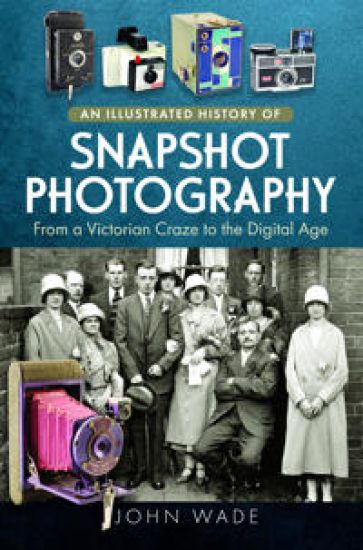
The arrival of the first snapshot camera in Victorian times bred a new kind of photographer, one who might never before have thought of owning a camera, but for whom the ability to take pictures without any previous experience offered a new liberation. The way snapshot cameras and the pictures they took evolved through the following years and into today’s digital age is what this book is all about. With more than 200 mono pictures and sixteen pages of colour, it examines how different types of snapshot camera opened up opportunities to shoot new kinds of picture; reveals the dubious way in which snapshot photographers were once perceived; shows how to identify where and when certain snapshots were taken; looks at the role of professional snapshot photographers; examines the part snapshots have played in social history; and explains why yesterday’s snapshots are still so important today.
Illustrated Tales of Essex

Illustrated Tales of Essex

John Wade

Amberley Publishing
2021
nidottu
Essex is a place where you learn to expect the unexpected. If you know where to look, there's history and mystery at every turn, and this book is here to help you find it all. It brings you stories of strange places with weird names, mystery buildings that make no sense until you know their history, bizarre legends, forgotten facts, lost villages, unknown islands, spirits and ghosts, witches and smugglers. Who knows, for example, the part played by Essex in the colonisation of America? Or that a town in Essex was once the capital of England? Did you know that Captain Cook was married in Essex prior to setting out on his voyages of discovery? Or that legend has it that the story of Saint George slaying a dragon might have begun on Essex soil? All this and more is described by writer and photographer John Wade in Illustrated Tales of Essex. In it he reveals that Essex's people and places of the past are a million miles away from the modern-day reality-TV view of the county.
The Golden Age of Science Fiction

The Golden Age of Science Fiction

John Wade

Pen Sword History
2019
nidottu
John Wade grew up in the 1950s, a decade that has since been dubbed the golden age of science fiction'. It was a wonderful decade for science fiction, but not so great for young fans. With early television broadcasts being advertised for the first time as unsuitable for children' and the inescapable barrier of the X' certificate in the cinema barring anyone under the age of sixteen, the author had only the radio to fall back on - and that turned out to be more fertile for the budding SF fan than might otherwise have been thought. Which is probably why, as he grew older, rediscovering those old TV broadcasts and films that had been out of bounds when he was a kid took on a lure that soon became an obsession. For him, the super-accuracy and amazing technical quality of today's science fiction films pale into insignificance beside the radio, early TV and B-picture films about people who built rockets in their back gardens and flew them to lost planets, or tales of aliens who wanted to take over, if not our entire world, then at least our bodies. This book is a personal account of John Wade's fascination with the genre across all the entertainment media in which it appeared - the sort of stuff he revelled in as a young boy - and still enjoys today.
Cameras at War

Cameras at War

John Wade

Pen Sword Military
2020
nidottu
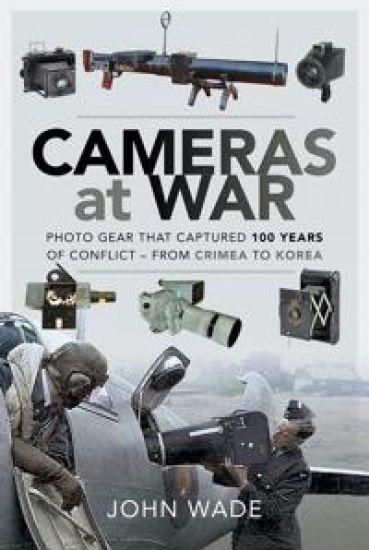
Books about war and the pictures that came out of conflict usually concentrate on the picture content. But behind every picture there is a camera - and that's what this book is about. Profusely illustrated throughout with pictures of the cameras, rather than the pictures they took, it looks at 100 years of conflict from the Crimean War to the Korean War. It begins in the days when a photographer needed to be more of a scientist than an artist, such were the difficulties of shooting and processing any photograph. It ends with the cameras whose compact dimensions, versatility and ease of use meant that photographers could largely forget the science and concentrate on the art. Some cameras simply recorded events. Others defined and changed the way those events proceeded. These were the cameras that went to war, and this is their story.
Tales from the Forgotten Front

Tales from the Forgotten Front

John Wade

Whittles Publishing
2015
pokkari
In November 1943, four years into World War II, Corporal Sid Wade, a conscripted and reluctant soldier in the British Army, was uprooted from a cold English winter and transported to the tropical coast of West Africa. Sid Wade was the author's father and, nearly 70 years after his two-year stint in Sierra Leone, he discovered the scrapbooks and diaries he had compiled during his time there. These were filled and overflowing with letters to and from home, his army paybook, post cards, snapshots, drawings, paintings, newspaper clippings, maps, government pamphlets, amateur dramatics and music concert programmes, poetry written by army buddies and newsletters written by the soldiers. These scrapbooks and diaries told more than his father had ever spoken about - they told a story that had little to do with the big picture of the war, but rather the smaller picture of day-to-day life for young soldiers suddenly transplanted into an alien and often frightening environment. Battling a harsh climate and tropical diseases as they trained members of the Royal West African Frontier Force, the soldiers found time to write and produce newsletters, paint and draw pictures, write poetry, put on music concerts and even organise amateur dramatics productions, all in a region that was something of a forgotten front, and known to all as 'The White Man's Grave'. Thanks to these scrapbooks and the associated ephemera, plus the author's own research, at least some part of Corporal Wade's African experiences, and that of his fellow soldiers, has been uncovered, shedding light on a less well-known aspect of WWII.
The Residual Effects of Unintended Consequences
NOTICE: The intoxicated human brain is a fortress breached by the keepers of hell. Enter the addiction: Any number of physical manifestations drawn from the effects of Satanic influence over the addicted soul. The Residual Effects of Unintended Consequence is a candid memoir listing slightly toward darkness as the addiction debuts early and vies all for leading role. Manifest here is a graphic documentation of warfare as conducted on a spiritual plane for the possession of our minds. Fortunately, the spiritual elements of human emotion abound as the seasons. While it is true that the addiction tends to vie all for stardom in every show that pertains, it does not always prevail. For of the greatest contenders there is, there's love. Would it then reason that where there is only the touting of love, which is greater than the actual, then the addiction reins? A question then remains. Is it a story of love after all?
Strength-Based Clinical Supervision

Strength-Based Clinical Supervision

John Wade; Janice Jones

Springer Publishing Co Inc
2014
nidottu
"Through the frame of positive psychology, Wade and Jones solidify a next step in conceptualization and practice of supervision. This expansive view of historical, narrative, literary, and theoretical approaches is a significant addition to the supervision literature." Carol Falender, PhD, University of California, Los Angeles "For many of us in mental health fields our "training" in supervision occurred on the job. We mirrored the examples of positive supervision we experienced or tried to avoid the pitfalls we associated with negative supervision experiences. But being a competent and proficient supervisor is far more than emulation or avoidance of past experience. It is a vital aspect of our jobs and requires a pedagogical approach steeped in best practices and evidence. Strength Based Clinical Supervision offers a comprehensive approach to providing sound clinical supervision and should be part of any training program for clinicians who will one day supervise, mentor, or instruct anyone entering the field of mental health services." Carrie Fleider, MSW, LISW-S, Assistant Director for Training, Counseling and Consultation Services, The Ohio State University As evidenced by the recent proliferation of books about positive psychology, there is a growing realization about the importance of focusing on an individual's strengths. Yet there has been little written about positive psychology that applies this approach to training and supervision. To fill this void, Strengths-Based Clinical Supervision combines the principles of positive psychology with research on effective supervision and training from various disciplines along with the characteristics of effective clinical supervisors. Designed for use with courses on clinical supervision in psychology, counseling, social work, the book is also an ideal resource for supervisors of Master's and Doctoral-level trainees as well as licensed professionals. It emphasizes practical applications and provides examples of questions and prompts to be used in supervision sessions. Chapters feature practical applications of key concepts as well as discussion questions to encourage retention of the material. Key Features: Integrates the basic principles of positive psychology with those of effective supervision and training Emphasizes practical applications of positive psychology to clinical supervision across multiple disciplines Includes examples of questions and prompts to be used in actual supervision sessions