Kirjojen hintavertailu. Mukana 11 244 527 kirjaa ja 12 kauppaa.

Kirjahaku

Etsi kirjoja tekijän nimen, kirjan nimen tai ISBN:n perusteella.

1000 tulosta hakusanalla Jon G. Lawrence

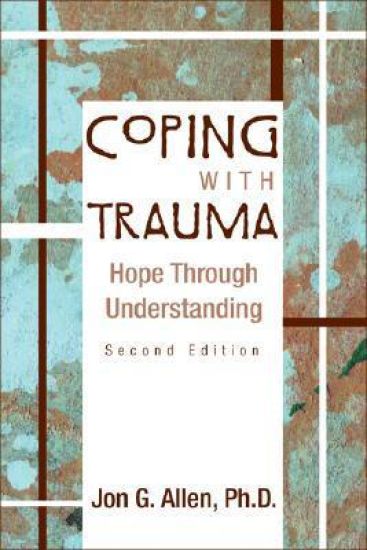
Coping with Trauma

Coping with Trauma

Jon G. Allen

American Psychiatric Association Publishing
2004
nidottu
Combining years of research, teaching, and experience treating trauma survivors, Dr. Jon G. Allen offers compassionate and practical guidance to understanding trauma and its effects on the self and relationships. Coping With Trauma is based on more than a decade of Dr. Allen's experience conducting educational groups for persons struggling with psychiatric disorders stemming from trauma. Written for a general audience, this book does not require a background in psychology. Readers will gain essential knowledge to embark on the process of healing from the complex wounds of trauma, along with a guide to current treatment approaches.In this supportive and informative work, readers will be introduced to and encouraged in the process of healing by an author who is both witness and guide. This clearly written, insightful book not only teaches clinicians about trauma but also, equally important, teaches clinicians how to educate their patients about trauma.Reshaped by recent developments in attachment theory, including the importance of cumulative stress over a lifetime, this compelling work retains the author's initial focus on attachment as he looks at trauma from two perspectives. From the psychological perspective, the author discusses the impact of trauma on emotion, memory, the self, and relationships, incorporating research from neuroscience to argue that trauma is a physical illness. From the psychiatric perspective, the author discusses various trauma-related disorders and symptoms: depression, posttraumatic stress disorder, and dissociative disorders, along with a range of self-destructive behaviors to which trauma can make a contribution.Important updates include substantive and practical information on ; Emotion and emotion regulation, prompted by extensive contemporary research on emotion - which is becoming a science unto itself. Illness, based on current developments in the neurobiological understanding of trauma. Depression, a pervasive trauma-related problem that poses a number of catch-22s for recovery. Various forms of self-destructiveness - substance abuse, eating disorders, and deliberate self-harm - all construed as coping strategies that backfire. Suicidal states and self-defeating aspects of personality disorders. The author addresses the challenges of healing by reviewing strategies of emotion regulation as well as a wide range of sound treatment approaches. He concludes with a new chapter on the foundation of all healing: maintaining hope.This exceptionally comprehensive overview of a wide range of traumatic experiences, written in nontechnical language with extensive references to both classic and contemporary theoretical, clinical, and research literature, offers a uniquely useful guide for victims of trauma, their family members, and mental health care professionals alike.
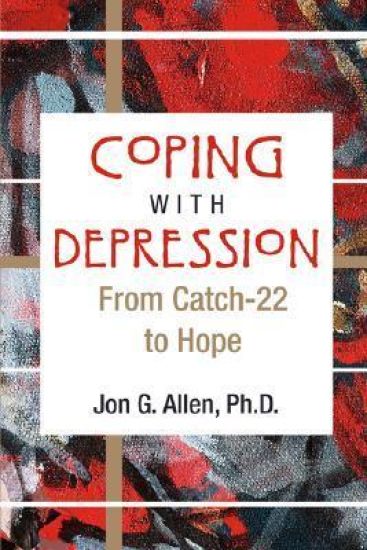
Coping With Depression

Coping With Depression

Jon G. Allen

American Psychiatric Association Publishing
2006
pokkari
Distilling years of experience in educating psychiatric patients and their families about depression, Jon Allen has written a practical book that addresses the challenges depressed patients face on the road to recovery. Allen advocates approaching depression by focusing on the importance of hope, and he helps patients understand depression through two simple ideas: catch-22 and stress pileup. This book conveys how the symptoms of depression impede all the things depressed persons must do to recover, thus defusing self-criticism while encouraging patients to take satisfaction in small steps toward improvement. And the concept of stress pileup encompasses a developmental perspective respecting the full range of accumulated biological, psychological, and interpersonal stresses that play into depression. This broad understanding helps patients become more compassionate toward themselves and puts them in a stronger position to make use of professional care. Coping With Depression is written for a general audience, including depressed persons and their family members, as well as professionals seeking a readable integration of current knowledge that they can use to educate their patients. Although written in nontechnical language, the book provides a sophisticated and comprehensive understanding of the psychological development of depression, the neurobiology of the illness, and the full range of evidence-based treatment modalities. All material is buttressed by extensive references to theoretical, clinical, and research literature. Coping With Depression emphasizes the concept of agency, encouraging readers to take an active role in their recovery. Countering today's trend toward exclusive reliance on antidepressant medication, the book employs the perspective of developmental psychopathology to integrate psychosocial and neurobiological knowledge. The book explains how biological vulnerability is intertwined with stress stemming from insecure attachment, childhood adversity, stressful life events, emotional conflicts, and problems in close relationships. Going far beyond the "chemical imbalance," the author illustrates how the experience of depression is linked to changes in patterns of brain activity as evidenced by neuroimaging studies. Coping With Depression will help readers • understand the development of depression from a biopsychosocial perspective• appreciate how depression is compounded by related conditions, including bipolar disorder, anxiety disorders, substance abuse, personality disorders, general medical conditions, and suicidal states• understand how recovering from depression entails working on many fronts, including improving physical health, participating in pleasurable activities, countering negative thinking, resolving internal conflicts, and-above all-establishing more stable and secure attachment relationships• become knowledgeable about the treatment options that facilitate coping, including cognitive-behavioral, interpersonal, and psychodynamic psychotherapy as well as medication and combined treatment• appreciate the centrality of hope in recovery from depression and the challenges to hope that depression poses To maintain hope, patients, their family members, and clinicians must face the seriousness of the illness of depression and the daunting obstacles to recovery, including catch-22 in all of its manifestations. Throughout the book, Allen reiterates the theme of agency: depressed persons can use their intelligence to understand their illness and do something to recover and remain well, making use of help from others along the way.
Mentalizing in Clinical Practice

Mentalizing in Clinical Practice

Jon G. Allen; Peter Fonagy; Anthony W. Bateman

American Psychiatric Association Publishing
2008
nidottu
Mentalizing, the fundamental human capacity to understand behavior in relation to mental states such as thoughts and feelings, is the basis of healthy relationships and self-awareness. A growing evidence base supports the effectiveness of mentalizing-focused interventions in the treatment of borderline personality disorder. This volume explores wider applications, construing mentalizing as a core common factor in the effectiveness of psychotherapeutic interventions that cuts across treatment modalities and theoretical approaches ranging from psychodynamic to interpersonal and cognitive therapies.This book distills the burgeoning literature on mentalizing for clinicians of diverse professional backgrounds. The book is divided into two parts: Understanding Mentalizing fully explicates the concept of mentalizing and its foundations in developmental research and social-cognitive neuroscience; Practicing Mentalizing presents the general principles of psychotherapeutic interventions that promote mentalizing as well as a range of current clinical applications. Mentalizing is multifaceted - for example, pertaining to self and others as well as explicit and implicit processes - and links to myriad overlapping concepts including empathy, metacognition, theory of mind, mindfulness, and psychological mindedness. Two sides of research on the development of mentalizing in attachment relationships have significant clinical implications: interactions in secure attachment relationships enhance mentalizing and illuminate the conditions of optimal psychotherapeutic relationships; conversely, trauma in attachment relationships undermines the development of mentalizing and eventuates in developmental psychopathology that poses special challenges for psychotherapy. Neuroimaging is illuminating diverse brain regions that contribute to mentalizing capacity, including a ""mentalizing region"" in the medial prefrontal cortex that is consistently activated in mentalizing tasks; concomitantly, research on autism and psychopathy attests to the neurobiological basis of psychopathologies in which stable impairments of mentalizing are most conspicuous. In development and in psychotherapy, mentalizing begets mentalizing, as exemplified by a mentalizing stance that fosters inquisitiveness and curiosity about mental states in oneself and others; basic principles and clinical examples, including the use of transference, demonstrate the spirit and technique of mentalizing, capped off by a patient's first-hand account of mentalization-based treatment for borderline personality disorder. Attachment trauma is the wellspring of disrupted mentalizing capacity, and a focus on mentalizing provides an integrative framework for psychodynamic and cognitive-behavioral treatment of trauma as well as for parenting, family, and social-systems interventions directed toward interrupting the perpetuation of trauma in relationships. Psychoeducational interventions, including patient education and structured exercises, are employed to cultivate a therapeutic alliance around mentalizing; the book includes a straightforward explanation clinicians can use with patients, ""What is Mentalizing and Why Do It?"" In the chapter on mentalizing interventions, the authors propose to clinicians, ""You are already doing it."" If the effectiveness of treatment depends on therapists mentalizing and helping their patients do so more consistently and skillfully, clinicians of all persuasions can benefit from the extensive knowledge now available to hone further their attention to this vital therapeutic process.
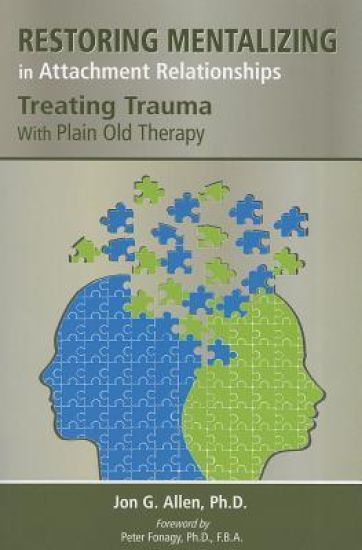
Restoring Mentalizing in Attachment Relationships

Restoring Mentalizing in Attachment Relationships

Jon G. Allen; Peter Fonagy

American Psychiatric Association Publishing
2012
pokkari
In Restoring Mentalizing in Attachment Relationships: Treating Trauma With Plain Old Therapy, Jon G. Allen, Ph.D., argues that the incorporation of mentalizing into attachment theory and research provides a solid foundation for trauma treatment, and offers therapists and patients a pathway to recovery. In plain language accessible to clinicians and laypeople alike, Allen describes trauma in attachment relationships, reviews the literature, and makes a compelling, evidence-based argument for the efficacy of psychotherapy. Specifically, the book: • Presents a comprehensive view of attachment trauma across diverse diagnostic conditions, directly linking these to the psychotherapeutic interventions that work best.• Allows therapists from different theoretical frameworks, by using these best practices, to treat patients with a wide range of problems and disorders.• Situates mindfulness and mentalizing as central to secure attachment, focusing clinicians' attention on these most critical dimensions of healing relationships.• Provides a thorough review of the research on attachment, mindfulness, and mentalizing, and evaluates the effectiveness of the most popular trauma treatments, thereby equipping clinicians to treat patients across the spectrum of trauma-related psychiatric disorders.• Employs a down-to-earth, conversational writing style that makes the book accessible to patients and family members as well as to professionals. Trauma can be the result of blatant events, such as violence, abuse, and neglect, or the subtle yet pervasive failure to connect. Both contribute to developmental psychopathology and cause lasting emotional pain. "Plain old therapy," according to Allen, is a valuable and proven resource for addressing trauma and treating patients with complex psychiatric disorders. This fascinating and eminently useful book should help to restore psychotherapy to its well-deserved stature.
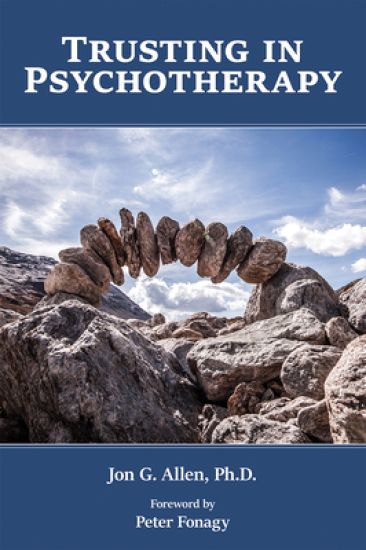
Trusting in Psychotherapy

Trusting in Psychotherapy

Jon G. Allen

American Psychiatric Association Publishing
2021
pokkari
Trusting in Psychotherapy is an important book that fills a lamentable void: although virtually everyone—therapists, students, and patients alike—believes that trust is the foundation of psychotherapy, the topic has been neglected in the psychiatric literature, to the detriment of the therapeutic relationship. The author, who brings five decades of study and practice to the enterprise, posits that cultivating trusting psychotherapy bonds—especially for patients who have experienced developmental trauma in close relationships—is complex, challenging, and a critically important topic for examination. Whereas therapists are inclined to focus on patients' problems with trust, the author argues that trusting cannot be understood apart from trustworthiness and that therapists should give equal attention to the task of becoming trustworthy to their patients. Blending developmental science and ethical thought in an interdisciplinary spirit, the author draws on contemporary writings of philosophers to elucidate the concepts of trust and trustworthiness. What it means to trust in the practice of psychotherapy; the many facets of trusting and trustworthiness; attachment relationships, both secure and insecure; the central role of hope in trust; and the ethical-moral basis of trusting and trustworthiness—these and other topics are addressed with competence and care. Intellectually engaging and designed to provoke thought, the book: • Offers a broadly developmental perspective, reflecting the belief that attachment trauma plays a profound role in many severe psychiatric disorders and emphasizing that the resulting and pervasive distrust and social alienation pose significant obstacles to developing therapeutic connections.• Provides an overview of the professional literature on developing expertise in conducting psychotherapy, with discussion of current research.Addresses the proliferation of new therapies in the context of competing schools of thought and what this proliferation means for the therapist caught between science and practice, academics and clinicians. • Is aimed chiefly at psychotherapists, yet its conversational, generally nontechnical style makes it accessible to those who are not mental health professionals, including patients who might wish to listen in on the conversation and families who desire a more complete understanding of the therapeutic process.• Includes key points at the end of each chapter to help the reader stay oriented and focused on the most important concepts. Trusting in Psychotherapy argues persuasively that we should shift the balance of our efforts from developing therapies to developing therapists, a view that deserves to inform mental health research and thought leadership.
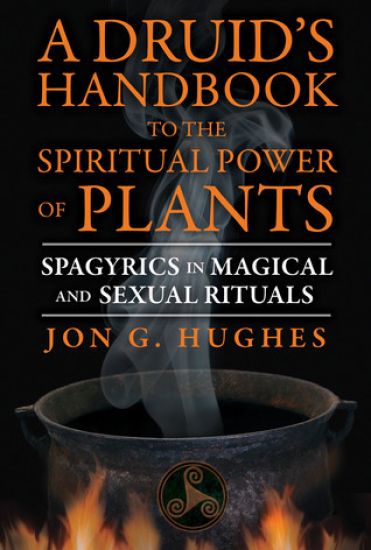
A Druid's Handbook to the Spiritual Power of Plants

A Druid's Handbook to the Spiritual Power of Plants

Jon G. Hughes

Inner Traditions Bear and Company
2014
pokkari
In this practical guide to Druidic plant magic, Jon G. Hughes reveals the gentle alchemy of converting plant essences into potent compounds for working sex magic rituals. Examining the identification, harvesting and magical properties of more than 70 flowers and trees, he details the careful and meticulous spagyric preparation of plant extracts and complexes as well as the process of obtaining or creating suitable alcoholic spirits for the base of these preparations. He includes instructions to make all necessary tools and explores how to prepare yourself to work with plant essences and properly use the magical compounds you create. Hughes explains how to release the energies, healing attributes and magical capacities of flowers and trees through the respectful seduction of a plant's virtue and the 3-step spagyric process of separation, purification and reunification. He shows how the spagyric process maximises the power of the acquired essence in preparation for its use in magical ritual. Detailing Druidic sex rituals for both a couple and a group, Hughes demonstrates how plant compounds are used in specific magical rituals and practices as well as the role of the plant complex in sexual potency. Exploring the underlying accord between alchemy and Druidic practices, Hughes provides a valuable manual for anyone wishing to harness the magical potential of plant energy. · Explores the identification, harvesting and magical properties of more than 70 flowers and trees · Details the careful and meticulous spagyric preparation of plant extracts and complexes · Demonstrates how plant compounds are used in druidic sex magic rituals by both couples and groups
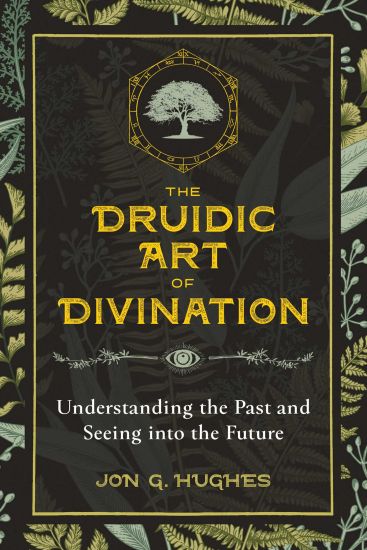
The Druidic Art of Divination

The Druidic Art of Divination

Jon G. Hughes

Destiny Books,U.S.
2020
pokkari
A complete guide to the techniques of the pre-Celtic Druids for understanding the past, present, and future In this practical guide, Jon G. Hughes shares ancient secret Druidic techniques of divination passed down to him across five generations in an unbroken lineage of influential Welsh Druids. Hughes explains the three forms of divination used by his tradition: interpretive divination, used by readers of the Sevens (small staves with engraved sigils); inductive divination, which includes instructions for reading the wind, reading smoke, and divination using water; and intuitive divination, whose tools includes cup-stones and slate mirrors for scrying. Providing step-by-step instructions for practices in each of the three forms, he offers a wealth of divinatory techniques and explains how to access the altered states of consciousness necessary to read time backward and forward. He also explores the crafting and use of all tools and mixtures the reader will need to perform each type of divination, including botanical compounds, scrying wands, and a slate speculum vitae, the “mirror of life.” He reveals how the prime function of divination in this school of Druidic lore is to gain insight into past, present, and future events through a process of internalizing them, akin to empathy, and then interpreting them. By providing an understanding of pre-Celtic beliefs and clear instructions for Druidic practices, Hughes offers each of us the opportunity to begin our own practical experimentation and journey of discovery into the ancient art of Druidic divination.
The Healing Practices of the Knights Templar and Hospitaller

The Healing Practices of the Knights Templar and Hospitaller

Jon G. Hughes

INNER TRADITIONS BEAR AND COMPANY
2022
pokkari
A detailed exploration of the remedies and methods used by the healers who journeyed along with the Crusading knights• Presents a traditional “cure-all” or leechbook of the ailments the Crusaders would have encountered and the remedies their mediciners would have employed, including recipes for many cures and instructions • Includes a comprehensive herbal, listing all the medicinal plants and materials needed to make the remedies, potions, elixirs, and unctions of the cure-all • Details the author’s travels in the steps of the Crusader physicians where he met with healers still employing the mediciners’ practices During the Crusades, chivalric knightly orders, such as the Knights Templar and the Knights Hospitaller, brought along monastic mediciners to treat the sick and wounded. These mediciners not only employed the leading cures of medieval Europe but also learned new methods from the local folk-healers and Arabic healing traditions they encountered on their journeys. Presenting a traditional “cure-all” or leechbook of the Crusader physicians, Jon Hughes shares a comprehensive encyclopedia of the ailments the Crusaders would have encountered and the remedies their mediciners would have employed. He details recipes for many cures and a range of magico-medical applications such as charms, spells, enchantments, and amulets used to address the new illnesses of strange and foreign lands. He includes a detailed and comprehensive herbal, listing all the plants and materials needed to make and administer the remedies of the cure-all. He also details his travels in the steps of the Crusader physicians throughout Poland, the Czech Republic, Malta, Morocco, and the island of Rhodes where he met with healers still following this healing path who shared their practices with him.Revealing how the healers of the Crusades helped elevate Western medical knowledge through the integration of wisdom from their Middle Eastern counterparts, Hughes shows how their legacy continues through the many effective remedies and healing modalities still in use today.
Witches, Druids, and Sin Eaters

Witches, Druids, and Sin Eaters

Jon G. Hughes

INNER TRADITIONS BEAR AND COMPANY
2022
pokkari
• Describes the arcane rituals, ancient beliefs, and secret rites of the Welsh Marches, including those of the Sin Eaters, Eye Biters, and Spirit Hunters • Includes a Grimoire of the Welsh Marches, a wide collection of spells and magical workings along with practical instruction on crafting and casting In this collaboration between a Druid and a Witchcraft researcher, Jon G. Hughes and Sophie Gallagher describe in intricate detail the arcane rituals, ancient beliefs, and secret rites of the Welsh Marches, the borderlands between Celtic Wales and Anglo-Saxon England--one of the oldest and most significant locations for early Witchcraft and a lasting repository for ancient Druidic lore. Drawing on their personal access to the archives of the National Museum of Wales, as well as the local museums found within the Welsh Marches, the authors share extracts from ancient texts, along with original photographs of related artifacts. In the second half of the book, the authors present a Grimoire of the Welsh Marches, a wide collection of spells and magical workings along with practical instruction on crafting and casting. Offering a comprehensive look at the earth-based beliefs and practices of primal Witchcraft and Druidic lore, the authors show not only how the traditions of the Welsh Marches had a profound influence on the cultural and spiritual history of the British Isles, but how their influence was exported to all corners of the world.
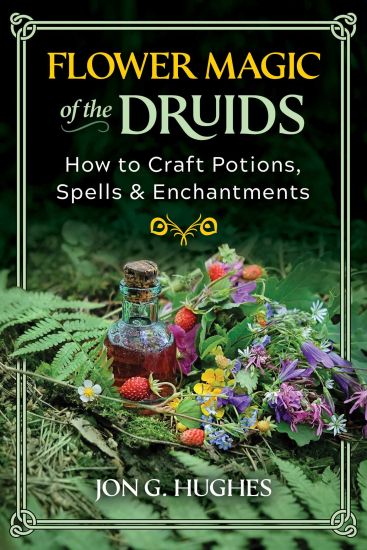
Flower Magic of the Druids

Flower Magic of the Druids

Jon G. Hughes

INNER TRADITIONS BEAR AND COMPANY
2023
pokkari
Flowers are found in magic traditions around the world, from ancient Egypt, China, and India to the Norse and Native Americans. Yet many of today’s well-established flower traditions--like bridal bouquets--originated in the Druidic magical lore of Wales, Ireland, and Scotland. As fifth-generation Druid Jon G. Hughes explains, flowers hold a preeminent position in Druidic folk magic with their own special branch of magical workings. In this practical guide, Hughes details how to use flowers in magical practice, focusing on flowering plants with a long history of magical use going back to Druidic times yet many of which are commonly found throughout the world such as buttercup, blackberry, and dog rose. He discusses what type of flower and form of flower magic is best for specific enchantments and rituals in the areas of love and sex magic, healing and focusing, and protection. He looks at the magical use of fresh flowers and provides detailed instruction on every stage of the harvesting, crafting, and practical use of flower magic potions, including a comprehensive herbarium of all the flowers that may be used. Examining the complex relationship between flowers and bees, the author looks at the physical and spiritual gifts of bees, such as honey, propolis, and bee’s wax, and the importance of bee culture in Druidic flower magic, including the tradition of the honeymoon, the significance of the hexagram, and medieval beekeeper lore. Inviting you into the gentle yet powerful realm of Druidic flower magic, the author also details how to plan, plant, and take care of your own magical flower garden with all the botanicals you will need to pursue the path of flower magic.
Living Wands of the Druids

Living Wands of the Druids

Jon G. Hughes

INNER TRADITIONS BEAR AND COMPANY
2024
pokkari
A practical guide to the creation of natural wands for magical work. From Moses to Merlin to the power of the royal scepter, the wand has been a key magical device found in nearly every civilization and esoteric tradition throughout history. The fundamental purpose of a wand is to act as a spiritual conduit, harnessing the power of the adept’s intention and channeling it into manifestation. Exploring the history, lore, and creation of living wands—those crafted from local natural materials—fifth-generation Druid Jon G. Hughes presents a practical guide to the harvesting, crafting, and potentializing of living wands, as well as rods and staffs. He offers detailed harvesting advice, explaining the magical actions and meditations specific to each tree that should accompany crafting work as well as important influences such as the phases of the moon and the seasons. He looks in depth at woodlore, explaining the variety of woods and other botanicals that may be used to craft wands, their magical and hermetic attributes and virtues, and how these influence the adept’s intention and magical workings. Trees and botanicals examined include oak, hawthorn, hazel, birch, apple, ash, mistletoe, holly, and ivy. The author explores various types of wands, such as rood, entwined, thorn, and compound, detailing how each differs in its use and intended outcome. He offers step-by-step instructions on how to use wands for magical workings and explains other aspects of wand practice, including cleansing, intention, potentializing, and how to properly return a wand to nature after its purpose has been fulfilled. Presenting a complete guide to crafting and using living wands as well as the history and lore behind this traditional form of Druidic natural magic, this book allows you to harness the magical essence of the living natural resources that surround you, helping you elevate your manifestations from the mundane to the higher spiritual planes.
Mentalizing in the Development and Treatment of Attachment Trauma
This book brings together the latest knowledge from attachment research and neuroscience to provide a new approach to treating trauma for therapists from different professional disciplines and diverse theoretical backgrounds. The field of trauma suffers from fragmentation as brands of therapy proliferate in relation to a multiplicity of psychiatric disorders. This fragmentation calls for a fresh clinical approach to treating trauma. Pinpointing at once the problem and potential solution, the author places the experience of being psychologically alone in unbearable emotional states at the heart of trauma in attachment relationships. This trauma results from a failure of mentalizing, that is, empathic attunement to emotional distress. Psychotherapy offers an opportunity for healing by restoring mentalizing, that is, fostering psychological attunement in the context of secure attachment relationships-in the psychotherapy relationship and in other attachment relationships. The book gives a unique overview of common attachment patterns in childhood and adulthood, setting the stage for understanding attachment trauma, which is most conspicuous in maltreatment but also more subtly evident in early and repeated failures of attunement in attachment relationships.
The Identification of Northern European Woods

The Identification of Northern European Woods

Jon G Hather

Archetype Publications Ltd
2009
sidottu
This technical and well-illustrated guide for archaeologists and conservators aims to 'provide a methodology for the identification of the woody taxa used to manufacture artefacts recovered from archaeological excavations', to provide the anatomical descriptions of the taxa and to present a list of characters of the taxa. The guide is heavily illustrated with photographs, maps, and tables to allow easy identification.
Håndbok i militærpsykiatri

Håndbok i militærpsykiatri

Jon G. Reichelt

Fagbokforlaget
2016
nidottu
Å være soldat er forbundet med helt spesielle utfordringer. Deltagelse i stridshandlinger, enten det er krig i tradisjonell forstand eller nyere tids fredsbevarende eller fredsopprettende operasjoner, innebærer økt risiko for både død og fysisk og psykisk skade. I tillegg kan soldater bli nødt til å ta liv som en del av oppdraget eller for å beskytte eget eller andres liv. Alt dette kan være såpass store påkjenninger at man normalt ville frarådet mennesker å delta i slikt. Denne håndboka er basert på et bredt erfaringsgrunnlag og gir konkrete råd for hvordan man kan forholde seg til de mulige negative psykiske konsekvensene av det å være soldat. Håndboka henvender seg primært til militære ledere og militært helsepersonell. Den kan også være nyttig for andre som kommer i kontakt med soldater eller personell som er trent og forberedt, men likevel møter påkjenninger i sitt arbeid, som politi, brann- og redningspersonell. Jon G. Reichelt har fagansvar for psykiatrien i Forsvaret, og er leder for Institutt for militærpsykiatri og stressmestring i Forsvarets sanitet. Han er oberstløytnant, har en doktorgrad i medisin og er lege med spesialitet i psykiatri.
Mentalisering i klinisk praksis

Mentalisering i klinisk praksis

Jon G. Allen; Peter Fonagy; Anthony Bateman

Gyldendal
2010
nidottu
At mentalisere vil sige at forstå adfærd som udtryk for mentale tilstande som tanker og følelser. Denne bog giver en udførlig redegørelse for begrebet mentalisering og dets anvendelse i klinisk praksis. Forfatterne lægger op til, at mentalisering betragtes som grundlaget for alle psykoterapeutiske handlinger, og ønsker med bogen at styrke fundamentet for psykoterapeutisk praksis. Udviklingen af interessen for mentalisering er sket i tre bølger. Den første bølge kom, da Uta Frith, John Morton og deres medarbejdere beskrev mentaliseringsvanskeligheder som det centrale psykologiske problem i forbindelse med autisme. Kort tid efter skabte Peter Fonagy, Mary Target og deres kolleger bølge nummer to ved at anvende mentaliseringsbegrebet i forbindelse med traumerelateret udviklingspsykologi, sådan som den kom til udtryk i borderline-personlighedsforstyrrelse. Nu er der så ved at danne sig en tredje bølge med henblik på at inddrage mentalisering i det kliniske arbejde med et bredere spektrum af forstyrrelser, behandlingsmodaliteter og teoretiske tilgange. Bogens første del er en grundig gennemgang af den forskningsmæssige og teoretiske litteratur af relevans for mentalisering, herunder dens mange aspekter og relationer til beslægtede begreber, dens udviklingsmæssige udspring i tilknytningsforhold og dens neurobiologiske forankring. Bogens anden del omhandler mentaliserende interventioner i psykoterapi, og hvordan disse anvendes i fx traumebehandling, terapi med børn og deres forældre, behandling af borderline-personlighedsforstyrrelse, psykoedukation og i forebyggelse af fx voldelig adfærd. Bogen henvender sig til faggrupper, der arbejder med mennesker, særligt i terapeutiske sammenhænge, herunder psykologer, psykiatere, psykoterapeuter. Den forsyner praktikere med alt, hvad de har brug for at vide om mentaliseringsbaseret behandling. Jon G. Allen, Peter Fonagy og Anthony W. Batemaner alle tre professorer og de største internationale kapaciteter inden for mentaliseringsbaseret terapi.
Mentalisering i tilknytningsrelationer
”Denne bog handler om et stort sundhedsproblem: traumer i tilknytningsrelationer – i yderste instans overgreb på og vanrøgt af børn. (…) Den voksende forståelse af den afgørende betydning af mentalisering – det at være opmærksom på mentale tilstande som tanker og følelser hos en selv og andre – sætter os mere specifikt i stand til at finde frem til det, som efter min opfattelse er nøglen til traumet og vejen til at komme sig: mentalisering i forbindelse med tilknytningsrelationer. Med inddragelsen af mentalisering vil tilknytningsteori og forskning give os et solidt grundlag for traumebehandling, som tilbyder terapeuter og patienter en klarere forestilling om, hvad vi foretager os.” Jon G. Allen i bogens prolog ”Allen styrer os behændigt gennem minefeltet af evidensbaserede terapier og når frem til ’traditionel terapi’, en ny kombination af mindfulness, mentalisering og tilknytningsbaseret terapi, der leverer den diagnostiske forståelse, som både terapeut og patient – implicit eller eksplicit – søger.” Peter Fonagy, leder af Anna Freud Centre, i bogens forord ”Jon G. Allen opfordrer på en yderst engagerende og nyttig måde terapeuter til grundige overvejelser, før de undervurderer værdien af ’traditionel terapi’, når de arbejder med klienter, som har været udsat for relationelle psykiske traumer. Men det, han beskriver, er meget mere end traditionel terapi; det er en kompleks (men særdeles praktisk) destillation af de centrale principper og praksisser, der gør alle de nyere ’evidensbaserede’ terapier effektive.” Julian D. Ford, University of Connecticut Health Center Jon G. Allen, ph.d, er ledende psykolog ved Menninger-klinikken og Helen Malsin Palley-professor i psykisk sundhedsforskning og professor i psykiatri ved Menninger-instituttet for psykiatri og adfærdsvidenskaber ved Baylor College of Medicine. Jon G. Allen har specialiseret sig i behandling af traumerelaterede lidelser og depression. Han er en produktiv forfatter og udgiver, der har skrevet bøger om traumer, depression og mentalisering.
Celtic Sex Magic

Celtic Sex Magic

Hughes Jon G.

Inner Traditions Bear and Company
2002
nidottu
The first written account by a contemporary Welsh initiate of the ancient tradition of sex magic as practiced by generations of Celtic druids. Reveals authentic, accurate, and fully illustrated instructions. Provides detailed instructions for crafting, purifying, and energizing all the necessary ritual tools. Sex magic is an important component of Celtic spiritual practice. Unlike other ritual practices that look to intermediaries or deities to execute the participants' wishes, druids believe that individuals can directly influence exterior reality by focusing their own internal sexual energy. Sex magic potentizes and projects this energy so that it reaches its full power, allowing the participants to liberate their consciousness from everyday awareness and influence reality at will. Written by a practicing druid with more than forty years in the tradition, Celtic Sex Magic explains the fundamental principles involved in channeling the vast amounts of energy generated during orgasm for the purpose of projecting spells and elevating consciousness. The secrets of this tradition have been passed down orally for generations and are revealed here in print for the first time.This workbook contains authentic, accurate, and fully illustrated instructions for a wide range of sex magic rituals that may be used by couples, groups, and solitary practitioners. The author also provides detailed instructions for crafting the necessary ritual tools and brewing the potions used in these rituals. Celtic Sex Magic offers the keys to unlocking and directing the enormous potential of sexual energy.