Kirjahaku
Etsi kirjoja tekijän nimen, kirjan nimen tai ISBN:n perusteella.
1000 tulosta hakusanalla Jon Philo
This textbook is an accessible introduction to philosophy. From the fundamental issues of philosophical thought to the latest theories in the philosophy of mind, "An Introduction to Philosophy" provides discussions of the key areas of philosophy for beginning students.
Divine Copywriting - A Philosopher's Guide to Profound Profits!: Volume I: The Seeds of Conscious Copy
Jon Low Jl
Createspace Independent Publishing Platform
2013
nidottu
Influence and Negotiations: The Philosophy of Systemic Thinking
Jon-Arild Johannessen
Createspace Independent Publishing Platform
2016
nidottu
Tackle the Library - Plato: Philosophy for the Curious
Jon Oldham
Createspace Independent Publishing Platform
2018
nidottu
Plato's philosophy, political theory, and scholasticism shaped our modern day world. His ideas and writings are both important and honestly confusing. Have you ever wanted to learn about this crucial man but felt overwhelmed by the number of books on the subject? Have you tried to read dry Wikipedia articles on the "Forms" or the "Philosopher King" which soon made your eyeballs glaze over? Do you simply not care that much about Plato to commit a lot of time in dissecting his complicated beliefs? The Tackle the Library series takes the top 5 books on a subject and turns them into a cohesive story that is not only interesting to read but highly informative. Plato is one of the greatest philosophers of all time and is worth learning about because he attempted to understand topics which impact our everyday life: ethics, desire, virtue, wisdom, love, politics, and purpose to name a few. This book makes nonfiction a painless process - no other text naturally explains the background, the evolution, the application, the history, and the paradoxes of Plato's philosophy in a way that keeps the pages turning. Stop staring at that dusty shelf of nonfiction texts in the library and crack open a book that you'll actually want to read.
An Introduction to Hegel's Lectures on the Philosophy of Religion
Jon Stewart
Oxford University Press
2022
sidottu
An Introduction to Hegel's Lectures on the Philosophy of Religion examines Hegel's religious thinking by seeing it against the backdrop of the main religious trends in his own day, specifically the Enlightenment and Romanticism. A basic introduction to Hegel's lectures, it provides an account of the criticism of religion by key Enlightenment thinkers such as Voltaire, Lessing, Hume, and Kant. This is followed by an analysis of how the Romantic thinkers, such as Rousseau, Jacobi and Schleiermacher, responded to these challenges. For Hegel, the views of these thinkers from both the Enlightenment and Romanticism tended to empty religion of its content. The goal that he sets for his own philosophy of religion is to restore this lost content. The book provides a detailed account of Hegel's Lectures on the Philosophy of Religion and argues that the basic ideas of the Enlightenment and Romanticism are still present today, and remain an important issue for both academics and non-academics, regardless of their religious orientation.
In The Unity of Content and Form in Philosophical Writing, Jon Stewart argues that there is a close relation between content and form in philosophical writing. While this might seem obvious at first glance, it is overlooked in the current climate of Anglophone academic philosophy, which, Stewart contends, accepts only a single genre as proper for philosophical expression. Stewart demonstrates the uniformity of today's philosophical writing by contrasting it with that of the past. Taking specific texts from the history of philosophy and literature as case studies, Stewart shows how the use of genres like dialogues, plays and short stories were an entirely suitable and effective means of presenting and arguing for philosophical positions given the concrete historical and cultural contexts in which they appeared. Now, Stewart argues, the prevailing intolerance means that the same texts are dismissed as unphilosophical merely due to their form, although their content is, in fact, profoundly philosophical. The book’s challenge to current conventions of philosophical is provocative and timely, and will be of great interest to students and scholars of philosophy, literature and history.
Systemic Thinking -Volume 1: Aspects of the Philosophy of Mario Bunge: Systemic Thinking Series
Jon-Arild Johannessen
Createspace Independent Publishing Platform
2016
nidottu
In chapter 1 we ask the question: How can we develop a general scientific methodology, on tenets from Mario Bunges philosophy? The purpose is presenting a general scientific methodology on tenets from Mario Bunge s philosophy. In the end of the chapter we show a general scientific methodology. based on systemic thinking. In chapter 2 we work with some of Mario Bunges statements, for instance: In order to explain a phenomenon/problem, some of the mechanisms which elicit the phenomenon/problem must be clarified, since: "a goal of scientific research is to uncover reality beneath appearance" (Bunge, 1998:149). The issue to be investigated by us is as follows: How can social mechanisms be examined from at systemic point of view? We will investigate, at an abstract level, what is meant by social mechanisms in social systems. Then we will investigate social mechanisms and various explanation models. In chapter 3 we discusses complexity in communication. We ask the question: How can one use distinction in the process of communication to reduse complexity? This perspective on communication is based partly on Bunges philosophy, and partly on Systems Theory. The purpose is to improve the theoretical understanding of the communicative processes. Through the chapter we develop aspects of a communication theory with three assumptions and ten propositions.
The Metaphysics of Resurrection in Seventeenth-Century Philosophy
Jon W. Thompson
Springer International Publishing AG
2022
sidottu
This book provides a new account of the emergence of the philosophy of personal identity in the early modern period. Reflection on personal identity is often thought to have begun in earnest with John Locke’s famous consciousness-based account, published in the 2nd Edition of the Essay in 1694. The present work argues that we ought to understand modern notions of personal identity, including Locke’s own, as emerging from within debates about the metaphysics of resurrection across the seventeenth century. It recovers and analyses theories of personal identity and resurrection in Locke and Leibniz, as well as largely-forgotten theories from the Cambridge Platonists, Thomas Jackson, and Francisco Suárez. The book narrates a time of radical change in conceptions of personal identity: the period begins with a near-consensus on hylomorphism, according to which the body is an essential metaphysical part of the person. The re-emergence of platonism in the period then undermines the centrality of the body for personal identity, and this lays the groundwork for a more thoroughly ‘psychological’ account of personal identity in Locke. This work represents the first scholarly study to thoroughly situate early modern conceptions of personal identity, embodiment, and the afterlife within the context of late scholasticism. Finally, due to its focus on the arguments of the authors in question, the work will be of interest to philosophers of religion as well as historians of philosophy.
The Metaphysics of Resurrection in Seventeenth-Century Philosophy
Jon W. Thompson
Springer International Publishing AG
2023
nidottu
This book provides a new account of the emergence of the philosophy of personal identity in the early modern period. Reflection on personal identity is often thought to have begun in earnest with John Locke’s famous consciousness-based account, published in the 2nd Edition of the Essay in 1694. The present work argues that we ought to understand modern notions of personal identity, including Locke’s own, as emerging from within debates about the metaphysics of resurrection across the seventeenth century. It recovers and analyses theories of personal identity and resurrection in Locke and Leibniz, as well as largely-forgotten theories from the Cambridge Platonists, Thomas Jackson, and Francisco Suárez. The book narrates a time of radical change in conceptions of personal identity: the period begins with a near-consensus on hylomorphism, according to which the body is an essential metaphysical part of the person. The re-emergence of platonism in the period then undermines the centrality of the body for personal identity, and this lays the groundwork for a more thoroughly ‘psychological’ account of personal identity in Locke. This work represents the first scholarly study to thoroughly situate early modern conceptions of personal identity, embodiment, and the afterlife within the context of late scholasticism. Finally, due to its focus on the arguments of the authors in question, the work will be of interest to philosophers of religion as well as historians of philosophy.
An Analysis of G.E.M. Anscombe's Modern Moral Philosophy
Jonny Blamey; Jon W. Thompson
Macat International Limited
2017
nidottu
Elizabeth Anscombe’s 1958 essay “Modern Moral Philosophy” is a cutting intervention in modern philosophy that shows the full power of good evaluative and analytical critical thinking skills. Though only 16 pages long, Anscombe’s paper set out to do nothing less than reform the entire field of modern moral philosophy – something that could only be done by carefully examining the existing arguments of the giants of the field. To do this, she deployed the central skills of evaluation and analysis. In critical thinking, analysis helps understand the sequence and features of arguments: it asks what reasons these arguments produce, what implicit reasons and assumptions they rely on, what conclusions they arrive at. Evaluation involves judging whether or not the arguments are strong enough to sustain their conclusions: it asks how acceptable, adequate, and relevant the reasons given are, and whether or not the conclusions drawn from them are really valid. In “Modern Moral Philosophy,” Anscombe dispassionately turns these skills on figures that have dominated moral philosophy since the 18th-century, revealing the underlying assumptions of their work, their weaknesses and strengths, and showing that in many ways the supposed differences between their arguments are actually negligible. A brilliantly incisive piece, “Modern Moral Philosophy” radically affected its field, remaining required – and controversial – reading today.
The Philadelphia Area Weather Book answers all of our questions about the region's weather and climate, from the Poconos and Philadelphia to southern New Jersey and the Jersey Shore to Delaware. The snowiest winter? The hottest summer? The strongest tornado? Signs of global warming? Why can't computers give reliable two-week forecasts? The answers are all here in this new paperback.Offering a little-known history of the region's pivotal role in the development of weather science as far back as colonial times, The Philadelphia Area Weather Book gives a lively account of what forecasters actually do on a daily basis.Features include: * "Stories from the Trenches": inside stories of forecasting the big storms; a look back with Philadelphia's television pioneers Wally Kinnan, Dr. Francis Davis, and Herb Clarke; and a glimpse at the possibilities for the future climate of our area *More than 150 illustrations (including 60 photographs, 54 maps, dozens of diagrams, and a 16-page color section): ranging from the first photographic image of lightning to local residents' photos of the Blizzard of '96 and Hurricane Floyd; from the dynamics of air masses to eroding shore lines and global warming trends * Weather tables: statistics for every day of the year, monthly averages as well as temperature and precipitation extremes for Philadelphia, Wilmington, Allentown, and Atlantic City * Lists of web resources organized by topic so that readers can follow current weather events using the same sites as the experts do.
The Philadelphia Area Weather Book answers all of our questions about the region's weather and climate, from the Poconos and Philadelphia to southern New Jersey and the Jersey Shore to Delaware. The snowiest winter? The hottest summer? The strongest tornado? Signs of global warming? Why can't computers give reliable two-week forecasts? The answers are all here in this new paperback. Offering a little-known history of the region's pivotal role in the development of weather science as far back as colonial times, The Philadelphia Area Weather Book gives a lively account of what forecasters actually do on a daily basis. Features include: * \u0022Stories from the Trenches\u0022: inside stories of forecasting the big storms; a look back with Philadelphia's television pioneers Wally Kinnan, Dr. Francis Davis, and Herb Clarke; and a glimpse at the possibilities for the future climate of our area * More than 150 illustrations (including 60 photographs, 54 maps, dozens of diagrams, and a 16-page color section): ranging from the first photographic image of lightning to local residents' photos of the Blizzard of '96 and Hurricane Floyd; from the dynamics of air masses to eroding shore lines and global warming trends * Weather tables: statistics for every day of the year, monthly averages as well as temperature and precipitation extremes for Philadelphia, Wilmington, Allentown, and Atlantic City * Lists of web resources organized by topic so that readers can follow current weather events using the same sites as the experts do.
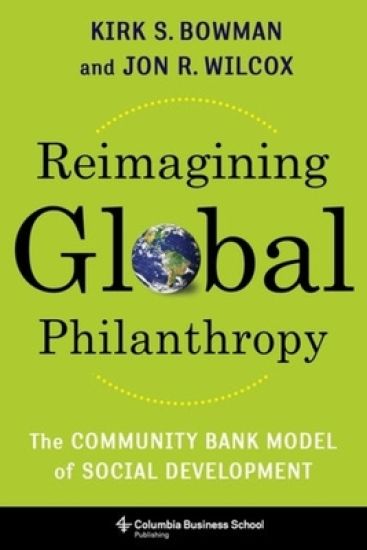
Well-meaning Westerners want to find ways to help the less fortunate. Today, many are not just volunteering abroad and donating to international nonprofits but also advancing innovations and launching projects that aim to be socially transformative. However, often these activities are not efficient ways of helping others, and too many projects cause more harm than good.Reimagining Global Philanthropy shares the journey of a conservative banker and a progressive professor to find a better way forward. Kirk S. Bowman and Jon R. Wilcox explain the boom in the global compassion industry, revealing the incentives that produce inefficient practices and poor outcomes. Instead of supporting start-up projects with long-shot hopes for success, they argue, we can dramatically improve results by empowering local leaders.Applying lessons from the success of community banks, Bowman and Wilcox develop and implement a new model that significantly raises philanthropic efficacy. Their straightforward and rigorously tested approach calls for community members to take the lead while outside partners play a supporting role. Bowman and Wilcox recount how they tested the model in Brazil, demonstrating the value of giving people in marginalized communities the opportunity to innovate. In a time of widespread social reckoning, this book shows how global philanthropy can confront its blind spots and failures in order to achieve truly transformative outcomes.Readers can access five of the documentary films discussed in the book on a companion website. In addition to the films, chapter discussion questions and other supplemental materials are also available at the site.
Bites and Pieces is a gathering of wicked tales from four authors with different perspectives on horror. Each one is equally twisted but some more morbid than the others. Enter the mind of a crazed mother who kills more of her children than she does the zombies, or try to imagine being in the mind of a fool who can fix even the most unfixable things. See the tooth-fairy as you've never seen her before. There's a little something for everyone.
One Hundred Years of the ANC
Thozama April; Badsha Omar; Barchiesi Franco; Phil Bonner; Booysen Susan; Erlank Natasha; Etherington Norman; Gunner Liz; Lissoni Arianna; Macmillan Hugh; Netshitenzhe Joel; Nieftagodien Noor; Saul John; Shubin Vladimir; Soske Jon; Soudien Crain; Southall Roger; Ineke van Kessel
Wits University Press
2012
nidottu
On 8 January 2012 the African National Congress (ANC) of South Africa, the oldest African nationalist organisation on the continent, celebrated its one hundredth anniversary. This historic event has generated significant public debate within both the ANC and South African society at large. There is no better time to critically reflect on the ANC’s historical trajectory and struggle against colonialism and apartheid than in its centennial year.One Hundred Years of the ANC is a collection of new work by renowned South African and international scholars. Covering a broad chronological and geographical spectrum and using a diverse range of sources, the contributors build upon but also extend the historiography of the ANC by tapping into marginal spaces in ANC history.By moving away from the celebratory mode that has characterised much of the contemporary discussions on the centenary, the contributors suggest that the relationship between the histories of earlier struggles and the present needs to be rethought in more complex terms. Collectively, the book chapters challenge hegemonic narratives that have become an established part of South Africa’s national discourse since 1994. By opening up debate around controversial or obscured aspects of the ANC’s century-long history, One hundred years of the ANC sets out an agenda for future research.The book is directed at a wide readership with an interest in understanding the historical roots of South Africa’s current politics will find this volume informative.
Jon Fredrickson was 16 when he started to complain of headaches and sickness. An eyesight test revealed the shocking news that he had developed a brain tumour. Over the months and years that followed Jon and his devoted family endured a roller-coaster ride of treatment and therapy, diagnosis and disappointment, until finally no more could be done for Jon, and he died at the age of only 26 with his devoted parents at his bedside. Jon's illness did not prevent this brave young man from setting up home on his own, travelling around the country independently and embarking on a successful career. His mother Jacky kept a diary of her years of trial, and she has now developed it into this moving and inspiring book.
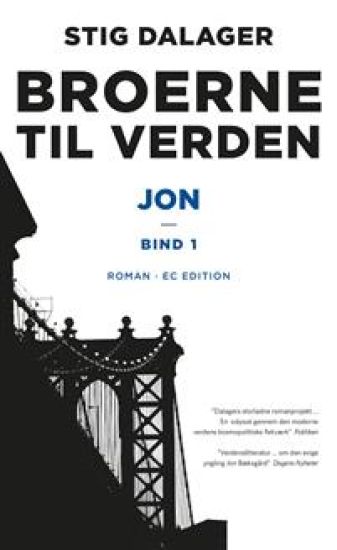
Broerne til verdenAllerede ved udgivelsen af det andet bind i dette syvbindsværk, der nu er under genudgivelse, beskrev den svenske litteraturkritiker Lars Olof Franzén fra Dagens Nyheter hovedpersonen Jon Bæksgård som en ”Odysseus i vor samtid”. Jon er netop en rejsende – og det ikke blot geografisk. Vi følger ham gennem de sidste næsten halvfjerds års mange politiske systemer i ofte spændingsmættede historier, der myldrer med samtidens kendte figurer. Men vi rejser også med på drømmeagtige eventyr i fortiden, fra stenalderen og op til dag. Med Jon Bæksgård forfølger Dalager store spørgsmål af eksistentiel og moralsk art fra Den Kolde Krig og op til nutidens Amerika under Trump.”En suite om at være menneske i senmoderniteten på godt og ondt,” Bo Tao Michaelis, Politiken”Dalagers tankevækkende storværk om Jon og samtiden,” Klaus Rothstein, Weekendavisen”En triumf for den politiske thriller,” Süddeutsche Zeitung”Verdenslitteratur ... nogle af de fineste og mest ambitiøse romaner, der kan læses nu," Dagens NyheterJonOm Jons barndom og brydningsfulde ungdom frem til universitetsårene i halvfjerdsernes Århus.”En intens sanset beskrivelse af en ung mands udvikling fra barndom til ungdom og samtidig en skildring af det omgivende samfunds udvikling … Flot, sammenhængende roman,” Karsten Just i Bibliotekstjenesten”Der er optrin … som bringer Sandemoses sømandsskildringer i erindring. Som en flænge i sofastykkets lærred, hvor man pludselig kan se ud i den store vide verden og fornemme, at der ikke er frelse at hente der. Men indsigt, proportionsfornemmelse og lidt selvforglemmelse. Romanen lyser af nærvær og poesi,” Peter Poulsen i DR´s litterære magasin, Perspektivkassen.Stig Dalager, en af dansk litteraturs mest internationalt udbredte forfattere, udgivet og spillet i 34 lande. I 2005 tildelt den livsvarige ydelse under Statens Kunstfond.Alle bøger i serien kan læses selvstændigt.
Alexandra Fisher and Jonathan Dixon meet in a honky-tonk outside of Nashville and instantly share a mutual attraction. Raised Jewish in New England by her wealthy, controlling father who holds her in contempt, Alex learned to comply with any request to keep the peace, even agreeing to marry his ideal candidate for her husband. Georgia construction empire scion Jon accepted a long-term project in Nashville, intending to spend solitary time healing. Very much the prodigal, he realized how far he's strayed off the path of his traditional Christian upbringing, and worked to repair his relationship with God before returning home to mend fences with his family. That night, Alex decides to take control of her life while, simultaneously, a horrific news story sends Jon back into a tailspin. After instructing the waitress to keep the drinks coming, they both make bad decisions that result in permanent consequences. Back home, when Alex stands up to her father, he pulls her trust fund, closes her accounts, applies influence with her employers, and evicts her. Alone, pregnant, and cut off, she can do nothing more than journey to Atlanta, hoping Jon can help. When Alex discovers Jon is not the blue-collar construction worker she assumed, she feels betrayed. However, his family's zest for life, love for Christ, and deep respect for each other show her how much was missing from the life she knew. She soon falls in love with Jon, but doesn't think he'll believe her. Jon knows he's fallen for Alex but doesn't know how to convey the depth of his feelings. Arriving at a mutual understanding of faith while looking through very different worldviews, they cling to each other, uniting as one, and learn to connect with God. But will family strife and all their baggage destroy their marriage before it even gets off the ground?