

Kirjahaku
Etsi kirjoja tekijän nimen, kirjan nimen tai ISBN:n perusteella.
1000 tulosta hakusanalla Jonathan Chamberlain


The complete edition of a timeless classic, includes the recently rediscovered Part Four and â??Last Wordsâ?? by Richard Bach.Jonathan Livingston Seagull, the most celebrated inspirational fable of our time, tells the story of a bird determined to be more than ordinary.

‘Trippy, incisive, riotously funny’ ALEXANDRA KLEEMAN ‘[An] insightfully nightmarish parable ' HALLE BUTLER 'A stunner’ NANA KWAME ADJEI-BRENYAH ‘Luminous … as if George Saunders infiltrated the Severance writers’ room’ WASHINGTON POST A work place novel. A love story. A dream you can’t wake from… Jonathan Abernathy is a loser. Unemployed and behind on his student loan repayments, the only thing Abernathy has in abundance is debt. When a secretive government loan forgiveness programme offers him a job he can literally do in his sleep, Abernathy thinks he’s found his big break. Hired as a dream auditor, he finds himself entering the dreams of white-collar workers to flag their anxieties for removal at night so they'll be more productive in the day. If Abernathy can at least appear competent, might he have a chance at a new life? As Abernathy tries to find his footing in this new gig, reality and morality begin to warp around him. Soon, the lines between life and work, right and wrong, and even sleep and consciousness, have blurred and Abernathy begins to wonder just what he might have signed away… Wildly imaginative, laced with black humour and full of close-to-the-bone truths, Jonathan Abernathy You Are Kind is the cult workplace novel that’s like nothing else you've read before. ‘Surrealist … A scathing critique of capitalism’ TIME ‘A rare and fine achievement.’ THE TELEGRAPH 'Imagine the movie Inception, but populated by the middle-management workers in David Graeber’s book Bullshit Jobs' NEW YORK TIMES 'An excitingly original writer, inventing much needed and killingly funny satires for contemporary work and dreams of success' HOLLY PESTER ‘A revelation’ HILARY LEICHTER ‘An original mind brimming over with invention’ BEN MARCUS ‘An exuberant, poignant, freewheeling debut … very funny’ JEFF VANDERMEER ‘The spiritual sibling of Severance, but creepier’ LITERARY HUB
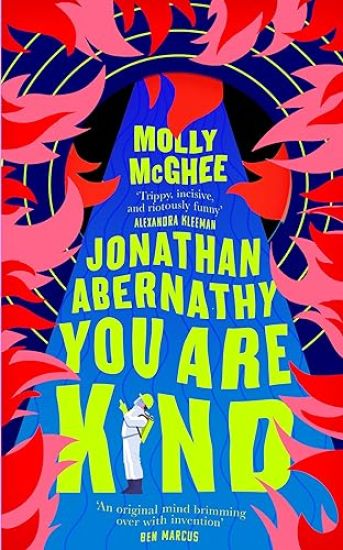
'Trippy, incisive, riotously funny' ALEXANDRA KLEEMAN'[An] insightfully nightmarish parable ' HALLE BUTLER'A stunner' NANA KWAME ADJEI-BRENYAH'Luminous ... as if George Saunders infiltrated the Severance writers' room' WASHINGTON POST

‘Trippy, incisive, riotously funny’ ALEXANDRA KLEEMAN ‘[An] insightfully nightmarish parable ' HALLE BUTLER 'A stunner’ NANA KWAME ADJEI-BRENYAH ‘Luminous … as if George Saunders infiltrated the Severance writers’ room’ WASHINGTON POST A work place novel. A love story. A dream you can’t wake from… Jonathan Abernathy is a loser. Unemployed and behind on his student loan repayments, the only thing Abernathy has in abundance is debt. When a secretive government loan forgiveness programme offers him a job he can literally do in his sleep, Abernathy thinks he’s found his big break. He finds himself entering the dreams of white-collar workers to audit them – flagging their anxieties for removal at night so they'll be more productive in the day. But as the lines between life and work, right and wrong, and even sleep and consciousness blur, Abernathy begins to wonder just how much he might have signed away … Wildly imaginative, laced with black humour and full of close-to-the-bone truths, Jonathan Abernathy You Are Kind is the cult workplace novel that’s like nothing else you've read before. ‘Surrealist … A scathing critique of capitalism’ TIME 'Imagine the movie Inception, but populated by the middle-management workers in David Graeber’s book Bullshit Jobs' NEW YORK TIMES 'An excitingly original writer, inventing much needed and killingly funny satires for contemporary work and dreams of success' HOLLY PESTER ‘A revelation’ HILARY LEICHTER ‘An original mind brimming over with invention’ BEN MARCUS ‘An exuberant, poignant, freewheeling debut … very funny’ JEFF VANDERMEER ‘The spiritual sibling of Severance, but creepier’ LITERARY HUB


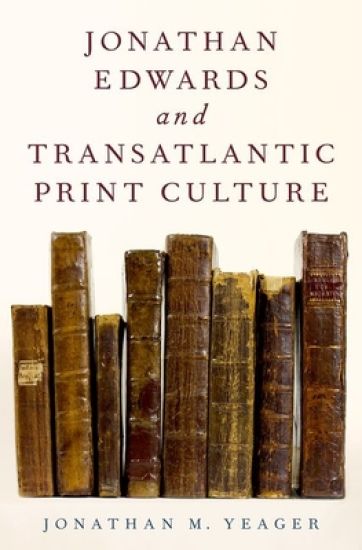
Jonathan Edwards and Transatlantic Print Culture
Jonathan M. Yeager
Oxford University Press Inc
2016
sidottu
On March 20, 1760, a fire broke out in the Cornhill district of Boston, destroying nearly 350 buildings in its wake. One of the ruined shops belonged to the eminent Boston bookseller Daniel Henchman, who had published some of Jonathan Edwards's most important works, including The Life of Brainerd in 1749. Less than one year after the Great Fire of 1760, Henchman died. Edwards's chief printer Samuel Kneeland and literary agent and editor, Thomas Foxcroft, had also passed away by the end of the decade, marking the end of an era. Throughout Edwards's lifetime, and in the years after his death in 1758, most of the first editions of his books had been published in Boston. But with the deaths of Henchman, Kneeland, and Foxcroft, the publications of Edwards's writings shifted to Britain, where a new crop of booksellers, printers, and editors took on the task of issuing posthumous editions and reprints of his books. In Jonathan Edwards and Transatlantic Print Culture, religious historian Jonathan Yeager tells the story of how Edwards's works were published, including the people who were involved in their publication and their motivations. This book explores what the printing, publishing, and editing of Jonathan Edwards's publications can tell us about religious print culture in the eighteenth century, how the way that his books were put together shaped society's understanding of him as an author, and how details such as the formats, costs, quality of paper, length, bindings, and the number of reprints and abridgements of his works affected their reception.

Jonathan Edwards and Scripture
Oxford University Press Inc
2018
sidottu
For too long, scholars have published new research on Edwards without paying due attention to the work he took most seriously: biblical exegesis. Edwards is recognized as an innovative theologian who wielded tremendous influence on revivalism, evangelicalism, and New England theology. What is often missed is how much time he devoted to studying and understanding the Bible. He kept voluminous notebooks on Scripture and died with unrealized plans for major treatises on the Bible. More and more experts now recognize the importance of this aspect of his life; this book brings together the insights of leading Edwards scholars on this topic. The essays in Jonathan Edwards and Scripture set Edwards' engagement with Scripture in the context of seventeenth-century Protestant exegesis and eighteenth-century colonial interpretation. They provide case studies of Edwards' exegesis in varying genres of the Bible and probe his use of Scripture to develop theology. The authors also set his biblical interpretation in perspective by comparing it with that of other exegetes. This book advances our understanding of the nature and significance of Edwards' work with Scripture and opens new lines of inquiry for students of early modern Western history.
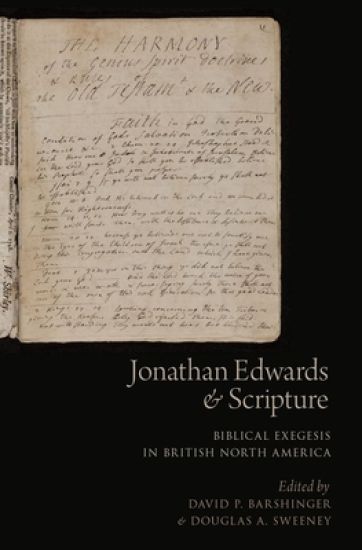
Jonathan Edwards and Scripture
Oxford University Press Inc
2018
nidottu
For too long, scholars have published new research on Edwards without paying due attention to the work he took most seriously: biblical exegesis. Edwards is recognized as an innovative theologian who wielded tremendous influence on revivalism, evangelicalism, and New England theology. What is often missed is how much time he devoted to studying and understanding the Bible. He kept voluminous notebooks on Scripture and died with unrealized plans for major treatises on the Bible. More and more experts now recognize the importance of this aspect of his life; this book brings together the insights of leading Edwards scholars on this topic. The essays in Jonathan Edwards and Scripture set Edwards' engagement with Scripture in the context of seventeenth-century Protestant exegesis and eighteenth-century colonial interpretation. They provide case studies of Edwards' exegesis in varying genres of the Bible and probe his use of Scripture to develop theology. The authors also set his biblical interpretation in perspective by comparing it with that of other exegetes. This book advances our understanding of the nature and significance of Edwards' work with Scripture and opens new lines of inquiry for students of early modern Western history.
Jonathan Edwards and the American Experience
Oxford University Press Inc
1989
nidottu
Universally recognized as a seminal figure in American intellectual history, Jonathan Edwards has been the focus of considerable scholarly attention in a variety of academic disciplines, including religion, history, literature, and philosophy. Because these disciplines discuss him in relation to different intellectual traditions, Edwards scholarship remains segmented. This volume represents the first attempt to provide a synthetic vision of Edwards and his contributions to American culture. Its fifteen previously unpublished essays present the best contemporary literary, historical, theological, and philosophical thinking on Edwards, locating him in his full historical context and demonstrating the continuity of his influence. Together, they provide the fullest account to date of his role in the development of the American consciousness. This volume is the first attempt to provide a synthetic vision of Edwards and his contribution to the development of the American consciousness. Fifteen previously unpublished essays present the best contemporary literary, historical, theological, and philosophical thinking on Edwards, locating him in his full historical context and demonstrating the continuity of his influence.
Jonathan Edwards and the Limits of Enlightenment Philosophy
Leon Chai
Oxford University Press Inc
1998
sidottu
Jonathan Edwards has most often been considered in the context of the Puritanism of New England. In many ways, however, he was closer to the thinkers of the European Enlightenment. In this book. Leon Chai explores that connection, analysing Edwards's thought in light of a number of the issues that preoccupied such Enlightenment figures as Locke, Descartes, Malebranche, and Leibniz. The book comprises three parts, each of which begins with a detailed analysis of a crucial passage from a classic Enlightenment text, and then turns to a major theological work of Jonathan Edwards in which the same issue is explored.

It has long been thought that Edwards's polemical arguments were aimed against Arminianism -- a doctrine that denied the Calvinist idea of predestination. In this book, Gerald McDermott shows that Edwards's real target was a larger and more influential one, namely deism -- the belief in a creator God who does not intervene in His Creation. To Edwards's mind, deism was the logical conclusion of most, if not all, schemes of divinity that appropriated Enlightenment tenets. McDermott argues that Edwards was an inclusivist who came to realize that salvation was open to peoples beyond the hearing of the Christian gospel.

Building upon recent research on the history of women, Jonathan Swift in the Company of Women examines Swift, both as man and writer, in terms of women: women as intimates, acquaintances, subjects of satire, and those who have written about Swift. It considers women as mothers and nurses in Swift's personal life and his fictions, and it explores the issue that has persisted from the eighteenth century into our own time: the subject of misogyny in Swift's writings.
Jonathan Swift and Thomas Sheridan: The Intelligencer
Clarendon Press
1992
sidottu
In 1728-9, Jonathan Swift and his friend Thomas Sheridan anonymously published the Intelligencer. This Dublin periodical offered trenchant and often witty commentary on the Irish social and political scene in the year before A Modest Proposal. The frequently anthologized review of The Beggar's Opera (no. 3) is not only the best contemporary criticism of it but also Swift's central pronouncement on satire. Several essays lash important enemies, anger being always a great creative stimulus to both Swift and Sheridan. This is the first collected edition of the Intelligencer since 1730. It is based on the rare original Dublin pamphlets, each known copy of which has been collated. Full commentary and appendices draw upon contemporary pamphlets, broadsides, newspapers, and manuscripts to site the Intelligencer papers in the personal, social, and political controversies in which they are engaged. There is also a fresh bibliographical analysis of the Intelligencer's textual transmission.
Throughout church history, the book of Psalms has enjoyed wider use and acclaim than almost any other book of the Bible. Early Christians extolled it for its fullness of Christian doctrine, monks memorized and recited it daily, lay people have prayed its words as their own, and churches have sung from it as their premier hymn book. While the past half century has seen an extraordinary resurgence of interest in the thought of American theologian Jonathan Edwards, including his writings on the Bible, no scholar has yet explored his meditations on the Psalms. David P. Barshinger addresses this gap by providing a close study of his engagement with one of the Bibles most revered books. From his youth to the final days of his presidency at the College of New Jersey, Edwards was a devout student of Scriptureas more than 1,200 extant sermons, theological treatises, and thousands of personal manuscript pages devoted to biblical reflection bear witness. Using some of his writings that have previously received little to no attention, Jonathan Edwards and the Psalms offers insights on his theological engagement with the Psalms in the context of interpretation, worship, and preaching. Barshinger shows that he appropriated the history of redemption as an organizing theological framework within which to engage the Psalms specifically, and the Bible as a whole. This original study greatly advances Edwards scholarship, shedding new and welcome light on the theologians relationship to Scripture.
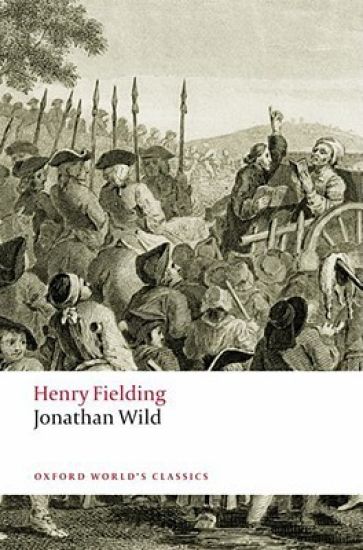
'he carried Good-nature to that wonderful and uncommon Height, that he never did a single Injury to Man or Woman, by which he himself did not expect to reap some Advantage' The real-life Jonathan Wild, gangland godfather and self-styled 'Thieftaker General', controlled much of the London underworld until he was executed for his crimes in 1725. Even during his lifetime his achievements attracted attention; after his death balladeers sang of his exploits, and satirists made connections between his success and the triumph of corruption in high places. Henry Fielding built on these narratives to produce one of the greatest sustained satires in the English language. Published in 1743, at a time when the modern novel had yet to establish itself as a fixed literary form, Jonathan Wild is at the same time a brilliant black comedy, an incisive political satire, and a profoundly serious exploration of human 'greatness' and 'goodness'. ABOUT THE SERIES: For over 100 years Oxford World's Classics has made available the widest range of literature from around the globe. Each affordable volume reflects Oxford's commitment to scholarship, providing the most accurate text plus a wealth of other valuable features, including expert introductions by leading authorities, helpful notes to clarify the text, up-to-date bibliographies for further study, and much more.

In Jonathan Edwards on God and Creation, Oliver Crisp considers two central themes in Edwards's thought, namely, his doctrine of God and his understanding of the created order, and how God and creation interrelate. Crisp argues that Edwards offers some truly original insights on these twin loci that have important implications for current theological discussion. What emerges is a picture of Edwards's understanding of God's relationship to the created order that differs in important respects from those offered by several influential recent interpreters. Crisp does not flinch from showing where Edwards made mistakes as well as where he offers fresh insights. Edwards is shown to be at once relevant to current discussion of issues like perfect being theology, panentheism, divine freedom or union with Christ, while remaining something of an idiosyncratic figure whose idealism and commitment to an uncompromising theological determinism can seem out of step with certain modern sensibilities. But, argues Crisp, even if we disagree with the conclusions Edwards reaches, which sometimes jar with our own intuitions about the divine nature or the created order, the clarity, rigor and sheer originality of his thinking offer an important set of themes and ideas with which contemporary theologians can fruitfully engage as they set about the task of constructive theology.

This book seeks to shed new light on the development of the ecclesiology of Jonathan Edwards from the writings of his youth until his Stockbridge treatises, setting this within the context of Reformation and Puritan debates, and his experience of the revivals during his Northampton ministry. Bezzant contends that Edwards repristinated an ossified New England ecclesiology by acknowledging the church's dynamic relationship with the created order, history and the nations, and by advocating renewal in ecclesial life through revivals, itinerancy, Concerts of Prayer, missionary initiatives outside of the local congregation, and doctrinal clarification. Bezzant shows that Edwards accommodated the Christendom model of ecclesiology to the new philosophical, political and social realities of the mid-eighteenth-century British Atlantic world. His ecclesiology can be aptly summarized as prophetic, in as far as the church makes identification with its social context, while yet providing an alternative millennial vision for human flourishing. Edwards's Gospel is preached within a larger vision of transformed society and the glory of God, for whom the church is an orderly but not ordinary instrument to promote visible union between believers and Christ.