Kirjojen hintavertailu. Mukana 12 390 323 kirjaa ja 12 kauppaa.

Kirjahaku

Etsi kirjoja tekijän nimen, kirjan nimen tai ISBN:n perusteella.

1000 tulosta hakusanalla Jonathan M. Hess

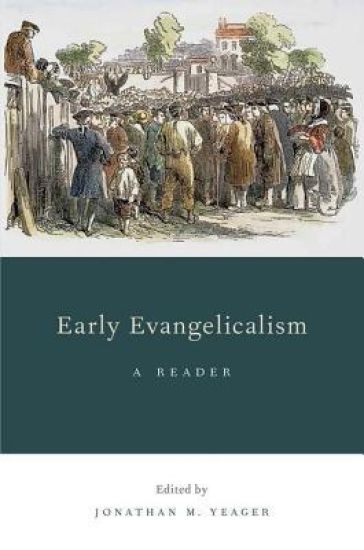
Early Evangelicalism

Early Evangelicalism

Jonathan M. Yeager

Oxford University Press Inc
2013
sidottu
Evangelicalism has played a prominent role in western religion since the dawn of modernity. Coinciding with the emergence of the Enlightenment in America and Europe, evangelicalism flourished during the transatlantic revivals of the eighteenth century. In addition to adopting Protestantism's core beliefs of justification by faith, scripture alone, and the priesthood of believers, early evangelicals emphasized conversion and cross-cultural missions to a greater extent than Christians of previous generations. Most people today associate early evangelicalism with only a few of its leaders. Yet this was a religious movement that involved more people than simply Jonathan Edwards, John Wesley, and George Whitefield. Early evangelicals were Anglicans, Baptists, Congregationalists, Methodists, Moravians, and Presbyterians and could be found in America, Canada, Great Britain, and Western Europe. They published hymns, historical works, poems, political pamphlets, revival accounts, sermons, and theological treatises. They recorded their conversion experiences and kept diaries and journals that chronicled their spiritual development. Early Evangelicalism: A Reader is an anthology that introduces a host of important religious figures. After brief biographical sketches of each author, this book offers over sixty excerpts from a wide range of well-known and lesser-known Protestant Christians, representing a variety of denominations, geographical locations, and underrepresented groups in order to produce the most comprehensive sourcebook of its kind.
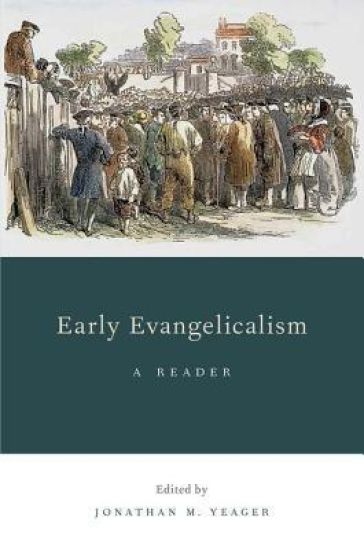
Early Evangelicalism

Early Evangelicalism

Jonathan M. Yeager

Oxford University Press Inc
2013
nidottu
Evangelicalism has played a prominent role in western religion since the dawn of modernity. Coinciding with the emergence of the Enlightenment in America and Europe, evangelicalism flourished during the transatlantic revivals of the eighteenth century. In addition to adopting Protestantism's core beliefs of justification by faith, scripture alone, and the priesthood of believers, early evangelicals emphasized conversion and cross-cultural missions to a greater extent than Christians of previous generations. Most people today associate early evangelicalism with only a few of its leaders. Yet this was a religious movement that involved more people than simply Jonathan Edwards, John Wesley, and George Whitefield. Early evangelicals were Anglicans, Baptists, Congregationalists, Methodists, Moravians, and Presbyterians and could be found in America, Canada, Great Britain, and Western Europe. They published hymns, historical works, poems, political pamphlets, revival accounts, sermons, and theological treatises. They recorded their conversion experiences and kept diaries and journals that chronicled their spiritual development. Early Evangelicalism: A Reader is an anthology that introduces a host of important religious figures. After brief biographical sketches of each author, this book offers over sixty excerpts from a wide range of well-known and lesser-known Protestant Christians, representing a variety of denominations, geographical locations, and underrepresented groups in order to produce the most comprehensive sourcebook of its kind.
Artifact and Artifice

Artifact and Artifice

Jonathan M. Hall

University of Chicago Press
2014
nidottu
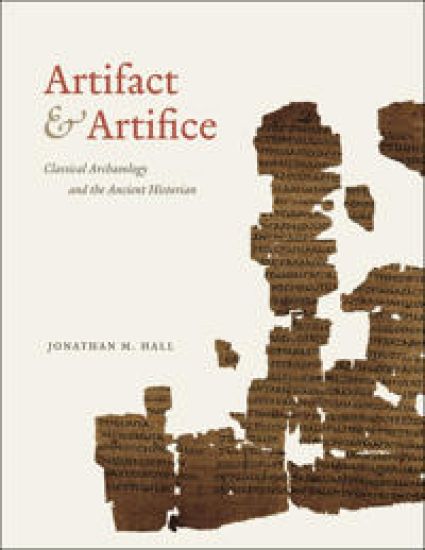
Is it possible to trace the footprints of the historical Sokrates in Athens? Was there really an individual named Romulus, and if so, when did he found Rome? Is the tomb beneath the high altar of St. Peter's Basilica home to the apostle Peter? To answer these questions, we need both dirt and words - that is, archaeology and history. Bringing the two fields into conversation, Artifact and Artifice offers an exciting excursion into the relationship between ancient history and archaeology and reveals the possibilities and limitations of using archaeological evidence in writing about the past. Jonathan M. Hall employs a series of well-known cases to investigate how historians may ignore or minimize material evidence that contributes to our knowledge of antiquity unless it correlates with information gleaned from texts. Dismantling the myth that archaeological evidence cannot impart information on its own, he illuminates the methodological and political principles at stake in using such evidence and describes how the disciplines of history and classical archaeology may be enlisted to work together. He also provides a brief sketch of how the discipline of classical archaeology evolved and considers its present and future role in historical approaches to antiquity. Written in clear prose and packed with maps, photos, and drawings, Artifact and Artifice will be an essential book for undergraduates in the humanities.
Ecological Niches

Ecological Niches

Jonathan M. Chase; Mathew A. Leibold

University of Chicago Press
2003
sidottu
Why do species live where they live? What determines the abundance and diversity of species in a given area? What role do species play in the functioning of entire ecosystems? All of these questions share a single core concept - the ecological niche. Although the niche concept has fallen into disfavour among ecologists in recent years, Jonathan M. Chase and Mathew A. Leibold argue that the niche is an ideal tool with which to unify disparate research and theoretical approaches in contemporary ecology. Chase and Leibold define the niche as including both what an organism needs from its environment and how that organism's activities shape its environment. Drawing on the theory of consumer-resource interactions, as well as its graphical analysis, they develop a framework for understanding niches that is flexible enough to include a variety of small- and large-scale processes, from resource competition, predation and stress to community structure, biodiversity and ecosystem function. Chase and Leibold's synthetic approach should interest ecologists from a wide range of subdisciplines.
Ecological Niches

Ecological Niches

Jonathan M. Chase; Mathew A. Leibold

University of Chicago Press
2003
nidottu
Although the niche concept has fallen into disfavour among ecologists in recent years, Jonathan M. Chase and Mathew A. Leibold argue that the niche is an ideal tool with which to unify disparate research and theoretical approaches in contemporary ecology.
Hellenicity

Hellenicity

Jonathan M. Hall

University of Chicago Press
2002
sidottu
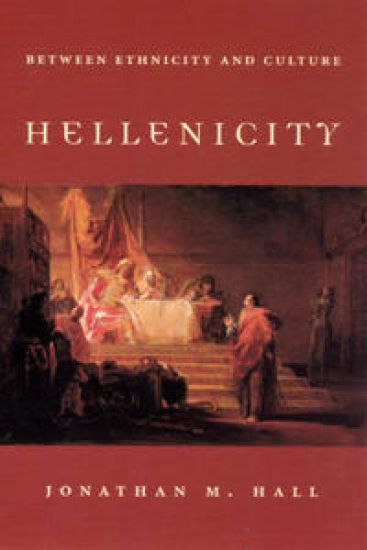
Jonathan M. Hall explores questions of ethnic and national identity in the context of ancient Greece in Hellenicity, drawing on an exceptionally wide range of evidence to determine when, how, why, and to what extent the Greeks conceived themselves as a single people. Hall argues that a subjective sense of Hellenic identity emerged in Greece much later than is normally assumed. For instance, he shows that the four main ethnic subcategories of the ancient Greeks - Akhaians, Ionians, Aiolians, and Dorians - were not primordial survivals from a premigratory period but emerged in precise historical circumstances during the eighth and seventh centuries BC. Furthermore, Hall demonstrates that the terms of defining Hellenic identity shifted from ethnic to broader cultural criteria during the course of the fifth century BC, chiefly due to the influence of Athens, whose citizens formulated a new Athenocentric conception of "Greekness."
Hellenicity

Hellenicity

Jonathan M. Hall

University of Chicago Press
2005
nidottu
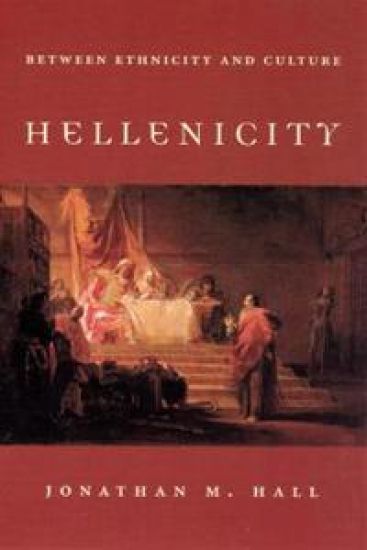
Jonathan M. Hall explores questions of ethnic and national identity in the context of ancient Greece in Hellenicity, drawing on an exceptionally wide range of evidence to determine when, how, why, and to what extent the Greeks conceived themselves as a single people. Hall argues that a subjective sense of Hellenic identity emerged in Greece much later than is normally assumed. For instance, he shows that the four main ethnic subcategories of the ancient Greeks - Akhaians, Ionians, Aiolians, and Dorians - were not primordial survivals from a premigratory period but emerged in precise historical circumstances during the eighth and seventh centuries BC. Furthermore, Hall demonstrates that the terms of defining Hellenic identity shifted from ethnic to broader cultural criteria during the course of the fifth century BC, chiefly due to the influence of Athens, whose citizens formulated a new Athenocentric conception of "Greekness."
The Lost Promise of Patriotism

The Lost Promise of Patriotism

Jonathan M. Hansen

University of Chicago Press
2003
sidottu
During the years leading up to World War I, America experienced a crisis of civic identity. How could a country founded on liberal principles and composed of increasingly diverse cultures unite to safeguard individuals and promote social justice? In this book, Jonathan Hansen tells the story of a group of American intellectuals who believed the solution to this crisis lay in rethinking the meaning of liberalism. Intellectuals such as William James, John Dewey, Jane Addams, Eugene V. Debs, and W.E.B. Du Bois repudiated liberalism's association with acquisitive individualism and laissez-faire economics, advocating a model of liberal citizenship whose virtues and commitments amount to what Hansen calls cosmopolitan patriotism. Rooted not in war but in dedication to social equity, cosmopolitan patriotism favoured the fight against sexism, racism and political corruption in the United States over battles against foreign foes. Its adherents held the domestic and foreign policy of the United States to its own democratic ideals and maintained that promoting democracy universally constituted the ultimate form of self-defence. Perhaps most important, the cosmopolitan patriots regarded critical engagement with one's country as the essence of patriotism, thereby justifying scrutiny of American militarism in wartime.
The Lost Promise of Patriotism

The Lost Promise of Patriotism

Jonathan M. Hansen

University of Chicago Press
2003
nidottu
During the years leading up to World War I, America experienced a crisis of civic identity. How could a country founded on liberal principles and composed of increasingly diverse cultures unite to safeguard individuals and promote social justice? In this book, Jonathan Hansen tells the story of a group of American intellectuals who believed the solution to this crisis lay in rethinking the meaning of liberalism. Intellectuals such as William James, John Dewey, Jane Addams, Eugene V. Debs, and W.E.B. Du Bois repudiated liberalism's association with acquisitive individualism and laissez-faire economics, advocating a model of liberal citizenship whose virtues and commitments amount to what Hansen calls cosmopolitan patriotism. Rooted not in war but in dedication to social equity, cosmopolitan patriotism favoured the fight against sexism, racism and political corruption in the United States over battles against foreign foes. Its adherents held the domestic and foreign policy of the United States to its own democratic ideals and maintained that promoting democracy universally constituted the ultimate form of self-defence. Perhaps most important, the cosmopolitan patriots regarded critical engagement with one's country as the essence of patriotism, thereby justifying scrutiny of American militarism in wartime.
The Big Truck That Went by

The Big Truck That Went by

Jonathan M. Katz

Palgrave Macmillan
2013
sidottu
On January 12, 2010, the deadliest earthquake in the history of the Western Hemisphere struck the nation least prepared to handle it. Jonathan M. Katz, the only full-time American news correspondent in Haiti, was inside his house when it buckled along with hundreds of thousands of others. In this visceral, authoritative first-hand account, Katz chronicles the terror of that day, the devastation visited on ordinary Haitians, and how the world reacted to a nation in need. More than half of American adults gave money for Haiti, part of a monumental response totaling $16.3 billion in pledges. But three years later the relief effort has foundered. It's most basic promises - to build safer housing for the homeless, alleviate severe poverty, and strengthen Haiti to face future disasters - remain unfulfilled. The Big Truck That Went By presents a sharp critique of international aid that defies today's conventional wisdom; that the way wealthy countries give aid makes poor countries seem irredeemably hopeless, while trapping millions in cycles of privation and catastrophe. Katz follows the money to uncover startling truths about how good intentions go wrong, and what can be done to make aid "smarter." With coverage of Bill Clinton, who came to help lead the reconstruction; movie-star aid worker Sean Penn; Wyclef Jean; Haiti's leaders and people alike, Katz weaves a complex, darkly funny, and unexpected portrait of one of the world's most fascinating countries. The Big Truck That Went By is not only a definitive account of Haiti's earthquake, but of the world we live in today.
Policing and the Poetics of Everyday Life

Policing and the Poetics of Everyday Life

Jonathan M. Wender

University of Illinois Press
2008
sidottu
Policing and the Poetics of Everyday Life takes a unique approach to the investigation of several abiding issues at the center of criminological and sociological inquiry by engaging them from a standpoint grounded in philosophy and aesthetics. This study by a self-described “philosopher-cop” develops a phenomenological interpretation of police-citizen encounters, revealing the importance of metaphysics in everyday life through a disclosure of the grounding principles that inform the bureaucratic approach to human predicaments. Jonathan M. Wender, a social philosopher and veteran police sergeant, brings a refreshing new voice to academic and practical discussions of social questions that are otherwise addressed almost exclusively from a narrow scientific or administrative perspective. This book reflects a conscious attempt to follow the general model of Martin Heidegger’s Zollikon Seminars, in which Heidegger engaged psychiatrists and psychologists in a sustained dialogue aimed at developing their critical awareness of the unexamined philosophical foundations informing their everyday clinical practice. Wender draws on Heidegger to argue that “praxis is poetry” and from this standpoint interprets all social action as intentional creation (or “poiesis”), which by its very nature is intrinsically meaningful. Using an interpretive framework that he calls a “phenomenological aesthetics of encounter,” Wender takes up a number of case studies of police-citizen encounters, including cases of domestic violence, contacts with juveniles, drug-related situations, instances of mental and emotional crisis, and death.
Anti-vaxxers

Anti-vaxxers

Jonathan M. Berman

MIT Press
2020
nidottu
Vaccines are a documented success story, one of the most successful public health interventions in history. Yet there is a vocal anti-vaccination movement, featuring celebrity activists (including Kennedy scion Robert F. Kennedy Jr. and actress Jenny McCarthy) and the propagation of anti-vax claims through books, documentaries, and social media. In Anti-Vaxxers, Jonathan Berman explores the phenomenon of the anti-vaccination movement, recounting its history from its nineteenth-century antecedents to today's activism, examining its claims, and suggesting a strategy for countering them.
Critical Thinking for Medical and Graduate Students

Critical Thinking for Medical and Graduate Students

Jonathan M. Berman; Troy Camarata

MIT PRESS LTD
2025
nidottu
The definitive handbook on critical thinking for medical and graduate students in biomedical sciences. First-year medical and graduate students in biomedical sciences face a variety of challenges in learning to study, feeling as though they belong, and learning to adopt the habits of thought of their chosen profession. Crucial to their success in this key career period is learning critical thinking, which involves slowing down, as well as considering causality, epistemology, ethics, and one's own cognitive biases. This book addresses these challenges by teaching evidence-based study habits, "the hidden curriculum," and how to think about complex topics in biomedicine, especially for underrepresented students. With a wealth of practical examples and case studies, this accessibly written book presents complex topics from a variety of fields such as philosophy and logic in a digestible format for the target audience.
General Matthew B. Ridgway

General Matthew B. Ridgway

Jonathan M. Soffer

Praeger Publishers Inc
1998
sidottu
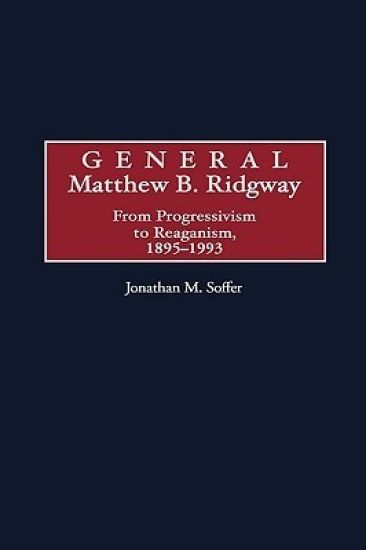
Detailing the life and legacy of one of America's highest profile military commanders, this biography looks at how Ridgway maintained his corporatist ideals through the critical days of World War II and the Cold War. The qualities that Ridgway honed on the battlefields of Europe and Korea were the same that he would draw upon in more politicized jobs as NATO commander and US Army Chief of Staff, and in retirement as the leading military critic of American intervention in Vietnam. The global scope of Ridgway's involvement, in wartime and peacetime, from Europe to Latin American to the Far East, provides a unique opportunity to examine the policy and ideological issues of the day. Early chapters chronicle Ridgway's younger life and early postings from West Point to China to Sandino's Nicaragua, and his participation in various campaigns during World War II, from Sicily to Normandy to the Battle of the Bulge and on into Germany. Later chapters cover his work as a military diplomat under President Truman, including his work on arms control and the Inter-American Cooperation Act. Soffer then examines Ridgway's key role in the Korean War and his ability as a theater commander, and then considers his actions under President Eisenhower and beyond, as well as Ridgway's active support for Ronald Reagan in the 1980s. This work will prove valuable to students of military history and the Cold War.
Innovation and Proactive Decision-Making

Innovation and Proactive Decision-Making

Jonathan M Williams

priya publishers
2024
pokkari
Some entrepreneurs lack the knowledge and skills to deal with risks created by business uncertainties. Small business entrepreneurs must develop strategies to help them run successful businesses for a long time. Grounded in the uncertainty management theory and enterprise risk management, the purpose of this qualitative study was to explore strategies entrepreneurs, especially those with startups within the food service industry, use to deal with risks created by business uncertainties. Participants were five food and service entrepreneurs within the Northeast region of the United States who successfully dealt with risks caused by business uncertainties
Islam

Islam

Jonathan M. Bloom; Sheila S. Blair

Yale University Press
2002
pokkari
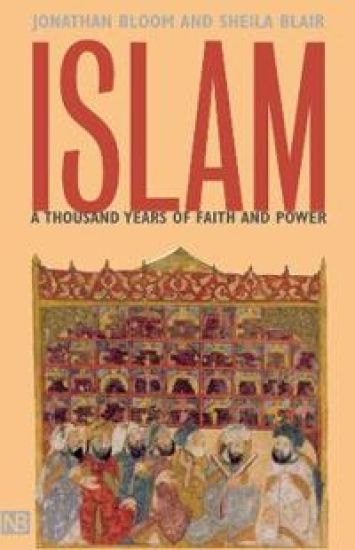
In its first thousand years—from the revelations to Muhammad in the seventh century to the great Islamic empires of the sixteenth--Islamic civilization flourished. While Europeans suffered through the Dark Ages, Muslims in such cities as Jerusalem, Damascus, Alexandria, Fez, Tunis, Cairo, and Baghdad made remarkable advances in philosophy, science, medicine, literature, and art. This engrossing and accessible book explores the first millennium of Islamic culture, shattering stereotypes and enlightening readers about the events and achievements that have shaped contemporary Islamic civilization.Jonathan Bloom and Sheila Blair examine the rise of Islam, the life of Muhammad, and the Islamic principles of faith. They describe the golden age of the Abbasids, the Mongol invasions, and the great Ottoman, Safavid, and Mughal empires that emerged in their wake. Their narrative, complemented by excerpts of the Koran, poetry, biographies, inscriptions, travel guides, and even a thirteenth-century recipe, concludes with a brief epilogue that takes us to the twenty-first century. Colorfully illustrated, this book is a wonderful introduction to the rich history of a civilization that still radically affects the world.
Architecture of the Islamic West

Architecture of the Islamic West

Jonathan M. Bloom

Yale University Press
2020
sidottu
An authoritative survey situating some of the Western world’s most renowned buildings within a millennium of Islamic history Some of the most outstanding examples of world architecture, such as the Mosque of Córdoba, the ceiling of the Cappella Palatina in Palermo, the Giralda tower in Seville, and the Alhambra Palace in Granada, belong to the Western Islamic tradition. This architectural style flourished for over a thousand years along the southern and western shores of the Mediterranean—between Tunisia and Spain—from the 8th century through the 19th, blending new ideas with local building practices from across the region. Jonathan M. Bloom’s Architecture of the Islamic West introduces readers to the full scope of this vibrant tradition, presenting both famous and little-known buildings in six countries in North Africa and southern Europe. It is richly illustrated with photographs, specially commissioned architectural plans, and historical documents. The result is a personally guided tour of Islamic architecture led by one of the finest scholars in the field and a powerful testament to Muslim cultural achievement.
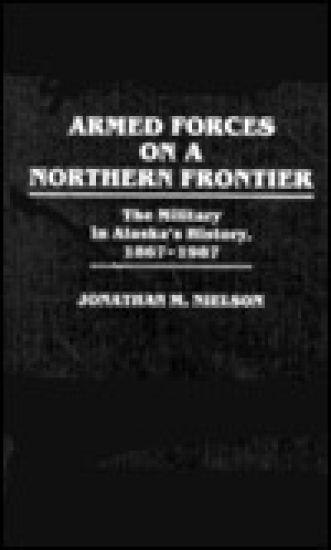
Armed Forces on a Northern Frontier

Armed Forces on a Northern Frontier

Jonathan M. Nielson

Praeger Publishers Inc
1988
sidottu
This book examines the contribution of the military to the exploration, settlement, development, and defense of Alaska. The work covers the period of time from its purchase from Russia in 1867 to the present. During that time Alaska emerged from an obscure colonial dependency to a resource-rich state. This same period confirmed its strategic significance in hemispheric and continental defense, first during the second world war, when Japanese forces occupied the Aleutian Islands, and then during the cold war confrontation between the United States and the Soviet Union.While in some ways analagous to the western experience generally, the duties of the military on the Alaska frontier were unique. Geography, climate, and unprecendented responsibilities of governance and law enforcement imposed many new challenges. In recent years Alaska and the Arctic have acquired military significance for both the United States and Russia. This fascinating study is in inquiry into the historical evidence and the major themes, events, and personalities that have shaped the development of our forty-ninth state. It offers original research in archival and manuscript sources, and provides a useful synthesis of the published documentary record, and brings together in a comprehensive bibliography resources that are available for those who wish to pursue specific areas of interest. The broad scope, both interpretive and narrative, of this important work will make it an indispensable aid to students and scholars of the western historical experience, American military history, and world history.
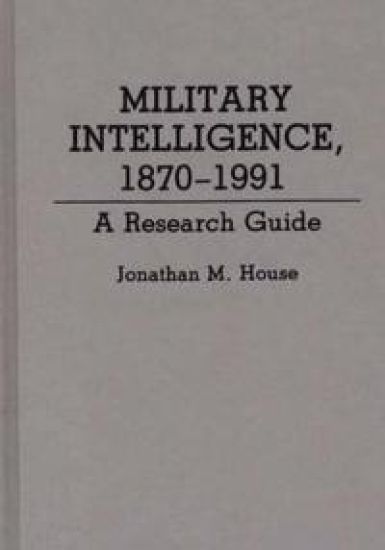
Military Intelligence, 1870-1991

Military Intelligence, 1870-1991

Jonathan M. House

Greenwood Press
1993
sidottu
This research guide is an introduction to military intelligence, a neglected aspect of warfare that provides commanders and national leaders with essential information for decision making. The introduction provides the general reader with an explanation of the terminology, procedures, and institutional problems of military intelligence, while outlining the history of this field and identifying areas for further research. The core of the guide is an extensively annotated bibliography of unclassified English language materials on military intelligence, the evolution of intelligence operations, the role of intelligence in air, ground, and naval operations, and specialized fields of espionage, counter intelligence, technical intelligence, and aerial photography. This guide is intended to fill a void in the literature for soldiers, historians, and general readers.
An Interactive History of the Clean Air Act

An Interactive History of the Clean Air Act

Jonathan M Davidson; Joseph M Norbeck

Elsevier - Health Sciences Division
2011
nidottu
The Clean Air Act of 1970 set out for the United States a basic, yet ambitious, objective to reduce pollution to levels that protect health and welfare. The Act set out state and federal regulations to limit emissions and the Environmental Protection Agency was established to help enforce the regulations. The Act has since had several amendments, notably in 1977 and 1990, and has successfully helped to increase air quality. This book reviews the history of the Clean Air Act of 1970 including the political, business, and scientific elements that went into establishing the Act, emphasizing the importance that scientific evidence played in shaping policy. The analysis then extends to examine the effects of the Act over the past forty years including the Environmental Protection Agency’s evolving role and the role of states and industry in shaping and implementing policy. Finally, the book offers best practices to guide allocation of respective government and industry roles to guide sustainable development. The history and analysis of the Clean Air Act presented in this book illustrates the centrality of scientific analysis and technological capacity in driving environmental policy development. It would be useful for policy makers, environmental scientists, and anyone interested in gaining a clearer understand of the interaction of science and policy.