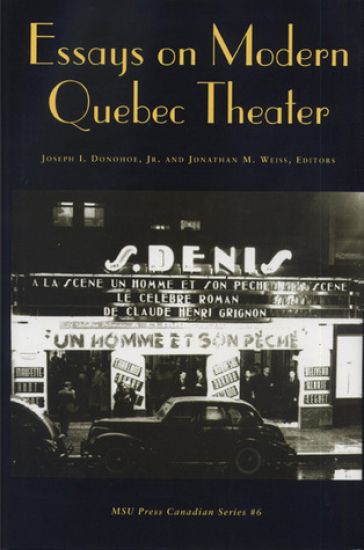
Scholars from Quebec, Anglophone Canada, France, and the US offer a dozen essays on the explosion of drama in Quebec since World War II, influenced by the cultural revival and revolution of the 1960's. Among the topics are staging the maternal body, language and collective identity, postmodern and experimental theater, and the hermaphrodite as cult
Political scientists designing experiments often face the question of how abstract or detailed their experimental stimuli should be. Typically, this question is framed in terms of tradeoffs relating to experimental control and generalizability: the more context introduced into studies, the less control, and the more difficulty generalizing the results. Yet, we have reason to question this tradeoff, and there is relatively little systematic evidence to rely on when calibrating the degree of abstraction in studies. We make two contributions. First, we provide a theoretical framework which identifies and considers the consequences of three dimensions of abstraction in experimental design: situational hypotheticality, actor identity, and contextual detail. Second, we field a range of survey experiments, varying these levels of abstraction. We find that situational hypotheticality does not substantively change experimental results, but increased contextual detail dampens treatment effects and the salience of actor identities moderates results in specific situations.
This realistic cross-section of the project management discipline in the federal arena will help anyone leading, working on, or affecting the direction of a project team. It covers the entire scope of project management from organization to methodology, technology to leadership. This volume focuses on the three project management organizational dimensions of culture, systems, and structure. Federal practices and successes in the areas of communication, project leadership, stakeholders, and key competencies are highlighted. The book offers clear and practical advice drawn from a variety of project management successes in the federal arena.
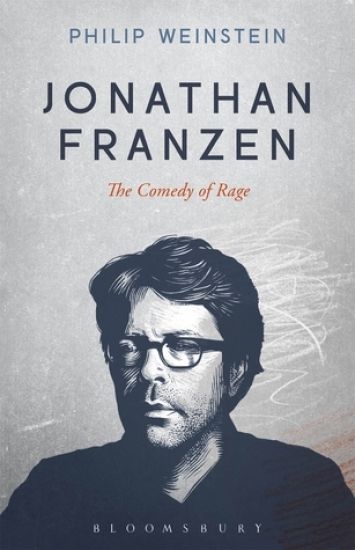
Jonathan Franzen: The Comedy of Rage is the first critical biography of one of today’s most important novelists. Drawing on unpublished emails and both published and private interviews, Philip Weinstein conveys the feel and heft of Franzen’s voice as he ponders the purposes and problems of his life and art, from his earliest fiction to his most recent novel, Purity.Franzen’s work raises major questions about the possibilities of contemporary fiction: how does one appeal to a wide audience of mainstream readers, on the one hand, while persuading connoisseurs, on the other, that one’s fiction has staying power, is high art? More acutely, how did Franzen move from the rage that animates his first two novels to the more generous comic stance of the later novels on which his reputation rests?Wrestling with these questions, Jonathan Franzen: The Comedy of Rage unpacks the becoming of Franzen as a person and a writer—from his ultra-sensitive Midwestern childhood, through his heady years at Swarthmore College, his marriage, and the alienating decade of the 1990s, up to his spectacular ascent and assimilation into pop culture as one of the literary figures of his generation. Weinstein joins biography and criticism in ways that fully respect their differences, but that also grant that the work comes, however unpredictably, out of the life.
Jonathan Franzen: The Comedy of Rage is the first critical biography of one of today’s most important novelists. Drawing on unpublished emails and both published and private interviews, Philip Weinstein conveys the feel and heft of Franzen’s voice as he ponders the purposes and problems of his life and art, from his earliest fiction to his most recent novel, Purity.Franzen’s work raises major questions about the possibilities of contemporary fiction: how does one appeal to a wide audience of mainstream readers, on the one hand, while persuading connoisseurs, on the other, that one’s fiction has staying power, is high art? More acutely, how did Franzen move from the rage that animates his first two novels to the more generous comic stance of the later novels on which his reputation rests?Wrestling with these questions, Jonathan Franzen: The Comedy of Rage unpacks the becoming of Franzen as a person and a writer—from his ultra-sensitive Midwestern childhood, through his heady years at Swarthmore College, his marriage, and the alienating decade of the 1990s, up to his spectacular ascent and assimilation into pop culture as one of the literary figures of his generation. Weinstein joins biography and criticism in ways that fully respect their differences, but that also grant that the work comes, however unpredictably, out of the life.
Sure, you know about chicken soup, but do you know about a souped-up chicken?Jonathan Segal Chicken was just another piece of kosher poultry, but he decided he wanted something more. He wanted to fly, and fly he did, on adventures that take him out into the world... and beyond.This classic parody from the 1970s is now available again in this newly redesigned edition."It is a witty and bitchy book, which amply repays the time and trouble which were once taken with its more serious and less significant forbear." - The Spectator (UK)
Despite clear evidence of a serious decline in morale, the major competitors in the law firm management marketplace have virtually ignored the motivational facet of current managerial theory and practice. As evidenced by a review of the literature dealing with law firm management, including major books, handbooks, and professional seminar outlines, there has existed until now no treatment of current management theory and practice as it pertains to law firms. In addressing human resources topics as they apply to the modern law firm, this book fills a genuine void in an area which is of major importance to law firms challenged to remain profitable in an increasingly hostile environment. Managing People in Today's Law Firm: The Human Resources Approach to Surviving Change provides a comprehensive treatment of critical aspects of modern management: motivation, communication, organizational culture, structure and strategy, power and politics, recruitment and training, the reward-performance-retention dynamic, performance appraisal, and planned change. Grounded in managerial theory and research, based on extensive practice, and exemplified by anecdotal war stories, this book makes valuable reading for partners, associates, managers, and future members of law firms—and offers important ideas for motivating members of all professional service firms. Intended for law firms and lawyers within them, solo practitioners who contemplate joining with others in a firm partnership, law school libraries, and general and professional association libraries including bar associations on the state and local levels.
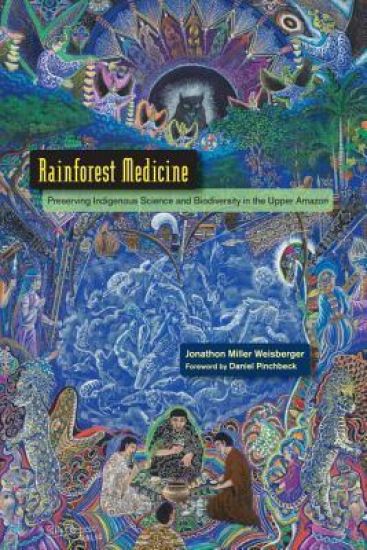
Chronicling the practices, legends, and wisdom of the vanishing traditions of the upper Amazon, this book reveals the area’s indigenous peoples’ approach to living in harmony with the natural world. Rainforest Medicine features in-depth essays on plant-based medicine and indigenous science from four distinct Amazonian societies: deep forest and urban, lowland rainforest and mountain.The book is illustrated with unique botanical and cultural drawings by Secoya elder and traditional healer Agustin Payaguaje and horticulturalist Thomas Y. Wang as well as by the author himself. Payaguaje shares his sincere imaginal view into the spiritual life of the Secoya; plates of petroglyphs from the sacred valley of Cotundo relate to an ancient language, and other illustrations show traditional Secoya ayahuasca symbols and indigenous origin myths. Two color sections showcase photos of the plants and people of the region, and include plates of previously unpublished full-color paintings by Pablo Cesar Amaringo (1938-2009), an acclaimed Peruvian artist renowned for his intricate, colorful depictions of his visions from drinking the entheogenic plant brew, ayahuasca (“vine of the soul” in Quechua languages).Today the once-dense mysterious rainforest realms are under assault as the indiscriminate colonial frontier of resource extraction moves across the region; as the forest disappears, the traditional human legacy of sustainable utilization of this rich ecosystem is also being buried under modern realities. With over 20 years experience of ground-level environmental and cultural conservation, author Jonathon Miller Weisberger’s commitment to preserving the fascinating, unfathomably precious relics of the indigenous legacy shines through. Chief among these treasures is the “shimmering” “golden” plant-medicine science of ayahuasca or yajé, a rainforest vine that was popularized in the 1950s by Western travelers such as William Burroughs and Alan Ginsberg. It has been sampled, reviled, and celebrated by outsiders ever since.Currently sought after by many in the industrialized West for its powerful psychotropic and life-transforming effects, this sacred brew is often imbibed by visitors to the upper Amazon and curious seekers in faraway venues, sometimes with little to no working knowledge of its principles and precepts. Perceiving that there is an evident need for in-depth information on ayahuasca if it is to be used beyond its traditional context for healing and spiritual illumination in the future, Miller Weisberger focuses on the fundamental knowledge and practices that guide the use of ayahuasca in indigenous cultures. Weaving first-person narrative with anthropological and ethnobotanical information, Rainforest Medicine aims to preserve both the record and ongoing reality of ayahuasca’s unique tradition and, of course, the priceless forest that gave birth to these sacred vines. Featuring words from Amazonian shamans–the living torchbearers of these sophisticated spiritual practices–the book stands as testimony to this sacred plant medicine’s power in shaping and healing individuals, communities, and nature alike.
College rule (also known as medium ruled paper) is the most common lined paper in use in the United States. It is generally used in middle school through to college and is also popular with adults. This is a good choice for teen or adult notebooks and composition books (known as exercise books outside the US).
The fight is coming to Gillham.That's what Jonathan should be focusing on. Instead, he's picking up Cedric, a mouse shifter who's running from the Beasts and happens to have information on what the Beasts' next step will be.Cedric just wants to save his brother, who's still in the Beasts' hands. He knows he can't do it on his own, which is why he decides to keep the date of the attack on Gillham to himself unless they help him get Archie back. Neither of them had planned on being each other's mate. Jonathan has to choose whether he'll be there for Gillham or for his mate, while Cedric needs to decide what's more important-saving his brother's life, or saving the lives of everyone in Gillham?
For months Jonathan has journeyed through forest and jungle, desert and bog, on a quest to reach the capital city where he will be crowned the King of Dreams. Along the way he has suffered loss and pushed through challenges, transforming from a reluctant boy to a young man who sees the value in protecting the dreamworld from nightmarish Rankers. However, Jonathan's latest discovery, that he can open a secret portal to the nightmare isles, haunts his thoughts. Perhaps he can open this portal and enter the isles covertly, ending the long war before anyone close to him gets hurt...but doing so requires that he commit an act of evil...The long war against the Rankers has affected Jonathan's friends as well. Almost a Ranker himself, Ben continues to act as a double agent against the nightmares, spying on them on Jonathan's behalf, though the toll it is taking on his body and spirit is harsh. In the waking world, they venture across the globe in order to protect the comatose bodies of his closest allies from Rankers. Sneaking past packs of Ranker supporters intent on hunting down those who defy Ranker rule presents its own challenges.In this conclusion to the Jonathan trilogy, friendships will be tested and fears faced as the Liege Master, god of the Rankers, takes the stage. It is time for the young Griffin King to discover who he was destined to be.From darkest night, in dark, the light, the Griffin King shall rise to fight.
Still recovering from the tragic loss of his mother, typical teen Jonathan excels at sports, strives to keep his girlfriend happy, and at times fights with his abusive, alcoholic father. Then Jonathan's world is swept off its axis when he is knocked into a coma and sent to the Land of Dreams-a place filled with nightmarish monsters, fantastic creatures, and limitless adventures-where Jonathan discovers he is the future Griffin King, protector against nightmarish Rankers.As Jonathan journeys across the corrupted Land of Dreams gathering allies, he learns he must conquer the demons in his past to defeat the Rankers, find his way out of his coma, and bring peace to his own life and the Land of Dreams. Although he may not be quite ready to take on the role of guardian of dreams and destroyer of nightmares, he learns that perhaps he's found something worth fighting-and maybe even dying-for.