Kirjojen hintavertailu. Mukana 11 244 527 kirjaa ja 12 kauppaa.

Kirjahaku

Etsi kirjoja tekijän nimen, kirjan nimen tai ISBN:n perusteella.

697 tulosta hakusanalla Jorn Finger

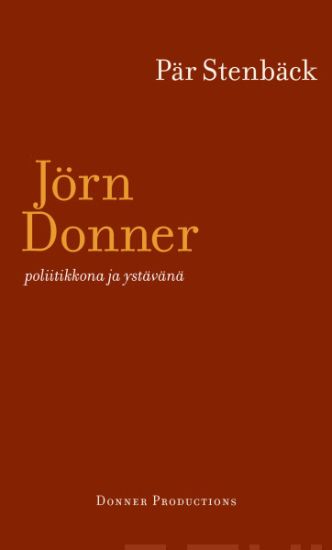
Jörn Donner poliitikkona ja ystävänä

Jörn Donner poliitikkona ja ystävänä

Pär Stenbäck

Donner Productions
2022
nidottu
"Jörn osoitti, että kuvia kumartelemattomalle yksilöllisyydellekin on tilaa, että jähmeä järjestelmä ei sulje pois oman tiensä kulkijoita vaan voi (tai sen täytyy) hyväksyä sellaistakin käytöstä, joka poikkeaa poliittisen korrektiuden normeista. Kun hänenlaisensa intellektuelli pystyi vieläpä vetoamaan taksikuskeihin ja muualle kansan syviin riveihin, se osoitti, että häntä pidettiin raikkaana vaihtoehtona. ”Jörkka on hyvä jätkä”, on varsin autenttinen toteamus."Apoliitikko, moniottelija, individualisti - tuuliviiri? Jörn Donnerin (1933- 2020) ura poliitikkona oli yhtä vaihderikas ja skandaalikäryinenkuin ”Jörkan” elämä muutenkin. Hänen poliittinen uransa sai alkunsa Helsingin kaupunginvaltuustossa vuonna 1968, jonne hänet valittiin SKDL:n edustajana, ja loppui 51 vuotta myöhemmin vuonna 2019 samaisessa valtuustossa mutta RKP:n riveissä koko Suomen vanhimpana kunnallisvaltuutettuna. Siinä välissä hän ehti muun muassa toimia europarlamentaarikkona, kansanedustajana, valitsijamiehenä, diplomaattina ja Martti Ahtisaaren puheiden kirjoittajana.Kirjassaan Jörn Donner poliitikkona ja ystävänä Pär Stenbäck tulkitsee Jörn Donnerin poliittista taivalta ainutlaatuisesta näkökulmasta. Pär Stenbäck oli monessa menossa mukana, ja pystyy muun muassa tarjoamaan kauan kaivattua selontekoa Jörn Donnerin tunnetuista puolueloikkauksista ”as it happened”. He tapasivat ensi kerran jo vuonna 1968, ystävystyivät pikkuhiljaa ja ehtivät pitkän ja monimutkaisen ystävyyden aikana riidelläkin.
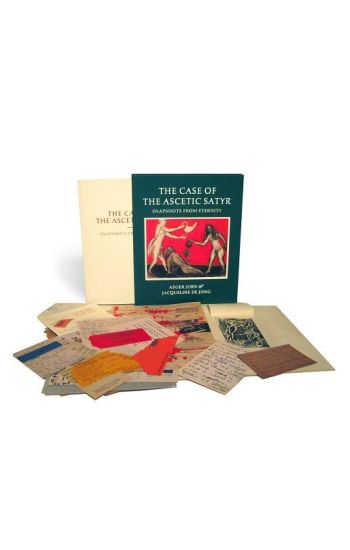
Asger Jorn & Jacqueline de Jong: The Case of the Ascetic Satyr
In 1962, while living in Paris, Dutch painter, sculptor and editor of The Situationist Times Jacqueline de Jong (born 1939) completed a set of 11 woodcut engravings, a medium in which she rarely worked. Danish painter and writer Asger Jorn (1914–1973) adored the engravings and decided to publish them. First, however, Jorn decided to compose a set of texts to accompany the art work, turning the suite of engravings into an "erotic novel" which they called "The Case of the Ascetic Satyr." Over the course of the next decade they jotted down playful (and occasionally sexually explicit) notes to each other on anything that came to hand--exhibition flyers, cocktail napkins, even an unused sheet from Memoires, Jorn's famous collaborative artist's book with Guy Debord. The texts are mostly in English, the language Jorn and de Jong usually used together, though some are in French, Danish, Dutch or German. Wordplay is prevalent, sometimes referring to James Joyce's Finnegans Wake. In the end, the book project outlasted the relationship between the two artists, and so was never published. This beautifully produced artist's book--published in a signed and numbered edition of 200 copies--is thus not so much a facsimile as a true first edition, with the prints accompanied by replicas of the notes between the two lovers. A companion volume includes essays on the piece by leading art historians in the field, Kevin Repp, Marc Lenot, Roberto Ohrt, Karen Kurczynski and Axel Heil.
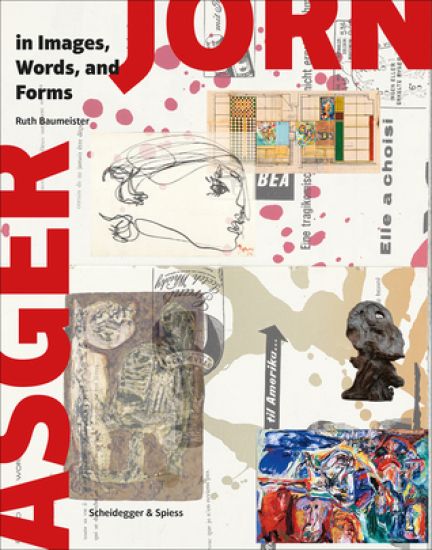
Asger Jorn in Images, Words and Forms

Asger Jorn in Images, Words and Forms

Ruth Baumeister

Scheidegger und Spiess AG, Verlag
2017
nidottu
This colourfully illustrated book gives a broad introduction to the life and work of Asger Jorn, one of the most significant Scandinavian artists. Educated in Paris, he collaborated with Fernand Leger and Le Corbusier, as well as creating a vast oeuvre of paintings, prints, tapestries, ceramics, collages and sculpture, characterised by his constant need to challenge his work and methods. He was a founding member of various international art movements, providing theory and narrative on an exquisite collection of European avant-garde art. This new book presents a selection of Jorn's key works and also features many original documents, such as interviews, letters and photographs, as well as articles by and about Jorn. Arranged in chapters focusing on crucial moments of his life and works of particular significance throughout his career, it illustrates the diverse range of his artistic and literary achievements, and reveals his highly ironic and prosaic approach to art, politics and philosophy.
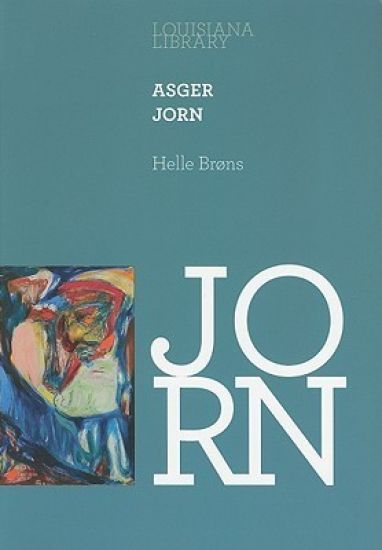
Asger Jorn: Louisiana Library

Asger Jorn: Louisiana Library

Louisiana Museum Of Modern Art
2010
pokkari
The second publication in the Louisiana Library series, from Denmark's Louisiana Museum of Modern Art, is an in-depth look at that institution's impressive Asger Jorn collection. Jorn, a founding member of COBRA (an acronym for Copenhagen, Brussels and Amsterdam), remains one of Denmark's most influential painters. He was also a founding member, with Guy Debord, of the Situationist International (SI). There has been a tendency to view Debord as the sole motivating figure behind the SI, but while Debord's role was indisputably central, Jorn's influence should not be underestimated. In his four years of activity with the group (1957-1961), Jorn not only continued to make some of his best paintings, he also assisted in the editing of the movement's journal, Internationale Situationniste. This volume provides an introduction to the life and work of this key figure of the European postwar art scene and is illustrated with color reproductions of the museum's entire Jorn collection.
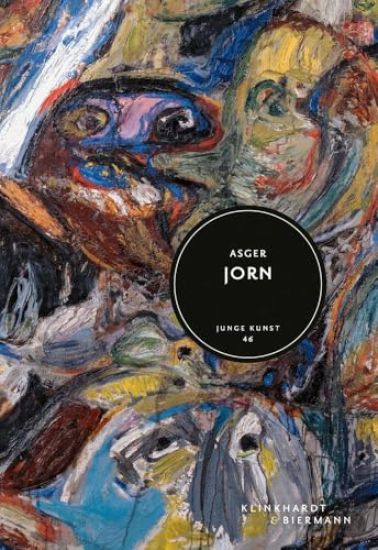
Asger Jorn

Asger Jorn

Dorthe Aagesen & Helle Brøns

SMK Forlag
2014
nidottu
Asgers Jorns kunst og tænkning er gennem de seneste årtier blevet mødt med en voksende opmærksomhed i både Danmark og udlandet, og hans centrale rolle i europæisk efterkrigstidskunst er for alvor ved at blive slået fast. 100-året for Jorns fødsel, den 3. marts 2014, er anledningen til, at Statens Museum for Kunst sammen med Museum Jorn i Silkeborg markerer kunstneren med to store udstillinger samt to ledsagende bøger. For begge museer er intentionen langt mere end blot en fejring af Jorn som hovedskikkelse i dansk kunst og kultur. Målet er at kaste et nuanceret og fagligt opdateret blik på hans kunst og skabe et solidt grundlag for at revurdere hans betydning som en markant figur i det 20. århundredes kunsthistorie. I dette udstillings- og bogprojekt præsenteres mangfoldigheden i Jorns virke som et markant træk. Målet er at tegne et billede af Jorns kunst i al dens kompleksitet ved specifikt at sætte fokus på hans multifacetterede tilgang, der kombinerer humoristiske og ekspressive malerier med filosofiske og politiske tekster, materielle eksperimenter med avantgardestrategier, kunstnerisk indsigt med socialt udsyn. Asger Jorn – Rastløs Rebel stiller skarpt på Asger Jorns liv og arbejde gennem artikler skrevet af en række danske og internationale Jorn-eksperter.
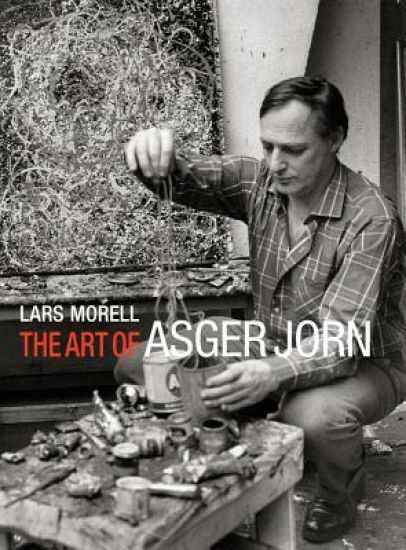
The Art of Asger Jorn

The Art of Asger Jorn

Lars Morell

Aarhus University Press
2017
sidottu
The Art of Asger Jorn is the first major work about one of Denmarks most important painters, Asger Jorn (1914-1973). It is not a typical biography depicting the outline of his life. Rather, the book sheds light on Jorns artistic production: Who he was inspired by, which artistic movements he was in contact with, and not least what his paintings depict. This is also the focus of The Art of Asger Jorn in which Lars Morell, a Danish historian of ideas, analyzes Jorns paintings. The author concludes that Jorns paintings do not depict anything specific. Indeed, it is as if Jorn seized them in the midst of transformation, where the subject is turning into a new subject. Morell finds that the paradoxes and transformations characteristic of the works were influenced by the ever-changing nature of Jorns own life. Asger Jorn was born in Denmark, but spent the majority of his artistic life abroad with workshops in both Paris and the Italian city of Albissola, famous for its skilled ceramic artisans. While abroad he discovered his great connection to the Nordic culture, and through his work with ceramics, he gained the necessary experience to liberate the colours of his paintings. While first and foremost a painter, he refined this artform by interacting with a variety of other art forms. The Art of Asger Jorn is thus not just a book about a single artists work, but also a book about the mindset of modern art.
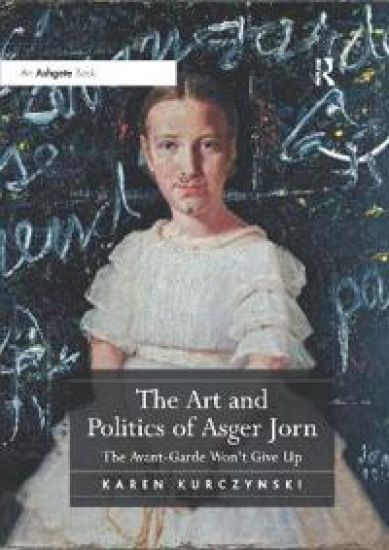
The Art and Politics of Asger Jorn

The Art and Politics of Asger Jorn

Karen Kurczynski

Routledge
2020
nidottu
A leading figure of the postwar avant-garde, Danish artist Asger Jorn has long been recognized for his founding contributions to the Cobra and Situationist International movements - yet art historical scholarship on Jorn has been sparse, particularly in English. This study corrects that imbalance, offering a synthetic account of the essential phases of this prolific artist’s career. It addresses his works in various media alongside his extensive writings and his collaborations with various artists' groups from the 1940s through the mid-1960s. Situating Jorn's work in an international, post-Second World War context, Karen Kurczynski reframes our understanding of the 1950s, away from the Abstract-Expressionist focus on individual expression, toward a more open-ended conception of art as a public engagement with contemporary culture and politics. Kurczynski engages with issues of interest to twenty-first-century artists and scholars, highlighting Jorn's proposition that the sensory address of art and its complex relationship to popular media can have a direct social impact. Perhaps most significantly, this study foregrounds Jorn's assertion that creativity is crucial to subjectivity itself in our increasingly mediated 'Society of the Spectacle.'
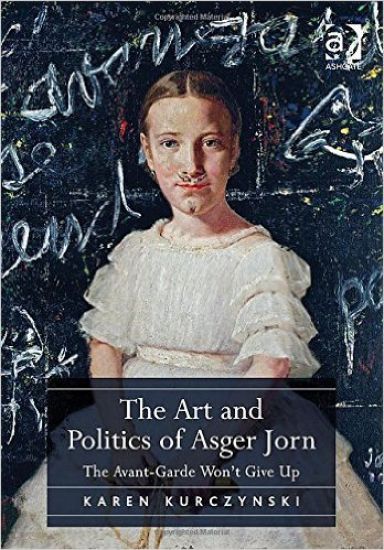
The Art and Politics of Asger Jorn

The Art and Politics of Asger Jorn

Karen Kurczynski

Ashgate Publishing Limited
2014
sidottu
A leading figure of the postwar avant-garde, Danish artist Asger Jorn has long been recognized for his founding contributions to the Cobra and Situationist International movements - yet art historical scholarship on Jorn has been sparse, particularly in English. This study corrects that imbalance, offering a synthetic account of the essential phases of this prolific artist’s career. It addresses his works in various media alongside his extensive writings and his collaborations with various artists' groups from the 1940s through the mid-1960s. Situating Jorn's work in an international, post-Second World War context, Karen Kurczynski reframes our understanding of the 1950s, away from the Abstract-Expressionist focus on individual expression, toward a more open-ended conception of art as a public engagement with contemporary culture and politics. Kurczynski engages with issues of interest to twenty-first-century artists and scholars, highlighting Jorn's proposition that the sensory address of art and its complex relationship to popular media can have a direct social impact. Perhaps most significantly, this study foregrounds Jorn's assertion that creativity is crucial to subjectivity itself in our increasingly mediated 'Society of the Spectacle.'
Strategic Vandalism: The Legacy of Asger Jorn's Modification Paintings
A comprehensive catalogue of the exhibition Strategic Vandalism: The Legacy of Asger Jorn's Modifications Paintings on view at Petzel Gallery in New York from March 5th to April 13th, 2019. With texts written and edited by the curators as well as reprinted articles on the subjects of d tournement, vandalism, and the relationship between modifications and appropriation art in the late 1970s. If you have old paintings, do not despair. Retain your memories but detourn them so that they correspond with your era. Why reject the old, if one can modernize it? --Asger Jorn Published on the occasion of the exhibition Strategic Vandalism: The Legacy of Asger Jorn's Modifications Paintings at Petzel Gallery in New York (March 5 - April 13, 2019) - this historical group show of over 30 prominent international artists investigates multifarious appropriation methods situated in the context of the first thrift store paintings altered by Danish artist Asger Jorn. Spanning from the mid-1960s to the flourishing techniques of the 1980s, up to the present day. In Paris, 1959, Asger Jorn exhibits a group of paintings at the prominent Galerie Rive Gauche. Not only has he re-worked these found paintings with his own brush, modifying their respective surfaces, but he also writes a text describing his technique as a recovery of certain iconographic archetypes. Instead of making a mockery of these kitsch paintings, he articulates some of their inherent folk-art values. The exhibition is not well received. However, it has since become legendary. Jorn's modifications have long been a neglected chapter in the Danish artist's biography. Yet from today's perspective these high/low hermaphrodites are recognized by keen-eyed viewers as mirrors reflecting the historicity of modern painting. Such "Modifications" are a painterly version of "d tournement," a Situationist technique, described in 1956 by Guy Debord and Gil Wolman as the systematic revaluation of "prefabricated aesthetic products." For Jorn, who co-founded and financially supported the Situationist International, the 1959 Galerie Rive Gauche exhibition, showcased his implementation of a fundamental aesthetic critique in which he appropriates a relatively discredited artistic source as "his" own material, then applies his iconography, and his language to that particular prefabricated model. Strategic Vandalism: The Legacy of Asger Jorn's Modification Paintings features works by Enrico Baj, Marcel Duchamp, Max Ernst, Hans-Peter Feldmann, Vidya Gastaldon, Wade Guyton/Stephen Prina, Rachel Harrison, Ray Johnson, Jacqueline de Jong, Asger Jorn, Mike Kelley, Martin Kippenberger, Per Kirkeby, Lee Krasner, Albert Oehlen, Francis Picabia, Stephen Prina, R.H. Quaytman, Arnulf Rainer, Julian Schnabel, Jim Shaw, Gedi Sibony, Alexis Smith, Daniel Spoerri, John Stezaker, Betty Tompkins, and David Wojnarowicz.
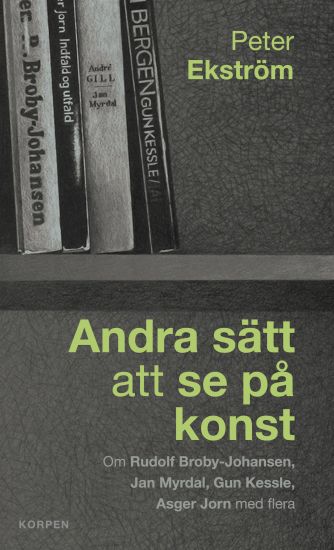
Andra sätt att se på konst : om Rudolf Broby-Johansen, Jan Myrdal, Gun Kessle, Asger Jorn med flera
Berättelsen om konstens historia har oftast sett ut på ett enda sätt. Det har varit de europeiska manliga genierna som har dominerat. De har uppträtt kronologiskt i en vacker rad som nästan inget har kunnat störa. Det har varit stillsamt, konservativt och dammigt. Så har konsthistoria lärts ut från studiecirklar och gymnasieskola till universitet.Men under den enhetliga ytan bubblar det av motsättningar och kritik. I själva verket är konsthistorien ett slamrande slagfält. Trots den konservativa dominansen har det funnits och finns andra försök att berätta konstens historia. Det har varit nytänkande, politiskt radikala eller djupt personliga berättelser. Peter Ekström har gjort en översikt över hur konstens historia har berättats och tittar på några alternativ. Särskilt har han koncentrerat sig på Rudolf Broby-Johansen, Gun Kessle, Jan Myrdal och Asger Jorn. Peter Ekström är konstnär och författare och har varit rektor för Örebro Konstskola. På Korpen har han tidigare givit ut Att placera sig själv i historien: Konst och marxism, Att tänka med ögonen vad pågår egentligen på konstskolorna? och Har revolutionen plats för sorg? Postumt samtal med John Berger.
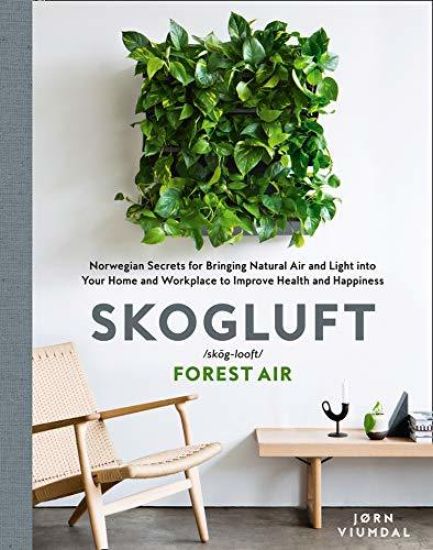
Skogluft (Forest Air)

Skogluft (Forest Air)

Jorn Viumdal

Thorsons
2019
sidottu
Why do we spend so much time indoors, which is not our natural habitat? Why have trends such as forest-bathing become so popular? The answer to the last question lies in the proven benefits we obtain from our connection with nature – from increased productivity to feelings of happiness and an enhanced sense of wellbeing. For millions of years, humans developed in natural environments, in close contact with sunlight, vegetation and fresh air. But most of us spend 80-90% of our time indoors far from the environments for which we are naturally suited and in which we evolved. Skogluft’s mission is to bring a natural living environment back into your home and workplace.Based on years of research data on the impact between nature and people, gathered together by a Norwegian mechanical engineer, Jorn Viumdal, Skogluft reveals how installing a wall of easily available plants in your home environment can dramatically improve health, strengthen the immune system and increase productivity. The plants are easily available, cheap to buy and simple to look after.Here is a low-tech solution to a problem created by our increasing dependence on a world dominated by high technology. Learn the simple techniques to beautify your world and create air you can live with all year around and experience the health and wellness effects for yourself.