Kirjojen hintavertailu. Mukana 11 627 220 kirjaa ja 12 kauppaa.

Kirjahaku

Etsi kirjoja tekijän nimen, kirjan nimen tai ISBN:n perusteella.

1000 tulosta hakusanalla Joseph Butler

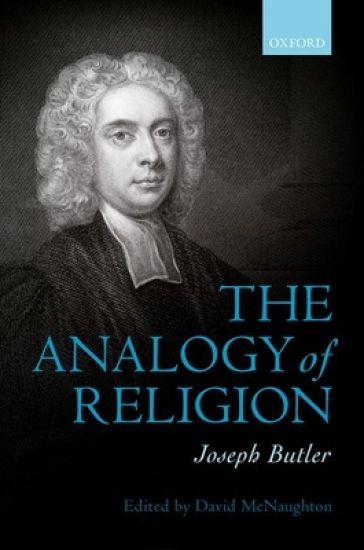
Joseph Butler: The Analogy of Religion
Joseph Butler's The Analogy of Religion (1736) is an important work in terms of its historical influence and its contemporary relevance. In it, Butler defends Christian belief against many well-known objections: for instance, that the evidence for Christianity is weak; that it is impossible to believe in miracles; that if God existed he would have revealed himself clearly to everyone. The problems Butler discusses are current in contemporary philosophy of religion, but his answers are often ignored, or given short shrift. Butler argues that by examining this world we have reason to believe its Creator is both benevolent and just; that virtue will be rewarded and vice punished. Even if we have doubts, we would be well advised to take Christianity seriously, given what is at stake. The work includes seminal discussions of life after death, personal identity, and the structure of our ethical thought. In addition to extensive notes, David McNaughton's edition includes a detailed synopsis, a selection from the correspondence between Butler and Samuel Clarke, and an oveview of philosophical influences on Butler's thought.
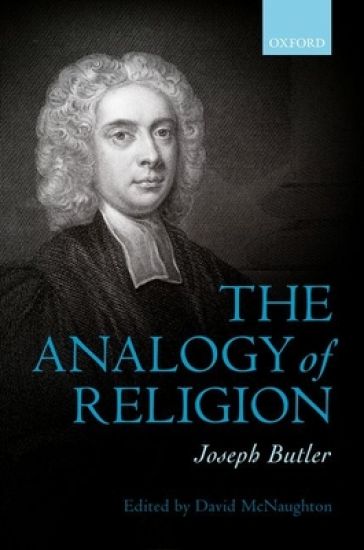
Joseph Butler: The Analogy of Religion
Joseph Butler's The Analogy of Religion (1736) is an important work in terms of its historical influence and its contemporary relevance. In it, Butler defends Christian belief against many well-known objections: for instance, that the evidence for Christianity is weak; that it is impossible to believe in miracles; that if God existed he would have revealed himself clearly to everyone. The problems Butler discusses are current in contemporary philosophy of religion, but his answers are often ignored, or given short shrift. Butler argues that by examining this world we have reason to believe its Creator is both benevolent and just; that virtue will be rewarded and vice punished. Even if we have doubts, we would be well advised to take Christianity seriously, given what is at stake. The work includes seminal discussions of life after death, personal identity, and the structure of our ethical thought. In addition to extensive notes, David McNaughton's edition includes a detailed synopsis, a selection from the correspondence between Butler and Samuel Clarke, and an oveview of philosophical influences on Butler's thought.
Joseph Butler: Fifteen Sermons and other writings on ethics
Joseph Butler's Fifteen Sermons (1729) is a classic work of moral philosophy, which remains widely influential. The topics Butler discusses include the role of conscience in human nature, self-love and egoism, compassion, resentment and forgiveness, and love of our neighbour and of God. The text of the enlarged and corrected second edition is here presented together with a selection of Butler's other ethical writings: A Dissertation of the Nature of Virtue, A Sermon Preached Before the House of Lords, and relevant extracts from his correspondence with Samuel Clarke. While this is a readers' edition that avoids cluttering Butler's text with textual variants and intrusive footnotes, it comes complete with scholarly apparatus intended to aid the reader in studying Butlers work in depth. David McNaughton contributes a substantial historical and philosophical introduction that highlights the continuing importance of these works. In addition, there are extensive notes at the end of the volume, including significant textual variants, and full details of Butler's sources and references, as well as short summaries of Butler's predecessors, and a selective bibliography. This will be the definitive resource for anyone interested in Butler's moral philosophy.
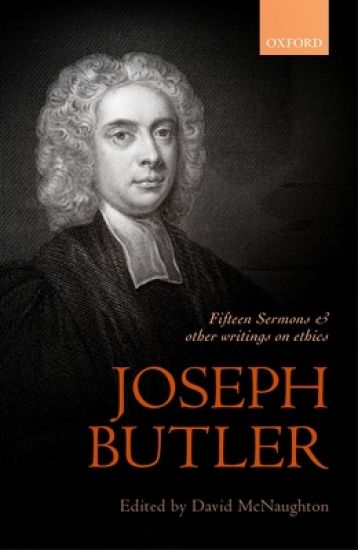
Joseph Butler: Fifteen Sermons and other writings on ethics
Joseph Butler's Fifteen Sermons (1726) is a classic work of moral philosophy, widely influential ever since. The topics Butler discusses include the role of conscience in human nature, self-love and egoism, compassion, resentment and forgiveness, love of our neighbour and of God. The text of the second edition of the Sermons is here presented together with a selection of Butler's other ethical writings: the Dissertation of the Nature of Virtue, a sermon on hypocrisy and liberty preached before the House of Lords, and relevant extracts from his correspondence with Samuel Clarke. David McNaughton contributes a substantial historical and philosophical introduction to help readers understand these works and see their continuing importance. While it is a readers' edition which avoids the clutter of textual variants and intrusive footnotes, it comes complete with scholarly apparatus intended to aid the reader in studying Butler's work in depth. McNaughton also includes short summaries of Butler's predecessors, and a selective bibliography. This will be the definitive resource for anyone interested in Butler's moral philosophy.
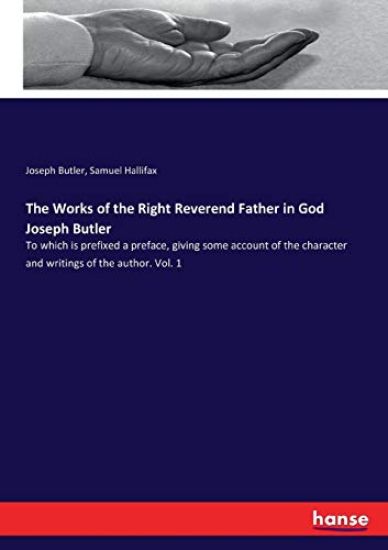
The Works of the Right Reverend Father in God Joseph Butler

The Works of the Right Reverend Father in God Joseph Butler

Joseph Butler; Samuel Hallifax

Hansebooks
2018
pokkari
The Works of the Right Reverend Father in God Joseph Butler - To which is prefixed a preface, giving some account of the character and writings of the author. Vol. 1 is an unchanged, high-quality reprint of the original edition of 1874. Hansebooks is editor of the literature on different topic areas such as research and science, travel and expeditions, cooking and nutrition, medicine, and other genres. As a publisher we focus on the preservation of historical literature. Many works of historical writers and scientists are available today as antiques only. Hansebooks newly publishes these books and contributes to the preservation of literature which has become rare and historical knowledge for the future.
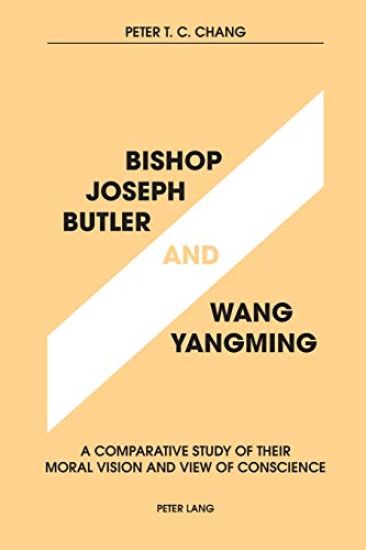
Bishop Joseph Butler and Wang Yangming

Bishop Joseph Butler and Wang Yangming

Peter T.C. Chang

Peter Lang AG, Internationaler Verlag der Wissenschaften
2014
nidottu
This book is a comparative study of the Anglican Bishop Joseph Butler’s and Neo-Confucianist Wang Yangming’s ethical enterprise. It first analyses, within their respective historical context, the two thinkers’ overarching worldviews and their seminal conception of conscience / liang-chih as a person's supreme moral guide. The English bishop and the Chinese philosopher-military general are then brought into dialogue by way of a comparing and contrasting of their distinct religious-philosophical traditions. In addition, Butler and Wang will be placed in a hypothetical encounter to explore how they, and by proxy Christianity and Confucianism, would critically appraise each other’s spiritual and sociopolitical endeavor. The end purpose of this study is to enhance our perception of the intriguing similarities and complex differences that exist between these two Axial Age civilizations. The author argues that dissonances notwithstanding, Butler and Wang share core values, consonances that could and should set the tone for an amiable Christian-Confucian co-existence.
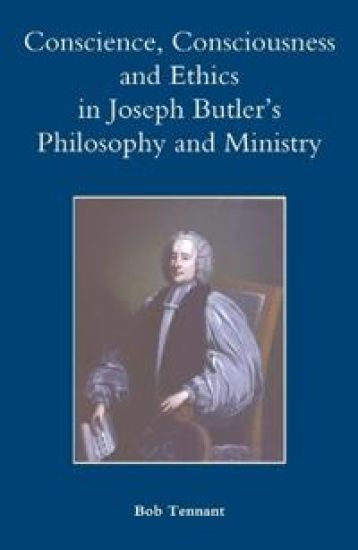
Conscience, Consciousness and Ethics in Joseph Butler's Philosophy and Ministry
Offers a new interpretation of Butler's theology and suggests that exploration of his methods may contribute to modern thinking about ethics, language, the Church as well as religion and science. Joseph Butler [1692-1752] is perhaps Britain's most powerful and original moral philosopher. He exercised a profound influence over the contemporary Protestant Churches, the English moralists and the Scottish philosophical schoolbut his theory of the "affections", grounded in Newtonian metaphysics and presenting an account of human psychology, also set the terms of engagement with questions of education, slavery, missions and even labour relations. Inthe nineteenth-century English-speaking world he was an authority of first resort for Evangelicals, Tractarians, philosophers, scientists, psychologists, economists, sociologists, lawyers and educationalists alike. He remains a key reference point for modern American and British philosophers, from Broad to Rawls and beyond. Many analyses of Butler, however, have been distorted by aggressively secular readings. This book is based on a comprehensive reassessment of his published work and the surviving manuscripts and archival materials. These are set within an account of his spiritual and intellectual development and his ministerial vocation, from the protracted and painful process of conforming to the Church of England to his initial observations on a social philosophy. Demonstrating that even The Analogy originated in liturgical preaching, this book offers a refreshed and detailed account of Butler's key terms - conscience, consciousness, identity, affections, charity, analogy, probability, tendency - and suggests that exploration of his methods may contribute to modern thinking about ethics, language, the role of the Church, and the religion and science debates. BOB TENNANT taught English Literature at the University of Sussex, spent many years as a senior manager in adult education, and was a trade union and political activist serving leading organisations at local, regional and national levels. He has written on political, economic and trade union matters for many newspapers and periodicals and is a founder of The British Pulpit Online, seeking to create an online catalogue and database of all printed British sermons from 1660 to 1901.